Most fat burners are safe for healthy adults when used at recommended doses — but that sentence carries more conditions than most supplement marketing acknowledges. The safety profile of a fat burner depends entirely on which ingredients it contains, at what dose, taken by whom, and under what circumstances.
That conditional matters. A 25-year-old with no health conditions taking a moderate-caffeine thermogenic before morning training is in a very different risk category than a 40-year-old with borderline hypertension taking the same product before outdoor exercise in a Delhi summer.
Are fat burners safe as a category? Mostly yes, for the right person. Are all fat burners safe for all people in all situations? No, and the gap between those two answers is where most of the real risk lives.
The Indian supplement market adds another layer to this question. Products sold locally or through grey-market importers are not subject to the same quality controls as FSSAI-registered products, and adulteration with undisclosed stimulants is a documented problem. The ingredient on the label is not always what is in the capsule.
This article covers the real risks, who faces them, what the adverse event data shows, and how to assess whether a specific product is safe for your specific situation.
The Short Answer
- Fat burners with standard ingredients like caffeine, green tea extract, and capsaicin are generally safe for healthy adults at recommended doses, but carry real risks for specific populations.
- The most common serious risks are cardiovascular: elevated heart rate, increased blood pressure, and in rare cases, cardiac arrhythmia — primarily from high-dose stimulant formulas.
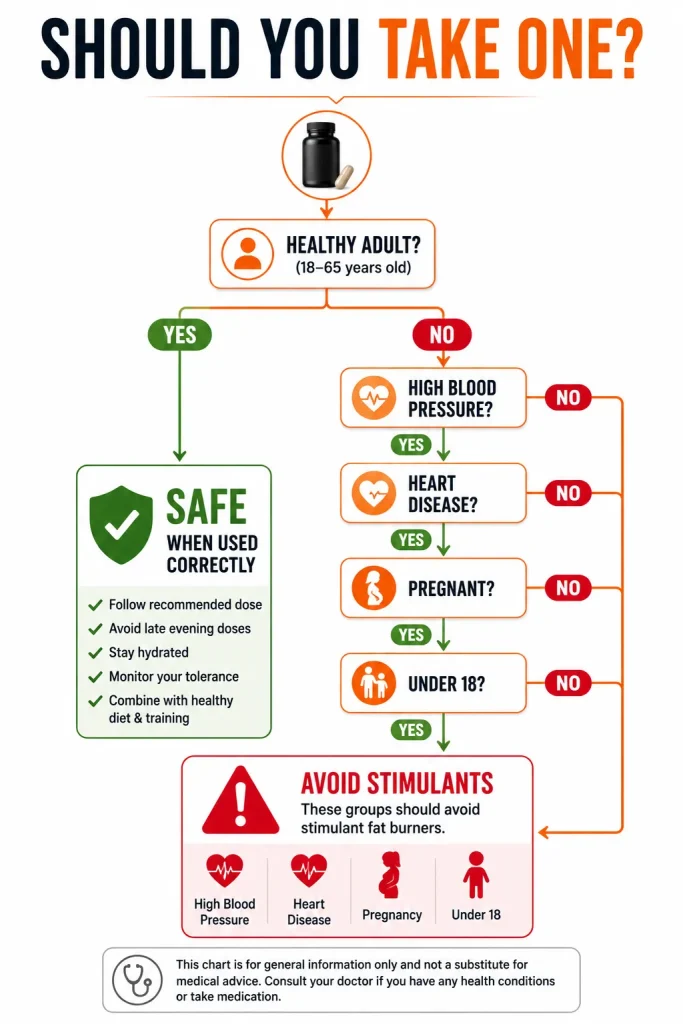
- People with hypertension, heart conditions, anxiety disorders, hyperthyroidism, or pregnancy should avoid stimulant-based fat burners entirely.
- Adulteration is a genuine concern in the Indian supplement market — unlisted stimulants in unregulated products are responsible for a significant share of adverse events globally.
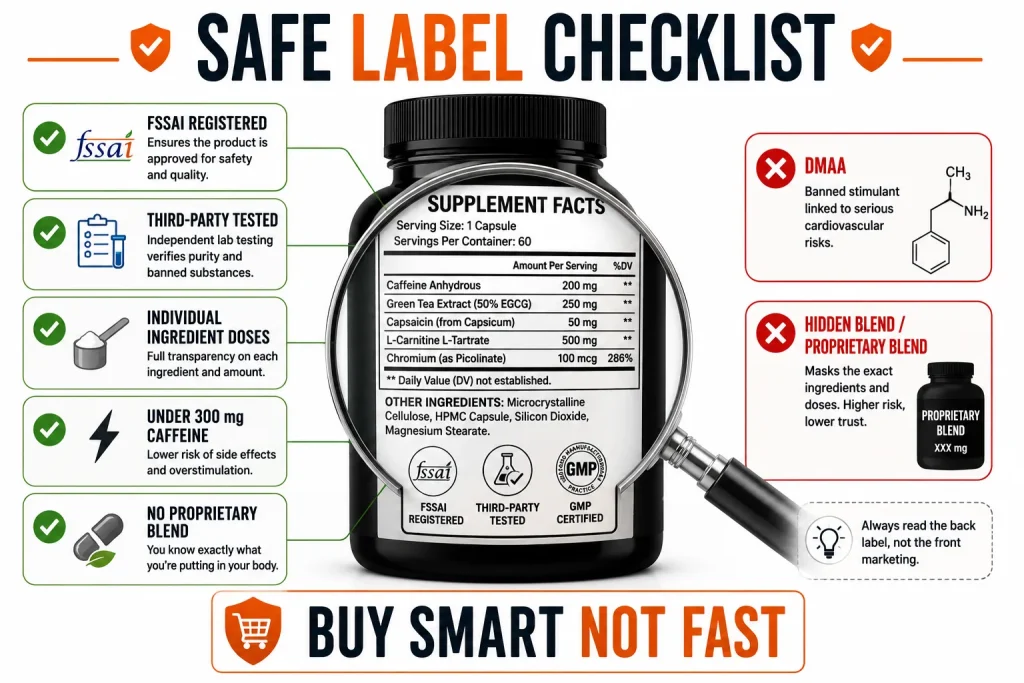
- The safest approach is to choose products with full label transparency, FSSAI registration, and third-party testing, and to stay within the recommended dose regardless of tolerance.
What Makes a Fat Burner Risky in the First Place?
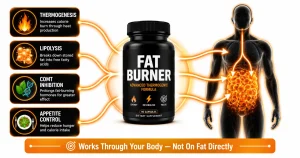
Fat burners are not inherently dangerous, but the mechanism that makes them work is the same mechanism that creates risk. Stimulant-based thermogenics work by activating the sympathetic nervous system — the same system responsible for the fight-or-flight response. That activation raises heart rate, increases blood pressure, narrows blood vessels, and elevates core body temperature.
For a healthy person at a moderate dose, those effects are mild and temporary. For someone with an underlying cardiovascular condition, they are a meaningful physiological stress on a system that is already under strain.
The other risk category is less dramatic but more common: drug interactions and undisclosed ingredients. Fat burners are classified as dietary supplements in most countries, which means they are not subject to the same pre-market safety testing as pharmaceutical drugs. In India, FSSAI regulates supplements, but enforcement is inconsistent — particularly for products sold through gym vendors, online marketplaces, or imported informally.
The Indian gym supplement market has a specific and documented problem with products that claim to contain standard ingredients but actually contain synthetic stimulants, banned substances, or compounds not listed on the label. This is not speculation — it is why FSSAI has issued multiple product recalls and warnings in recent years. Buying from unverified sources adds a layer of risk that has nothing to do with the labelled ingredients.
Are Fat Burners Safe? Breaking Down the Risk by Ingredient
Caffeine: Safe at Moderate Doses, Risky at High Doses
Caffeine is the most common and most studied ingredient in fat burners, and its safety profile is well understood. At doses up to 400 mg per day, caffeine is considered safe for most healthy adults. Most standard fat burner servings contain between 150 and 300 mg of caffeine per dose.
The risk profile changes significantly above 400 mg per day, or when multiple caffeinated sources are stacked. Someone taking a fat burner with 250 mg of caffeine, drinking two cups of coffee, and having a pre-workout supplement could easily exceed 600 to 700 mg on a single day — well into the range where cardiovascular strain, anxiety, and sleep disruption become genuine concerns.
For Indian users specifically, tea and coffee consumption is already high across most demographics. A strong cup of South Indian filter coffee contains approximately 80 to 150 mg of caffeine. Masala chai contains 30 to 60 mg per cup. People who consume multiple cups daily before adding a fat burner are starting from a much higher caffeine baseline than the supplement label assumes.
The other caffeine concern is cardiovascular sensitivity. Caffeine increases systolic blood pressure by an average of 3 to 15 mmHg in non-habitual consumers. In someone with pre-existing hypertension, that increase can push blood pressure into a clinically concerning range. Anyone with blood pressure above 130/80 mmHg should discuss caffeine-containing supplements with a doctor before use.
Verdict: Safe at standard doses for healthy adults with no cardiovascular conditions. Requires caution in high daily caffeine consumers and anyone with hypertension.
Synephrine: The Ingredient That Deserves More Scrutiny
Synephrine is derived from bitter orange (Citrus aurantium) and is used as a stimulant in many fat burners — particularly those marketed as ephedra-free alternatives after ephedra was banned globally in the early 2000s. It works through adrenergic receptors, increasing heart rate and blood pressure through a similar but less potent mechanism than ephedra.
At doses of 10 to 20 mg per day, synephrine appears to be reasonably safe in healthy individuals. The problem is that it is frequently combined with caffeine, and that combination amplifies cardiovascular effects beyond what either ingredient produces alone. Research has shown that the caffeine-synephrine combination raises blood pressure more than caffeine alone at equivalent doses.
Synephrine is also frequently mislabelled or undisclosed in proprietary blends. A product listing “bitter orange extract” without specifying synephrine content gives the consumer no way to assess dose. This is a transparency problem that is particularly common in grey-market products.
Verdict: Acceptable at low doses in isolation for healthy adults. More caution warranted when combined with caffeine, and transparency around dosing is essential before use.
EGCG and Green Tea Extract: Low Risk, One Specific Concern
Green tea extract, specifically EGCG (epigallocatechin gallate), has a good safety profile at standard doses. Most adverse events associated with green tea extract supplements involve liver stress (hepatotoxicity), which is not a concern with the green tea you drink but has been reported with concentrated supplemental EGCG at high doses.
The threshold for concern appears to be above 800 mg of EGCG per day taken on an empty stomach. Standard fat burner doses of 400 to 500 mg of EGCG taken with food are well below this level. However, people with pre-existing liver conditions or those taking medications metabolised by the liver should be cautious with high-dose green tea extract supplements.
This risk is low in absolute terms for most people, but it is worth knowing because it is entirely absent from most supplement marketing around green tea.
Verdict: Safe at standard doses (400 to 500 mg EGCG per day) for most people. Take with food, not on an empty stomach. Avoid if you have liver disease or take hepatically metabolised medications.
Thermogenic Stacks and Proprietary Blends: The Highest-Risk Category
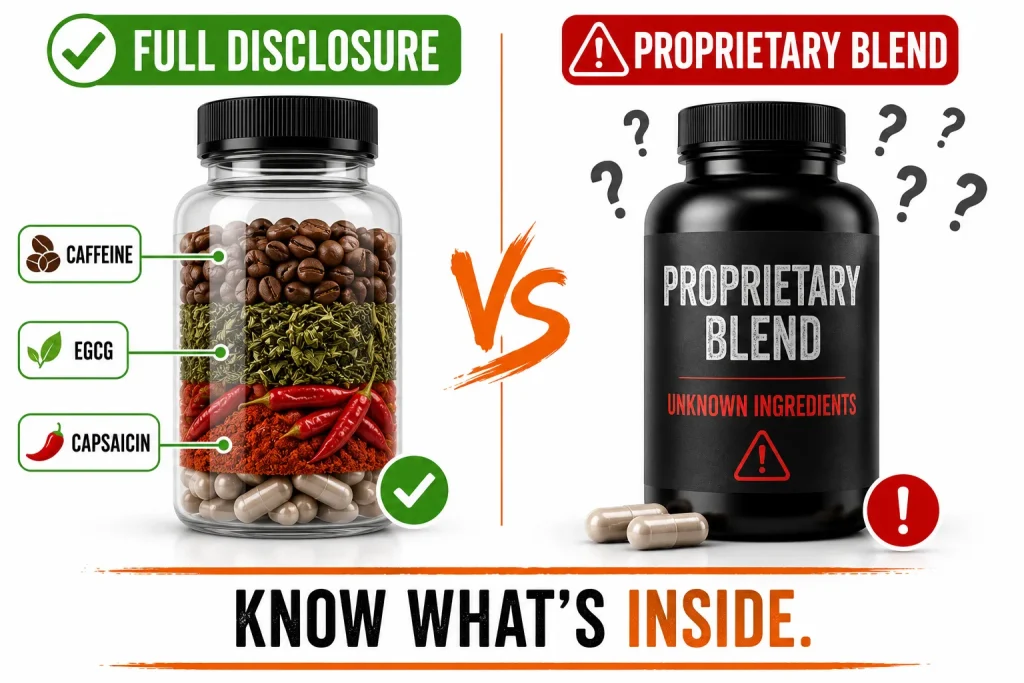
The greatest safety risk in the fat burner category is not any single ingredient but the combination of multiple stimulants in proprietary blends at undisclosed doses. When a product lists a “thermogenic matrix” with eight ingredients and a total blend weight of 500 mg, you have no way of knowing whether caffeine is at 50 mg or 400 mg, whether synephrine is present at a trace level or a pharmacologically active dose, or whether additional stimulants are included.
This is the category responsible for the majority of serious adverse events linked to fat burners globally. The US FDA’s adverse event reporting system (FAERS) has recorded thousands of reports linked to weight loss supplements over the past two decades, with cardiovascular events — palpitations, elevated blood pressure, chest pain — being the most commonly reported serious outcomes.
In India, the regulatory framework under FSSAI requires ingredient disclosure, but enforcement of this requirement for imported or informally distributed products is limited. Products purchased from gym vendors, WhatsApp supplement groups, or unverified online sellers carry a meaningfully higher risk than FSSAI-registered products from verified domestic distributors.
Verdict: Proprietary blends with undisclosed doses are the highest-risk fat burner format. Avoid any product that does not list individual ingredient amounts clearly on the label.
Fat Burner Safety Risk Summary Table
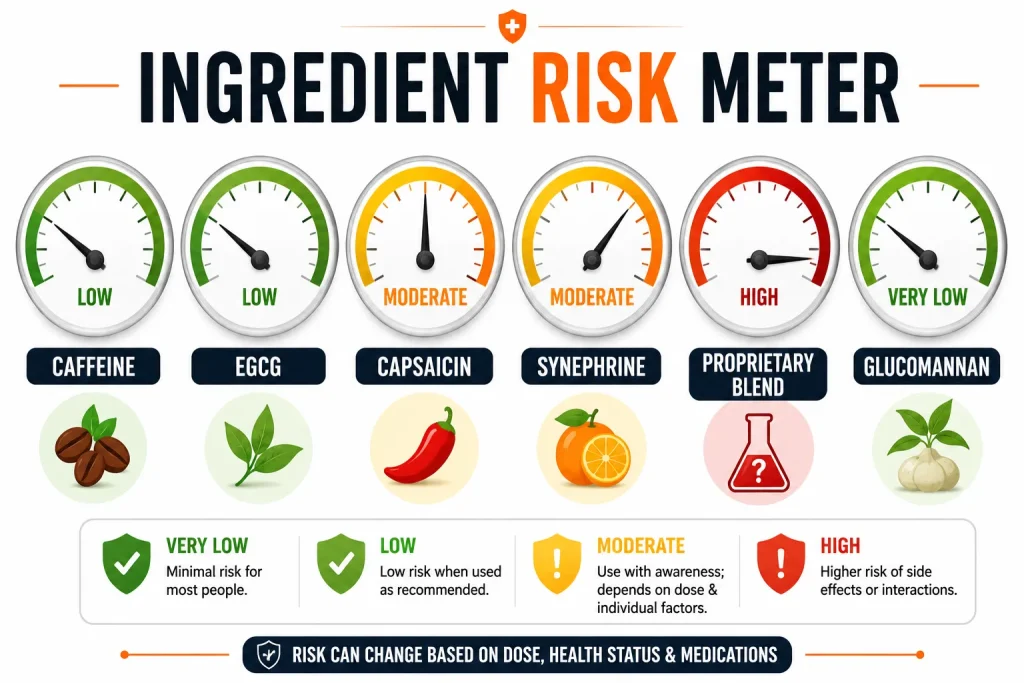
| Ingredient / Category | Primary Risk | Risk Level (Healthy Adults) | Risk Level (At-Risk Populations) | Safe Dose Range | Key Interaction |
|---|---|---|---|---|---|
| Caffeine | Elevated BP, heart rate, insomnia | Low at under 400 mg/day | High for hypertension, anxiety, heart conditions | 150–400 mg/day | Amplified by other stimulants |
| Synephrine (bitter orange) | Cardiovascular strain | Low-Moderate at 10–20 mg/day | High when combined with caffeine | 10–20 mg/day | Avoid with caffeine if cardiac history |
| EGCG (green tea extract) | Liver stress at very high doses | Low at 400–500 mg/day | Moderate for liver disease | 400–500 mg/day with food | Hepatically metabolised medications |
| Capsaicin | GI irritation, heat stress | Low at 2–6 mg/day | Moderate in hot climate outdoor training | 2–6 mg/day | Worsened by dehydration |
| Proprietary blends (undisclosed) | Any of the above, amplified | Moderate–High (unknown doses) | Very high | Not assessable | Cannot predict interactions |
| L-Carnitine | Fishy body odour at high doses, minor GI | Very low | Low | Up to 3 g/day | Minimal known interactions |
| Glucomannan (non-stimulant) | Choking risk if taken without water | Very low | Very low | 1 g before meals with 250 ml water | Slows absorption of some medications |
How Your Body Responds to Fat Burner Ingredients Over Time
When you first take a stimulant fat burner, the sympathetic nervous system activation produces a noticeable response: increased alertness, elevated heart rate, mild increase in body temperature, and improved focus. These are the intended acute effects, and they occur within 30 to 60 minutes of ingestion.
With continued daily use, the body adapts. Tolerance develops through two mechanisms: downregulation of adrenergic receptors (the receptors that respond to noradrenaline and adrenaline) and increased activity of enzymes that break down caffeine more rapidly. This is why the “buzz” from a fat burner diminishes after 2 to 3 weeks for most people.
The safety implication of tolerance is important. Many people respond to reduced perceived effect by increasing their dose. That dose escalation is where the risk profile shifts. The body’s tolerance to the subjective experience of stimulants does not mean its cardiovascular system has fully adapted — blood pressure and heart rate elevations can persist at higher doses even when the stimulant “feel” has faded.
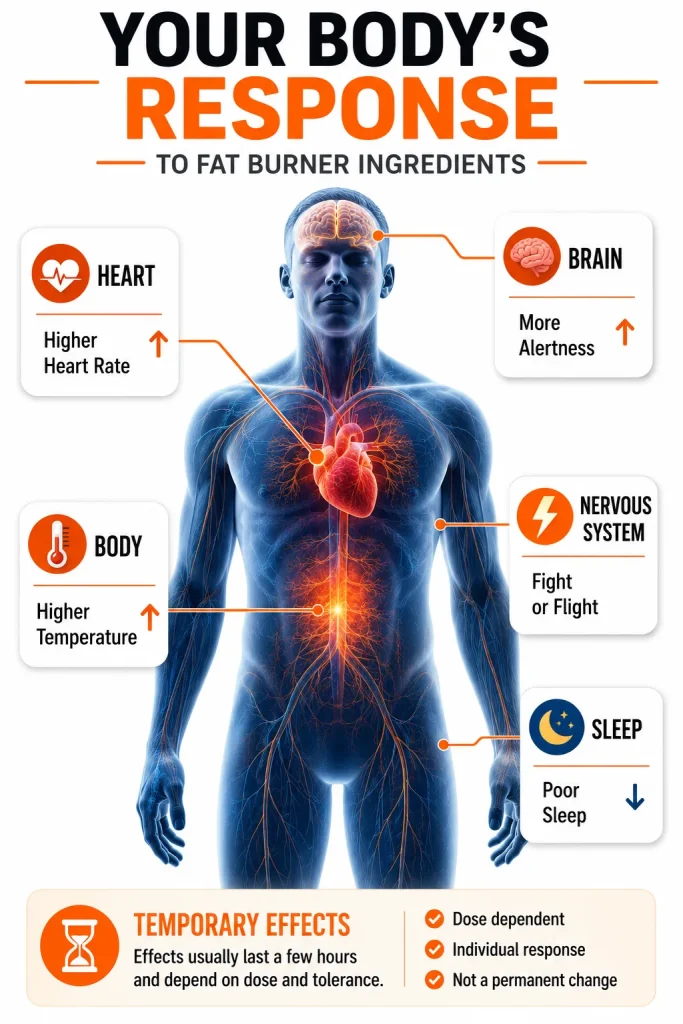
Practically: use fat burners in cycles of 6 to 8 weeks on, 2 to 4 weeks off. This preserves effectiveness and avoids the dose escalation pattern that leads to most adverse events. Never exceed the recommended dose, and never stack multiple stimulant products simultaneously.
What the Research and Adverse Event Data Shows
The most important safety data on fat burners does not come from efficacy trials — it comes from adverse event reporting. A 2019 analysis of supplement-related adverse event reports submitted to the US FDA found that weight loss supplements were among the most frequently cited categories for serious events, including hospitalisation and death, though absolute event rates remain low relative to total usage.
A key finding from hepatotoxicity research: a study published in Hepatology in 2014 by Navarro et al. found that herbal and dietary supplements accounted for 20% of drug-induced liver injury cases in the United States, up from 7% a decade earlier. Weight loss supplements were one of the most commonly implicated subcategories. This does not mean fat burners broadly cause liver damage — the cases were concentrated in specific high-dose products, often with adulterated or undisclosed ingredients.
The honest reality check is this: for the vast majority of healthy adults taking a standard-dose, transparently labelled fat burner from a reputable brand, serious adverse events are rare. The risk is concentrated in specific populations (cardiovascular conditions, liver disease, pregnancy), specific products (proprietary blends, grey-market imports), and specific behaviours (dose stacking, exceeding recommendations).
“Herbal and dietary supplement hepatotoxicity has increased substantially over the past decade, with weight loss products among the most commonly implicated categories.” — Navarro VJ et al., Hepatology, 2014
Side Effects and What to Watch Out For
The most common side effects from stimulant fat burners are jitteriness, elevated heart rate, headaches, difficulty sleeping, and digestive discomfort. These are dose-dependent and resolve with dose reduction or discontinuation. They are unpleasant but not dangerous for most healthy people.
The side effects that warrant immediate discontinuation are chest pain or tightness, heart palpitations (irregular or rapid heartbeat), severe headache, significant difficulty breathing, or signs of allergic reaction. These are rare but serious and require medical attention, not dose adjustment.
Three India-specific concerns that do not appear in most generic safety articles:
Dehydration interaction. Thermogenic fat burners increase sweat rate and core temperature. India’s climate, particularly in summer months, already creates high baseline dehydration risk. Fat burner use without deliberate hydration management — at least 3 to 3.5 litres of water daily — meaningfully increases heat stress and kidney strain risk.
FSSAI registration as a minimum filter. In India, buying a fat burner from an unregistered seller or through informal channels removes the only meaningful quality assurance layer available to consumers. FSSAI registration does not guarantee perfect quality, but it establishes a baseline of labelling and ingredient accountability that unregistered products lack entirely.
Combination with alcohol. Mixing stimulant fat burners with alcohol — a pattern that occurs among younger gym-goers who take a fat burner before evening training and then drink socially — creates cardiovascular strain and masks the perceived sedative effect of alcohol, increasing the risk of overconsumption. This combination should be avoided entirely.
Who Should Be Cautious and Who Should Avoid Fat Burners Entirely?
If You Are a Healthy Adult Under 35 With No Medical Conditions
Stimulant fat burners at standard doses carry low risk for you. The practical safety rules are straightforward: choose a product with full ingredient disclosure and individual doses listed, stay within the recommended amount, cycle off every 6 to 8 weeks, avoid stacking with other stimulants, and do not take them within 6 hours of sleep. If you want to understand which products are worth using at all, the best fat burner supplement guide for 2026 covers the Indian market specifically.
If You Have Hypertension, a Heart Condition, or Arrhythmia
Avoid stimulant-based fat burners entirely. The cardiovascular mechanism that makes thermogenics work is directly contraindicated for people with these conditions. Non-stimulant options like glucomannan for appetite management carry no cardiovascular risk and are a reasonable alternative. Any weight management supplement in this population should be discussed with a cardiologist first.
If You Have Anxiety or a History of Panic Attacks
Caffeine and synephrine both activate the sympathetic nervous system in ways that can trigger or worsen anxiety and panic symptoms. Even at doses that are safe from a cardiovascular standpoint, the subjective experience can be distressing and counterproductive. Non-stimulant fat loss support — structured diet, consistent training, potentially glucomannan — is a more appropriate path. The exercises for heart health that improve cardio naturally guide covers safe, effective training approaches that do not require stimulant support.
If You Are Pregnant or Breastfeeding
Avoid all stimulant fat burners without exception. High caffeine intake during pregnancy is associated with increased risk of low birth weight and miscarriage. No fat loss supplement of any kind has been tested for safety in pregnancy. This is a firm no, not a caution.
If You Are Under 18
Fat burners are not appropriate for anyone under 18. The developing cardiovascular and endocrine systems respond differently to stimulants than adult systems, and no safety data exists for this population. If a young person is concerned about body composition, structured nutrition and training are the only appropriate interventions.
If You Take Any Regular Medication
Check every ingredient against your medication list before use. Stimulants interact with cardiac medications, thyroid medications, antidepressants (particularly MAOIs and SSRIs when combined with 5-HTP), and blood pressure medications. This is not a formality — some of these interactions are clinically significant. A pharmacist can review your medication list against a supplement’s ingredient panel quickly and at no cost.
The Bottom Line
Are fat burners safe? For healthy adults with no underlying conditions, choosing a transparently labelled product from a verified source and staying within recommended doses — yes, the risk is low. That is not the same as saying they are risk-free, and it is not the same as saying every product on the market meets that standard.
The Indian supplement market specifically requires more scepticism than most. The gap between what a label claims and what a product actually contains is wider here than in more tightly regulated markets. FSSAI registration, third-party testing certificates, and buying from verified domestic distributors are not optional precautions — they are the minimum reasonable standard.
If you are already managing a health condition, the risk-benefit calculation shifts significantly. The modest fat loss effect these supplements provide rarely justifies cardiovascular, hepatic, or drug interaction risks for people in those populations.
The safest fat burner for most people is still a cup of black coffee, a calorie deficit, and consistent training. That is not a cop-out. It is the honest arithmetic of what the evidence supports. If you want to understand how fat burners actually fit into a broader supplement approach, the 5 best fat loss supplements that actually work covers the full picture with the same level of honesty.
People Also Ask
Are fat burners safe to take every day?
Fat burners are generally safe for daily use over 6 to 8 week cycles for healthy adults at recommended doses. Daily use beyond 8 weeks without a break increases the risk of tolerance-driven dose escalation, which is where most adverse events occur. Cycling off for 2 to 4 weeks between periods of use maintains effectiveness and keeps the risk profile low. Long-term continuous daily use of high-stimulant products is not supported by safety research.
Can fat burners damage your heart?
Standard fat burners at recommended doses do not cause permanent heart damage in healthy adults. However, high-dose stimulant fat burners raise heart rate and blood pressure, which creates short-term cardiovascular strain. In people with pre-existing heart conditions, arrhythmias, or significantly elevated blood pressure, this strain can trigger serious events. The risk is not zero for vulnerable populations — it is meaningfully elevated and warrants avoidance of stimulant supplements entirely.
Are fat burners safe for people with high blood pressure in India?
Fat burners are not safe for people with high blood pressure. Caffeine and synephrine, the primary active ingredients in most thermogenics, both raise blood pressure. For someone with hypertension, even a moderate dose can push blood pressure into a dangerous range, particularly during exercise. Non-stimulant approaches to fat loss — dietary changes, consistent training, and potentially glucomannan for appetite management — are more appropriate for this group.
Is it safe to take a fat burner and pre-workout together?
Taking a fat burner and pre-workout together simultaneously is not recommended. Most pre-workout supplements already contain 150 to 300 mg of caffeine per serving. Adding a fat burner with another 150 to 250 mg puts total caffeine intake well above the 400 mg daily threshold considered safe for most adults. The combined stimulant load increases cardiovascular strain, anxiety risk, and sleep disruption significantly. If you want the performance benefit of pre-workout, skip the fat burner on training days or choose a stimulant-free fat burner formula.
Do fat burners affect sleep quality?
Yes, stimulant fat burners significantly disrupt sleep quality when taken too late in the day. Caffeine has a half-life of approximately 5 to 6 hours in most adults, meaning half the caffeine from a 3 PM dose is still active at 9 PM. Poor sleep independently increases cortisol levels, which promotes fat storage and reduces muscle retention — directly working against fat loss goals. Take stimulant fat burners only in the morning or early afternoon, and never within 6 hours of your intended sleep time.
Are natural or herbal fat burners safer than synthetic ones?
Natural or herbal fat burners are not automatically safer than synthetic formulations. Green tea extract, synephrine from bitter orange, and capsaicin from chilli are all “natural” ingredients that carry real physiological risks at high doses. The liver injury cases associated with weight loss supplements are predominantly linked to herbal products, not synthetic ones. The relevant question is not natural versus synthetic — it is whether the ingredients are disclosed, dosed appropriately, and from a quality-controlled source.
What should I look for on a fat burner label to know if it is safe?
A safe fat burner label lists every ingredient with its individual dose — not just a total “proprietary blend” weight. It should show FSSAI registration for Indian products or a recognised international certification. It should not contain ephedra, DMAA, DMHA, or other banned stimulants. Caffeine content should be clearly stated and under 300 mg per serving. If the label uses vague terms like “thermogenic matrix” or “fat loss complex” without individual ingredient amounts, that product does not meet a basic transparency standard and should be avoided.
Sources and References
- Navarro VJ, Barnhart H, Bonkovsky HL, et al. (2014). Liver injury from herbals and dietary supplements in the U.S. Drug-Induced Liver Injury Network. Hepatology, 60(4), 1399–1408. https://pubmed.ncbi.nlm.nih.gov/25043597/
- Geller AI, Shehab N, Weidle NJ, et al. (2015). Emergency department visits for adverse events related to dietary supplements. New England Journal of Medicine, 373(16), 1531–1540. https://pubmed.ncbi.nlm.nih.gov/26465986/
- Kaats GR, Miller H, Preuss HG, Stohs SJ. (2013). A 60-day double-blind, placebo-controlled safety study involving Citrus aurantium (bitter orange) extract. Food and Chemical Toxicology, 55, 358–362. https://pubmed.ncbi.nlm.nih.gov/23337027/
- Temple JL. (2010). Caffeine use in children: what we know, what we have left to learn, and why we should worry. Neuroscience and Biobehavioral Reviews, 34(5), 685–694. https://pubmed.ncbi.nlm.nih.gov/19954184/