Fat burners work by triggering your body’s own fat-release systems — primarily through stimulating the sympathetic nervous system, inhibiting enzymes that break down fat-mobilising hormones, and raising your resting metabolic rate through thermogenesis. The mechanisms are real. What they cannot do is override the fundamental requirement that your body must be burning more energy than it is taking in for any of that released fat to actually disappear.
Understanding how fat burners work matters because most people buying them have a vague idea that something “speeds up metabolism” — and that vague idea leads to vague expectations, wasted money, and frustration when results do not match the packaging.
The biology is actually interesting. And knowing it makes you a better consumer, because once you understand the mechanism, you can immediately see whether a specific ingredient at a specific dose has any real chance of doing what it claims.
This article covers the four main mechanisms fat burners use, which ingredients drive each one, and why the chain of events from “taking the pill” to “losing fat” is longer and more conditional than most supplement marketing admits.
The Short Answer
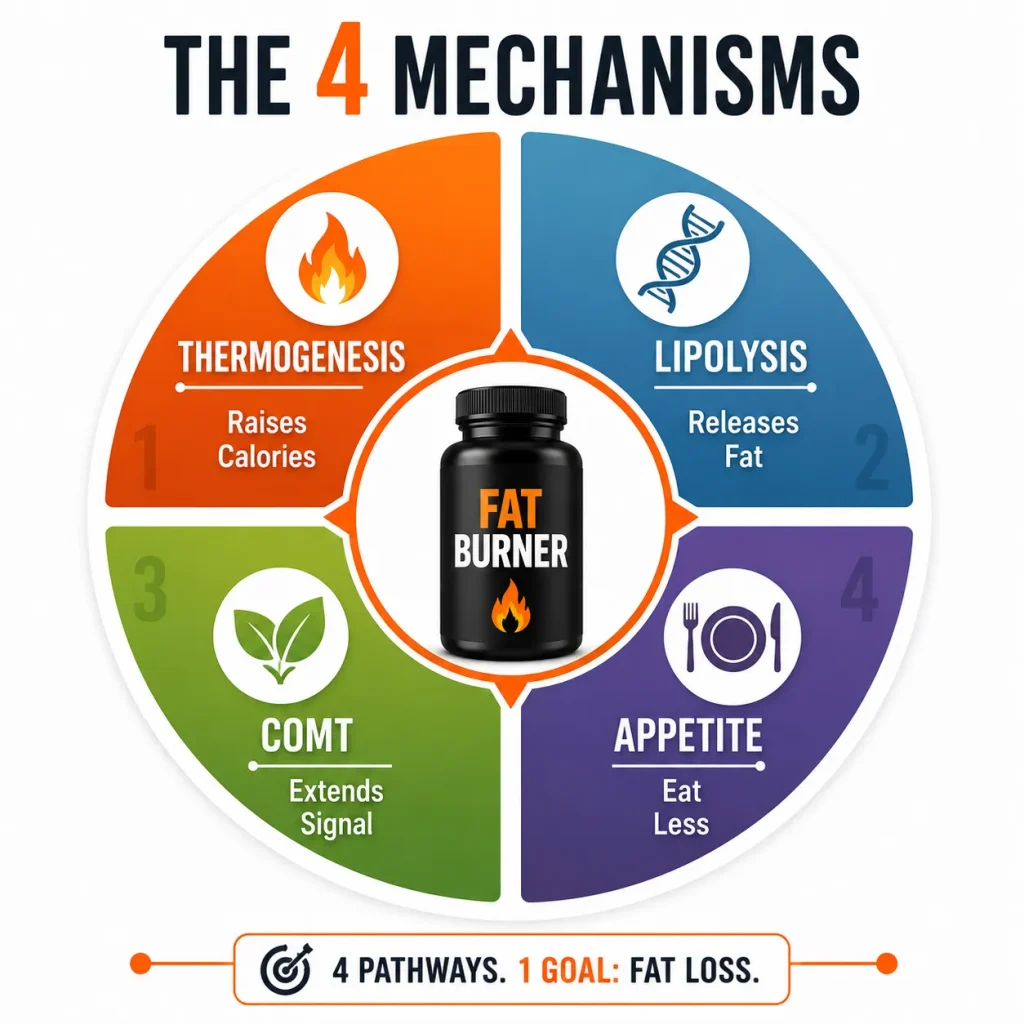
- Fat burners work through four primary mechanisms: thermogenesis (raising body temperature and calorie burn), lipolysis stimulation (triggering fat cells to release stored fat), appetite suppression (reducing calorie intake), and fat oxidation enhancement (shifting the body toward using fat as fuel during exercise).
- The sympathetic nervous system is the central pathway — stimulant ingredients like caffeine activate it, triggering noradrenaline release, which signals fat cells to release fatty acids into the bloodstream.
- Lipolysis releases fat into the bloodstream, but that fat is only burned as energy if a calorie deficit already exists — without a deficit, released fatty acids are simply repackaged and stored again.
- Green tea extract (EGCG) works by blocking the COMT enzyme, which normally breaks down noradrenaline — this prolongs the fat-release signal beyond what caffeine alone produces.
- No mechanism in any fat burner bypasses the calorie deficit requirement. Understanding this is more valuable than any ingredient list.
What Is Actually Happening When You Take a Fat Burner?
Fat burners do not work on fat directly. There is no ingredient that dissolves adipose tissue or chemically breaks down stored triglycerides from the outside. What fat burner ingredients do is influence the signalling systems your body already uses to manage energy — and they do this by activating, inhibiting, or prolonging specific hormonal and enzymatic processes.
The central pathway is the sympathetic nervous system (SNS). This is the system responsible for your body’s fight-or-flight response — increased alertness, elevated heart rate, mobilisation of energy reserves. Stimulant fat burner ingredients activate the SNS, which triggers the release of catecholamines: primarily noradrenaline (also called norepinephrine) and adrenaline (epinephrine).
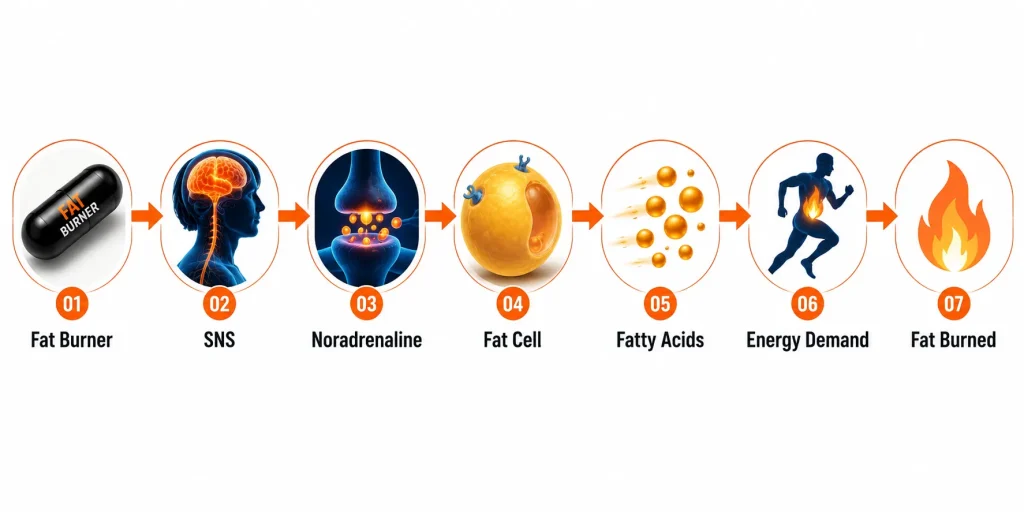
These catecholamines travel through the bloodstream and bind to adrenergic receptors on fat cells. That binding activates an enzyme called hormone-sensitive lipase (HSL), which breaks down stored triglycerides into free fatty acids and glycerol. Those free fatty acids enter the bloodstream — a process called lipolysis.
From here, the pathway requires one more condition to complete: those free fatty acids must be taken up by cells and oxidised for energy. That oxidation only happens at scale if energy demand exceeds energy supply. A calorie deficit is not optional. It is the mechanism.
In the Indian gym context, this misunderstanding is widespread. Many people take a fat burner expecting the supplement to do the fat-burning work while keeping their diet largely unchanged. The biology does not support that expectation — but the marketing consistently implies it.
How Do Fat Burners Work? The Four Mechanisms Explained
Thermogenesis: How Fat Burners Raise Your Calorie Burn
Thermogenesis is the process of heat production in the body, and it directly increases calorie expenditure. When your core temperature rises, your body burns more energy to maintain that elevated state — the same way a car engine running hot uses more fuel.
Caffeine is the primary thermogenic agent in most fat burners. It raises metabolic rate by stimulating the central nervous system and increasing noradrenaline activity. Research consistently shows that caffeine at doses of 3 to 6 mg per kilogram of body weight increases resting energy expenditure by approximately 3 to 11%, depending on body composition and caffeine habituation. For a 70 kg person, this translates to an additional 60 to 100 calories burned per day at rest.
Capsaicin, the active compound in chilli peppers, activates a receptor called TRPV1 (transient receptor potential vanilloid 1) in fat tissue and the gut lining. TRPV1 activation increases noradrenaline release locally and raises thermogenesis. Studies on capsaicin consistently show a modest increase in metabolic rate of 4 to 5% at effective doses of 2 to 6 mg per day.
The honest limitation here: thermogenesis from supplements is real but small in absolute terms. A 5% increase in resting metabolic rate for someone burning 1,800 calories per day at rest means an extra 90 calories — roughly equivalent to one medium banana. Meaningful over weeks and months when combined with a deficit. Not meaningful as a standalone intervention.
Verdict: Thermogenesis is the most well-supported mechanism in fat burner research. Caffeine delivers it most reliably. The magnitude is modest and tolerance develops within 2 to 3 weeks, requiring cycling.
Lipolysis Stimulation: How Fat Burners Trigger Fat Cell Release
Lipolysis is the breakdown of stored triglycerides in fat cells (adipocytes) into free fatty acids and glycerol, which then enter the bloodstream. Fat burners stimulate lipolysis primarily through adrenergic receptor activation — specifically the beta-adrenergic receptors on fat cells.
When noradrenaline binds to beta-adrenergic receptors, it activates a signalling cascade: the receptor activates adenylyl cyclase, which produces cyclic AMP (cAMP — the cellular second messenger that carries the signal forward). cAMP activates protein kinase A (PKA), which phosphorylates and activates hormone-sensitive lipase (HSL). HSL then cleaves triglycerides into their component parts, releasing free fatty acids into the bloodstream.
Caffeine amplifies this process through a secondary mechanism: it inhibits phosphodiesterase (PDE), the enzyme that breaks down cAMP. By blocking PDE, caffeine keeps cAMP levels elevated longer, prolonging the fat-release signal. This is why caffeine has a dual fat-burning action — it both initiates and sustains lipolysis.
Synephrine (from bitter orange extract) works on the same adrenergic pathway as noradrenaline but with lower potency and slightly different receptor selectivity. At 10 to 20 mg per day, it adds a modest additional lipolytic stimulus on top of caffeine.
The critical point: lipolysis releases fat into the bloodstream. It does not eliminate fat from the body. Those free fatty acids are available for oxidation — but if your total calorie intake is at or above maintenance, they will be repackaged as triglycerides and returned to fat cells within hours. Lipolysis is step one of a two-step process, and step two requires a calorie deficit.
Verdict: The most fundamental mechanism in stimulant fat burners. Caffeine drives it through two separate pathways. Synephrine adds marginal additional stimulus. Neither step completes without energy deficit conditions.
COMT Inhibition: How Green Tea Extract Prolongs the Fat-Burning Signal
EGCG (epigallocatechin gallate), the primary active compound in green tea extract, works through a completely different mechanism than caffeine — which is why the two ingredients together produce a stronger effect than either alone.
COMT stands for catechol-O-methyltransferase, an enzyme that breaks down catecholamines like noradrenaline in the body. When COMT is active, it degrades the noradrenaline signal quickly, shortening the window during which beta-adrenergic receptors on fat cells are stimulated.
EGCG inhibits COMT. By slowing noradrenaline breakdown, EGCG effectively extends the duration of the fat-release signal. The fatty acids that caffeine helped release stay mobilised for longer, increasing the likelihood they will be oxidised for energy rather than recirculated.
A 2009 meta-analysis published in the International Journal of Obesity by Hursel and colleagues found that the combination of green tea catechins with caffeine produced statistically greater fat oxidation and weight reduction than caffeine alone. The additional effect was modest — approximately 0.5 to 1 kg over 12 weeks — but it was consistent across studies, which matters for establishing that the mechanism is real.
The effective dose for EGCG’s COMT inhibition is 400 to 500 mg per day. Below that threshold, the inhibitory effect on COMT is insufficient to produce a meaningful extension of the noradrenaline signal. Most Indian fat burner products either underdose EGCG or do not disclose the amount separately from a broader “green tea extract” figure — making it impossible to know whether the dose is therapeutically relevant.
Verdict: A genuinely distinct and additive mechanism that complements caffeine. Requires adequate EGCG dosing — 400 mg minimum — to produce a meaningful effect.
Appetite Suppression: How Some Fat Burners Reduce Calorie Intake
Not all fat burners work on metabolism. Some work on the intake side of the calorie equation — by reducing hunger, increasing satiety, or blunting appetite signals.
Glucomannan is a soluble dietary fibre derived from konjac root. It absorbs water in the stomach and expands to form a gel-like mass, creating a mechanical feeling of fullness. At doses of 1 gram taken with 250 ml of water before meals, it has shown consistent reductions in hunger and post-meal calorie intake in multiple trials. It has no stimulant effect and carries minimal risk.
5-HTP (5-hydroxytryptophan) is a precursor to serotonin, a neurotransmitter involved in mood regulation and satiety signalling. By raising serotonin availability, 5-HTP can reduce carbohydrate cravings and lower overall calorie intake. The evidence is real but the research base is smaller than for caffeine or EGCG, and long-term use without cycling raises questions about serotonin regulation that have not been fully resolved.
Stimulant fat burners also suppress appetite as a secondary effect of SNS activation. Elevated noradrenaline reduces gastric motility (slows stomach emptying) and can directly suppress hunger signals. This is partly why people feel less hungry when taking a strong pre-workout or thermogenic — the stimulant load itself reduces appetite, independent of any specific appetite-suppressing ingredient.
Verdict: Glucomannan has the cleanest mechanism and evidence base for appetite suppression with minimal risk. Stimulant-driven appetite suppression is real but secondary and tolerance-dependent.
Fat Burner Mechanisms Comparison Table
| Mechanism | Primary Ingredient(s) | How It Works | Onset Time | Effect Magnitude | Requires Deficit? | Verdict |
|---|---|---|---|---|---|---|
| Thermogenesis | Caffeine, capsaicin | Raises core temperature, increases resting calorie burn | 30–60 min | 60–100 kcal/day extra | Yes | Most reliable mechanism |
| Lipolysis stimulation | Caffeine, synephrine | Activates beta-adrenergic receptors, releases fatty acids from fat cells | 30–45 min | Releases fat but doesn’t burn it | Yes — critical | Foundation of stimulant fat burners |
| COMT inhibition | EGCG (green tea extract) | Slows noradrenaline breakdown, extends fat-release signal | 45–90 min | Adds 0.5–1 kg over 12 weeks vs caffeine alone | Yes | Best when stacked with caffeine |
| Appetite suppression | Glucomannan, 5-HTP, stimulants | Reduces hunger via mechanical fullness, serotonin, or SNS activation | 15–30 min (glucomannan) | Reduces intake by 50–150 kcal/meal | Indirect — creates deficit | Cleanest risk profile (glucomannan) |
| Fat oxidation enhancement | L-Carnitine | Transports fatty acids into mitochondria for oxidation | Chronic (weeks) | Minimal in omnivores | Yes | Mostly useful for vegetarians |
How the Full Chain of Events Works in Your Body
Taking a stimulant fat burner sets off a sequence of events. Understanding the full chain — not just step one — explains why the conditions around supplementation matter as much as the supplement itself.
Within 30 to 45 minutes of ingestion, caffeine crosses the blood-brain barrier and blocks adenosine receptors. Adenosine normally promotes drowsiness and slows neural activity — blocking it increases alertness and stimulates the SNS. The SNS then releases noradrenaline from nerve terminals throughout the body, including in adipose tissue.
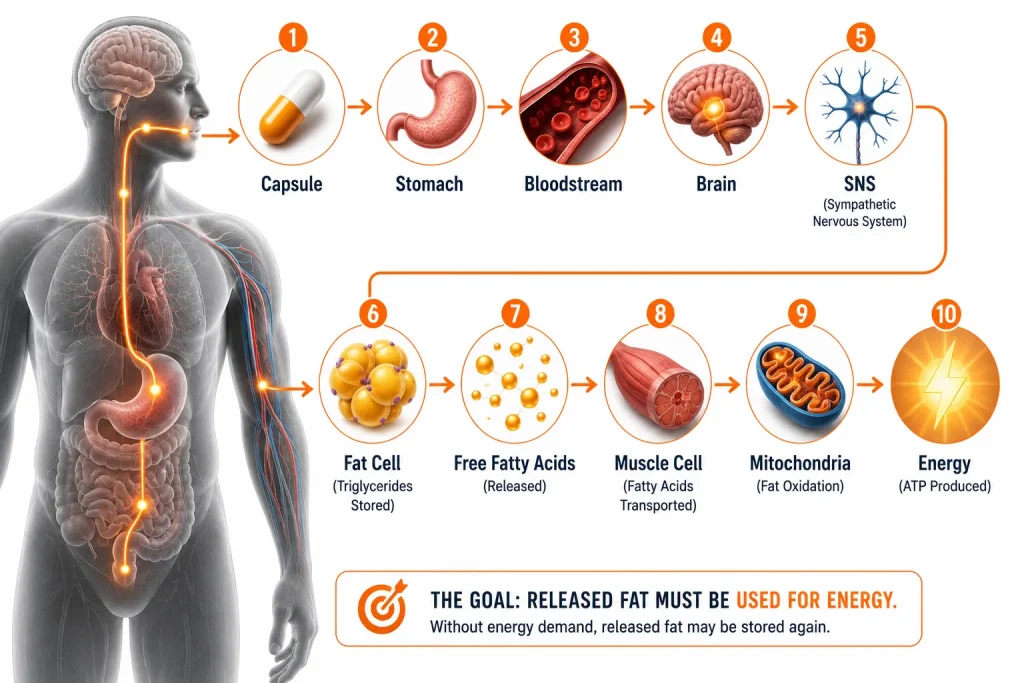
Noradrenaline binds to beta-2 and beta-3 adrenergic receptors on fat cells. This activates the adenylyl cyclase pathway, raising intracellular cAMP levels. Caffeine simultaneously inhibits PDE — the enzyme that degrades cAMP — keeping levels elevated. The elevated cAMP activates PKA, which activates HSL, which breaks down triglycerides into free fatty acids.
EGCG, if present, slows the breakdown of noradrenaline via COMT inhibition, extending the receptor stimulation period and maintaining the elevated cAMP signal for longer.
Free fatty acids enter the bloodstream. From here, they are either oxidised in mitochondria for energy — if the body is in a calorie deficit and energy demand is high — or re-esterified back into triglycerides and stored, if energy supply is sufficient.
Practical timing recommendation: Take a stimulant fat burner 30 to 45 minutes before training, when energy demand will be highest during the active period following lipolysis. This maximises the probability that released fatty acids are oxidised for fuel rather than recirculated. Taking it without exercise or at maintenance calories means the fat release happens but the fat loss does not.
What the Research Shows About These Mechanisms
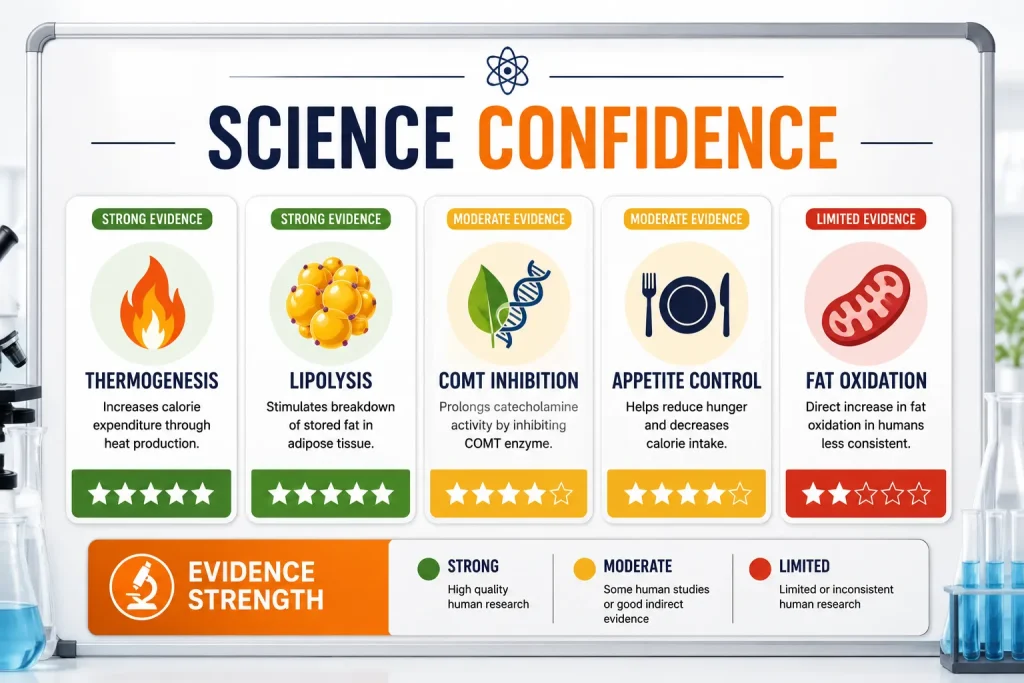
The most rigorous overview of fat burner mechanisms comes from a 2011 review by Jeukendrup and Randell published in Obesity Reviews, which systematically examined the evidence for supplements that increase fat metabolism. Their assessment confirmed caffeine and green tea catechins as the ingredients with the most consistent mechanistic and clinical evidence. Most other ingredients either lacked adequate human trial data or showed effects too small to be practically meaningful.
On the EGCG-caffeine combination specifically, the Hursel et al. meta-analysis in the International Journal of Obesity remains the clearest summary: the combination produces statistically significant but modest additional fat loss compared to caffeine alone, with the effect consistent enough across studies to be considered real rather than statistical noise.
On lipolysis specifically, the mechanism is so well-established in basic physiology that it does not require a single landmark citation — it is textbook adrenergic pharmacology. The debate in the literature is not whether lipolysis occurs, but how much of the released fat is actually oxidised under real-world conditions versus recirculated.
The honest reality check here is important: research conditions are controlled. Participants follow standardised diets. In real life, many people eat slightly more when they feel a supplement is “working” — compensatory eating that erases the modest calorie gap the supplement created. This behavioural variable is rarely measured in trials and is probably responsible for a large share of the gap between research results and real-world outcomes.
If you want to understand how these mechanisms translate into a full fat loss strategy, the 3 pillars of a sustainable fat loss plan covers the dietary and training context that makes any supplement worth using.
Side Effects That Follow Directly From These Mechanisms
The side effects of stimulant fat burners are not random — they follow directly from the mechanisms above. Understanding the biology makes the side effects predictable.
SNS activation raises heart rate and blood pressure. This is the mechanism. It is also the risk for anyone with hypertension, arrhythmia, or cardiovascular disease. The thermogenic effect raises core temperature — useful for calorie burning, problematic in hot conditions or during dehydration. The cAMP elevation that drives lipolysis also stimulates the adrenal glands, which can cause jitteriness, anxiety, and in high-caffeine-sensitive individuals, panic-like symptoms.
Sleep disruption is the most universally underestimated side effect. Caffeine’s half-life is 5 to 6 hours in most adults. A dose taken at 3 PM means half of it is still active at 9 PM. Disrupted sleep raises cortisol — which directly suppresses fat oxidation and increases fat storage. A fat burner taken at the wrong time of day can actively work against the goal it is supposed to support.
For Indian users training outdoors in summer: the combination of thermogenesis, elevated ambient temperature above 35°C, and insufficient hydration creates a meaningful heat stress risk. Minimum hydration of 3 to 3.5 litres of water per day is not optional when using thermogenic supplements in Indian climate conditions.
The non-stimulant ingredients carry a different and generally lower risk profile. Glucomannan is safe for most people but must be taken with adequate water — swallowing it dry creates a choking risk as it expands. EGCG at very high doses (above 800 mg per day taken on an empty stomach) has been associated with liver stress in case reports, though standard fat burner doses are well below this threshold.
Who Should Use Which Mechanism?
If You Want Maximum Metabolic Effect and Are Caffeine-Tolerant
A formula combining caffeine at 150 to 200 mg with EGCG at 400 to 500 mg gives you both the thermogenic and the COMT-inhibition mechanisms simultaneously. This is the most evidence-aligned combination for raising resting calorie burn and extending fat cell stimulation. Take it 30 to 45 minutes before your training session, cycle off every 6 to 8 weeks, and do not stack it with other caffeinated products on the same day.
If You Are Caffeine-Sensitive or Train in the Evening
The thermogenic and lipolysis mechanisms from stimulants are not available to you without disrupting sleep — and disrupted sleep will cost you more in cortisol and recovery than the fat burner gains. Glucomannan before meals is the appropriate mechanism here: appetite suppression with no stimulant load, no cardiovascular stress, and no sleep interference. It works on the intake side of the calorie equation rather than the expenditure side.
If You Follow a Vegetarian or Vegan Diet
L-carnitine addresses the fat oxidation mechanism for vegetarians who have minimal dietary carnitine intake. At 2 to 3 g per day, it supports the transport of long-chain fatty acids into mitochondria for oxidation. This mechanism is largely redundant for omnivores who get carnitine from meat, but genuinely relevant for plant-based eaters. Combined with caffeine and EGCG, this covers three of the four mechanisms. For the broader dietary picture around plant-based fat loss, the best vegetarian protein sources in India guide covers what the diet needs to look like alongside supplementation.
If You Want to Understand What to Buy Before Spending Money
The mechanism knowledge above lets you evaluate any fat burner label quickly. Does it list individual ingredient amounts? Does caffeine content fall between 150 and 300 mg per serving? Is EGCG listed separately with a dose above 400 mg? If the answer to any of these is no, the product either cannot deliver the mechanisms it claims or is not transparent enough to evaluate. The best fat burner supplement guide for 2026 applies exactly this framework to specific products in the Indian market.
The Bottom Line
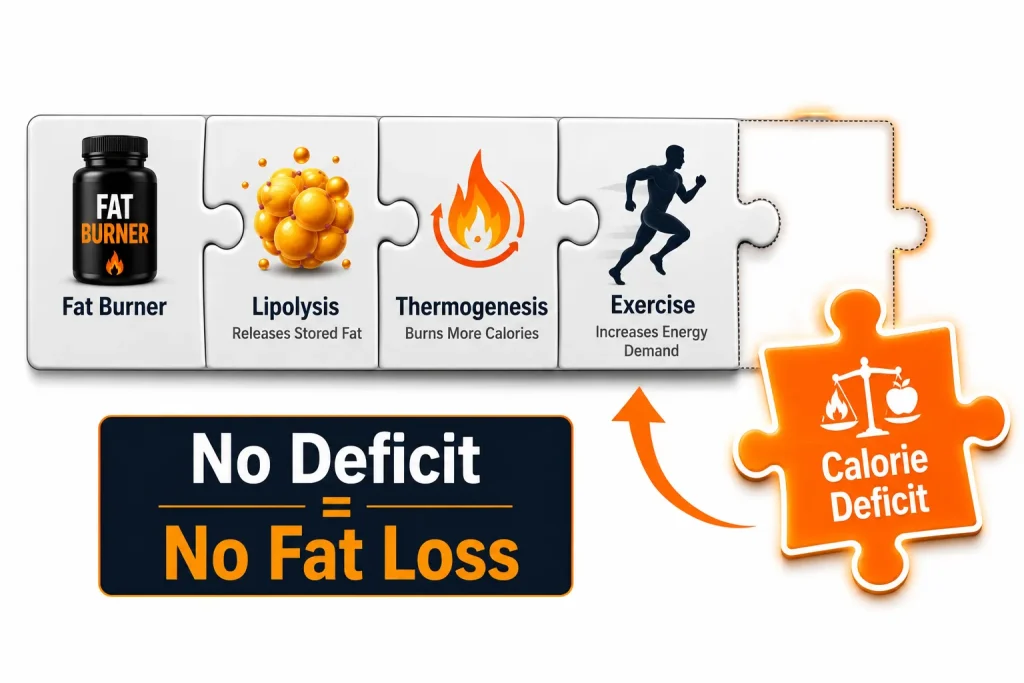
Fat burners work by activating your body’s own fat-release and calorie-burning systems — not by doing something external to them. The mechanisms are real: thermogenesis raises calorie burn, lipolysis releases stored fat, COMT inhibition extends the fat-release signal, and appetite suppression reduces intake. Every one of those mechanisms requires a calorie deficit to produce fat loss rather than just fat movement.
That is the sentence worth remembering. Fat burners move fat. A calorie deficit removes it. The supplement handles the first part. You have to handle the second.
For most people, the honest contribution of a well-formulated fat burner over 8 to 12 weeks is 0.5 to 2 kg of additional fat loss on top of what diet and training produce. That is real. It is also modest. And it is only available to people who have already built the dietary and training habits that create a consistent deficit.
Know the mechanism. Evaluate the label. Set the right expectation. Then decide if the price is worth the marginal benefit for where you are right now.
People Also Ask
How do fat burners know to burn fat and not muscle?
Fat burners do not specifically target fat over muscle — that distinction comes from your diet, not the supplement. The adrenergic activation from stimulant fat burners stimulates lipolysis in fat cells, but the body will also increase muscle protein breakdown under certain conditions, particularly during aggressive caloric restriction without adequate protein intake. Keeping protein intake at 1.6 to 2.2 g per kilogram of body weight while using a fat burner is the primary protection against muscle loss, not the supplement itself.
How long does it take for a fat burner to work in your body?
The stimulant effects of a caffeine-based fat burner are active within 30 to 60 minutes of ingestion. The lipolysis signal begins within that same window. However, the actual fat loss effect — which is cumulative and small — only becomes measurable after 4 to 8 weeks of consistent use alongside a calorie deficit. Any product claiming visible results in days is describing the stimulant experience, not actual tissue-level fat reduction.
Do fat burners work differently for men and women?
The core mechanisms — thermogenesis, lipolysis, COMT inhibition, appetite suppression — are the same for men and women. The practical differences are in baseline metabolic rate (men typically have higher resting metabolic rates due to greater lean mass) and hormonal context. Women’s fat distribution and fat mobilisation are influenced by oestrogen, which tends to protect lower-body fat stores. Fat burners do not override hormonal fat distribution patterns — they raise overall energy expenditure modestly, regardless of where the body prefers to store fat.
Why do fat burners stop working after a few weeks?
Fat burners stop feeling effective after 2 to 3 weeks primarily because of caffeine tolerance. Tolerance develops through two mechanisms: downregulation of adrenergic receptors (reducing sensitivity to noradrenaline) and increased production of enzymes that metabolise caffeine faster. The subjective “buzz” fades. The metabolic effect also diminishes, though it does not disappear entirely. Cycling off stimulant fat burners for 2 to 4 weeks every 6 to 8 weeks restores receptor sensitivity and renews effectiveness.
Can fat burners work on belly fat specifically?
Fat burners cannot target belly fat or any specific fat depot. The lipolysis stimulation from adrenergic activation affects fat cells throughout the body — it does not preferentially release fat from the abdomen. Where your body loses fat first is determined by genetics, sex hormones, and insulin sensitivity, not by any supplement. People in India who carry disproportionate abdominal fat — a pattern discussed in detail in the why Indians are skinny fat guide — will lose belly fat through overall calorie deficit, not through spot-targeting supplements.
Is it better to take a fat burner before or after training?
Taking a fat burner 30 to 45 minutes before training is significantly more effective than after. The lipolysis mechanism releases free fatty acids into the bloodstream — those fatty acids need to be used as fuel during the elevated energy demand of exercise to be oxidised rather than recirculated. Taking a fat burner after training means the peak stimulant effect arrives when energy demand has already dropped. The fat release happens but the oxidation does not.
Do fat burners work without cardio?
Fat burners produce a small increase in resting metabolic rate — typically 60 to 150 extra calories per day — that occurs regardless of whether you do cardio. So technically, yes, some thermogenic effect exists without exercise. But the lipolysis mechanism is far more effective when exercise creates elevated energy demand, giving released fatty acids somewhere to go. Without cardio or resistance training, you are getting roughly 10 to 15% of the available benefit from a stimulant fat burner. The supplement was designed to complement training, not replace it.
Sources and References
- Jeukendrup AE, Randell R. (2011). Fat burners: nutrition supplements that increase fat metabolism. Obesity Reviews, 12(10), 841–851.
- Hursel R, Viechtbauer W, Westerterp-Plantenga MS. (2009). The effects of green tea on weight loss and weight maintenance: a meta-analysis. International Journal of Obesity, 33(9), 956–961.
- Dulloo AG, Duret C, Rohrer D, et al. (1999). Efficacy of a green tea extract rich in catechin polyphenols and caffeine in increasing 24-h energy expenditure and fat oxidation in humans. American Journal of Clinical Nutrition, 70(6), 1040–1045.
- Acheson KJ, Gremaud G, Meirim I, et al. (2004). Metabolic effects of caffeine in humans: lipid oxidation or futile cycling? American Journal of Clinical Nutrition, 79(1), 40–46.