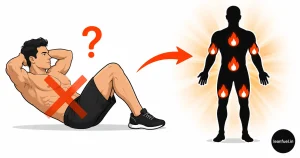
Fat burners do work — but not in the way most people buying them expect. The ingredients with real evidence behind them produce modest, measurable effects on metabolism and appetite. The gap between “modest and measurable” and what the packaging implies is where most people get burned.
That gap is worth understanding before you spend anywhere from Rs. 800 to Rs. 4,000 on a bottle.
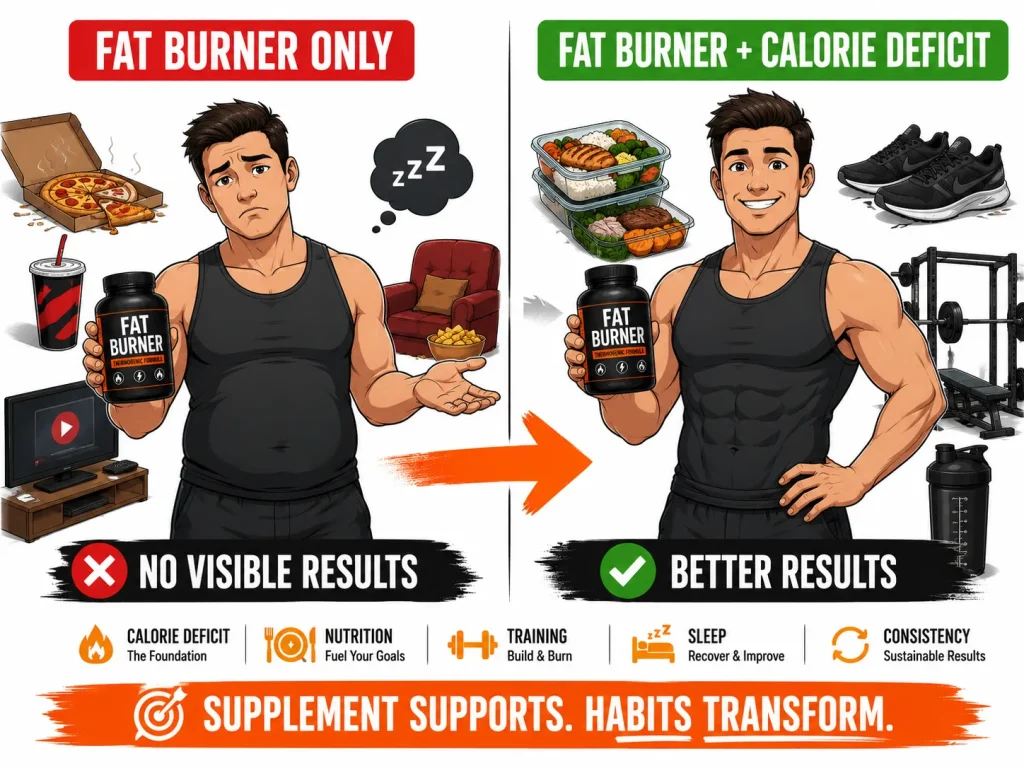
The honest answer is conditional. Fat burners work when the right ingredients are dosed correctly, taken by someone already in a calorie deficit, who is training consistently. Remove any one of those conditions and the effect shrinks to nearly nothing. Most people buying fat burners in India are missing at least one of those conditions — usually the calorie deficit.
This article goes through what the research actually shows, which ingredients have genuine evidence, which are marketing-driven noise, and who should actually consider using one.
The Short Answer
- Fat burners with evidence-backed ingredients like caffeine, green tea extract, and capsaicin do produce real but small effects on metabolism — typically 60 to 150 extra calories burned per day.
- No fat burner works without a calorie deficit already in place. The supplement amplifies an existing effort; it does not replace one.
- Most products sold in India contain underdosed active ingredients, making the real-world effect even smaller than what research shows.
- Caffeine is responsible for most of the measurable effect in nearly every fat burner on the market, and a cup of black coffee delivers a similar result for free.
- For people with consistent diet and training already in place, a quality fat burner may add marginal value. For everyone else, it is an expensive placebo.
What “Working” Actually Means for a Fat Burner
Do fat burners actually work depends entirely on what you mean by “work.” If working means producing any measurable metabolic effect, then yes — the better-formulated ones do. If working means visibly changing your body composition without dietary effort, then no fat burner on the market achieves that.
The mechanism matters here. Fat burners primarily work through thermogenesis — raising your resting metabolic rate slightly so you burn marginally more calories throughout the day. Some also reduce appetite, which indirectly lowers calorie intake. A few claim to enhance fat oxidation during exercise, shifting your body toward using fat as fuel rather than glycogen.
None of these mechanisms replaces the fundamental requirement of a calorie deficit. Your body stores fat as a reserve energy source. It releases that stored fat only when total energy expenditure exceeds total energy intake. A fat burner can widen that gap by a small amount. It cannot create the gap from nothing.
In the Indian fitness context, this distinction gets buried under aggressive supplement marketing. Walk into any gym supplement shop in Delhi, Mumbai, or Bengaluru and the sales pitch for fat burners implies results that no clinical trial has ever demonstrated. The expectation mismatch is significant, and it leads to either wasted money or, worse, people abandoning their actual diet and training because the supplement “isn’t working.”
Do Fat Burners Actually Work? Breaking Down Each Claim
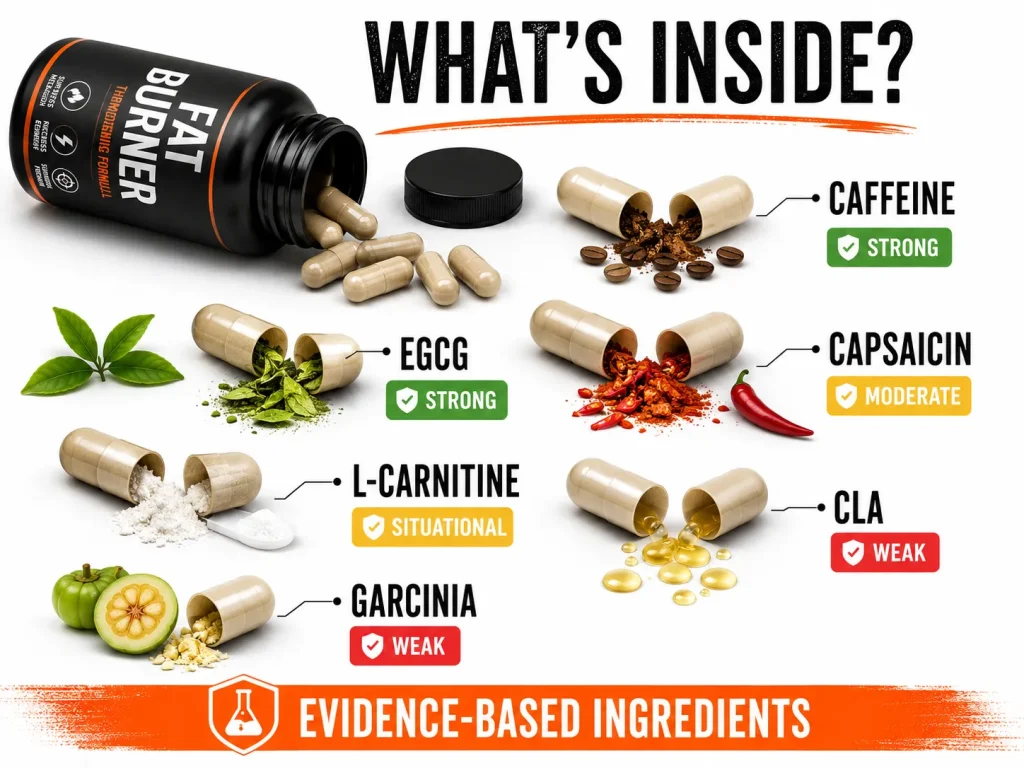
Caffeine: The One Ingredient With Genuine Evidence
Caffeine is the most effective fat-burning ingredient in the supplement world, and it works through two separate mechanisms. First, it stimulates the central nervous system and increases the release of noradrenaline, which signals fat cells to release stored fatty acids through a process called lipolysis. Second, it directly raises resting metabolic rate through thermogenesis.
Research consistently shows that caffeine at doses of 3 to 6 mg per kilogram of body weight increases energy expenditure by approximately 3 to 11%, depending on body composition and caffeine tolerance. For a 70 kg person, that is roughly 60 to 100 additional calories burned per day. The effect is real. The magnitude is modest.
The critical variable is caffeine tolerance. Regular caffeine consumers develop tolerance within 2 to 3 weeks of daily use, which significantly blunts the metabolic effect. This is why fat burner companies recommend cycling — taking the product for 6 to 8 weeks and then stopping for 2 to 4 weeks. The fat-burning effect from caffeine is strongest in people who rarely or never consume it.
One important myth to address: many Indian gym-goers believe that taking more caffeine produces proportionally more fat loss. It does not. Above 400 to 600 mg per day, additional caffeine primarily increases side effects — anxiety, elevated blood pressure, disrupted sleep — without meaningfully increasing fat oxidation.
Verdict: The strongest ingredient in this category. Effective at the right dose, for the right person, with appropriate cycling.
Green Tea Extract (EGCG): Real Effect, Small Magnitude
Green tea extract works through a different mechanism than caffeine, which is why the two are frequently combined. The active compound, EGCG (epigallocatechin gallate), inhibits an enzyme called COMT (catechol-O-methyltransferase) that normally breaks down noradrenaline. By slowing that breakdown, EGCG prolongs the fat-releasing signal in fat cells.
A meta-analysis published in the International Journal of Obesity examined multiple trials and found that green tea catechins combined with caffeine produced statistically significant reductions in body weight compared to caffeine alone. The additional effect was approximately 0.5 to 1 kg over 12 weeks — real, but not transformative.
The effective dose for EGCG is 400 to 500 mg per day. Most Indian fat burner products either do not disclose EGCG content separately or contain significantly less than this threshold, making the real-world effect smaller than what research demonstrates.
Verdict: Works best when combined with caffeine at an adequate dose. Rarely dosed correctly in most Indian supplement products.
Capsaicin: Thermogenic Effect With a Tolerance Ceiling
Capsaicin, the compound that makes chilli peppers hot, activates the TRPV1 receptor in fat tissue, increasing thermogenesis and fat oxidation. Research suggests capsaicin can increase metabolic rate by 4 to 5% and reduce calorie intake by 50 to 75 calories per meal when taken before eating.
The challenge with capsaicin is tolerance. The thermogenic effect diminishes with regular use, similar to caffeine. There is also a significant inter-individual variation — some people respond strongly, others minimally.
For Indian readers specifically, this is an interesting one. The average Indian diet is already high in chilli consumption, which means many Indian users may have pre-existing tolerance to capsaicin’s thermogenic effect, reducing the benefit from supplemental capsaicin compared to populations with lower baseline chilli intake.
Verdict: Genuine thermogenic effect but likely blunted in regular chilli consumers. Worth including in a formula; not worth paying a premium for as a standalone.
L-Carnitine: Overhyped for Most, Useful for Some
L-carnitine is one of the most heavily marketed fat loss ingredients in India, and one of the most disappointing when scrutinised. Carnitine transports long-chain fatty acids into the mitochondria (the cell’s energy-producing structures) where they are oxidised for fuel. The logic is sound. The supplementation data in healthy adults is not.
The issue is that most people with adequate protein intake already produce sufficient carnitine internally, and the body tightly regulates intracellular carnitine levels. Adding more through supplementation does not meaningfully increase fat oxidation in well-nourished individuals.
Where L-carnitine shows more genuine promise is in vegetarians and vegans, who get virtually zero dietary carnitine from food, and in older adults where endogenous production declines. In these populations, 2 to 3 g per day of L-carnitine has shown modest improvements in fat oxidation and exercise recovery.
Verdict: Largely ineffective for most omnivores. May have genuine value for vegetarians and vegans who have no dietary carnitine intake.
Garcinia Cambogia and CLA: The Weakest Links
Garcinia cambogia is everywhere in Indian supplement shops and pharmacy chains. The active compound, HCA (hydroxycitric acid), theoretically inhibits ATP citrate lyase, an enzyme involved in fat synthesis. Human trials have been uniformly disappointing — effect sizes are too small to be practically meaningful, and several large reviews have concluded that the evidence does not support its use for fat loss.
CLA (conjugated linoleic acid) has a slightly better evidence base but still weak in practice. Some trials show modest reductions in body fat percentage over 12 weeks at doses of 3 to 6 g per day. Others show no effect. The inconsistency across studies makes a confident recommendation impossible, and the cost-to-benefit ratio at current Indian prices is poor.
Verdict: Both are difficult to justify at their typical price points. If a fat burner’s primary ingredients are garcinia and CLA, it is not worth buying.
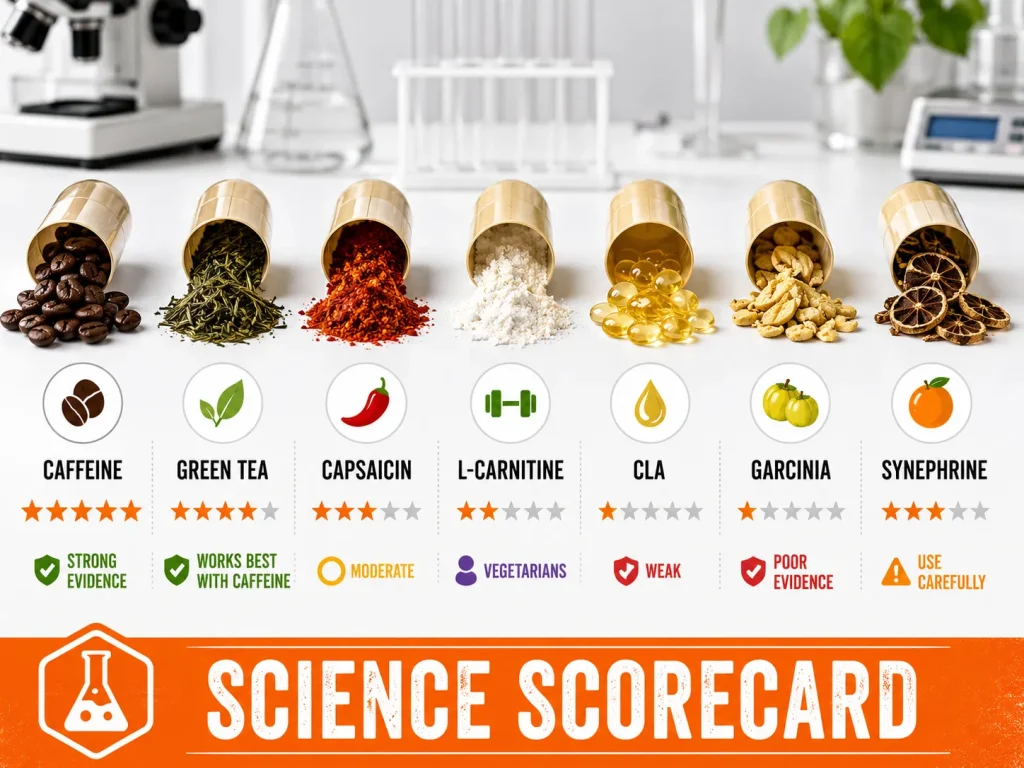
Fat Burner Evidence Summary Table
| Ingredient | Mechanism | Evidence Quality | Effective Dose | Realistic Extra Calories Burned | Indian Context Note | Verdict |
|---|---|---|---|---|---|---|
| Caffeine | Thermogenesis, lipolysis | Strong | 3–6 mg/kg body weight | 60–100 kcal/day | Tolerance common in chai/coffee drinkers | Best overall |
| EGCG (green tea) | COMT inhibition, fat oxidation | Moderate | 400–500 mg/day | 3–4% increased fat oxidation | Often underdosed in Indian products | Use with caffeine |
| Capsaicin | TRPV1 activation, thermogenesis | Moderate | 2–6 mg/day | 50–75 kcal/day | Blunted in high-chilli diet consumers | Situational |
| L-Carnitine | Fatty acid transport to mitochondria | Weak (omnivores) / Moderate (vegetarians) | 2–3 g/day | Minimal in most people | More relevant for vegetarians | Situational |
| Garcinia cambogia | ATP citrate lyase inhibition | Very weak | Varies | Negligible in trials | Widely sold in Indian pharmacies | Avoid |
| CLA | Fat cell regulation | Weak–Moderate | 3–6 g/day | Marginal at best | Poor value at Indian prices | Hard to justify |
| Synephrine | Adrenergic stimulation | Moderate | 10–20 mg/day | Similar to low-dose caffeine | Often unlisted in grey-market products | Use cautiously |
How Your Body Actually Responds to Fat Burners
When you take a stimulant-based fat burner, the caffeine and synephrine activate the sympathetic nervous system within 30 to 60 minutes. This triggers noradrenaline release, which binds to beta-adrenergic receptors on fat cells and initiates lipolysis — the breakdown of stored triglycerides into free fatty acids that enter the bloodstream.
Here is the part that most supplement marketing skips: lipolysis is not fat loss. Releasing fatty acids into the bloodstream is step one. Those fatty acids only get oxidised for energy if your total energy demand exceeds your total energy supply. If you are eating at or above maintenance, those released fatty acids simply get repackaged and stored back in fat cells within a few hours. The release happened. The loss did not.
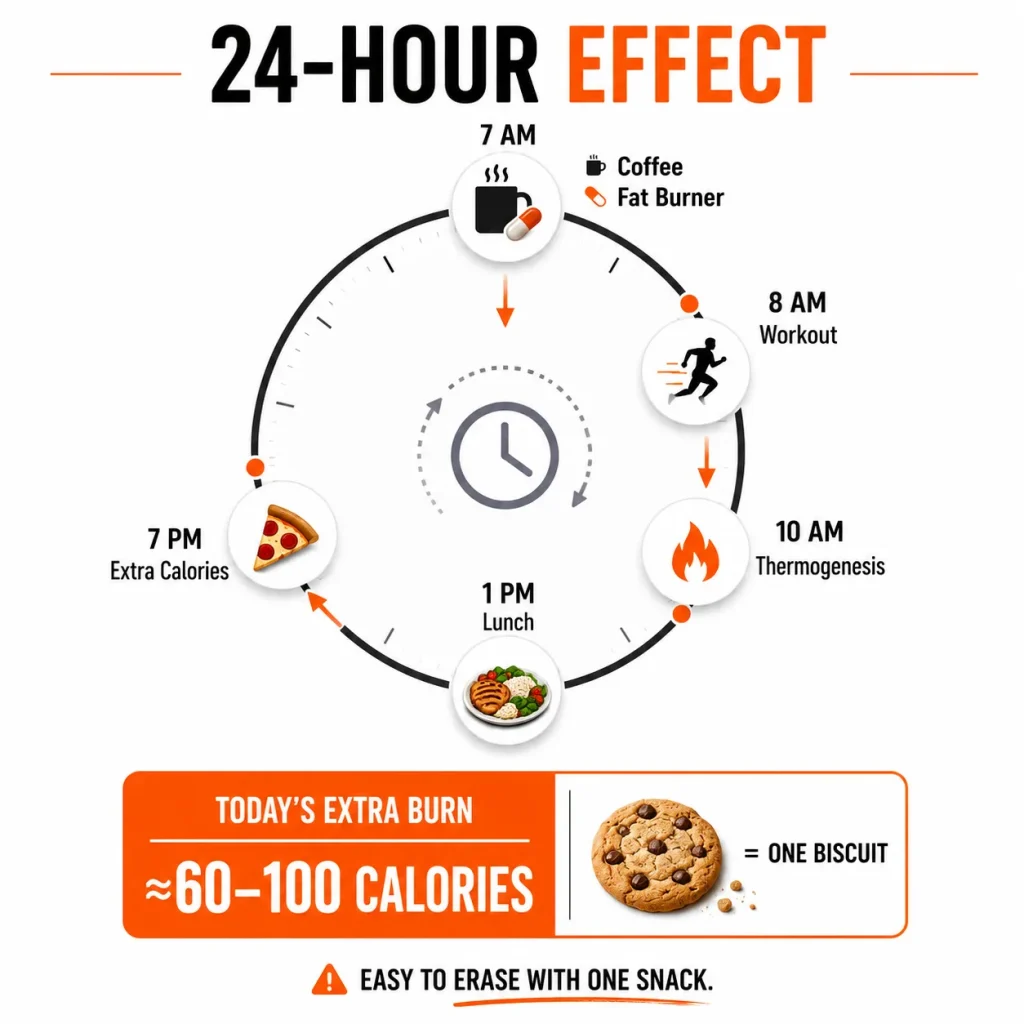
This is why fat burners require a calorie deficit to work. The supplement accelerates a process that requires the right conditions to complete.
Timing matters practically. Taking a fat burner 30 to 45 minutes before training maximises the overlap between peak stimulant effect and active calorie burning. Taking it after 3 PM risks sleep disruption — and poor sleep directly increases cortisol, which promotes fat storage and muscle loss. If you train in the evening, a non-stimulant option or a lower-caffeine formula is more appropriate.
What the Research Actually Shows
The most useful overview of fat burner evidence comes from a 2011 review by Jeukendrup and Randell published in Obesity Reviews, which examined the research on fat metabolism supplements systematically. Their assessment: caffeine and green tea extract have the most consistent evidence, with effects that are statistically real but modest in absolute terms. Most other ingredients either lack rigorous human trial data or show effects too small to be clinically meaningful.
A 2009 meta-analysis in the International Journal of Obesity by Hursel et al. examined green tea catechin trials specifically and found a small but significant benefit when EGCG was combined with caffeine compared to caffeine alone — approximately 0.5 to 1 kg additional fat loss over 12 weeks.
The honest reality check: controlled trials use standardised diets and exercise protocols. Participants are typically monitored closely and not compensating by eating more because they feel the supplement is “working.” In real-world conditions, many people subconsciously eat slightly more when they believe a supplement is handling their fat loss. This compensatory behaviour largely explains why results outside clinical trials are weaker than results inside them.
A quality fat burner used correctly by someone with diet and training already dialled in might produce 1 to 2 kg additional fat loss over a 12-week period. That is a real but modest contribution — worth understanding clearly before purchase.
Side Effects and What to Watch Out For
The most common side effects from stimulant fat burners are elevated heart rate, increased blood pressure, anxiety, jitteriness, headaches, and disrupted sleep. These are dose-dependent and most pronounced in people who are caffeine-sensitive or who are stacking multiple stimulant sources.
People with cardiovascular conditions, hypertension, anxiety disorders, or a history of panic attacks should avoid stimulant-based fat burners entirely. This is not a precautionary disclaimer — the physiological mechanism is direct. Stimulants raise heart rate and blood pressure by design. That effect is the mechanism. For someone with a pre-existing cardiac condition, it is a meaningful risk.
Three India-specific concerns worth flagging:
Heat and humidity. Thermogenic fat burners raise core body temperature. Training outdoors or in a non-air-conditioned gym in Indian summer conditions while taking a thermogenic increases heat stress risk. This is particularly relevant between April and June across most of India.
Adulteration in the Indian market. The supplement market in India has a documented quality control problem. Some products sold through local supplement shops or imported via grey channels have been found to contain unlisted stimulants, including compounds not approved for sale in India. Buy only from brands with FSSAI registration and verifiable third-party testing.
Interaction with medications. Synephrine interacts with certain cardiac medications. 5-HTP, occasionally included in appetite-suppressing formulas, must never be combined with antidepressants. Check the full ingredient list against any medications you take.
So Who Should Actually Use a Fat Burner?
If You Are Still Building Your Diet and Training Foundation
Do not use a fat burner yet. Your body responds strongly to dietary changes and resistance training for the first 3 to 6 months without any supplemental help. Adding a stimulant before habits are consistent creates dependency on the stimulant effect and obscures whether your actual programme is working. Build the foundation first. If you want to understand what that looks like, the 3 pillars of a sustainable fat loss plan covers it properly.
If You Have Been in a Deficit for 8 to 12 Weeks and Progress Has Slowed
This is the most legitimate use case for a fat burner. You are already eating in a deficit and training consistently. Progress has slowed not because of effort but because metabolic adaptation is reducing the size of your deficit. A quality thermogenic can provide a small metabolic boost that helps maintain progress through a plateau. Expect modest results — not a dramatic acceleration.
If You Train Fasted in the Morning and Need an Energy Boost
A moderate-dose caffeine-based fat burner taken 30 to 45 minutes before an early morning fasted session serves two purposes simultaneously: it improves training performance and marginally increases fat oxidation during the session. This is a sensible and practical use case. Keep the dose under 200 mg if you are caffeine-sensitive.
If You Are Vegetarian or Vegan and Training Seriously
L-carnitine supplementation at 2 to 3 g per day is worth genuine consideration for vegetarians who get no dietary carnitine from animal sources. Combined with a caffeine and EGCG formula, this is the most evidence-aligned fat burner stack for plant-based eaters. Check out best vegetarian protein sources in India for the full dietary context around plant-based fat loss.
If You Want to Know Which Specific Products Are Worth Buying
The ingredient evidence is one thing. Whether a specific product actually contains those ingredients at effective doses is a separate question entirely. The best fat burner supplement guide for 2026 breaks down the current Indian and imported market by ingredient quality, dosing transparency, and price-to-value ratio.
If You Have High Blood Pressure, a Heart Condition, or Anxiety
Avoid stimulant-based fat burners. The thermogenic mechanism that makes them work is the same mechanism that raises heart rate and blood pressure. Non-stimulant options like glucomannan (a soluble fibre that reduces appetite by expanding in the stomach) carry no cardiovascular risk and have a modest but genuine evidence base for appetite reduction.
The Bottom Line
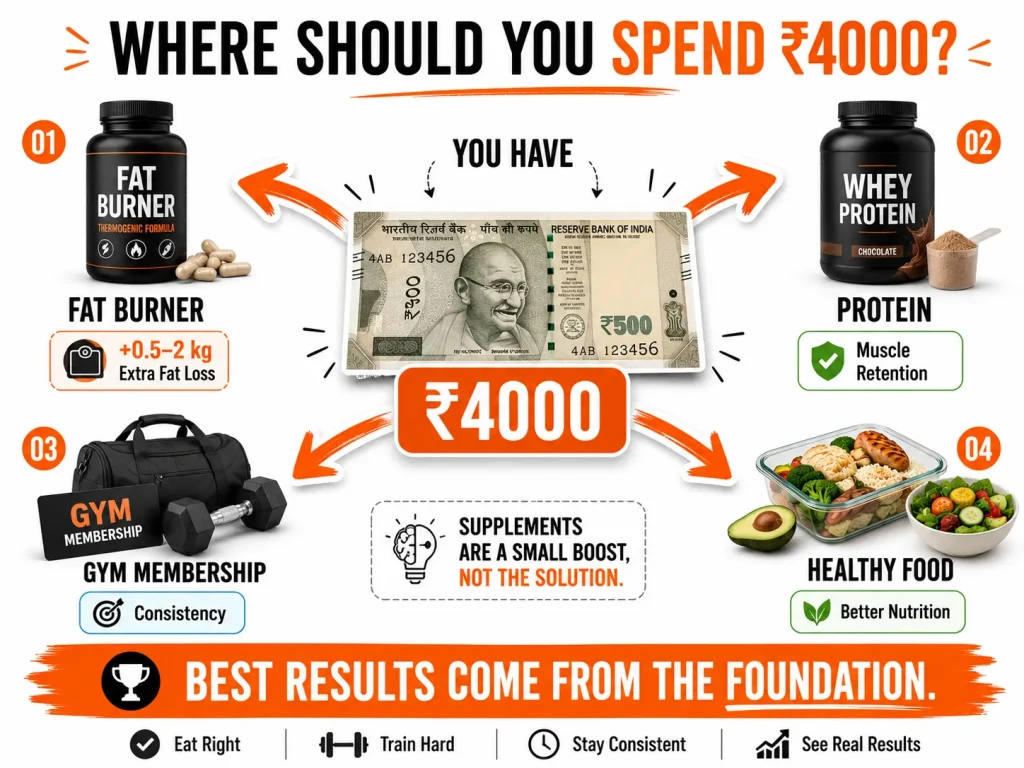
Do fat burners actually work? Yes, conditionally. The best-formulated ones with adequate doses of caffeine, EGCG, and capsaicin produce real metabolic effects. The total additional fat loss they can contribute over 12 weeks, realistically, is 0.5 to 2 kg on top of what diet and training produce alone. That is a real number. It is also a modest one.
The majority of fat burners sold in India do not meet the dosing thresholds that produce even those modest effects. And the majority of people buying fat burners are not already in a consistent calorie deficit, which makes the supplement functionally useless regardless of the formula.
If your diet is already dialled in, your training is consistent, and you are looking for a small additional edge during a plateau, a quality thermogenic is a reasonable addition. If any of those conditions are not yet in place, fix those first. No supplement closes the gap that inconsistent habits create.
A cup of black coffee before training gets you most of the way there for nearly free. That is not a joke or a deflection. It is the honest arithmetic of what these products actually do.
People Also Ask
Do fat burners actually work for weight loss or are they just a scam?
Fat burners with evidence-backed ingredients do work, but the effect is modest — typically an additional 0.5 to 2 kg of fat loss over 12 weeks when used alongside a calorie deficit. They are not a scam in the sense that the mechanisms are real. They are misleading in the sense that marketing implies results far beyond what research demonstrates. Whether a specific product is worth buying depends entirely on the ingredients and their doses, not the brand name.
Can fat burners work without diet and exercise?
Fat burners cannot produce meaningful fat loss without a calorie deficit. The metabolic effects they produce — extra 60 to 150 calories burned per day — are entirely cancelled out by even a small amount of additional eating. Without diet and exercise creating the calorie deficit, fat burners have no mechanism to work through. They amplify an existing effort; they do not create one independently.
How long does it take for a fat burner to start working?
The stimulant effects of a caffeine-based fat burner are felt within 30 to 60 minutes of taking it. The actual fat loss effect — which is cumulative and small — becomes measurable only over 4 to 12 weeks of consistent use alongside appropriate diet and training. Any product promising visible fat loss results within 1 to 2 weeks is overstating what the evidence supports.
Are fat burners safe to use in India’s climate?
Stimulant fat burners raise core body temperature, which increases heat stress risk during outdoor training in Indian summers. Between April and July, when temperatures routinely exceed 35°C in most Indian cities, taking a thermogenic before outdoor exercise carries a meaningful risk of heat exhaustion if hydration is not managed carefully. Training in an air-conditioned environment reduces this risk significantly. Non-stimulant formulas carry no heat-related risk.
Is a fat burner the same as a weight loss pill?
Fat burners and weight loss pills are different categories. Fat burners are supplements that increase metabolism or reduce appetite through ingredients like caffeine, EGCG, and capsaicin — they are unregulated supplements, not medicines. Weight loss pills like Ozempic (semaglutide) are prescription medications with clinically significant effects on appetite and body weight through hormonal mechanisms. The two are not comparable in effect size or regulatory status. If you want to understand the medication side of this, the Ozempic for weight loss guide covers the evidence and risks honestly.
Why did the fat burner I took not work at all?
The most common reasons a fat burner produces no noticeable result are: calorie intake was not reduced (the supplement cannot override eating at maintenance or above); caffeine tolerance was already high, blunting the thermogenic effect; the product was underdosed and did not contain effective amounts of active ingredients; or the supplement was taken inconsistently. If none of those apply, it is worth checking whether the product’s ingredients have any evidence behind them at all — many do not.
Do fat burners cause muscle loss?
Standard thermogenic fat burners do not directly cause muscle loss. However, stimulants that suppress appetite significantly can cause people to undereat protein, which does lead to muscle loss during a fat loss phase. This is an indirect risk worth managing. Keeping protein intake at 1.6 to 2.2 g per kilogram of body weight while using a fat burner protects against this. For more on protein during fat loss, the high protein foods for fat loss guide is a practical starting point.
Sources and References
- Jeukendrup AE, Randell R. (2011). Fat burners: nutrition supplements that increase fat metabolism. Obesity Reviews, 12(10), 841–851. https://pubmed.ncbi.nlm.nih.gov/21951331/
- Hursel R, Viechtbauer W, Westerterp-Plantenga MS. (2009). The effects of green tea on weight loss and weight maintenance: a meta-analysis. International Journal of Obesity, 33(9), 956–961. https://pubmed.ncbi.nlm.nih.gov/19597519/
- Dulloo AG, Duret C, Rohrer D, et al. (1999). Efficacy of a green tea extract rich in catechin polyphenols and caffeine in increasing 24-h energy expenditure and fat oxidation in humans. American Journal of Clinical Nutrition, 70(6), 1040–1045. https://pubmed.ncbi.nlm.nih.gov/10584049/
- Heymsfield SB, Allison DB, Vasselli JR, et al. (1998). Garcinia cambogia (Hydroxycitric Acid) as a potential antiobesity agent: a randomized controlled trial. JAMA, 280(18), 1596–1600. https://pubmed.ncbi.nlm.nih.gov/9820262/