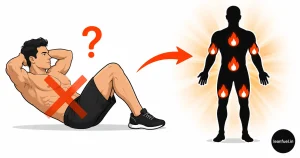
Losing sleep does not just make you tired. It quietly rewires the hormones that decide how hungry you feel, how much fat your body holds onto, and how well you burn energy the next day.
Yes, lack of sleep can cause weight gain. Sleeping less than seven hours a night raises ghrelin, the hormone that drives hunger, and lowers leptin, the hormone that tells your brain you are full. Over weeks and months, that shift adds up to real fat gain, even if your diet has not changed much.
For anyone building a fitness routine in India, this matters more than it seems. Long work hours, late dinners, and scrolling in bed until 1 a.m. are treated as normal here, not as a health problem. Most people blame weight gain entirely on food or lack of exercise, and never look at their sleep schedule as a real factor.
This is the part most fat loss advice skips completely.
The Short Answer
- Sleeping less than 7 hours a night raises ghrelin, your hunger hormone, and lowers leptin, your fullness hormone, so you eat more without realizing it.
- Large population studies link short sleep to meaningfully higher obesity risk, though researchers are still working out exactly why.
- Being awake longer gives you more hours and more opportunity to eat, especially late-night, carb-heavy snacking.
- Poor sleep reduces insulin sensitivity, which pushes your body toward storing more of what you eat as fat.
- Fixing sleep alone will not cause major fat loss, but ignoring it makes every other part of a fat loss plan harder to stick to.
Why Does Poor Sleep Make You Gain Weight?
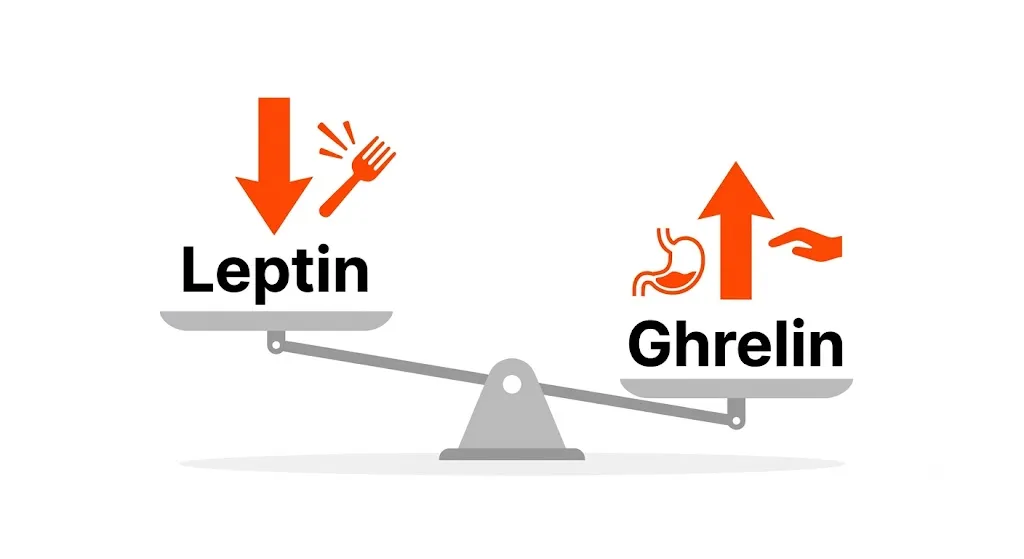
Sleep is not just rest. It is when your body regulates two hormones that directly control appetite: ghrelin and leptin.
Ghrelin is produced mainly in your stomach and signals hunger to your brain. Leptin is produced by fat cells and tells your brain you have had enough. When you sleep well, these two stay balanced. When you cut sleep short, ghrelin rises and leptin drops, and your brain reads that combination as one message: eat more, right now.
This is not a willpower failure. It is a hormonal shift that happens whether you notice it or not. Research on sleep-restricted adults consistently shows people eat more calories the next day, specifically more carbohydrate-heavy, calorie-dense food.
In India, this plays out in a specific way. Late dinners after 9 or 10 p.m., long commutes that push bedtime back, and phone use in bed are common enough to feel normal. Add warm, poorly ventilated nights in much of the country during summer, and total sleep time for a lot of working adults quietly drops below 6 hours. That is squarely in the range research links to higher obesity risk. It is one reason people who eat reasonably clean still end up looking soft around the middle despite a normal body weight, something we go into in Why Indians Are Skinny Fat.
What Actually Happens to Your Body When You Don’t Sleep Enough
How Sleep Loss Spikes Ghrelin and Crashes Leptin
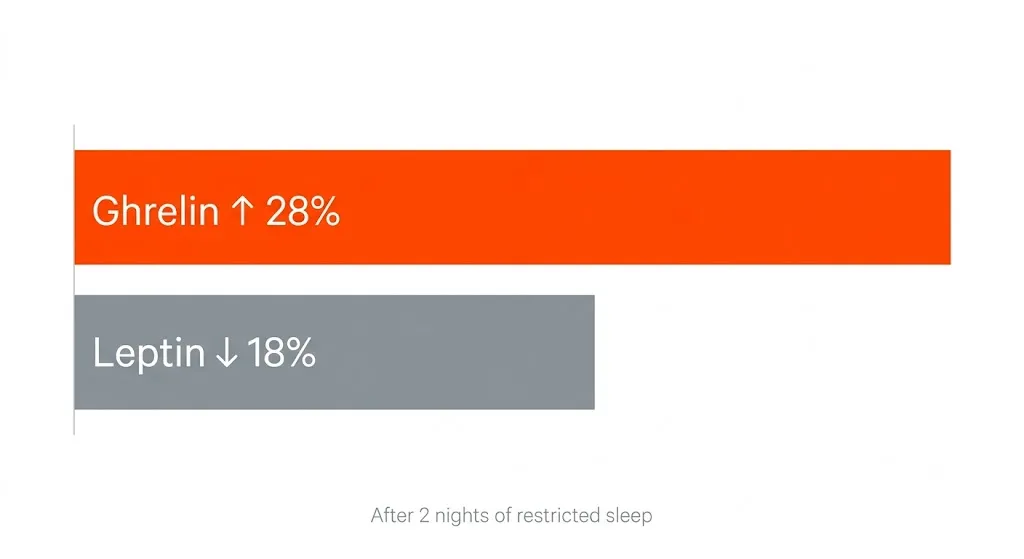
Cutting sleep short changes your hunger chemistry within days, not weeks. In one widely cited study, just two nights of restricted sleep in healthy men produced an 18 percent drop in leptin and a 28 percent rise in ghrelin compared to a full night’s rest.
That combination does more than make you hungrier. It specifically increases cravings for carbohydrate-heavy, calorie-dense foods, the kind that are easiest to overeat late at night when your guard is already down.
The good news is that this effect is not permanent. Hormone levels tend to recover once normal sleep resumes for a few nights. The problem is when short sleep, five or six hours a night, becomes your normal pattern for months at a time. That is when these hormonal shifts stop being occasional and start being your baseline.
Verdict: this is the clearest, most consistently reproduced mechanism linking sleep and weight gain.
How Sleep Loss Affects Insulin and Fat Storage
Poor sleep does not just make you hungrier. It changes how your body handles the food you already eat.
Sleep deprivation reduces insulin sensitivity, meaning your cells respond less efficiently to insulin and pull less glucose out of your blood. Your body compensates by producing more insulin, and chronically elevated insulin favors fat storage over fat burning.
This is one reason people who are sleep deprived but eating roughly the same as before still see their body fat percentage creep up over months. The food intake did not change much. How the body processed it did.
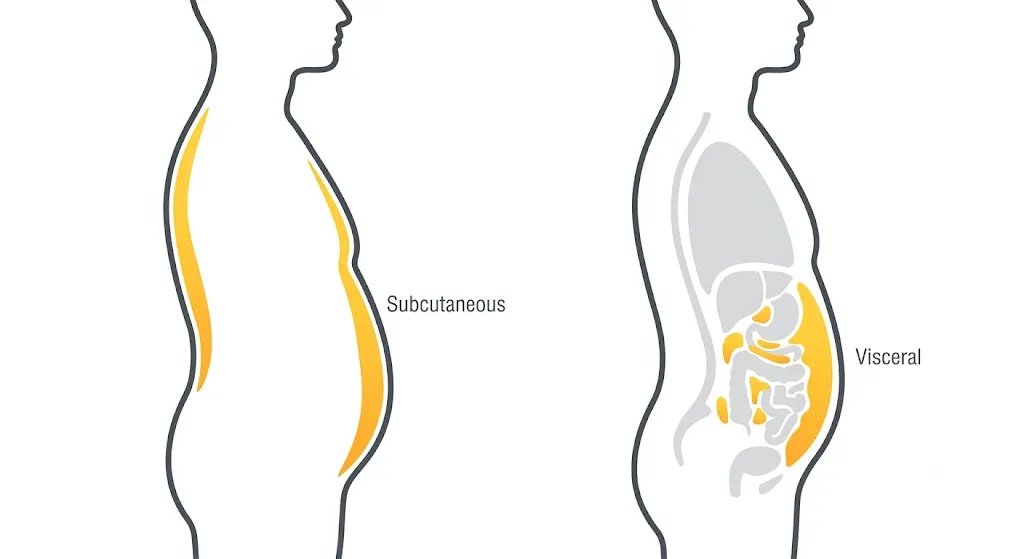
This effect appears more pronounced with visceral fat, the fat stored around your organs, which is also the type most linked to long-term metabolic issues like insulin resistance.
Verdict: sleep loss makes your body worse at handling the same food, not just hungrier for more of it.
How Sleep Loss Increases Late-Night and Emotional Eating
Staying awake longer gives you more hours in the day to eat, and most of that extra eating happens after dinner, not before it.
Research on sleep restriction consistently shows people eat significantly more calories from evening snacks when sleep is cut short, in some controlled studies an extra 300-plus calories a day, mostly from carbohydrates and sweets.
There is a psychological layer too. Being tired reduces activity in the part of your brain responsible for impulse control while increasing activity in the reward centers that respond to food. That combination makes it genuinely harder to skip the second helping or the 11 p.m. snack when you are running on five hours of sleep.
Verdict: sleep loss does not just raise hunger. It lowers your resistance to acting on it.
How Sleep Loss Cuts Into Your Workouts and Muscle Recovery
Poor sleep is where more people quietly undo their gym progress than they realize.
Being sleep deprived lowers motivation, physical performance, and recovery capacity. Even if you drag yourself to a workout on low sleep, that same session tends to burn fewer calories and build less strength, because you cannot push the same intensity or lift the same weight.
Sleep is also when the bulk of muscle repair and growth hormone release happens. Cutting sleep short interferes with this recovery window, which matters directly if you are training for muscle gain or trying to hold onto muscle while losing fat.
Verdict: one bad night of sleep can quietly cancel out one good session in the gym.
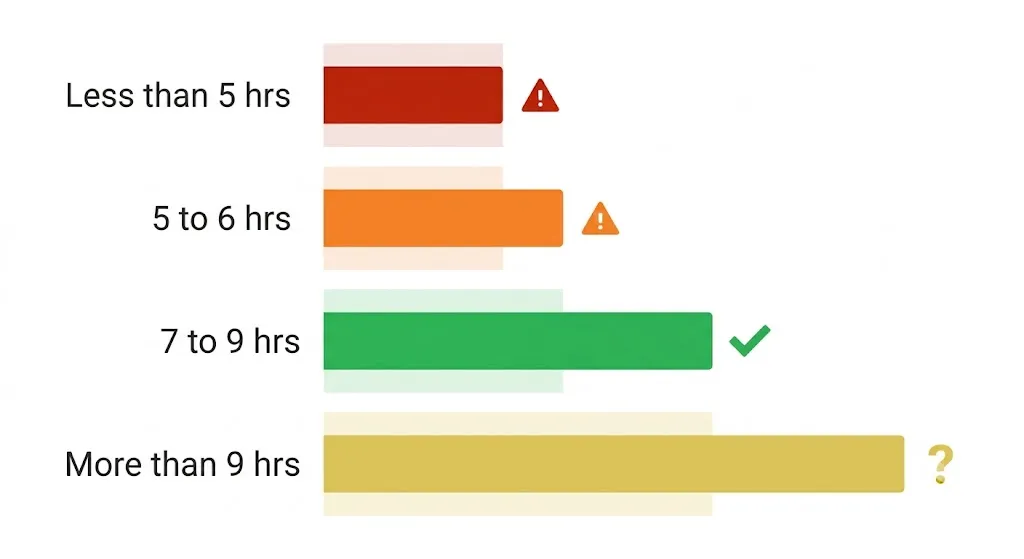
Sleep Duration and Weight Gain Risk: A Quick Comparison
| Sleep Duration | Hunger Hormone Effect | Obesity Risk (vs 7 to 9 hrs) | Verdict |
|---|---|---|---|
| Less than 5 hours | Ghrelin up roughly 28%, leptin down roughly 18% in short-term studies | About 55% higher odds, based on a pooled analysis of 18 studies in over 600,000 adults | Avoid |
| 5 to 6 hours | Ghrelin elevated, leptin mildly reduced | Meaningfully higher, with risk rising as sleep drops further | Situational |
| 7 to 9 hours | Hunger signaling stays balanced | Lowest risk category in most population studies | Best overall |
| More than 9 hours | Hormone link less consistent across studies | Slightly higher in some studies, though the cause is unclear | Situational |

How This Plays Out in Your Body
Your hunger hormones do not work in isolation. They sit inside your circadian rhythm, the internal 24-hour clock that also regulates cortisol, body temperature, and blood sugar handling.
When sleep is cut short, cortisol, your primary stress hormone, tends to run higher through the day. Elevated cortisol on its own is linked to increased abdominal fat storage, on top of whatever ghrelin and leptin are doing.
Insulin sensitivity, meaning how efficiently your cells respond to insulin and clear glucose from your blood, also dips noticeably after even a few nights of short sleep. This is part of why the same meal can hit your blood sugar and hunger differently on a bad sleep week versus a well-rested one.
The practical takeaway: if you train early morning or fast until noon, poor sleep the night before will likely make that window feel far harder than it should. Prioritizing 7 or more hours consistently, rather than occasionally, is what actually moves these numbers.
What the Research Actually Says
The research here is stronger on some points than others, and it is worth being honest about which is which.
The hormonal link is well established in controlled lab settings. A frequently referenced 2013 study published in the journal SLEEP by Spaeth, Dinges, and Goel found that experimentally restricting sleep in healthy adults led to measurable increases in caloric intake and weight over the study period, with most of the extra calories coming from late-night snacking.
Separate controlled research on ghrelin has found that sleep-restricted participants consistently showed elevated ghrelin during both nighttime and daytime hours, which tracked closely with higher consumption of sweets the following day.
“Insufficient sleep duration is associated with an increased risk of a number of chronic conditions, such as obesity, diabetes, hypertension, heart disease, stroke, anxiety, and depression.” — Centers for Disease Control and Prevention
Where it gets more nuanced: a 2025 systematic review and meta-analysis of randomized controlled trials found the ghrelin response to sleep loss was less consistent across studies than commonly assumed, with significant variation depending on study design. This does not overturn the overall picture, but it is an honest reminder that the exact hormonal mechanism is still being refined, even though the population-level link between short sleep and higher body weight is well documented by the CDC’s national sleep data and summarized in this narrative review on sleep deprivation and obesity.
The average person’s experience usually lines up with the lab data: a few nights of bad sleep and cravings go up noticeably. What is harder to isolate outside a lab is how much of the resulting weight gain comes from hormones directly versus simply having more waking hours to eat in.
Side Effects and What to Watch Out For
Chasing sleep is generally safe advice, but a few things are worth flagging honestly.
Oversleeping is not automatically better. Some studies show a similar, though smaller, uptick in obesity risk at the far end, more than 9 hours a night, though the reason is less understood and may reflect underlying health issues rather than sleep itself.
If you snore heavily, wake up gasping, or feel exhausted despite a full 8 hours, that pattern can point to obstructive sleep apnea, which itself is linked to weight gain and needs a doctor’s evaluation, not just an earlier bedtime.
For Indian readers specifically, erratic shift work, joint family schedules, and festival-season late nights can make consistent sleep genuinely hard to control. In these cases, protecting sleep quality on the nights you can control it matters more than chasing a perfect number every single night.
If constant fatigue persists even with adequate hours of sleep, it is worth ruling out an underlying nutrient gap rather than assuming sleep is the only variable, something covered in 7 Early Signs of Nutrient Deficiency Most Indians Ignore.
Who Should Actually Care About This?
If your goal is fat loss
Treat sleep as a fourth pillar alongside diet, training, and consistency, not an afterthought. Aim for 7 to 8 hours before you tweak your calorie deficit further, since poor sleep can quietly work against whatever plan you are following.
If you train hard or lift regularly
Prioritize sleep on training days specifically. Recovery and growth hormone release both lean heavily on deep sleep, and skimping here shows up as stalled strength and slower recovery before it shows up on the scale.
If you struggle to fall asleep
Look at your evening routine before reaching for medication. Reducing screen time an hour before bed, keeping your room cool, and a consistent wind-down routine help most people. Magnesium is one of the more evidence-backed minerals for sleep quality, and comparing it against other common options is covered in Magnesium vs Zinc: Which Mineral Helps You More?
If you are a shift worker or have an unpredictable schedule
Focus on total sleep hours across a 24-hour period rather than forcing a rigid night-only schedule, and keep meal timing as consistent as possible even when your sleep timing cannot be.
If you already sleep 7 to 9 hours and still are not losing fat
Sleep is likely not your limiting factor. Look at total calorie intake and training consistency instead, ideally as part of a broader plan like the 3 Pillars of a Sustainable Fat Loss Plan.
The Bottom Line
Lack of sleep does cause weight gain, and the mechanism is real, not just a wellness talking point. Short sleep raises hunger hormones, lowers your body’s ability to handle food well, and hands you more hours in the day to eat.
It is not the only factor, and it will not replace a real calorie and training plan. But trying to lose fat while running on 5 hours of sleep is like trying to fill a bucket with a hole in it. Fix the sleep first, or at least alongside everything else, and the rest of your plan finally gets a fair shot at working.
People Also Ask
Can lack of sleep cause belly fat specifically?
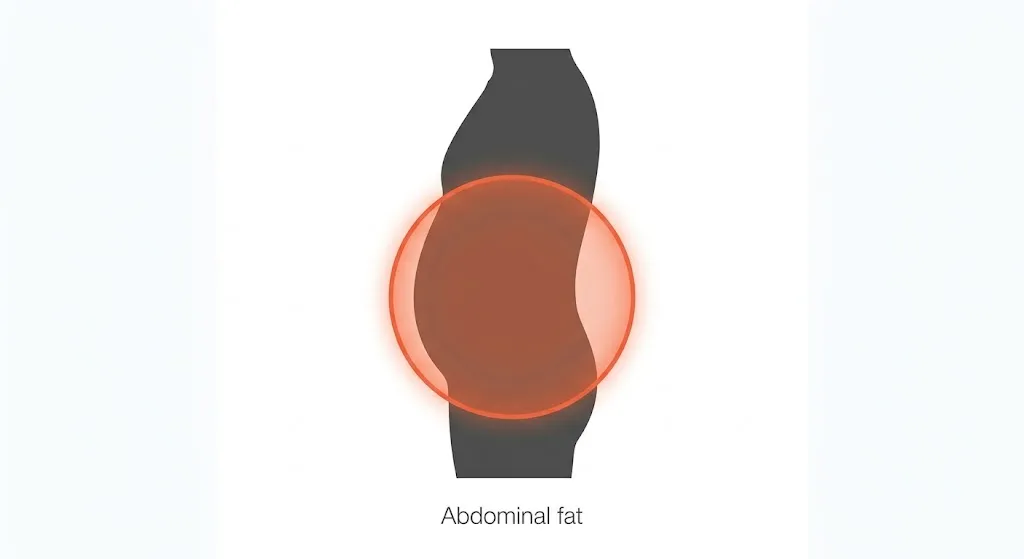
Yes, indirectly. Poor sleep raises cortisol, and elevated cortisol is linked to increased fat storage specifically around the abdomen, on top of the general calorie surplus that often comes from sleep-driven cravings.
How many hours of sleep cause weight gain?
Research generally points to under 7 hours a night as the threshold where obesity risk starts rising meaningfully, with the risk increasing further below 6 and especially below 5 hours.
Can I lose weight if I sleep only 5 hours a night?
It is harder, not impossible. You would need to control calories and cravings more deliberately than someone sleeping 7 to 9 hours, since your hunger hormones are working against you by default.
Does taking a nap make up for lost night sleep?
Partially. A short nap can reduce next-day fatigue and slightly blunt cravings, but it does not fully reverse the leptin and ghrelin shifts caused by a short night’s sleep.
Is it true that Indians sleep less than people in other countries?
Long commutes, joint family routines, and late dinners common in urban India do push average bedtimes later, and heat during much of the year also disrupts sleep quality, though exact national comparisons vary by survey and are hard to state precisely.
Does poor sleep affect weight gain even if I eat in a calorie deficit?
It can slow progress. Poor sleep reduces insulin sensitivity and workout performance, both of which can make a calorie deficit feel harder to sustain and less effective than it should be, even if the numbers on paper look correct.
Will fixing my sleep alone help me lose weight without changing my diet?
Unlikely on its own. Sleep improvement removes one obstacle, cravings and hormone imbalance, but meaningful fat loss still requires a consistent calorie deficit and reasonable training.
Sources and References
Centers for Disease Control and Prevention, National Center for Health Statistics. (2024). Short Sleep Duration and Sleep Difficulties Among Adults: United States, 2024. CDC.gov. https://www.cdc.gov/nchs/products/databriefs/db559.htm
Sharma, S., & Kavuru, M. (2010). Sleep deprivation and obesity in adults: a brief narrative review. PMC, National Institutes of Health. https://pmc.ncbi.nlm.nih.gov/articles/PMC6196958/
Spaeth, A. M., Dinges, D. F., & Goel, N. (2013). Effects of experimental sleep restriction on weight gain, caloric intake, and meal timing in healthy adults. SLEEP, 36(7), 981-990. [Search directly on PubMed for full text]
St-Onge, M. P., et al. Elevated ghrelin predicts food intake during experimental sleep restriction. Published in PMC, National Institutes of Health. [Search directly on PubMed/NIH for full text]