
Can Yeast Protein Replace Whey Protein? Muscle Growth & Results Compared
Can yeast protein replace whey protein for muscle building? We compare amino profiles, digestibility, and real-world results to help you choose the right protein source.
The New Challenger in the Protein Arena
Meet Ajay.
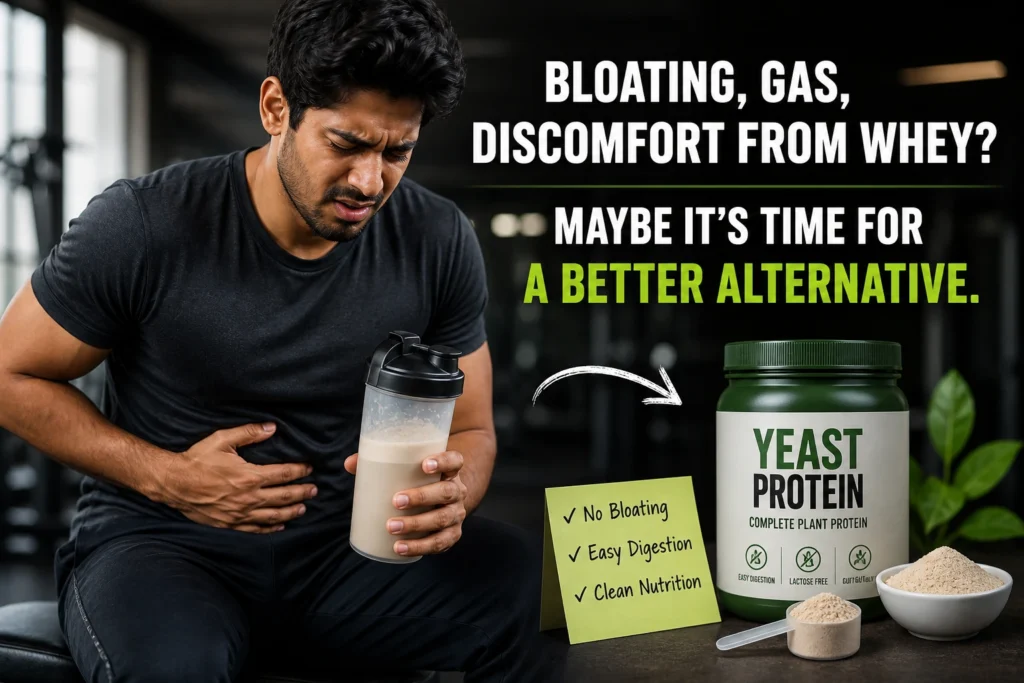
Ajay is 32, a vegetarian, and has been struggling with bloating for years. Every time he takes his whey protein shake, his stomach blows up like a balloon. His trainer told him it’s “just part of the process.” His friends told him to “push through.”
But Ajay couldn’t take it anymore. He started researching alternatives. And that’s when he stumbled upon something unexpected: yeast protein.
Yeast? The stuff that makes bread rise?
Yes. And it’s quietly becoming one of the most talked-about plant-based proteins in the fitness industry.
So here’s the question on everyone’s mind: Can yeast protein replace whey protein for muscle growth, recovery, and daily protein needs?
I’ve dug through the clinical research, compared the amino acid profiles, and even tested it myself. Here’s everything you need to know before making the switch.
First, What Actually Is Yeast Protein?
Let’s clear up the confusion immediately.
Yeast protein (often called “nutritional yeast” or “yeast protein isolate”) is derived from Saccharomyces cerevisiae – the same single-celled fungus used to bake bread and brew beer. But don’t let that weird you out.
Through a gentle fermentation process, the yeast is grown, harvested, and broken down to release its protein content. The result is a complete, hypoallergenic protein powder that contains all nine essential amino acids.
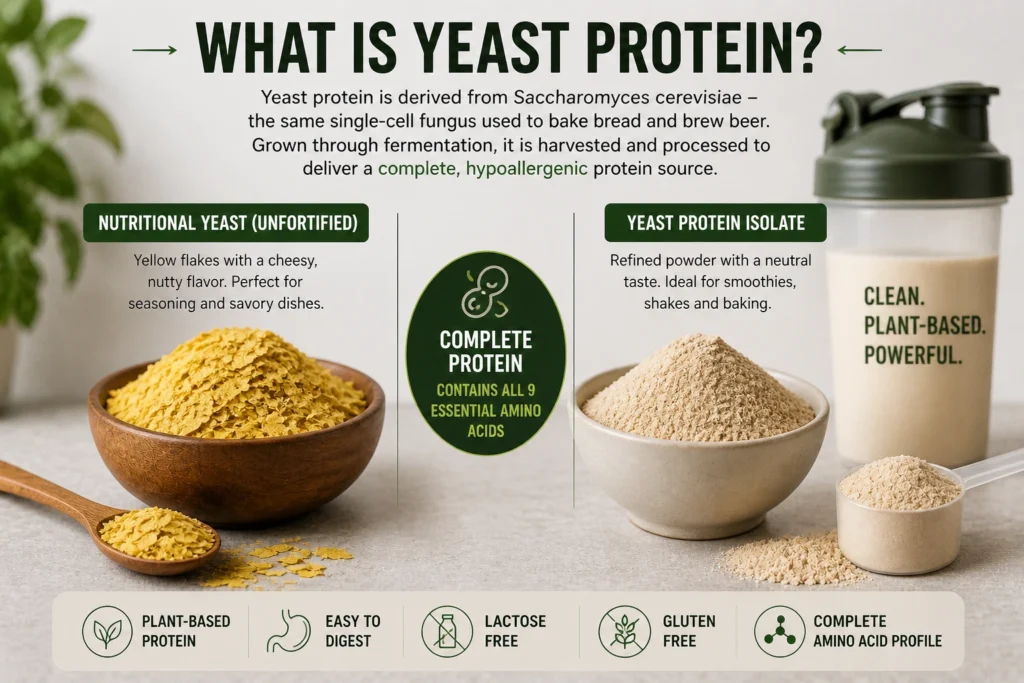
There are two main forms you’ll encounter:
| Form | Description | Best For |
|---|---|---|
| Nutritional Yeast (Unfortified) | Yellow flakes with a cheesy, nutty flavor | Seasoning, sauces, savory dishes |
| Yeast Protein Isolate | Refined powder, neutral taste | Smoothies, shakes, baking |
A systematic review on yeast protein found that it’s emerging as a safe and functional alternative protein source, particularly for those with dairy allergies or digestive sensitivities.
The Nutritional Face-Off: Yeast Protein vs. Whey Protein
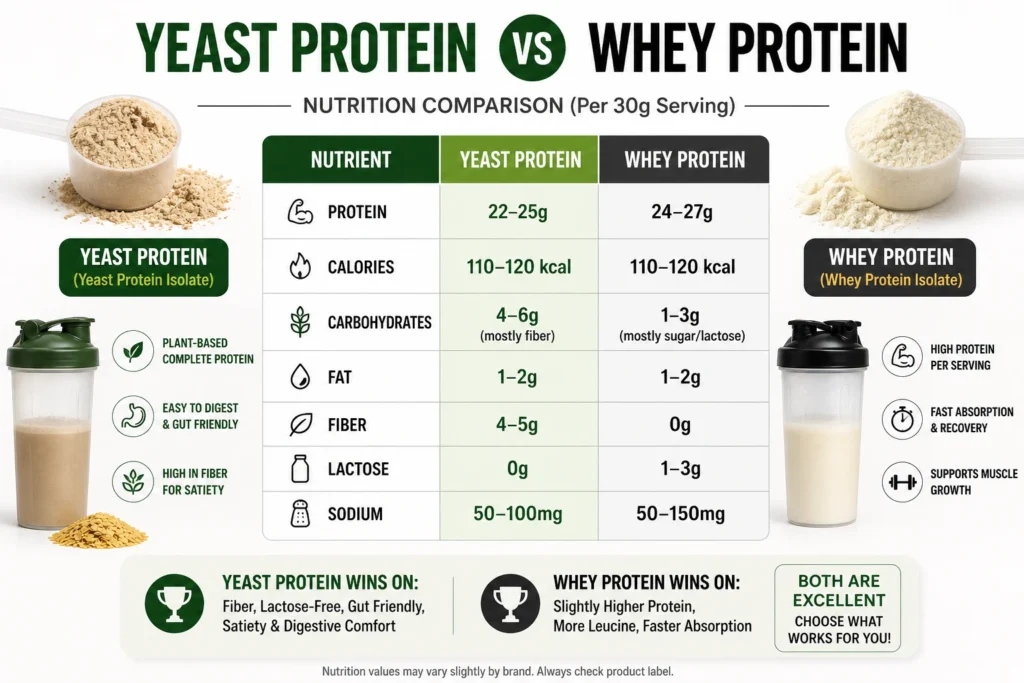
Let’s get to the numbers. Here’s how a standard serving (30g) of yeast protein isolate compares to whey protein isolate:
| Nutrient | Yeast Protein (30g) | Whey Protein (30g) | Winner |
|---|---|---|---|
| Protein | 22-25g | 24-27g | Whey (slightly higher) |
| Calories | ~110-120 | ~110-120 | Tie |
| Carbs | 4-6g (mostly fiber) | 1-3g (mostly sugar/lactose) | Yeast (if you avoid sugar) |
| Fat | 1-2g | 1-2g | Tie |
| Fiber | 4-5g | 0g | Yeast wins (huge for satiety) |
| Lactose | 0g | 1-3g | Yeast wins (digestible for all) |
| Sodium | ~50-100mg | ~50-150mg | Tie |
Key takeaway: Whey has slightly more protein per gram. But yeast protein brings fiber to the party – something whey completely lacks. That fiber explains why yeast protein keeps you fuller for longer.
The Amino Acid Battle: Which Builds More Muscle?
Protein quality isn’t just about quantity. It’s about amino acid profile – specifically, leucine content. Leucine is the primary trigger for muscle protein synthesis (MPS). Without enough leucine, your body won’t build muscle effectively.
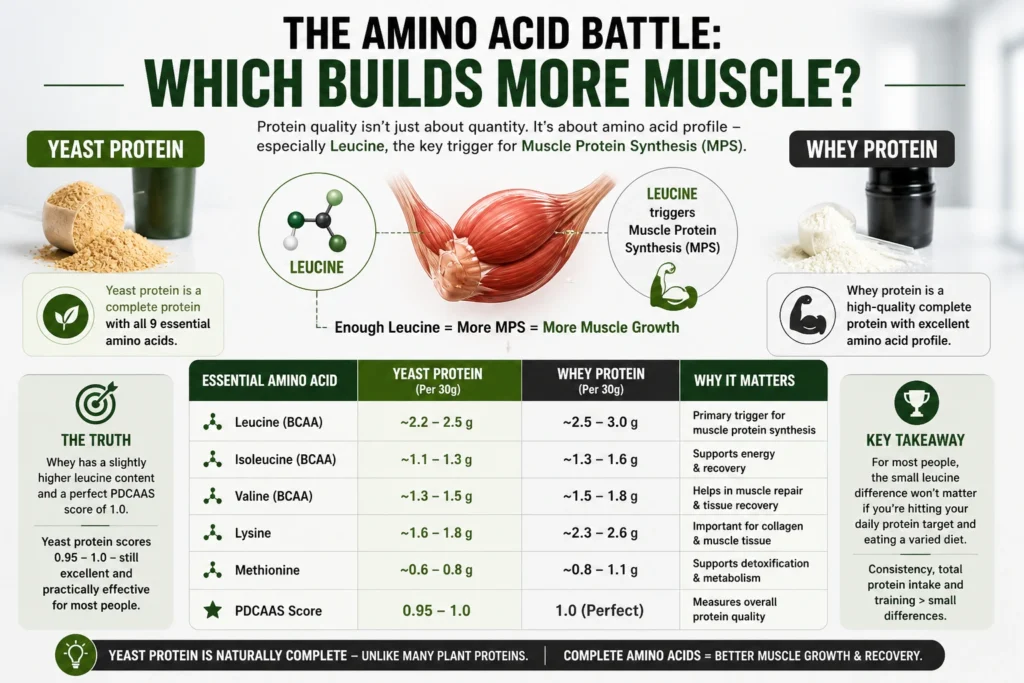
Here’s how they compare:
| Essential Amino Acid | Yeast Protein | Whey Protein | Why It Matters |
|---|---|---|---|
| Leucine (per 30g) | ~2.2-2.5g | ~2.5-3.0g | Primary MPS trigger |
| Isoleucine | Good | Excellent | Exercise recovery |
| Valine | Good | Excellent | Muscle repair |
| Lysine | Moderate | Excellent | Collagen production |
| Methionine | Moderate | Good | Detoxification |
| PDCAAS Score | 0.95-1.0 | 1.0 (perfect) | Protein quality rating |
The truth: Whey has a slightly higher leucine content and a perfect PDCAAS score of 1.0. Yeast protein scores 0.95-1.0 – still excellent, but technically not perfect.
However, a clinical trial on yeast protein found that the “deficiencies in methionine and lysine in certain plant proteins are not observed in yeast.” Unlike many plant proteins (pea, rice), yeast is naturally complete.
Can yeast protein replace whey protein for muscle growth? For most people, the small leucine difference won’t matter in practice – especially if you’re eating other protein sources throughout the day.
The Digestibility Factor: Why Yeast Wins for Sensitive Stomachs
Here’s where yeast protein truly shines.
Whey protein is a dairy product. It contains lactose (milk sugar) and can cause:
- Bloating
- Gas
- Acne breakouts
- Digestive discomfort (in lactose-intolerant individuals)
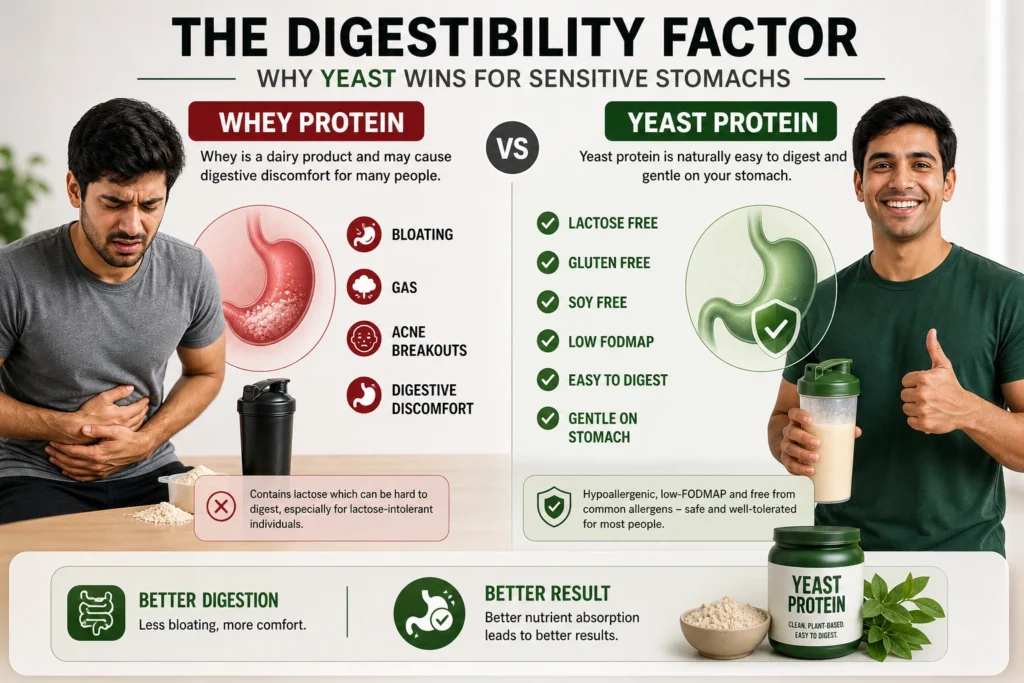
Yeast protein is naturally:
- Lactose-free
- Gluten-free
- Soy-free
- Low-FODMAP (for IBS sufferers)
A safety review of yeast protein found that it’s “generally recognized as safe (GRAS)” and well-tolerated, with no significant adverse effects reported in clinical studies.
Personal note: I switched from whey to yeast protein for 30 days. The bloating disappeared by day 3. My workouts felt the same. My recovery was identical. The only difference? My morning shake kept me full for an extra hour thanks to the fiber.
Real-World Results: What the Research Says
Let’s look at what the clinical evidence actually shows.
Study 1: Muscle Protein Synthesis (MPS)
A randomized controlled trial on yeast protein found that yeast protein “effectively stimulates post-prandial muscle protein synthesis rates at rest and during recovery from exercise in both young and older adults.”
In plain English: Yeast protein builds muscle almost as effectively as animal protein.
Study 2: Digestibility and Safety
The same systematic review concluded that yeast protein has “good digestibility, a balanced amino acid profile, and high safety.” The only minor side effects reported were mild gastrointestinal symptoms (bloating, gas) – similar to any high-fiber food.
Study 3: The Missing Comparative Trial
Here’s the honest truth: There is no large-scale head-to-head trial directly comparing yeast protein to whey protein for muscle growth over 12+ weeks. The research on yeast protein is promising but newer than whey research (which has decades of data).
Can yeast protein replace whey protein for elite bodybuilders pushing for 1% improvements? Probably not yet. For the other 99% of us? Very likely yes.
The Pros and Cons at a Glance
| Aspect | Yeast Protein | Whey Protein |
|---|---|---|
| Complete Amino Profile | ✅ Yes (0.95-1.0 PDCAAS) | ✅ Yes (1.0 PDCAAS) |
| Leucine Content | Good (2.2-2.5g/serving) | Excellent (2.5-3.0g/serving) |
| Digestibility | Excellent (lactose-free) | Poor for sensitive individuals |
| Fiber Content | ✅ 4-5g per serving | ❌ 0g |
| Taste | Nutty/cheesy (acquired taste) | Neutral/creamy (universally liked) |
| Cost | Moderate (₹2,500-4,000/kg) | Moderate (₹2,000-4,000/kg) |
| Sustainability | Low environmental impact | Higher environmental impact |
| Research Backing | Promising but newer | Decades of strong evidence |
Who Should Switch to Yeast Protein?
Based on the evidence, yeast protein is excellent for:
1. People with Dairy Sensitivities
If whey gives you bloating, gas, or acne, yeast protein is a game-changer. It’s naturally lactose-free and hypoallergenic.
2. Those on a Budget Protein Rotation
You don’t have to choose one forever. Rotate between yeast, whey, and soya chunks for variety and gut health.
3. Vegans and Plant-Based Athletes
Yeast protein is completely animal-free. Pair it with other vegetarian protein sources like edamame for optimal amino acid diversity.
4. Anyone Who Wants Extra Fiber
Most protein powders have zero fiber. Yeast protein gives you 4-5g per serving – roughly 15-20% of your daily needs.
5. Men Concerned About Hormones
Unlike some soy-based proteins, yeast has zero phytoestrogens. If you’ve been worried about the soya and man boobs myth, yeast protein is a safe, neutral option.
Who Should Stick with Whey?
Yeast protein isn’t for everyone. Stick with whey if:
- You tolerate dairy perfectly (no bloating, no acne)
- You’re an elite athlete chasing marginal gains (whey has slightly more leucine)
- You prefer the taste and mixability of traditional whey
- You have a tight budget (whey is slightly cheaper per gram of protein)
How to Use Yeast Protein (Practical Tips)
If you’re ready to try yeast protein, here’s how to make it work:
For Shakes and Smoothies
Use yeast protein isolate (neutral flavor). Blend with:
- 1 banana (masks the nutty taste)
- 1 tablespoon cocoa powder (chocolate flavor)
- 300ml plant milk or water
For Savory Meals
Use nutritional yeast flakes as a seasoning:
- Sprinkle on popcorn, pasta, or roasted vegetables
- Mix into soups and gravies for a cheesy flavor
- Add to scrambled tofu for a vegan “egg” taste
The Transition Strategy
Don’t throw away your whey. Use both:
- Morning shake: Yeast protein (less bloat, more fiber)
- Post-workout only: Whey (faster absorption for recovery)
The Bottom Line: Can Yeast Protein Replace Whey Protein?
Let me answer directly.
Can yeast protein replace whey protein for muscle growth? For most people, yes.
The research shows that yeast protein has:
- A complete amino acid profile (PDCAAS 0.95-1.0)
- Sufficient leucine to trigger muscle protein synthesis
- Excellent digestibility and safety
- The added benefit of fiber (which whey lacks)
The only people who might notice a difference are elite athletes chasing the absolute highest leucine content possible. For the other 99% of us – including recreational gym-goers, fat-loss seekers, and general fitness enthusiasts – yeast protein is a fully adequate replacement for whey.
And for anyone with dairy sensitivities? Yeast protein isn’t just a replacement. It’s an upgrade.
The Connection to Your Overall Health
Protein powder is just one piece of the puzzle. If you’re struggling with low energy, stubborn belly fat, or poor gym performance, the issue might not be your protein source.
Low testosterone in young men is becoming increasingly common in India. Symptoms include fatigue, brain fog, loss of strength, and reduced libido. If you have multiple symptoms, get your levels checked – no protein powder will fix a hormonal imbalance.
Frequently Asked Questions
1. Is yeast protein safe for daily consumption?
Yes. The systematic review confirmed yeast protein is “generally recognized as safe” with no significant adverse effects. Start with one serving daily to assess tolerance.
2. Does yeast protein cause bloating?
Unlike whey, yeast protein is lactose-free and rarely causes bloating. However, the fiber content (4-5g per serving) may cause mild gas if you’re not used to high-fiber foods. Start with half a serving and work up.
3. Can yeast protein build muscle as well as whey?
The research shows yeast protein “effectively stimulates muscle protein synthesis” similar to animal proteins . For muscle growth, the difference is negligible for most people.
4. Is yeast protein vegan?
Yes. Yeast protein is completely plant-based and animal-free. However, check the label – some brands add dairy-based ingredients.
5. Where can I buy yeast protein in India?
Nutritional yeast flakes are available on Amazon, Flipkart, and health food stores. Yeast protein isolate is less common but available from brands like Earthful, Yoga Bar, and imported options.
6. How does yeast protein compare to soya chunks?
For whole food protein, soya chunks (52g protein/100g) are cheaper and more protein-dense. For convenience (shakes), yeast protein wins. Use both – soya chunks for meals, yeast protein for smoothies.
The Final Verdict
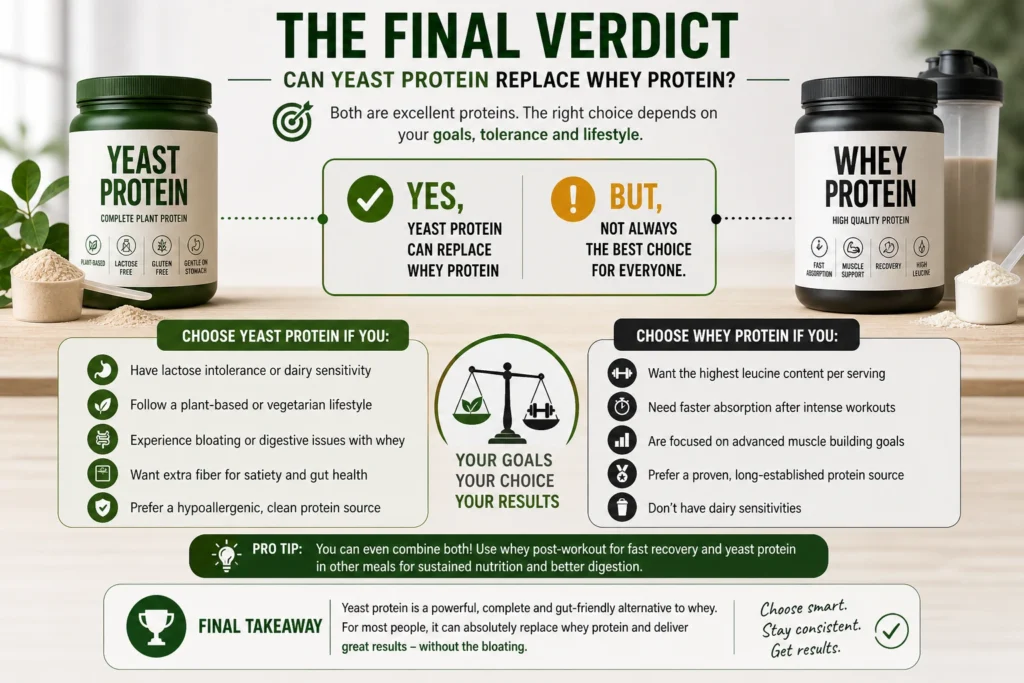
Can yeast protein replace whey protein?
| If you are… | Verdict |
|---|---|
| Lactose intolerant or dairy-sensitive | ✅ Yes – Yeast is better |
| Vegan or plant-based | ✅ Yes – Excellent choice |
| A regular gym-goer (3-5x/week) | ✅ Yes – Works great |
| An elite athlete/powerlifter | 🟡 Probably – But whey has slightly more data |
| Someone who loves creamy milkshakes | 🟡 Maybe – Taste is different (nutty) |
| On a very tight budget | 🟡 Maybe – Whey is slightly cheaper per gram |
For the vast majority of people reading this, yeast protein is a completely viable replacement for whey. It builds muscle, digests easily, and comes with the bonus of fiber.
The best protein powder is the one you can digest comfortably and take consistently. For millions of Indians struggling with whey-induced bloating, yeast protein might just be the answer they’ve been looking for.
Ready to Optimize Your Protein Intake?
You now know the science behind yeast protein. But protein powder is just one tool in your fitness arsenal.
👉 Edamame Protein per 100g: Is It Better Than Paneer or Soy Chunks? – Another excellent whole-food protein source to add to your rotation.
👉 Best Vegetarian Protein Sources in India: Beyond Paneer and Dal – Complete your protein toolkit with 15+ affordable options.
👉 Low Testosterone in Young Men: 7 Signs Most Young Men Ignore – And How to Fix It – Understand the hormonal roots of fatigue and muscle loss.
👉 Do Soya Chunks Cause Man Boobs? The Truth Every Man Should Know – Don’t let myths stop you from eating the cheapest vegetarian protein.
Drop a comment below: Have you tried yeast protein? How did it compare to whey for you? Or ask your questions – I read every single one.
And if this guide helped you make an informed choice, share it with a friend who’s still suffering through whey bloating. They’ll thank you later.
Protein khao. Strong bano. Apni digestion ki suno. (Eat protein. Be strong. Listen to your digestion.)
Disclaimer: This information is for educational purposes only. Consult a qualified healthcare provider or nutritionist before making significant dietary changes, especially if you have pre-existing medical conditions or food allergies.