
Taking ashwagandha with warm milk at night is one of the few Ayurvedic practices that modern research actually backs. The fat in milk improves absorption of withanolides — the active compounds in ashwagandha — and the nighttime timing aligns with your body’s natural cortisol drop before sleep, making the combination genuinely more effective than a capsule taken randomly through the day.
Your grandmother was right. She just did not have a PubMed link to prove it.
Most people who take ashwagandha in India either swallow a capsule with water whenever they remember, or dump it in their morning protein shake and wonder why nothing changes after two weeks. The timing and delivery method matter more than the label on the bottle.
Before You Read Further
- Ashwagandha with warm milk at night works because fat from milk enhances withanolide absorption and nighttime aligns with the body’s peak cortisol reduction window.
- The clinically effective dose for most adults is 300 to 600 mg of a standardised root extract daily, not raw churna at uncontrolled concentrations.
- Benefits — reduced cortisol, improved sleep quality, better stress resilience — typically appear after 4 to 8 weeks of consistent use, not days.
- KSM-66 and Sensoril are the two standardised ashwagandha extracts used in the majority of published human clinical trials; these are the ones worth buying.
- People with thyroid disorders, autoimmune conditions, or who are pregnant should not take ashwagandha without consulting a doctor first.
Why Milk Makes a Real Difference Here
Ashwagandha’s active compounds are called withanolides — a class of steroidal lactones found in the root that are responsible for most of the herb’s documented effects on stress, sleep, and physical performance. Withanolides are fat-soluble compounds, which means they absorb significantly better when taken alongside a dietary fat source.
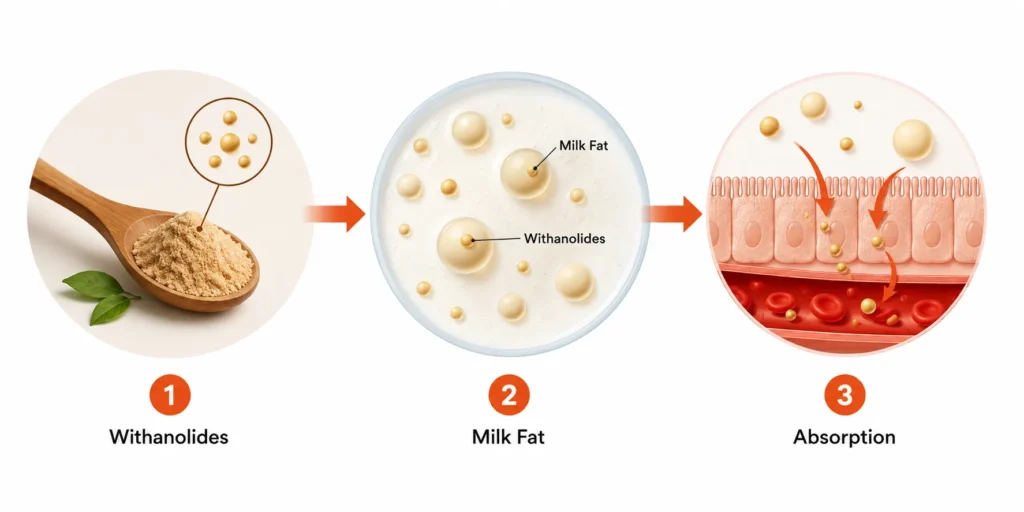
Warm whole milk provides roughly 3.5 to 4 grams of fat per 100 ml. That fat acts as a carrier that improves how efficiently withanolides cross from the gut into the bloodstream. Taking ashwagandha with water does not destroy efficacy, but it leaves absorption lower than it needs to be — especially with raw churna, which has no standardisation of withanolide concentration.
In India, the traditional preparation is a glass of warm doodh with half a teaspoon of ashwagandha churna, sometimes with a pinch of cardamom or a small amount of jaggery to cut the bitter, earthy taste. This is not just cultural habit. The rationale holds up when you look at what the compound actually needs to absorb well.
For the Indian supplement market specifically, there is a problem worth naming. Many local brands sell loose ashwagandha powder with no indication of withanolide percentage. A standardised extract like KSM-66 guarantees a minimum of 5 percent withanolides by weight. Raw churna from a kirana shop may contain 0.5 percent or 3 percent or 7 percent — there is no way to know. This is why dose consistency is almost impossible with unbranded powder, even when the timing is perfect. If you are using raw churna and noticing nothing after 6 weeks, inconsistent concentration is likely the reason.
What Ashwagandha With Milk at Night Actually Does
Ashwagandha With Warm Milk at Night for Sleep Quality
Ashwagandha improves sleep quality by reducing cortisol levels in the evening and modulating gamma-aminobutyric acid (GABA) receptors in the brain. GABA is the main inhibitory neurotransmitter — the one that slows neural activity and signals the brain to wind down. Ashwagandha contains a compound called triethylene glycol that has been shown to induce sleep through GABA pathway activation.
A 2019 double-blind, randomised, placebo-controlled study by Langade and colleagues published in Cureus found that 300 mg of KSM-66 ashwagandha taken twice daily for 10 weeks significantly improved sleep onset latency, total sleep time, sleep efficiency, and mental alertness upon waking compared to placebo. Sleep efficiency improved by a clinically meaningful margin in both healthy adults and those with diagnosed insomnia.
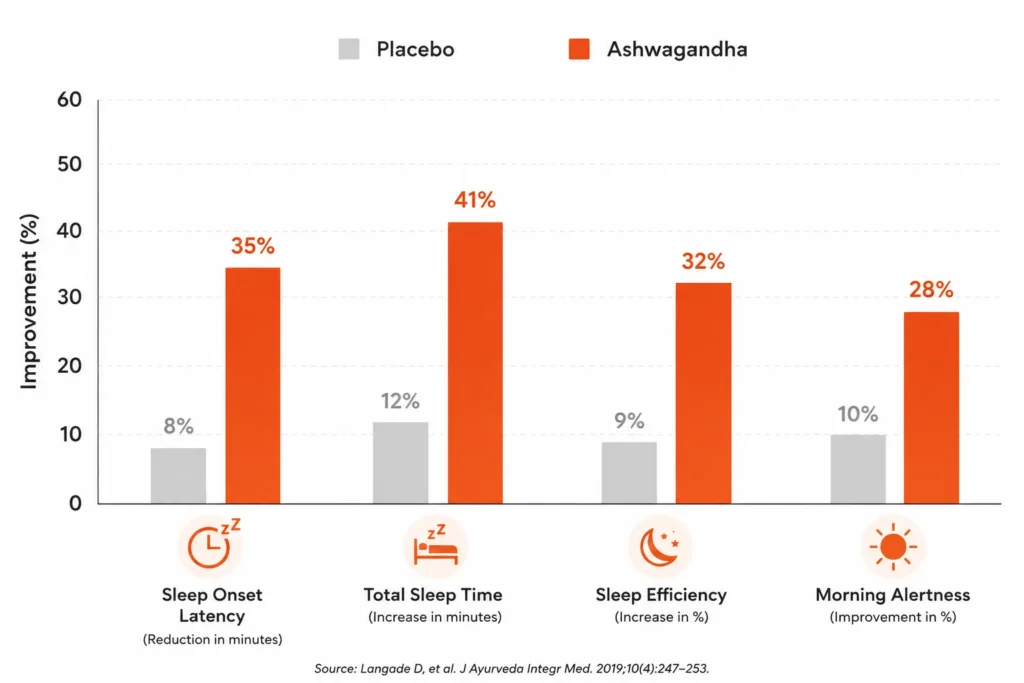
Taking it at night, in warm milk, is not just ritual. Cortisol naturally begins declining in the early evening in preparation for sleep. Ashwagandha’s cortisol-lowering effect reinforces this natural dip. You are working with the body’s rhythm rather than against it.
Verdict: Nighttime is the optimal window for sleep-related benefits. The milk delivery adds meaningful absorption advantage.
How Ashwagandha Reduces Stress and Cortisol
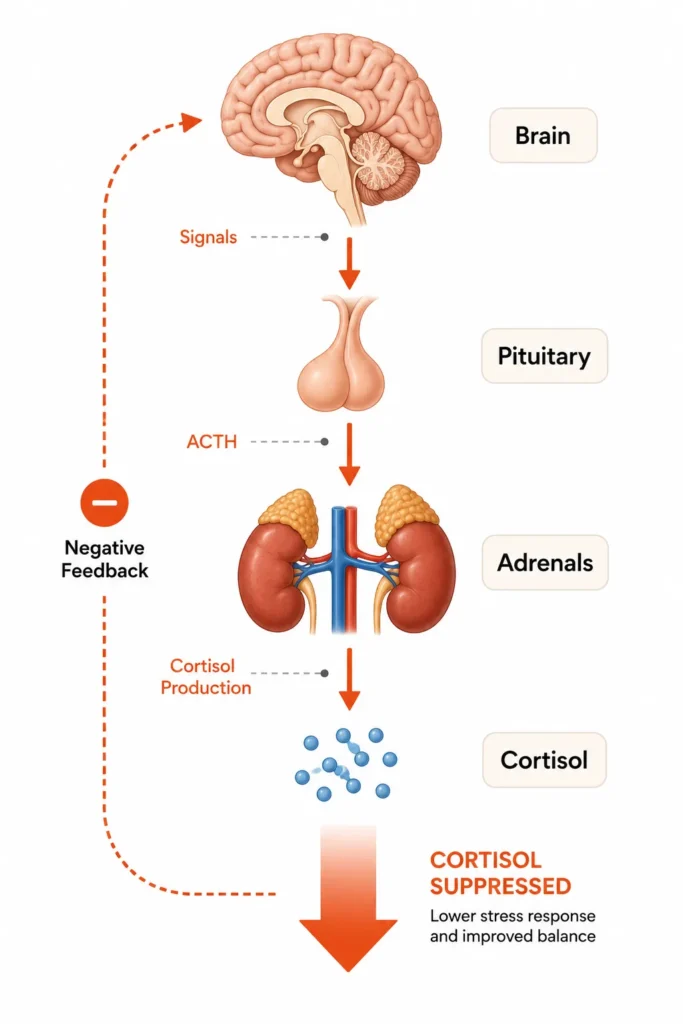
Ashwagandha is classified as an adaptogen — a compound that helps the body maintain homeostasis under physical or psychological stress. The primary mechanism is its action on the hypothalamic-pituitary-adrenal (HPA) axis, which is the hormonal system that controls cortisol secretion in response to stress.
A 2012 randomised, double-blind, placebo-controlled study by Chandrasekhar, Kapoor, and Anishetty published in the Indian Journal of Psychological Medicine found that adults taking 300 mg of high-concentration ashwagandha root extract twice daily showed a 27.9 percent reduction in serum cortisol levels over 60 days, compared to a 7.9 percent reduction in the placebo group. Scores on all stress and anxiety assessment scales were significantly lower in the ashwagandha group.
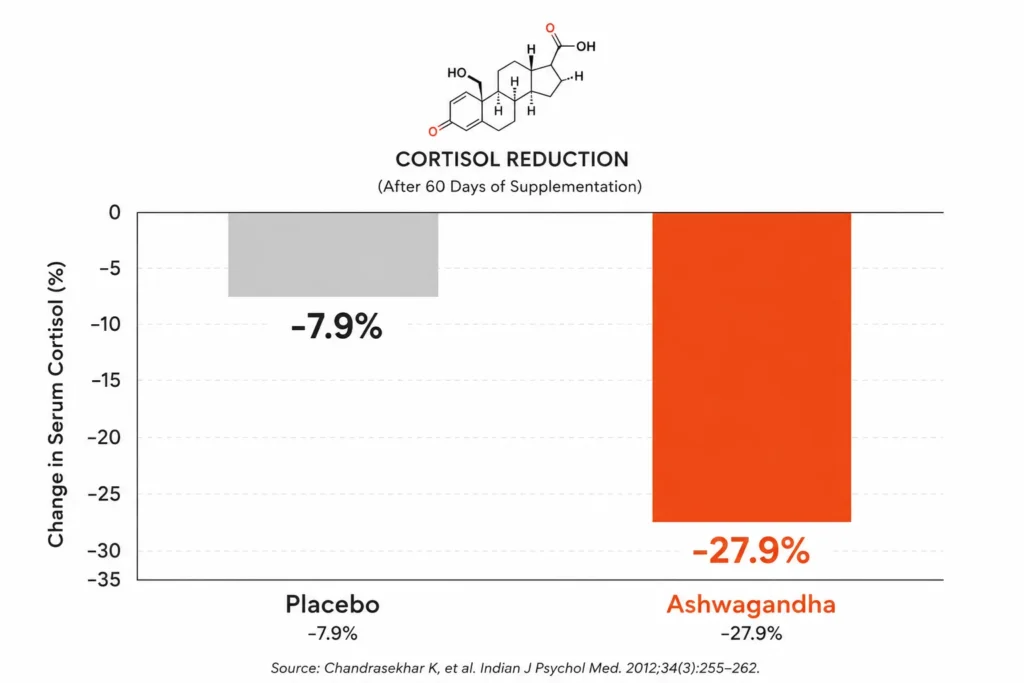
This is one of the most-cited ashwagandha studies in existence, and it was conducted at Asha Hospital in Hyderabad — which gives it specific relevance for Indian readers. The population studied, the stress context, and the intervention all mapped closely to what everyday Indian adults actually experience.
The cortisol reduction is the mechanism behind most of ashwagandha’s other effects. Lower chronic cortisol means better sleep, better body composition (cortisol promotes fat storage and muscle breakdown), and reduced anxiety across the day.
Verdict: The cortisol reduction is real, measurable, and visible in bloodwork after 60 days. This is not a placebo-driven effect.
Ashwagandha Dosage: What Actually Works
The correct dose for most adults is 300 to 600 mg of standardised root extract per day, with a minimum withanolide content of 5 percent. This is the range used in clinical trials showing meaningful results. Going higher does not linearly increase benefits. Going lower — especially with unstandardised raw powder — makes consistent results unreliable.
For ashwagandha with milk at night specifically, one dose of 300 to 600 mg taken 30 to 60 minutes before sleep is a practical and evidence-aligned protocol. Some people split the dose — 300 mg in the morning and 300 mg at night — which is also what several trials have used.
The common Indian mistake is taking too much raw churna too quickly, thinking more equals more. A heaped teaspoon of raw churna weighs roughly 3 to 5 grams but its withanolide concentration may be far lower than 300 mg of a standardised extract. The number on the scoop means nothing without standardisation.
Results at the correct dose take time. Cortisol reduction is measurable at 4 weeks but more pronounced at 8 to 12 weeks. Sleep quality typically improves within 2 to 4 weeks. Anyone expecting overnight transformation from ashwagandha is going to be disappointed regardless of how they take it.
Verdict: 300 to 600 mg of standardised extract daily is the dose. Raw powder without concentration guarantees is a roll of the dice.
Ashwagandha for Gym Performance and Testosterone
Ashwagandha taken with warm milk at night also benefits people in resistance training, and the mechanism goes beyond just cortisol. A 2015 randomised controlled trial by Wankhede and colleagues published in the Journal of the International Society of Sports Nutrition found that 300 mg of ashwagandha root extract taken twice daily for 8 weeks produced significantly greater gains in bench press strength, leg extension strength, and muscle size compared to placebo in resistance-trained young Indian men.

The same study found significantly higher serum testosterone levels in the ashwagandha group at 8 weeks compared to placebo. The mechanism appears to be linked to reduced cortisol — since cortisol and testosterone are inversely related, reducing chronic cortisol creates conditions where testosterone production is less suppressed.
This is relevant for Indian men specifically. If you are dealing with signs of low testosterone — poor recovery, low energy, reduced motivation — ashwagandha addresses one of the major upstream causes rather than just the symptom.
Nighttime timing is particularly useful here because sleep is when testosterone production is highest. Taking ashwagandha before bed means the cortisol-lowering effect is active during the period when your body needs that hormonal environment most.
Verdict: Real evidence for gym performance and testosterone support, especially in men training under chronic stress.
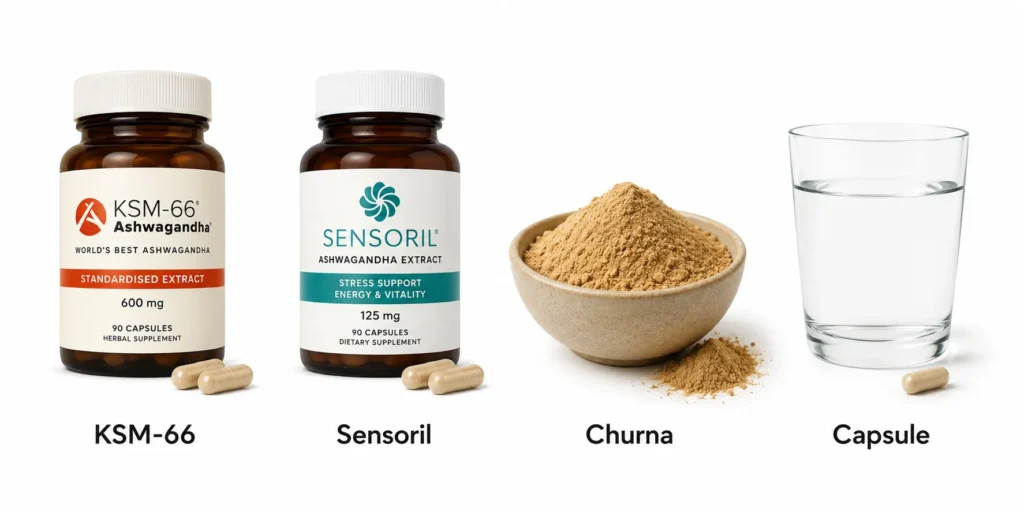
Ashwagandha With Milk: A Practical Comparison Table
| Form | Withanolide Content | Typical Dose | Bioavailability | Best For | Verdict |
|---|---|---|---|---|---|
| KSM-66 extract (with milk) | 5% standardised | 300–600 mg | High | Sleep, stress, testosterone | Best overall |
| Sensoril extract (with milk) | 10% standardised | 125–250 mg | High | Stress, anxiety, recovery | Strong alternative |
| Raw churna (with milk) | 0.5–3% (variable) | 3–6g | Moderate | Traditional use | Inconsistent |
| Capsule (with water) | Depends on brand | 300–600 mg | Lower than with fat | Convenience | Suboptimal delivery |
| Morning dose (any form) | Same | Same | Same | Energy, stress | Less ideal for sleep |
How Your Body Absorbs and Uses Ashwagandha
After consuming ashwagandha with warm milk, withanolides are absorbed through the small intestine into the bloodstream. The fat content of milk — primarily saturated and unsaturated fatty acids — forms micelles with the fat-soluble withanolides, increasing their uptake through intestinal epithelial cells. This is the same mechanism by which fat-soluble vitamins like D, A, E, and K absorb more effectively when taken with food containing fat.
Once absorbed, withanolides act on the HPA axis by modulating the stress response at multiple points — reducing corticotropin-releasing hormone (CRH) output, lowering ACTH secretion from the pituitary, and ultimately suppressing cortisol production in the adrenal glands. This is a cascade effect, not a single-point intervention, which is why effects accumulate over weeks rather than hours.
The triethylene glycol component additionally acts on GABA-A receptors in the central nervous system, producing a mild anxiolytic and sleep-facilitating effect that is pharmacologically distinct from the HPA axis pathway. This is why ashwagandha can improve sleep quality even in people whose primary complaint is not stress.
Peak plasma concentration of withanolides appears within 1 to 2 hours of oral consumption. Taking it 30 to 60 minutes before sleep is timed to align this peak with the onset of the natural cortisol decline, maximising the additive effect.
One important practical point: ashwagandha does not produce sedation the way antihistamines or benzodiazepines do. It does not knock you out. It supports the conditions under which natural sleep comes more easily. The difference matters — there is no driving or functioning impairment risk.
What the Research Actually Shows
The clinical evidence for ashwagandha is more robust than for most adaptogens sold in Indian supplement stores, but it is still not without limits.
The strongest evidence is for stress and anxiety reduction. The Chandrasekhar 2012 study showed a 27.9 percent cortisol reduction over 60 days with twice-daily supplementation. This study used a population based in Hyderabad, which makes its findings directly relevant to the Indian context.
Sleep quality has good supporting evidence. The Langade 2019 study used polysomnography and validated sleep questionnaires, not just self-report, to confirm improvements in sleep onset latency and total sleep time. These are objective measures, not placebo-driven responses.
Muscle strength and testosterone have evidence from the Wankhede 2015 trial, conducted at Indian institutions, which adds local applicability. The testosterone increase was statistically significant but modest in absolute terms — ashwagandha supports testosterone levels, it does not replace medical treatment for clinically low testosterone.
“Ashwagandha root extract safely and effectively improves resistance to stress and thereby improves self-assessed quality of life.” — Chandrasekhar et al., Indian Journal of Psychological Medicine, 2012
The honest reality check: most clinical trials use highly standardised extracts at specific doses, with controlled compliance and no confounding variables. Real-world results are messier. Sleep quality may improve significantly for one person and modestly for another, depending on the root cause of their sleep issues. Ashwagandha is not a substitute for fixing a screen habit at 11 PM or addressing chronic overwork.
The Things Worth Knowing Before You Start
Ashwagandha is well-tolerated by most healthy adults, but there are genuine cautions that do not get mentioned often enough in Indian fitness content.

Thyroid conditions are the most important one. Ashwagandha has thyroid-stimulating properties and has been shown in some studies to increase T3 and T4 levels. For people with hypothyroidism already on levothyroxine, this can interfere with medication management. For people with hyperthyroidism, it can worsen the condition. Anyone on thyroid medication should check with their doctor before starting.
Autoimmune conditions — including rheumatoid arthritis, lupus, and multiple sclerosis — may be worsened by ashwagandha because it stimulates immune function. This is one of the rare cases where the herb’s immune-modulating property becomes a liability.
Pregnancy is a contraindication. Ashwagandha has historically been used to induce labour in Ayurvedic practice, which means it carries uterine stimulant properties. Do not take it during pregnancy.
Sedative medications — including anxiety medications, sleep aids, and some antihistamines — can interact with ashwagandha’s GABA-modulating effects. The combination can produce excessive sedation.
Digestive sensitivity is the most common minor complaint. Some people experience nausea or loose stools when starting, particularly with raw churna. Starting with a lower dose — 150 mg of extract or a quarter teaspoon of churna — for the first two weeks generally resolves this.
The Honest Guide to Who Should and Who Should Not

If You Train Hard and Sleep Badly
This is the person ashwagandha with milk at night was made for. Training stress + work stress + poor sleep creates a high-cortisol environment that destroys recovery, suppresses testosterone, and makes building muscle far harder than it needs to be. 300 to 600 mg of KSM-66 in warm milk 30 to 60 minutes before sleep directly addresses all three arms of that problem. Give it 8 weeks before judging.
If Your Goal Is Stress and Anxiety Management
Start with 300 mg of a standardised extract in warm milk at night. Do not expect clinical results in week one. The cortisol reduction builds over 4 to 8 weeks. If you want to track it, get a serum cortisol test at baseline and again at 8 weeks — it is available at most pathology labs in India for under ₹500 and gives you an objective measure of whether it is working for you specifically.
If You Are a Vegetarian or Vegan
Skip the milk and use a plant-based alternative with a fat content of at least 3 to 4 percent — full-fat coconut milk works well, as does oat milk with added fat. Almond milk with less than 1 percent fat is not sufficient as an absorption carrier. The fat is the mechanism; the source of that fat is flexible.
If You Are on a Tight Budget
Raw ashwagandha churna from a reputable Ayurvedic brand — Dabur, Baidyanath, or Himalaya — costs between ₹80 and ₹200 for 100 grams and is widely available. The limitation is unknown withanolide concentration. To partially compensate, use a larger amount — half a teaspoon to one full teaspoon — in warm full-fat milk rather than in water, and be consistent for a minimum of 8 weeks. Results will be less predictable than with standardised extract but not zero.
If You Have Existing Health Conditions
Do not start ashwagandha without medical clearance if you have thyroid disease, an autoimmune condition, are pregnant, or are on sedative or immunosuppressive medications. This is not a generic legal disclaimer — these are real mechanistic interactions, not theoretical ones.
The Bottom Line
Ashwagandha with warm milk at night is the right way to take it for sleep, stress, and recovery. The fat in milk genuinely improves absorption of withanolides. The nighttime timing works with your cortisol rhythm rather than against it. And the evidence behind the benefits — particularly from Indian clinical trials conducted in Indian populations — is stronger than most supplement marketing deserves.
Use a standardised extract. KSM-66 or Sensoril. 300 to 600 mg. Thirty to sixty minutes before sleep, in warm full-fat milk. Be consistent for at least 8 weeks.
If you want to round out a broader supplement and nutrition strategy, the guide on 7 signs of magnesium deficiency is worth reading alongside this — magnesium and ashwagandha together are among the most well-supported natural combinations for sleep quality and stress.
Your ancestors figured this one out before the clinical trials did. The trials just confirmed it.
People Also Ask
Can I take ashwagandha with milk every night?
Yes, taking ashwagandha with warm milk every night is safe for healthy adults and is actually the recommended approach for consistency. Clinical trials showing significant results used daily supplementation for 8 to 12 weeks. The fat in milk improves withanolide absorption, and nightly timing aligns with the body’s natural cortisol decline before sleep. Avoid it if you have thyroid disorders, autoimmune conditions, or are pregnant.
What is the best time to take ashwagandha for sleep?
The best time to take ashwagandha for sleep is 30 to 60 minutes before bed. This timing aligns peak plasma concentration of withanolides with the body’s natural evening cortisol decline. A 2019 double-blind study published in Cureus found significant improvements in sleep onset latency, sleep efficiency, and total sleep time with ashwagandha supplementation over 10 weeks, with nighttime dosing forming part of the protocol.
How much ashwagandha should I put in milk?
Use 300 to 600 mg of a standardised root extract, or half a teaspoon of raw ashwagandha churna, mixed into one glass of warm full-fat milk. If using raw churna, the taste is earthy and bitter — adding a small amount of jaggery or cardamom makes it easier to drink without affecting the herb’s efficacy. Do not exceed one teaspoon of raw powder per day without guidance.
Is ashwagandha with milk good for testosterone?
Ashwagandha with milk supports testosterone levels by reducing cortisol, which suppresses testosterone production when chronically elevated. A 2015 randomised trial by Wankhede and colleagues found significantly higher serum testosterone in resistance-trained Indian men taking ashwagandha for 8 weeks compared to placebo. The effect is meaningful for men with high stress and poor recovery, but ashwagandha is not a replacement for medical treatment of clinically diagnosed low testosterone.
What happens if I take ashwagandha daily for 3 months?
Most people taking 300 to 600 mg of standardised ashwagandha daily for 3 months experience measurable reductions in perceived stress and anxiety, improved sleep quality, and reduced serum cortisol levels. Athletes often report better recovery and modest improvements in strength. Side effects at standard doses are rare and typically mild — some people experience initial digestive sensitivity that resolves within two weeks. Long-term safety beyond 3 months is not extensively studied; periodic breaks are a reasonable precaution.
Is ashwagandha safe for daily use in India?
Ashwagandha is safe for daily use for most healthy Indian adults. It has been used continuously in Ayurvedic medicine for centuries and is well-tolerated in clinical trials of up to 12 weeks. However, people with thyroid conditions, autoimmune diseases, or who are pregnant should not take it without medical advice. The Indian market contains many products with unverified withanolide concentration — choosing a brand with standardised extract (KSM-66, Sensoril, or reputable Ayurvedic brands like Himalaya or Dabur) matters for both safety and efficacy.
Does ashwagandha churna in milk work the same as capsules?
Ashwagandha churna in full-fat warm milk can deliver comparable benefits to standardised capsules, provided the withanolide concentration in the powder is adequate. The milk improves absorption of fat-soluble withanolides in both cases. The key difference is consistency — standardised extracts guarantee a minimum withanolide percentage, while loose churna varies widely by source and batch. If using churna, buy from a reputable Ayurvedic brand rather than unbranded loose powder.
Sources and References
Chandrasekhar, K., Kapoor, J., & Anishetty, S. (2012). A prospective, randomized double-blind, placebo-controlled study of safety and efficacy of a high-concentration full-spectrum extract of ashwagandha root in reducing stress and anxiety in adults. Indian Journal of Psychological Medicine, 34(3), 255–262. https://pubmed.ncbi.nlm.nih.gov/23439798/
Langade, D., Kanchi, S., Salve, J., Debnath, K., & Ambegaokar, D. (2019). Efficacy and safety of ashwagandha (Withania somnifera) root extract in insomnia and anxiety: A double-blind, randomized, placebo-controlled study. Cureus, 11(9), e5797. https://www.ncbi.nlm.nih.gov/pmc/articles/PMC6827862/
Wankhede, S., Langade, D., Joshi, K., Sinha, S.R., & Bhattacharyya, S. (2015). Examining the effect of Withania somnifera supplementation on muscle strength and recovery: A randomized controlled trial. Journal of the International Society of Sports Nutrition, 12, 43. https://www.ncbi.nlm.nih.gov/pmc/articles/PMC4658772/