
Magnesium deficiency is one of the most common and most overlooked nutritional problems in India, and there is a very good chance you have it right now without knowing. Most people assume tiredness, muscle cramps, or poor sleep are just “stress” — but these are textbook signs of magnesium deficiency. The mineral is involved in over 300 enzymatic reactions in the body, including energy production, protein synthesis, nerve function, and muscle contraction. Yet nearly 48% of Indians do not meet their daily magnesium requirement through diet alone, according to nutrition surveys.
The tricky part is that blood tests for magnesium often look “normal” even when your body is running low. Only about 1% of the body’s magnesium is in the blood. The rest is stored in bones and soft tissue, which means a deficiency can quietly develop for months before anything shows up on a standard panel.
Here is how to spot the signs before it becomes a serious problem.
Quick Answer
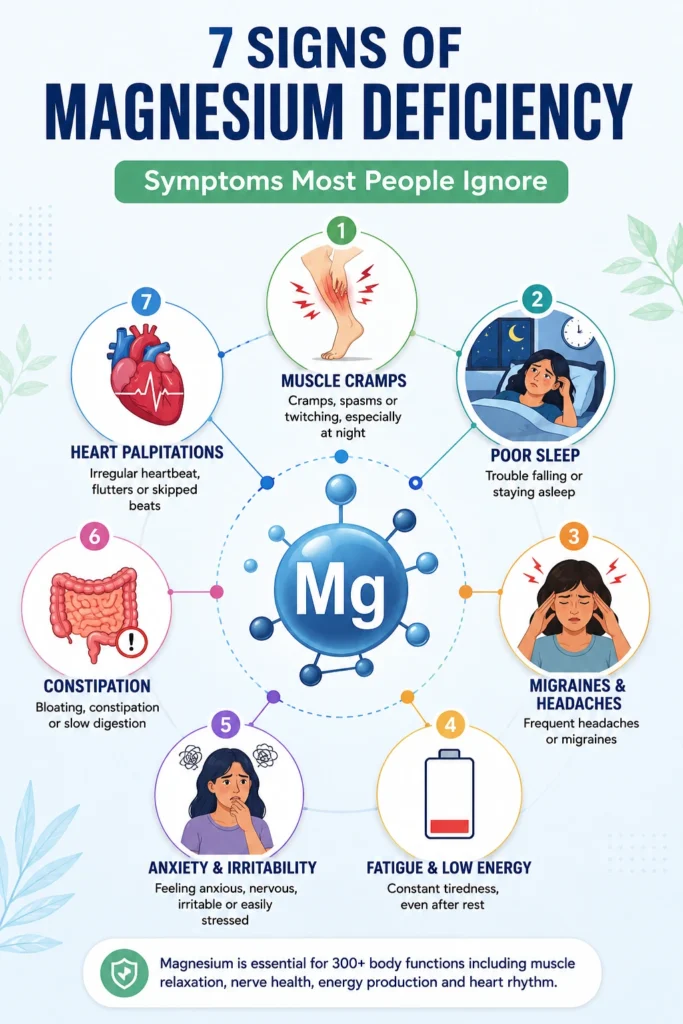
Signs of magnesium deficiency most people ignore:
- Muscle cramps or twitching, especially at night or after exercise
- Chronic fatigue and low energy that sleep does not fully fix
- Anxiety, irritability, or feeling on edge without an obvious cause
- Poor sleep quality and difficulty staying asleep
- Irregular heartbeat or palpitations, particularly during stress
- Headaches and migraines that come back frequently
- Constipation and slow digestion that does not improve with diet changes
What Is Magnesium Deficiency — Simple Explanation
Magnesium is a mineral. Your body cannot make it. You have to get it from food or supplements. It sits inside your cells and drives processes that keep muscles contracting, nerves firing, and blood sugar stable.
A deficiency, called hypomagnesemia in clinical terms, happens when your intake is consistently too low for your body’s needs. This is not rare. A large chunk of the Indian population eats diets heavily based on white rice, refined flour, and processed foods — all of which are stripped of magnesium during processing.
Think of magnesium like the oil in an engine. The engine can run for a while with low oil, but performance degrades, parts wear out faster, and eventually things start breaking. The signs of low magnesium deficiency are your body’s warning lights. Most people just keep driving.
Soil depletion is also a real issue. Modern agricultural soil in India has significantly less magnesium than it did 50 years ago, which means even “healthy” vegetables may contain less magnesium than nutrition charts suggest.
Signs of Magnesium Deficiency You Are Probably Dismissing
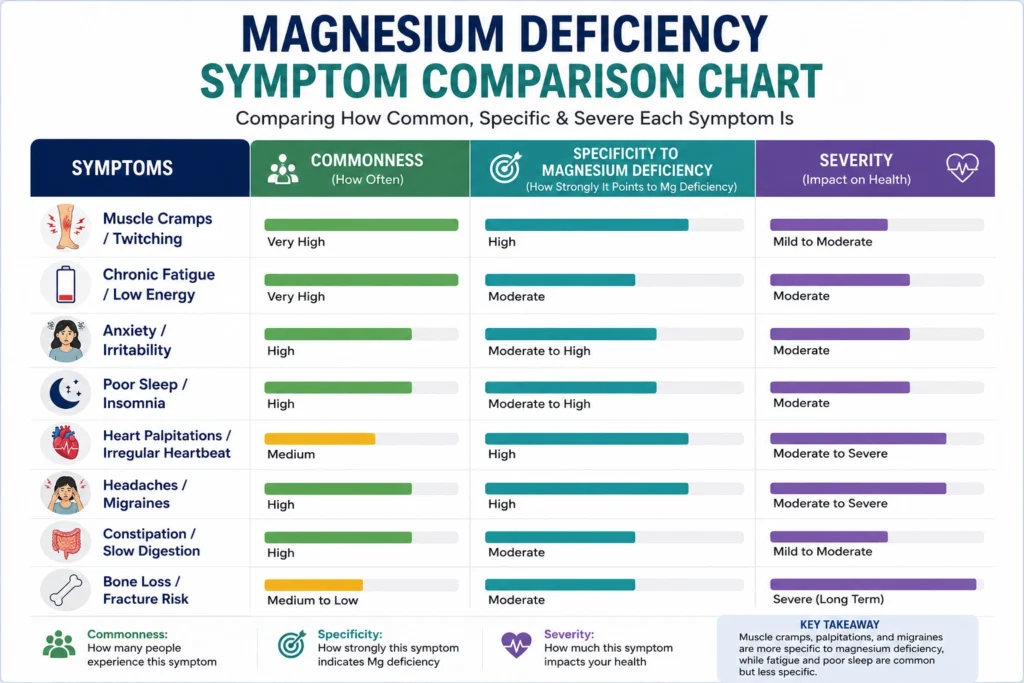
This is the part most articles get wrong. They list symptoms without telling you which ones actually point to magnesium versus something else, how severe each one is, or what combination of signs genuinely warrants attention.
Muscle Cramps and Nighttime Twitching

This is the most recognized sign, and also the most misunderstood. Magnesium and calcium work as a pair — calcium causes muscle contraction, magnesium causes relaxation. When magnesium drops, muscles stay contracted longer than they should.
Nighttime leg cramps that wake you up? That is a classic low magnesium symptom. Eye twitching that lasts for days? Also common. Involuntary muscle spasms during or after exercise are particularly telling for people who train.
The Indian gym crowd tends to blame dehydration or electrolyte imbalance for cramps, which is partly correct — but magnesium is an electrolyte, and it is the one most frequently forgotten. Most sports drinks and ORS solutions replace sodium and potassium. They do nothing for magnesium.
Verdict: High specificity for magnesium deficiency. If cramps are your main symptom, this is the first mineral to look at.
Chronic Fatigue That Does Not Respond to Sleep
Magnesium is directly involved in ATP synthesis — that is the molecule that carries energy inside every cell. Without adequate magnesium, cells cannot produce or use energy efficiently. You feel tired even after 8 hours of sleep.
This is different from iron-deficiency fatigue, which usually comes with breathlessness and pale skin. Magnesium fatigue feels more like heaviness, brain fog, and low motivation. You can do things, but everything feels harder than it should.
This symptom overlaps with B12 deficiency and vitamin D deficiency, both of which are extremely common in India. If fatigue is your main issue, it is worth checking all three. Our guide on Vitamin B12 Deficiency in Vegetarians covers what to watch for there, and Reasons for Vitamin D Deficiency in India: 5 Signs You’re Ignoring is worth reading alongside this one.
Verdict: Common symptom but not highly specific on its own. Combine with other signs to narrow it down.
Anxiety, Irritability, and Feeling Wired for No Reason
This one gets missed the most, particularly among young working adults in cities. Magnesium regulates the HPA axis, which controls your stress response. Low magnesium makes the nervous system overreactive. Small stressors feel bigger. You snap at people you normally would not. Sleep feels unrefreshing because your nervous system never fully downregulates at night.
There is a strong bidirectional relationship here. Chronic stress depletes magnesium (stress hormones flush it out through urine), and low magnesium amplifies the stress response. It becomes a loop.
Research published in Nutrients (2017) found that supplementing with magnesium significantly reduced anxiety symptoms in mildly anxious adults. This is not placebo territory. The mechanism is real.
Verdict: Underappreciated sign. If you are anxious, irritable, or have poor stress tolerance alongside other symptoms, magnesium deficiency deserves serious consideration.
Poor Sleep Quality and Insomnia
Magnesium activates the parasympathetic nervous system (the “rest and digest” mode) and regulates melatonin production. Low magnesium disrupts both. You may fall asleep fine but wake at 2 or 3 AM and struggle to get back to sleep — that is a recognizable pattern.
Magnesium glycinate, in particular, has strong evidence for improving sleep quality. It is one of the most prescribed non-pharmaceutical sleep interventions in functional medicine.
A lot of Indians deal with this chronically and assume it is work pressure or screen time alone. Those factors matter. But if the sleep issues are persistent despite fixing your sleep hygiene, this could be a nutritional problem with a straightforward fix.
Verdict: Highly relevant. Sleep disruption plus fatigue plus muscle issues is a strong combined signal.
Heart Palpitations and Irregular Heartbeat
Magnesium is essential for electrical conduction in the heart muscle. Low levels can cause ectopic beats (the sensation that your heart skipped a beat or fluttered). This happens even in otherwise healthy young people.
This is not something to guess about. If you have recurring palpitations, get a proper evaluation. But if your cardiology workup comes back clean and palpitations persist, magnesium deficiency is a legitimate thing to investigate.
Verdict: Rarer sign, but clinically significant. Do not self-medicate if palpitations are your primary concern.
Frequent Headaches and Migraines
Magnesium deficiency lowers the threshold for migraine attacks. The research on this is solid — a meta-analysis in Cephalalgia found that intravenous magnesium was effective for treating acute migraines, and oral supplementation reduced frequency in chronic migraine sufferers.
Magnesium helps prevent the cortical spreading depression that triggers migraines. It also relaxes blood vessels that narrow during attacks. If you get migraines regularly and have never looked at your magnesium status, this is worth your attention.
Verdict: Genuinely underused intervention for migraines. Strong evidence base.
Constipation and Slow Digestion
Magnesium draws water into the intestines and relaxes the smooth muscle lining the gut wall. Low levels slow things down. Magnesium oxide is actually used as a laxative in clinical settings for exactly this reason.
Chronic constipation that does not improve despite eating more fiber and drinking more water can be a gut issue, but it can also be a magnesium issue. This is worth exploring before resorting to long-term laxative use.
Verdict: Fairly specific sign, especially when combined with muscle cramping.
Bone Loss and Increased Fracture Risk
This one develops slowly and gets noticed late. About 60% of the body’s magnesium is stored in bone, where it contributes to bone density and structure. A long-term deficiency reduces bone mineral density, increasing fracture risk.
This is especially important for women over 35, postmenopausal women, and anyone who has been on a low-calorie diet for extended periods. Most people focus only on calcium for bone health. Magnesium is just as important for calcium to be properly absorbed and used in bone tissue.
Verdict: Long-term consequence rather than acute sign. Relevant for anyone with a history of low intake or chronic deficiency.
Signs of Magnesium Deficiency: Symptom Overview Table
| Sign | How Common | Specificity to Mg | Severity | Onset Speed | Overlaps With |
|---|---|---|---|---|---|
| Muscle cramps/twitching | Very common | High | Mild to moderate | Fast (days to weeks) | Calcium, potassium deficiency |
| Chronic fatigue | Very common | Moderate | Moderate | Gradual | B12, vitamin D, iron deficiency |
| Anxiety/irritability | Common | Moderate-High | Moderate | Weeks | Stress, thyroid issues |
| Poor sleep | Common | Moderate-High | Moderate | Gradual | Multiple causes |
| Heart palpitations | Less common | High | Potentially serious | Can be sudden | Arrhythmia, caffeine excess |
| Migraines/headaches | Common | High | Moderate to severe | Recurrent | Dehydration, hormones |
| Constipation | Common | Moderate | Mild | Gradual | Diet, gut motility issues |
| Bone loss | Less visible | Moderate | Severe (long term) | Very gradual | Calcium, vitamin D deficiency |
Absorption, Timing, and Bioavailability
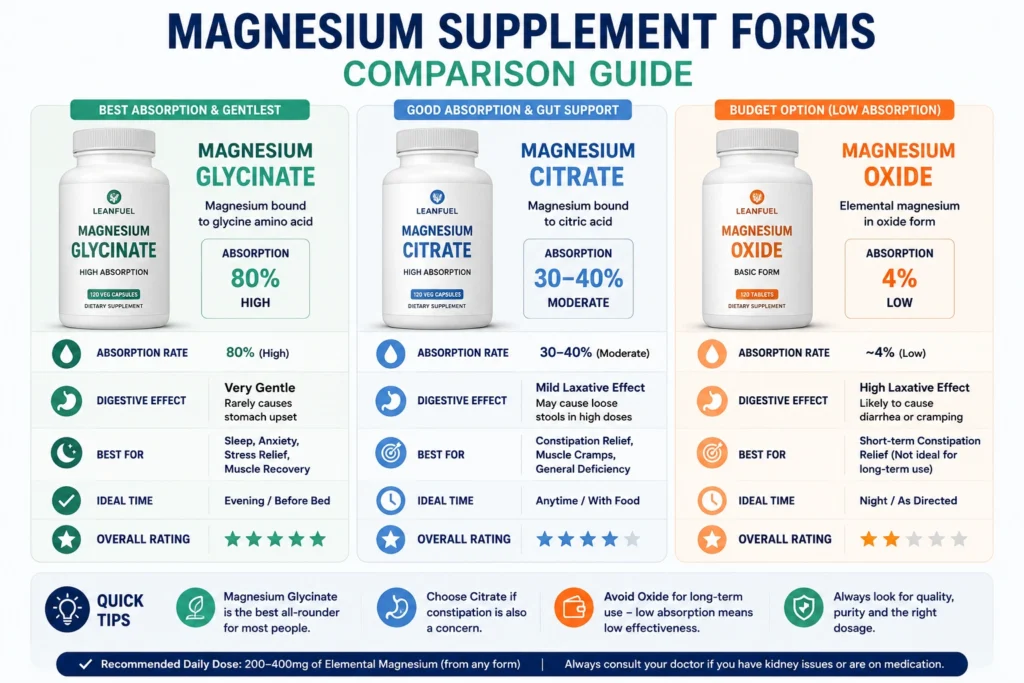
Magnesium glycinate is the highest-bioavailability option and the gentlest on the stomach. It is the best choice for anxiety, sleep, and general deficiency. Magnesium citrate absorbs reasonably well and has a mild laxative effect, making it useful if constipation is also a concern.
Magnesium oxide is cheap and widely sold in Indian pharmacies. The problem is that it has a bioavailability of roughly 4%, compared to 80% for glycinate. Most people taking oxide-based tablets are absorbing very little of what is on the label.
Timing matters too. Taking magnesium at night makes practical sense for sleep and nervous system benefits. The body replenishes intracellular magnesium during rest, so evening dosing aligns with this natural cycle.
Cofactors also play a role. Vitamin B6 significantly increases intracellular magnesium uptake. Vitamin D deficiency impairs magnesium metabolism. This is another reason why multiple deficiencies often cluster together, which our article on 7 Early Signs of Nutrient Deficiency Most Indians Ignore covers in more depth.
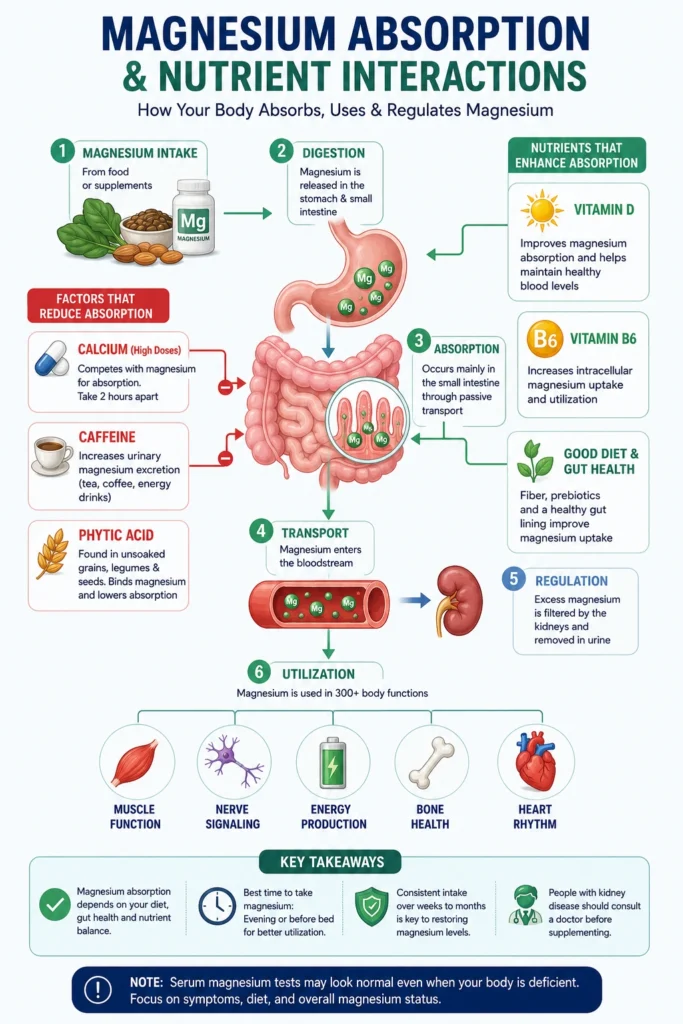
Avoid taking magnesium with calcium at the same time in high doses. They compete for absorption in the gut. Space them 2 hours apart if supplementing both.
What the Research Actually Says
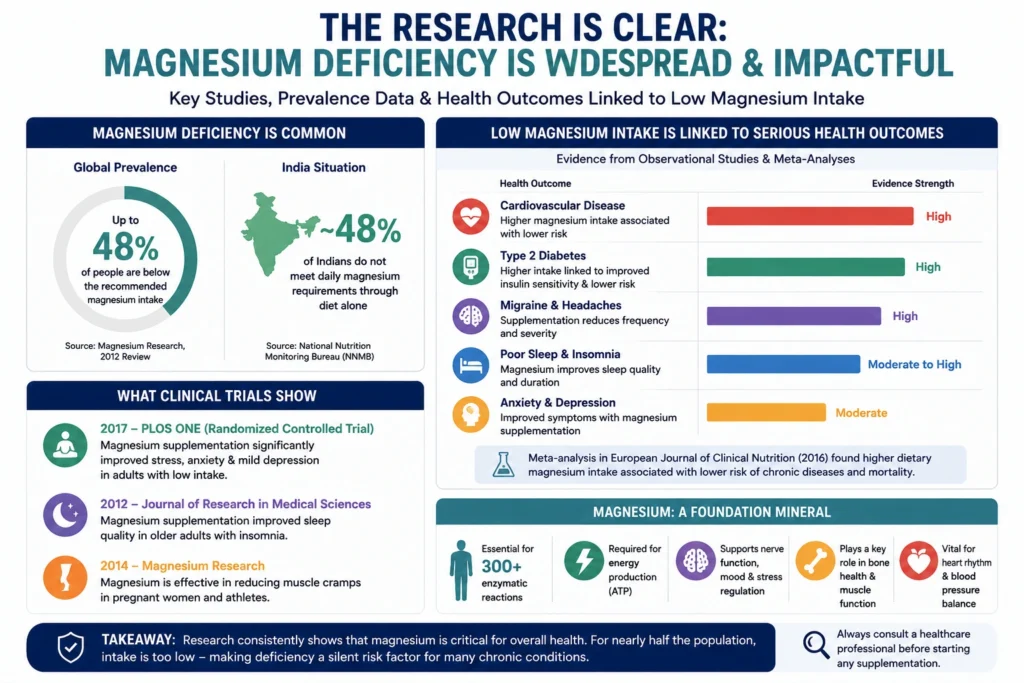
The science on magnesium is well-established. A 2012 review published in Magnesium Research found that up to 48% of Americans were below the estimated average requirement for magnesium. Indian data from the National Nutrition Monitoring Bureau paints a similar picture.
A 2017 randomized controlled trial in PLOS ONE found that magnesium supplementation improved subjective measures of stress, anxiety, and mild depression in adults with self-reported low intake. This was not a pharmaceutical trial — these were people eating a normal diet, supplementing a mineral they were not getting enough of.
A meta-analysis in European Journal of Clinical Nutrition found that higher dietary magnesium intake was associated with lower risk of type 2 diabetes, cardiovascular disease, and all-cause mortality.
The reality check: supplementing magnesium is not a magic fix for everything. If your fatigue is from iron deficiency, magnesium will not solve it. The research supports magnesium supplementation specifically when intake is genuinely low, which for a large proportion of the Indian population, it is.
Side Effects, Digestibility, and Practical Concerns
Magnesium is generally safe. The most common side effect is loose stools, which happens more with oxide, citrate, or sulfate forms than glycinate.
A few real-world practical points for an Indian context:
People eating heavily processed, rice-dominated diets — which is common across much of central and eastern India — are at significant risk of low intake. Phytic acid in whole grains and legumes also binds magnesium, reducing its absorption. Eating a lot of dal and roti does not necessarily mean adequate magnesium if the rest of the diet is poor.
Excessive tea and coffee consumption accelerates magnesium loss through the kidneys. India’s high chai culture is relevant here. Three to five cups of chai daily is not unusual, and caffeine is a known magnesium-depleting substance.
People with kidney disease should consult a doctor before supplementing, since impaired kidneys cannot regulate magnesium excretion properly.
Cost is not a major barrier. A decent magnesium glycinate supplement in India runs between Rs. 300 and 600 per month — broadly affordable if you know what to look for. The harder issue is that most people buy the cheapest tablet available, which tends to be oxide, and absorb very little of it.
Who Should Supplement and Who Should Fix Their Diet First
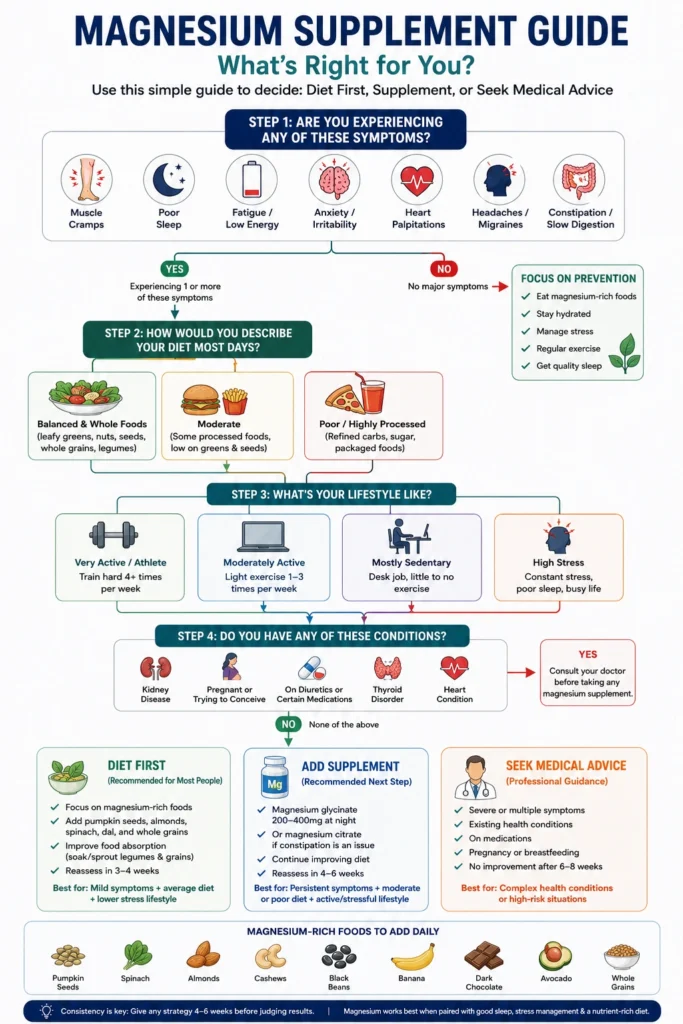
If You Have Muscle Cramps, Poor Sleep, and Fatigue Together
This combination is a strong indicator. Do not wait for a blood test to confirm — serum magnesium is a poor marker of true body stores. Start with dietary changes first: add dark leafy greens, pumpkin seeds, almonds, and whole grains. If improvement is slow or symptoms are significant, consider a magnesium glycinate supplement at 200 to 400mg per day in the evening.
If Your Main Issue Is Anxiety or Stress
Magnesium is worth trying before reaching for adaptogens or supplements with weaker evidence. Magnesium glycinate at 300 to 400mg before bed is the standard recommendation. Give it 4 to 6 weeks to assess effect. If low testosterone is also a concern — and it frequently co-occurs with magnesium deficiency in young men — our article on Low Testosterone in Young Men: 7 Signs Most Young Men Ignore covers that territory in detail.
If You Are Vegetarian or Vegan
Good news: many plant foods are high in magnesium — pumpkin seeds, dark chocolate, legumes, tofu, whole grains. The concern is absorption. Phytic acid reduces bioavailability from plant sources. Soaking legumes and grains before cooking reduces phytic acid content significantly.
If You Are on a Tight Budget
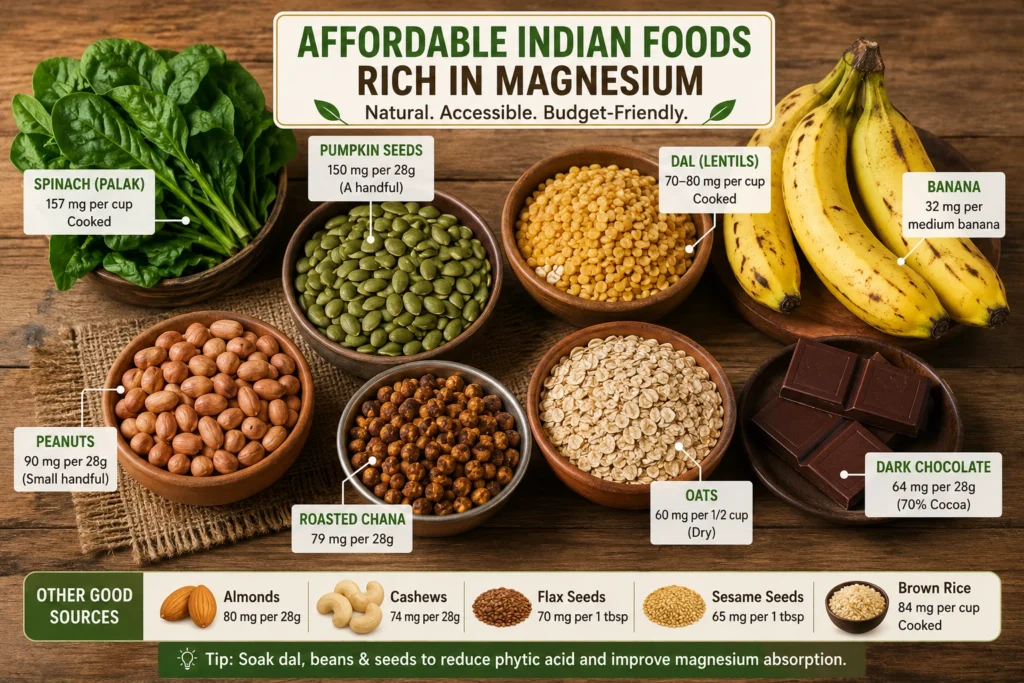
Food-first is the right approach here. Pumpkin seeds (kaddu ke beej), a handful per day, provide roughly 150mg of magnesium — that is about 35% of your daily requirement, and they cost very little. Dark leafy greens like palak are cheap, widely available, and magnesium-dense. If you need a supplement, magnesium citrate is the budget-friendly option with decent absorption. You do not need an expensive imported glycinate product to correct a moderate deficiency. For a full look at affordable, nutrient-dense eating, our Budget Indian Diet Plan for Weight Loss Under Rs. 200/Day is worth bookmarking.
If You Train Regularly
Athletes and gym-goers lose more magnesium through sweat and have higher cellular demands due to increased energy turnover. If you train 4 to 5 times a week and eat a standard Indian diet without attention to micronutrients, there is a real chance your intake is not matching your needs. Supplementing 200 to 400mg of magnesium post-workout or at night is a reasonable starting point.
If You Are Pregnant or Trying to Conceive
Magnesium requirements increase during pregnancy. Deficiency is associated with gestational hypertension and preterm labor. Do not self-supplement in high doses during pregnancy — work with your OB/GYN on dosing.
Final Verdict
Magnesium deficiency is not exotic. It is not a niche concern for biohackers or elite athletes. It is a widespread, underdiagnosed nutritional gap that quietly affects sleep, mood, muscle function, cardiovascular health, and bone density across a significant portion of the Indian population.
The signs of magnesium deficiency are easy to miss because they look like “normal” stress and fatigue. Cramps, anxiety, poor sleep, and low energy have become so common that people assume they are just features of a busy life. Often, they are not. They are fixable.
Start with food. Pumpkin seeds, spinach, almonds, and whole grains are your first move. If symptoms persist, choose magnesium glycinate, not oxide. Give it 4 to 6 weeks. Track how your sleep, energy, and muscle recovery feel. For most people, the improvement is noticeable and reasonably fast.
One thing to watch: if you are correcting fatigue and deficiency across multiple nutrients, do not do it all at once without some tracking. You will not know what is working.
FAQs
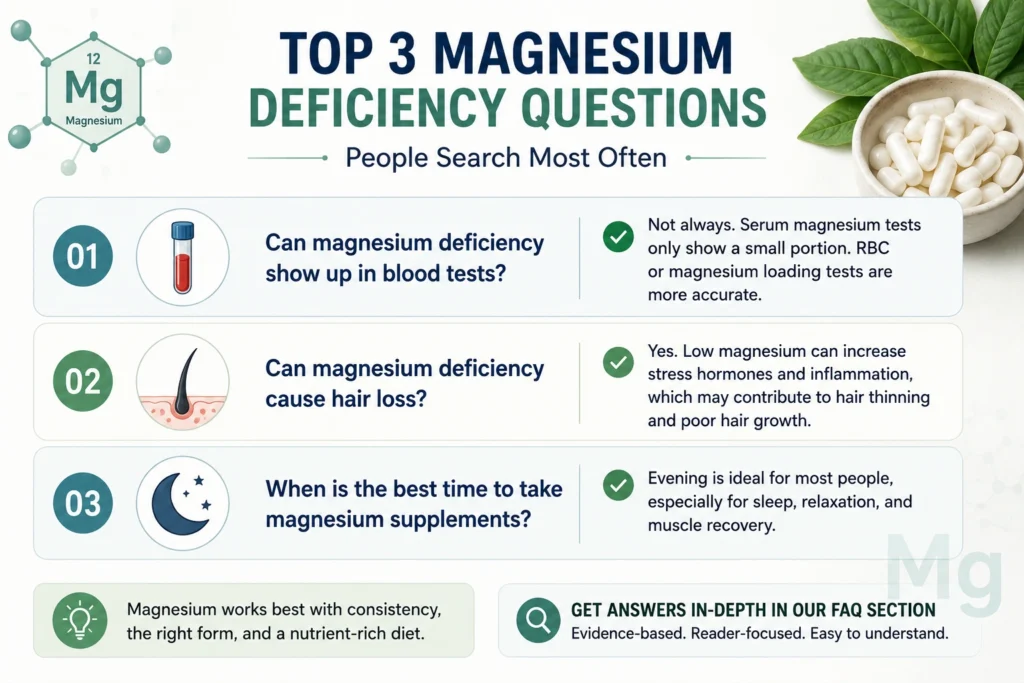
Can magnesium deficiency cause hair loss?
Low magnesium does not directly cause hair loss in the way severe protein or iron deficiency does. However, because magnesium plays a role in protein synthesis and is involved in the enzymatic processes that support follicle health, a prolonged deficiency can contribute to increased hair shedding over time. If hair loss is your primary concern, focus on ferritin, thyroid function, and protein intake first. Magnesium is supporting cast, not the main actor.
Is a normal blood test enough to rule out magnesium deficiency?
No. Serum magnesium is an unreliable marker because your body tightly regulates blood levels at the expense of cellular stores. You can have “normal” blood magnesium while your muscles, heart, and nervous system are running low. The RBC (red blood cell) magnesium test is more accurate, but even that is not perfect. Symptom picture matters as much as lab values here.
Does eating lots of dal and roti give you enough magnesium?
Partially. Whole dals and grains do contain magnesium, but phytic acid in unprocessed legumes and grains binds to magnesium and reduces how much you actually absorb. Soaking and cooking dal improves this considerably. White rice, which is a staple across much of India, has very little magnesium compared to brown rice or whole grains. A dal-rice diet alone is unlikely to meet full magnesium requirements without other sources.
Can too much magnesium be harmful?
From food, essentially no — your kidneys handle the excess. From supplements, very high doses (above 600mg per day from supplements alone) can cause persistent diarrhea, nausea, and in extreme cases with impaired kidney function, dangerously low blood pressure. Stick to 200 to 400mg from supplements and let food cover the rest. People with kidney disease should not supplement without medical supervision.
Does drinking a lot of chai or coffee deplete magnesium?
Yes, caffeine increases urinary magnesium excretion. Three or more cups of tea or coffee daily can meaningfully accelerate magnesium loss over time, especially if dietary intake is already borderline. This does not mean you need to quit chai, but it is worth factoring in if you have multiple deficiency symptoms.
What is the fastest way to fix magnesium deficiency?
Diet changes plus a well-absorbed supplement taken consistently. Magnesium glycinate at 300 to 400mg at night, combined with adding pumpkin seeds, dark leafy greens, and almonds to your daily diet. Most people notice improvements in sleep and muscle cramps within 2 to 4 weeks. Full tissue repletion takes longer, often 6 to 12 weeks of consistent intake. There is no shortcut that is faster than this.
A Final Word
If 3 or more of the signs above sound familiar, it is worth taking magnesium seriously for a month and seeing how you feel. Supplements are inexpensive, the risk is low, and the upside for quality of life is potentially significant.
Your body has been trying to tell you something. Muscle cramps at 3 AM are not personality flaws.