
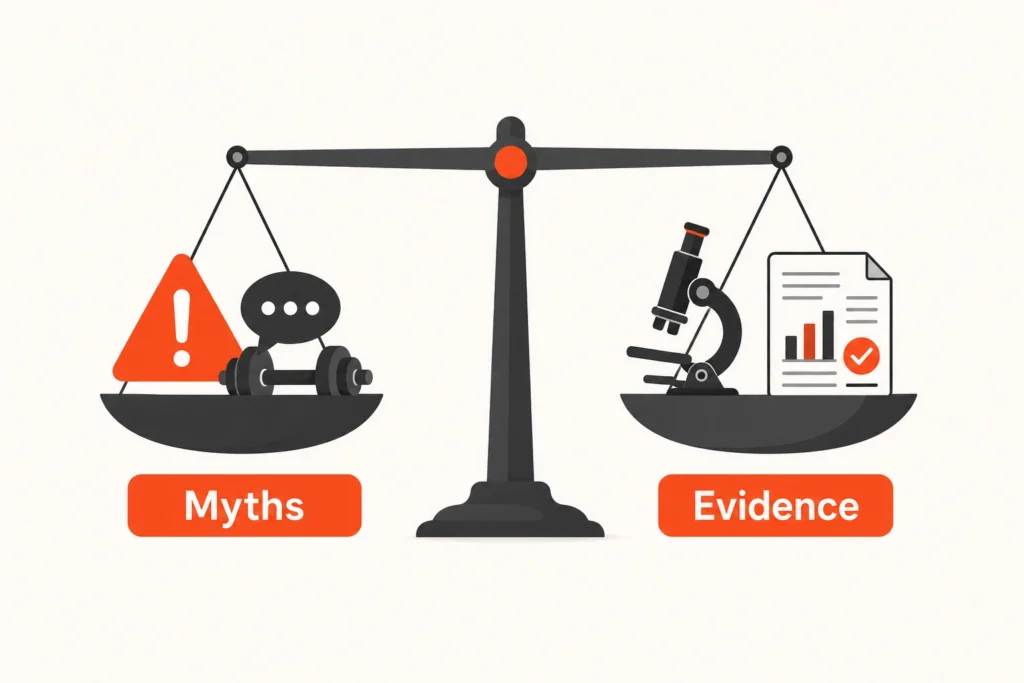
Creatine is the most researched sports supplement in existence, and it is also the most lied about. The creatine myths circulating in Indian gyms — that it damages your kidneys, causes hair loss, is a steroid, needs to be loaded, or stops working after a few months — are not based on science. They are based on fear, bad gym bro advice, and supplement companies that have a financial interest in keeping things complicated.
The core fact is simple: creatine monohydrate is safe, effective, and backed by over three decades of peer-reviewed research. It works for most people who use it correctly. It does not work in the dramatic ways some people expect, and it does not cause the damage that others fear.
What makes this frustrating in the Indian context specifically is that creatine is one of the most affordable and genuinely useful supplements available. Yet a large number of gym-goers either avoid it entirely based on misinformation, or cycle it unnecessarily, load it aggressively, or pay triple the price for “advanced” forms they do not need.
This piece addresses the myths one by one, with what the research actually shows.
Quick Answer
The most common creatine myths — and the truth:
- Creatine does not damage kidneys in people with normal kidney function; decades of research confirm this.
- Creatine is not a steroid; it is a naturally occurring compound found in meat and produced by the liver.
- Loading is not required; 3 to 5g daily reaches saturation in 3 to 4 weeks without a loading phase.
- Creatine does not directly cause hair loss, though one study found a possible indirect hormonal mechanism worth knowing about.
- Plain creatine monohydrate is the best form; no premium version has outperformed it in head-to-head trials.
What Creatine Actually Is Before We Bust Anything
Creatine is not a drug. It is not manufactured in a lab from scratch. Your body produces it naturally from three amino acids: arginine, glycine, and methionine. Your liver makes roughly 1 to 2 grams per day. You also get creatine from food, primarily red meat and fish — about 1 to 2 grams per 500g of cooked meat.
The supplement form simply tops up your muscle creatine stores to saturation, which diet and natural production alone rarely achieve fully.
Inside muscle cells, creatine is stored as phosphocreatine, which is used to rapidly regenerate ATP (adenosine triphosphate — the molecule your muscles use for energy). During short, explosive efforts like a heavy squat, sprint, or max deadlift, ATP is depleted in seconds. Phosphocreatine donates a phosphate group to ADP to recreate ATP almost instantly. More phosphocreatine available means you can sustain that explosive output slightly longer before performance drops.
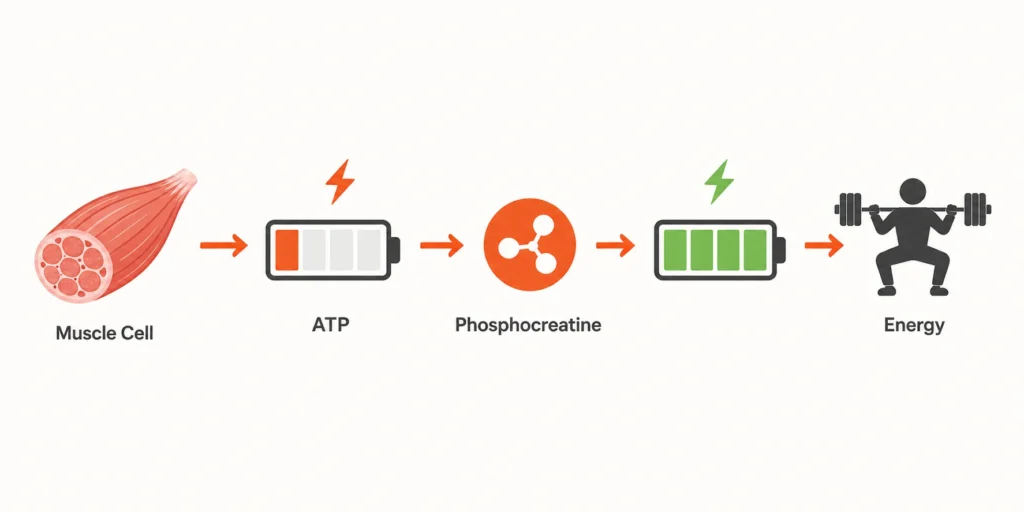
The practical result: you get one or two extra reps at a given weight before failing. Over months of training, that compounds into meaningful strength and muscle gains.
In the Indian supplement market, creatine monohydrate is widely available from brands like MuscleBlaze, AS-IT-IS, and Optimum Nutrition at prices between Rs. 500 and 1200 for a month’s supply. Yet it remains underused relative to whey protein, partly because of persistent myths that convince people it is risky. That gap is worth closing.
The Biggest Creatine Myths, Addressed One by One
Myth 1: Creatine Damages Your Kidneys
Creatine does not damage healthy kidneys, and this is one of the most thoroughly studied questions in sports nutrition. The concern originated from a misunderstanding: creatine supplementation raises serum creatinine levels, and creatinine is used in kidney function tests. Elevated creatinine can indicate kidney stress — but in this case, the elevated reading is a direct byproduct of creatine metabolism, not a sign of damage.
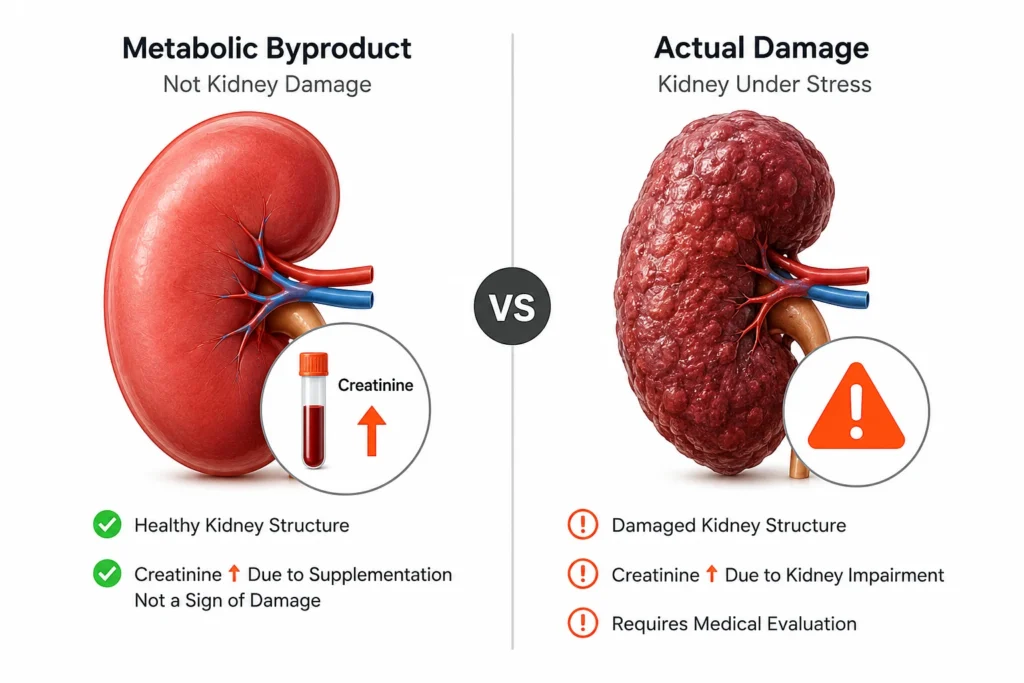
A long-term study published in the Journal of the International Society of Sports Nutrition reviewed safety data across multiple populations and concluded that creatine supplementation at standard doses does not impair kidney function in healthy individuals.
The nuance worth acknowledging: people with pre-existing kidney disease or single-kidney function should consult a doctor before using creatine, because the kidneys are already under strain and adding a compound that changes creatinine readings makes monitoring harder. That is a reasonable precaution for a specific population. It is not a blanket warning for everyone else.
Verdict: This myth is false for people with normal kidney function. If you have a kidney condition, speak to a doctor first.
Myth 2: Creatine Is a Steroid
Creatine is not a steroid in any sense of the word. Anabolic steroids are synthetic derivatives of testosterone that alter hormone levels and gene expression in muscle cells. Creatine is a nitrogenous organic acid that replenishes energy stores. They operate through completely different mechanisms and have nothing in common chemically.
This myth is particularly prevalent in Indian gym culture, where anything that visibly improves performance gets categorised as a steroid by people who are either genuinely confused or deliberately spreading misinformation. The visual cue that fuels the myth is water retention. Creatine increases intramuscular water content, which makes muscles look fuller within the first week or two. That increased fullness looks like “fast muscle gain” to an outsider and gets misread as steroid-like.
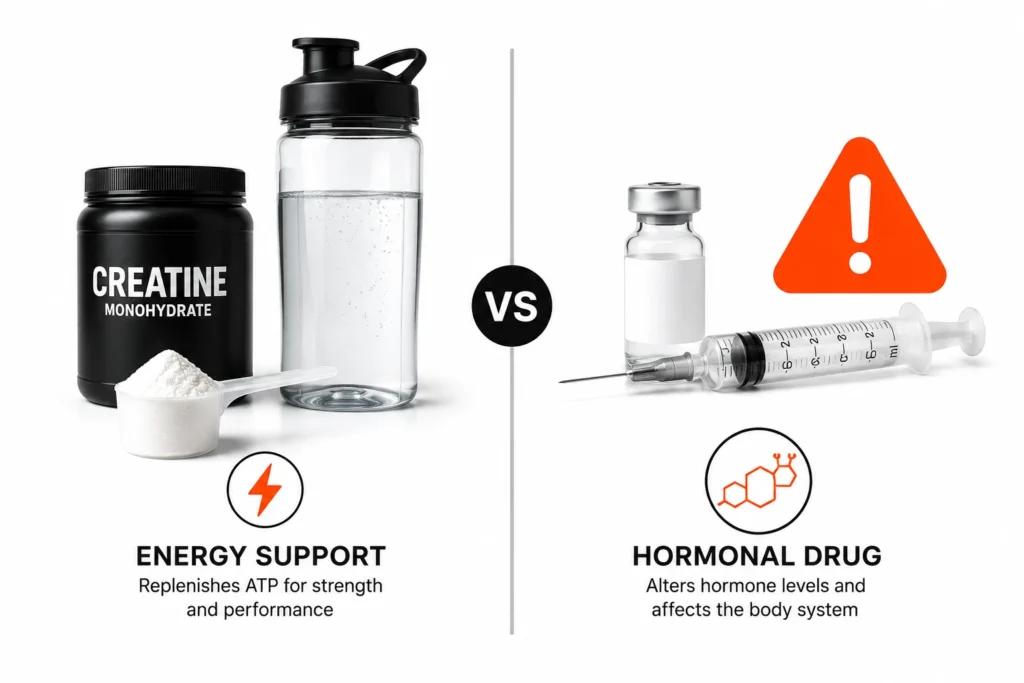
Creatine is not banned by WADA. It is not on any professional sports organisation’s restricted list. It is consumed daily by millions of athletes, from high school track teams to Olympic weightlifters, without any regulatory concern.
Verdict: Completely false. Calling creatine a steroid reflects either a misunderstanding of chemistry or a deliberate misrepresentation.
Myth 3: You Need to Load Creatine to Make It Work
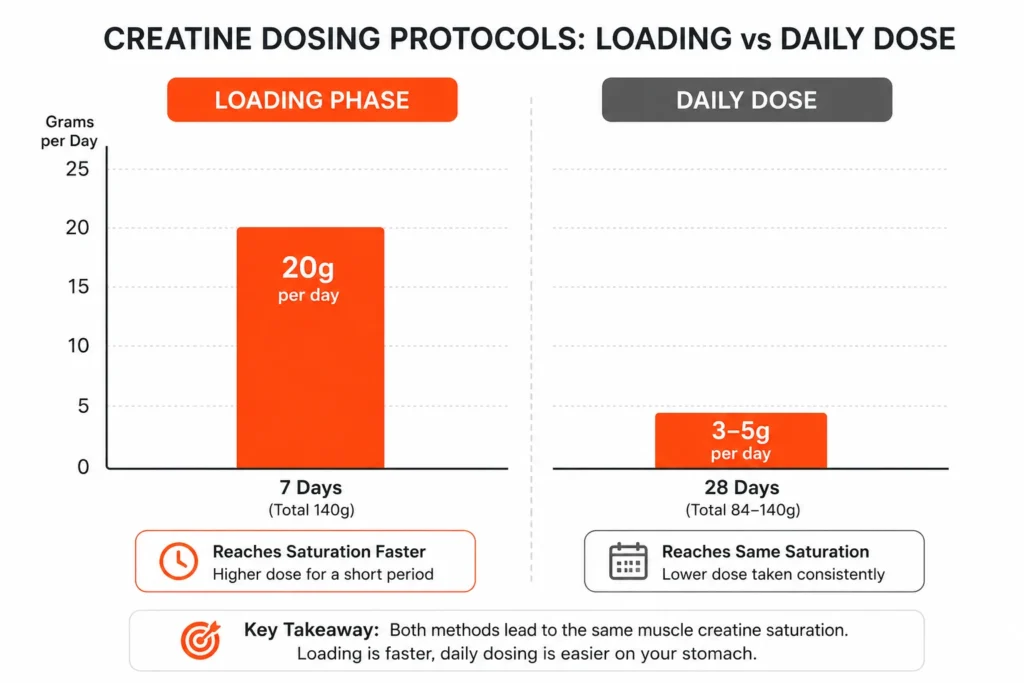
The loading protocol — 20g per day for 5 to 7 days, split into 4 doses — does saturate muscle creatine stores faster. That part is true. What is not true is that loading is required for creatine to work, or that it produces better long-term results than a standard dose.
Research consistently shows that taking 3 to 5g of creatine monohydrate daily reaches full muscle saturation in approximately 3 to 4 weeks without a loading phase. The end state is identical. The only difference is timing.
The downside of loading that nobody mentions: taking 20g daily in the first week significantly increases the likelihood of gastrointestinal discomfort, bloating, and loose stools. This leads people to conclude creatine does not agree with their stomach, when the issue is simply the dose.
For most people, 3 to 5g daily with no loading phase produces the same outcome with zero digestive side effects. If you want results slightly faster and your stomach handles it fine, loading is an option. It is not a requirement.
Verdict: Loading is optional, not necessary. Standard dosing gets you to the same place in 3 to 4 weeks.
Myth 4: Creatine Causes Hair Loss
This is the creatine myth that has the most legitimate scientific nuance behind it, and it deserves a careful answer rather than a flat dismissal.
A 2009 study published in Clinical Journal of Sport Medicine followed college-aged rugby players who supplemented with creatine for 3 weeks. The study found that DHT (dihydrotestosterone) levels increased by approximately 56% during the loading phase and remained 40% above baseline during maintenance. DHT is the androgen most associated with androgenetic alopecia (male pattern baldness).
Here is what the study did not find: it did not measure actual hair loss. It found a change in a hormone associated with hair loss. That is not the same thing.
No study since then has directly linked creatine supplementation to increased hair shedding or measured hair follicle changes. The 2009 study has not been replicated in the same way. The sample size was 20 participants.
The reasonable interpretation: if you have a strong genetic predisposition to male pattern baldness, a persistent elevation in DHT from creatine supplementation could theoretically accelerate a process that was going to happen anyway. If you have no family history of early hair loss, this finding is essentially irrelevant to you.
Verdict: Not proven, but not entirely dismissible either. People with strong genetic hair loss history should factor this in. Everyone else can largely set it aside.
Myth 5: Creatine Stops Working After a Few Months — You Need to Cycle It
Creatine cycling — taking it for 8 weeks, stopping for 4 weeks, restarting — has no scientific rationale. This practice appears to have originated from confusion with prohormones and performance-enhancing compounds that cause receptor downregulation or hormonal suppression over time. Creatine does not work through either mechanism.
Phosphocreatine stores simply reflect your current intake. When you take creatine daily, stores stay elevated. When you stop, stores return to baseline over 4 to 6 weeks. There is no adaptation that makes creatine “less effective” over time. No receptor downregulation. No hormonal suppression.
Some people notice a subjective drop in performance after their first few months on creatine. This is almost always because the initial visual response (intramuscular water retention) stabilises, and the more subtle long-term benefit (marginally better performance in high-intensity sets) does not feel as dramatic. The supplement is still working. It just does not feel new anymore.
Verdict: Cycling is unnecessary. Daily use at 3 to 5g indefinitely is supported by research and has no documented downside.
Myth 6: Expensive Creatine Forms Are Better Than Monohydrate
Creatine ethyl ester, buffered creatine (Kre-Alkalyn), creatine hydrochloride, and liquid creatine have all been marketed as superior to monohydrate with claims of better absorption, less water retention, and higher potency at lower doses.
“Creatine monohydrate remains the most studied form of creatine and the only form with consistent evidence supporting its efficacy and safety.” — International Society of Sports Nutrition Position Stand, 2017
A head-to-head comparison published in the Journal of the International Society of Sports Nutrition found that creatine monohydrate outperformed creatine ethyl ester in muscle creatine saturation and lean mass gains. Creatine ethyl ester was partially converted to the waste product creatinine in the gut before absorption, making it less efficient.
Creatine HCl has better solubility in water but no evidence of superior muscle creatine loading at lower doses. The “you need less of it” marketing claim is not supported by trials comparing equivalent muscle saturation outcomes.
Verdict: Monohydrate is the best option. Any premium creatine form charging 2 to 3x the price is not delivering 2 to 3x the results.
Creatine Myths vs Facts: Quick Reference Table
| Myth | What People Believe | What Research Shows | Risk Level | Verdict |
|---|---|---|---|---|
| Damages kidneys | Raises creatinine = kidney damage | Creatinine rise is metabolic byproduct, not damage marker | Low (healthy individuals) | False for healthy people |
| It is a steroid | Causes fast gains like steroids | Different mechanism entirely; not on any banned list | None | Completely false |
| Loading is required | Must take 20g/day for first week | 3-5g/day reaches saturation in 3-4 weeks | GI discomfort if loading | Loading optional |
| Causes hair loss | DHT rise directly causes baldness | 2009 study found DHT rise, not measured hair loss | Low-moderate (genetic risk) | Unproven, nuanced |
| Needs to be cycled | Body adapts and stops responding | No receptor downregulation occurs with creatine | None | Cycling unnecessary |
| Premium forms are better | Ethyl ester, HCl absorbs faster | Monohydrate outperforms alternatives in direct trials | Financial waste | Monohydrate wins |
How Creatine Is Absorbed and When Timing Actually Matters
Creatine monohydrate has an absorption rate of approximately 99% when taken orally, meaning almost all of what you swallow reaches circulation. Absorption occurs primarily in the small intestine via a sodium-dependent transporter called CreaT1.
Insulin enhances creatine uptake into muscle cells. This is why the older advice to take creatine with juice or a high-carbohydrate meal has some logic behind it. A carbohydrate intake of 70 to 80g alongside creatine increases muscle uptake by approximately 60% compared to taking it alone, according to research. This does not mean you must have a large carb meal with every dose, but it does mean taking creatine post-workout with your carb and protein meal is a reasonable choice.
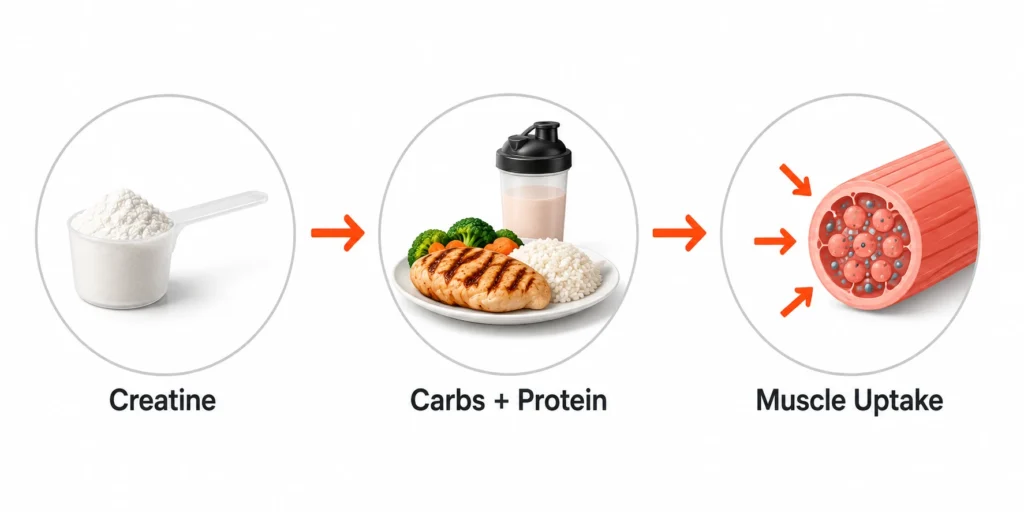
For timing specifically: post-workout is marginally better than pre-workout based on current evidence. A 2013 study in the Journal of the International Society of Sports Nutrition found that creatine taken post-exercise resulted in slightly greater lean mass gains compared to pre-exercise supplementation in recreational bodybuilders. The difference was small but consistent.
The practical takeaway: take 3 to 5g of creatine monohydrate after training, with your post-workout meal. On rest days, take it with any meal that contains carbohydrates. Consistency across days matters far more than precise timing on any individual day.
What the Research Actually Says About Creatine
The 2017 ISSN Position Stand on Creatine Supplementation reviewed over 500 studies and concluded that creatine monohydrate is the most effective ergogenic nutritional supplement available for increasing high-intensity exercise capacity and lean body mass during training. That is not a qualified statement. It is the consensus position of the leading sports nutrition research body.
A meta-analysis in the European Journal of Sport Science (2003) pooled data across 22 studies and found that creatine supplementation produced an average increase of 8% in maximum strength and 14% in the number of repetitions performed at a given weight compared to placebo.
These numbers sound modest. They are. Creatine is not a dramatic transformation tool on its own. What it does is create a small but consistent performance advantage that, compounded across hundreds of training sessions, results in meaningfully better strength and muscle mass outcomes than you would achieve without it.
The honest reality check: most people who start creatine and feel nothing in the first month are either not training hard enough to push past their phosphocreatine ceiling, or are expecting a subjective feeling that creatine does not actually produce. It does not create energy, stimulation, or a pump. It creates a slightly higher ceiling on explosive output. If you are not working near that ceiling already, the gap is not yet relevant.
Side Effects and Practical Concerns for Indian Gym-Goers
The most common side effect from creatine is bloating and loose stools, and both are almost exclusively associated with the loading protocol at 20g per day. At 3 to 5g daily, gastrointestinal issues are rare and typically resolve within a few days of starting.
Weight gain of 1 to 2kg in the first week is normal and expected. This is water retention inside muscle cells, not fat gain. It is also not the same as the subcutaneous water retention (under the skin, soft-looking) that people sometimes fear. Intramuscular water makes muscles look fuller and harder, not softer.
For the Indian climate specifically: creatine draws water into muscle cells, which means hydration requirements increase. Training in Indian summers with inadequate water intake while on creatine is a genuine concern. Aim for a minimum of 3 to 3.5 litres of water daily when supplementing, more if training outdoors or in gyms without air conditioning.
Creatine interacts with nephrotoxic drugs (medications that are hard on the kidneys, including certain antibiotics like aminoglycosides and NSAIDs taken regularly). If you are on long-term NSAID use for joint pain, which is not uncommon among Indian gym-goers self-managing injuries, this combination warrants awareness.
Creatine monohydrate is vegetarian. It is synthetically produced and contains no animal-derived ingredients despite being found naturally in meat. This is relevant for vegetarian Indian gym-goers who assume creatine is animal-sourced.
Who Should Use Creatine and Who Should Be Cautious
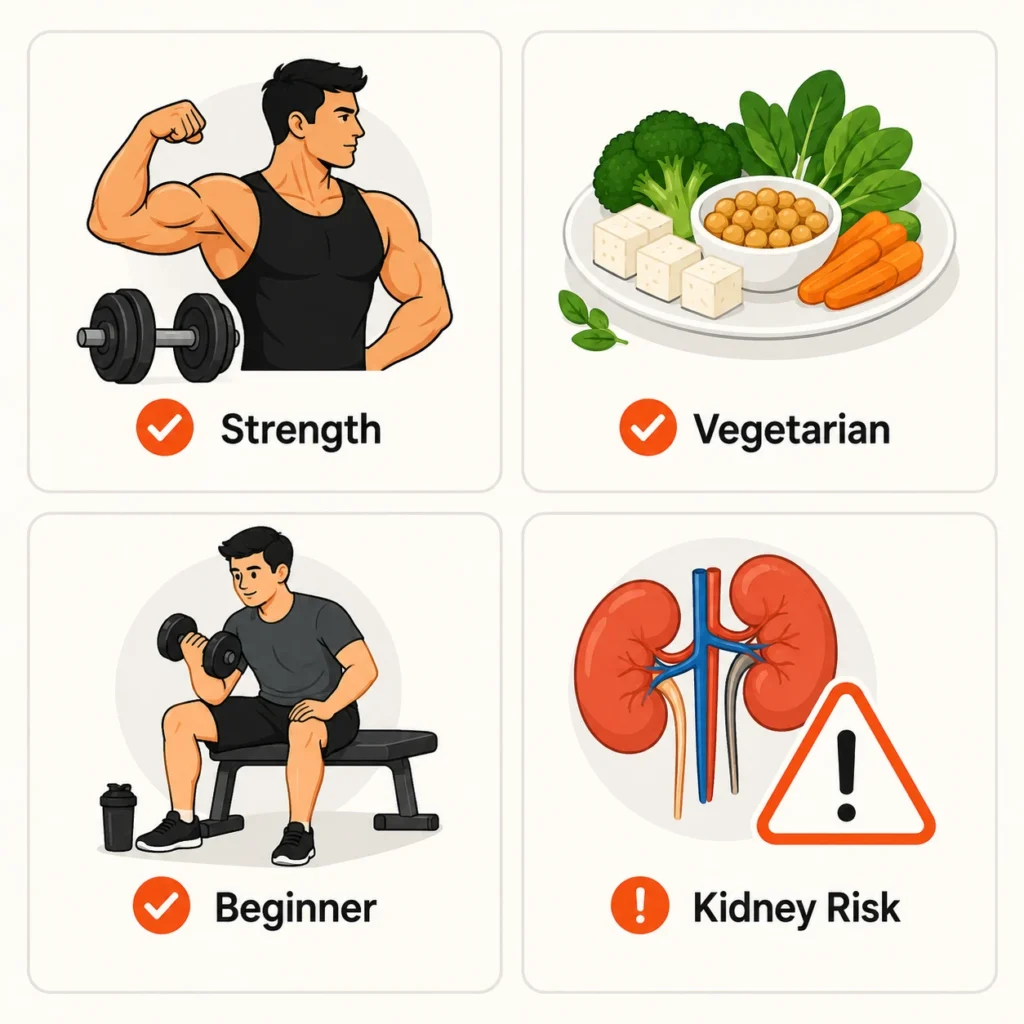
If your goal is strength and muscle gain
Creatine monohydrate at 3 to 5g daily is one of the most justified supplements you can take. Start with 3g if you are concerned about bloating. Take it post-workout with your protein and carbohydrate meal. Give it 6 to 8 weeks before making any assessment. Do not load.
If your goal is fat loss
Creatine does not directly burn fat. It does support lean muscle retention during a calorie deficit, which matters for body composition. The weight gain from intramuscular water in the first week can be psychologically jarring if you are tracking the scale daily. Understand what that number represents before deciding creatine is not for you during a cut.
If you follow a vegetarian diet
Vegetarians have lower baseline muscle creatine stores than omnivores because dietary creatine comes almost entirely from meat and fish. Research consistently shows that vegetarians respond more strongly to creatine supplementation than meat-eaters, with larger percentage increases in muscle creatine, strength, and performance. If you train seriously and eat vegetarian, creatine is arguably more valuable for you than for your meat-eating gym partner.
If you are a beginner who just started training
Creatine works best when you are training intensely enough to actually exhaust your phosphocreatine system. In the first 3 to 6 months of training, most beginners are still building the neuromuscular coordination to train at that intensity. The supplement will not hurt, but the return is lower early on. Focus on training consistency and diet first. Add creatine when your training intensity is genuinely high.
If you have a kidney condition or family history of kidney disease
Do not self-prescribe creatine without speaking to a nephrologist first. The concern is not that creatine causes kidney damage, but that elevated creatinine in blood tests makes it harder to monitor kidney function accurately in someone already at risk.
If you are worried about hair loss
If you have significant family history of early male pattern baldness, the DHT data from the 2009 study is worth knowing. It does not prove creatine will accelerate your hair loss, but it is the one scenario where the risk is not zero. The decision is yours to make with that information.
Final Verdict
Creatine monohydrate is the best supplement value in the market for anyone doing resistance training. The creatine myths around kidney damage, steroids, mandatory loading, and cycling are false and have been false for a long time. The hair loss question has one weak study behind it and deserves nuance rather than dismissal, but it does not hold up as a reason to avoid creatine entirely.
Buy the plain monohydrate. Skip the premium forms. Take 3 to 5g daily, post-workout on training days, with any meal on rest days. Stay hydrated. Expect slow, steady improvement in performance over months, not a dramatic transformation in weeks.
If you are building your supplement stack from scratch, our guide on 5 Best Fat Loss Supplements That Actually Work is worth reading alongside this one, because creatine fits into the stack differently depending on whether you are in a building or cutting phase. And if the hair loss concern is something you want to understand more broadly, our piece on why hair fall can be linked to vitamin deficiency covers the full nutritional picture for hair health.
Creatine has earned its reputation. Three decades of research on one supplement is not something you see often. Use it.

FAQ
Does creatine cause kidney damage? I keep hearing this at my gym.
Creatine does not damage kidneys in people with normal kidney function. The confusion comes from the fact that creatine metabolism raises serum creatinine, a marker that doctors use to assess kidney health. In this case, the elevated reading is a direct byproduct of creatine supplementation, not a sign of kidney stress or damage. Long-term studies including ones running over 5 years of continuous use have found no kidney impairment in healthy users.
Is creatine a steroid? My trainer told me to stay away from it.
Creatine is not a steroid. Anabolic steroids are synthetic testosterone derivatives that alter hormone levels. Creatine is a naturally occurring compound your body makes from amino acids and gets from meat. They have no chemical similarity, no shared mechanism, and no shared regulatory status. Creatine is not on any sports governing body’s banned substance list. Your trainer is wrong on this one.
Do I have to load creatine or can I just take it every day?
You do not have to load. A standard daily dose of 3 to 5g reaches full muscle creatine saturation in approximately 3 to 4 weeks without a loading phase. The end result is identical to loading. Loading only makes sense if you have a specific reason to saturate stores faster, like a competition in two weeks. For most people training regularly, slow saturation with no digestive side effects is the better approach.
Will creatine make me look bloated or fat?
Creatine causes intramuscular water retention, meaning water is stored inside muscle cells. This increases muscle volume and typically makes muscles look fuller and slightly harder, not softer or puffier. You will likely see a 1 to 2kg increase on the scale in the first week. That is water inside your muscles, not fat. The scale number is misleading. How you look and how you perform are the more relevant measures.
I am vegetarian. Can I still take creatine, and will it work for me?
Creatine monohydrate supplements are synthetically produced and are completely vegetarian. They contain no animal-derived ingredients. More importantly, vegetarians have lower baseline muscle creatine stores than meat-eaters because dietary creatine comes almost exclusively from meat and fish. Research consistently shows that vegetarians experience larger performance improvements from creatine supplementation than omnivores, because they are starting from a lower baseline and have more room to saturate.
Which creatine is best to buy in India: monohydrate or the premium forms?
Creatine monohydrate is the best option available in India and globally. No premium form, including creatine ethyl ester, creatine HCl, or Kre-Alkalyn, has outperformed monohydrate in direct comparison studies. In fact, creatine ethyl ester performed worse than monohydrate in a head-to-head trial. Brands like AS-IT-IS, MuscleBlaze, and Optimum Nutrition sell pure monohydrate at Rs. 500 to 1200 per month. Any product charging significantly more for a “superior” form is not delivering superior results.
Does creatine really cause hair loss or is that just another myth?
This is the creatine myth with the most legitimate nuance behind it. A 2009 study on rugby players found that creatine supplementation raised DHT (dihydrotestosterone) levels by 56% during loading and remained 40% above baseline during maintenance. DHT is the primary driver of male pattern baldness in genetically susceptible men. However, the study did not measure actual hair loss. No subsequent study has confirmed direct hair shedding from creatine use. If you have a strong family history of early male pattern baldness, this information is worth factoring into your decision. For everyone else, the risk is largely theoretical.
A Note Before You Go
You now have what most gym conversations around creatine lack: the actual evidence. Not what someone’s cousin told them, not what a supplement brand’s packaging implies, not what a trainer confidently stated without a single source.
Take 3 to 5g of plain monohydrate daily. Track your performance over 8 weeks. Pay attention to how many reps you get at your working weights, not just how you look in the mirror.
If you have been avoiding creatine for years based on the kidney or steroid myths, and you have read this piece in full, now is a reasonable time to try it. Share what you notice in the comments below. Whether it made a difference, how long it took, or what side effects (if any) you actually experienced. Real data from real people training in Indian conditions is more useful than most of what is currently circulating in gym WhatsApp groups.







One Response
Very informative