Hair fall linked to vitamin deficiency is not a fringe theory — it is one of the most clinically documented and routinely missed causes of excessive hair shedding in India. If you are losing more than 100 strands a day consistently, and your shampoo, oil, or expensive hair serum is not making a dent, there is a reasonable chance your scalp is paying the price for what your diet is not providing.
Most people treat hair fall as a cosmetic problem. It is a nutritional signal. The follicle is a metabolically active structure that competes for nutrients the same way your muscles and organs do. When the body is running low, the follicle loses out first.
The part most articles skip: not every vitamin deficiency causes hair fall the same way, and not every person with hair fall has a deficiency. Knowing which vitamins actually matter, and what the research behind them looks like, changes what you actually do about it.
Quick Answer
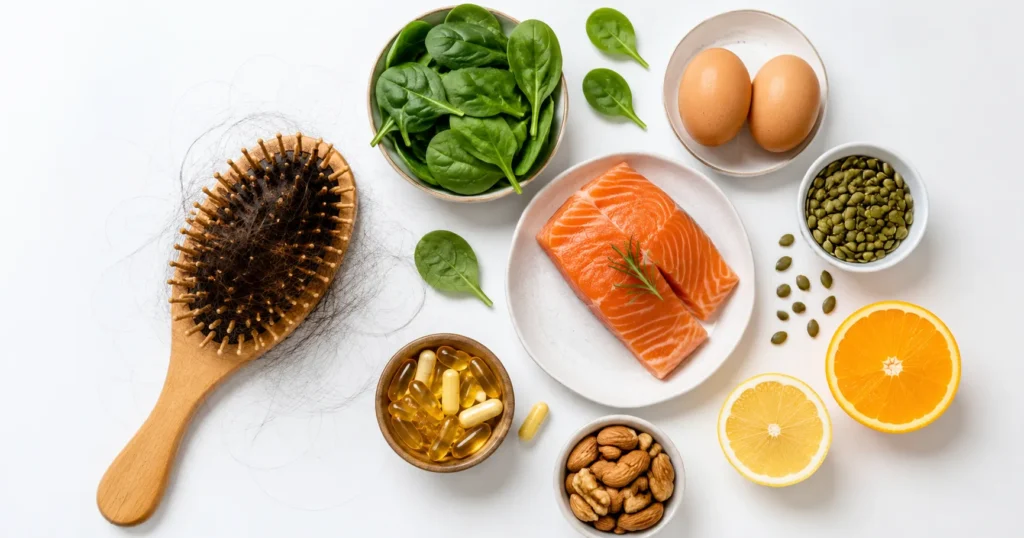
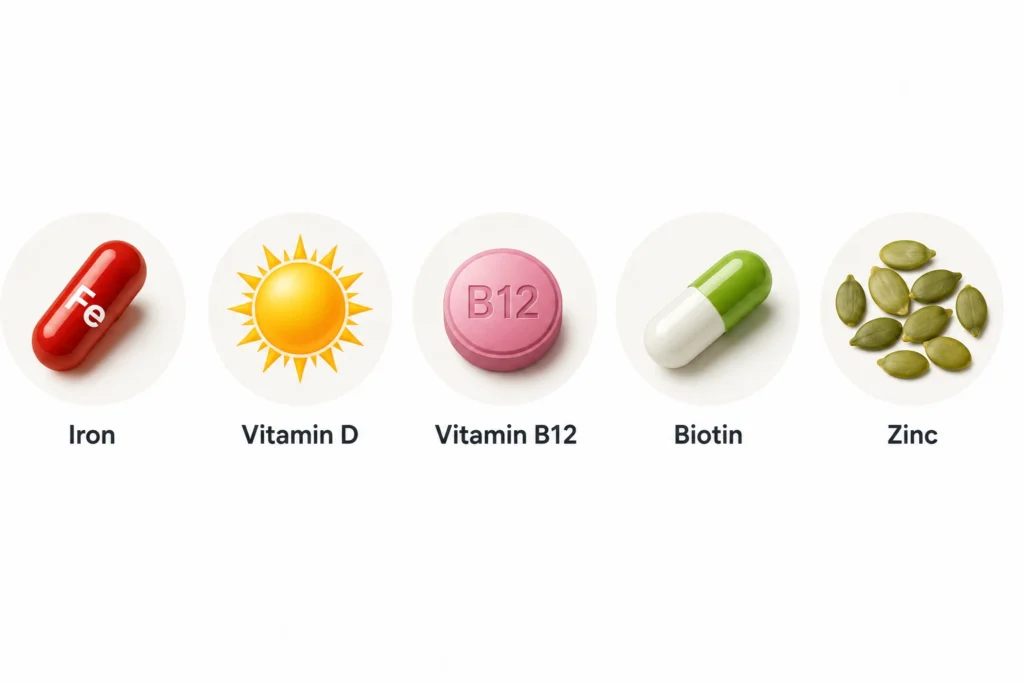
Vitamins and nutrients most directly linked to hair fall:
- Iron deficiency (technically a mineral, but the most common nutritional cause of hair loss in Indian women) reduces oxygen delivery to follicles and disrupts the hair growth cycle.
- Vitamin D deficiency impairs follicle cycling and is associated with alopecia areata and diffuse thinning.
- Vitamin B12 deficiency affects red blood cell production and follicle nourishment, particularly common in vegetarians.
- Biotin (B7) deficiency is rare, but when genuine, causes notable hair thinning and brittle nails.
- Zinc deficiency disrupts protein synthesis in the follicle and accelerates shedding, especially in people on calorie-restricted diets.
What Vitamin Deficiency Causing Hair Fall Actually Means
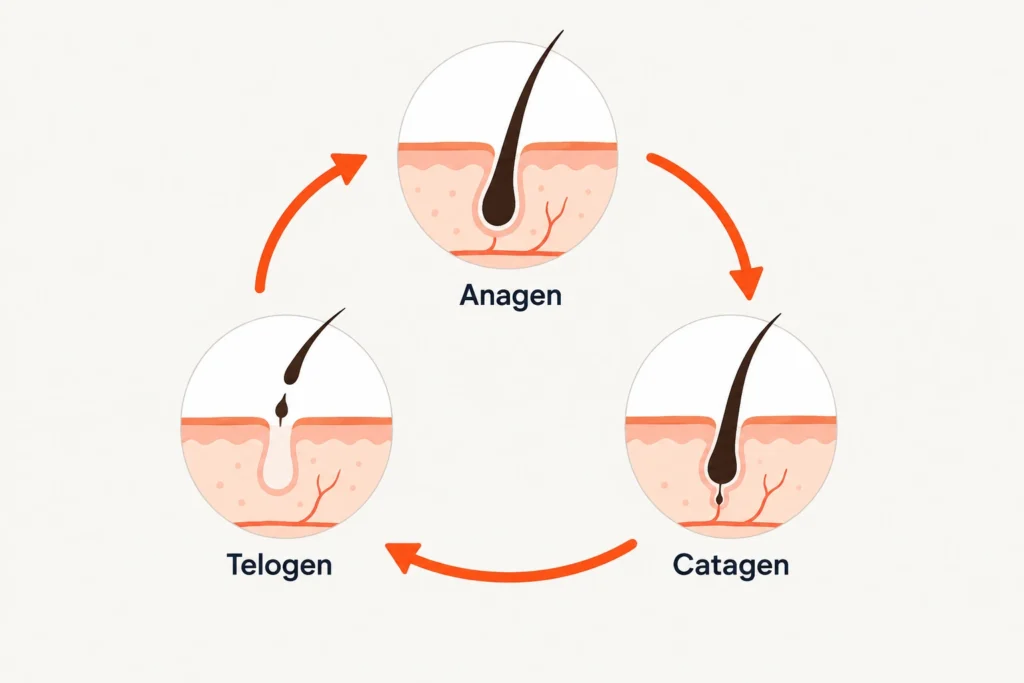
The hair follicle is one of the fastest-cycling cell populations in the human body. It goes through growth phases (anagen), transition (catagen), and rest (telogen) continuously. Every phase of that cycle requires energy, protein, and specific micronutrients.
A vitamin or mineral deficiency does not “damage” the hair shaft you can see. It disrupts the cycle happening inside the follicle, at the root. The result is called telogen effluvium (TE), a condition where more follicles than normal shift into the resting and shedding phase simultaneously. This is why deficiency-related hair fall tends to be diffuse (thinning all over) rather than patchy.
Think of it this way: the follicle is like a small factory. If raw material supply drops below a threshold, the factory slows production or shuts a line down. You notice the output problem weeks to months later, which is why hair fall from a deficiency often starts 2 to 3 months after the nutritional problem began.
In India, the picture is made more complicated by diet. A large proportion of the population follows vegetarian diets that are naturally low in iron, B12, and zinc in their most bioavailable forms. Add calorie-restricted weight loss phases (common among gym-goers in the 18 to 35 bracket), and deficiency-driven hair fall becomes genuinely common rather than exceptional.
Which Vitamin Deficiencies Actually Cause Hair Fall — And How Badly
Iron Deficiency: The Most Common Cause of Hair Fall in India
Iron deficiency is not a vitamin deficiency strictly speaking, but it is the single most well-documented nutritional cause of diffuse hair loss, and it cannot be left out of this conversation.
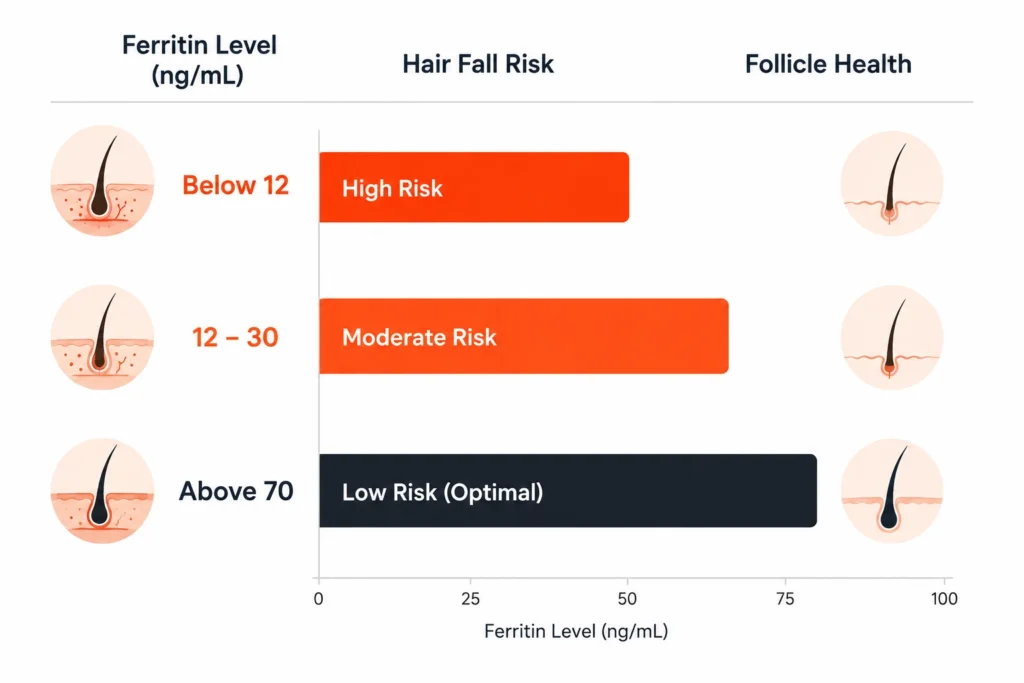
Ferritin (the iron storage protein) is what matters most, not just serum iron. Hair follicles store iron in the dermal papilla and use it during the anagen growth phase. When ferritin drops below 30 ng/mL, follicle function is compromised. Many labs flag deficiency only below 12 ng/mL, which means a person can have clinically significant hair fall with lab results that look “normal.”
A 2006 study in the Journal of the American Academy of Dermatology confirmed the link between low ferritin and chronic telogen effluvium in premenopausal women. The association was independent of actual anemia.
For Indian women specifically, this matters enormously. Approximately 59% of women aged 15 to 49 in India are anaemic according to NFHS-5 data, with iron deficiency being the dominant cause. Vegetarian diets provide non-heme iron (from plant sources), which has an absorption rate of only 2 to 20% compared to 15 to 35% for heme iron from meat.
Verdict: Most impactful cause of nutritional hair fall for Indian women. Get ferritin tested, not just haemoglobin.
Vitamin D Deficiency and Hair Loss: A Stronger Link Than Most Expect
Vitamin D deficiency is directly linked to impaired hair follicle cycling. Vitamin D receptors (VDRs) are expressed in keratinocytes inside the hair follicle, and these receptors play a role in initiating new anagen (growth) phases.
Research published in Skin Pharmacology and Physiology (2017) found that low vitamin D levels were significantly more prevalent in patients with telogen effluvium and alopecia areata compared to healthy controls. Women with vitamin D levels below 20 ng/mL had measurably higher rates of diffuse hair thinning.
India has a vitamin D deficiency paradox: despite abundant sunlight, deficiency is widespread due to skin melanin levels, indoor lifestyles, and poor dietary intake of vitamin D-rich foods (which are mostly animal-based). Studies suggest 70 to 100% of urban Indians have suboptimal vitamin D levels.

The supplementation evidence here is mixed. Correcting a genuine deficiency does appear to improve hair cycling. But taking vitamin D supplements when you are not deficient does not make hair grow faster. The benefit is specific to addressing a real gap.
Verdict: Highly relevant for the Indian context. Worth testing routinely if you have unexplained hair fall.
Vitamin B12 Deficiency Causing Hair Fall: Real but Indirect
B12 does not act on the follicle directly the way vitamin D does. Its role in hair health runs through red blood cell production and DNA synthesis. B12 is required to make healthy red blood cells, which carry oxygen to the follicle. Low B12 means reduced follicle oxygenation and a slower, disrupted hair cycle.
Deficiency develops slowly. The body stores B12 in the liver for 2 to 5 years, so someone who has been vegetarian for a long time may show no symptoms initially and then experience a sudden sharp decline in hair density.
Approximately 47% of vegetarians in India are B12 deficient based on studies conducted in hospital settings, according to research in the Indian Journal of Endocrinology and Metabolism. Hair fall in this context is usually accompanied by fatigue, brain fog, and sometimes tingling in the extremities.
Verdict: Particularly relevant for long-term vegetarians and vegans in India. Hair fall is rarely the only symptom. If your B12 deficiency is confirmed, address it with injections or high-dose supplements, not just dietary changes.
Biotin (Vitamin B7) Deficiency: Overhyped, but Real in Specific Cases
Biotin has been aggressively marketed as a hair growth supplement. The reality is more specific than the marketing suggests. Genuine biotin deficiency is rare in people eating a varied diet because gut bacteria synthesise some biotin and most foods contain small amounts.
Where biotin deficiency does occur, it causes notable hair thinning, brittle nails, and a characteristic scaly rash around the nose and mouth. This can happen with long-term use of certain anticonvulsant medications, excessive raw egg white consumption (avidin in raw egg whites blocks biotin absorption), or in people with a genetic disorder called biotinidase deficiency.
For most people buying biotin supplements for hair fall, the deficiency diagnosis was never confirmed. A randomised controlled trial published in the Journal of Clinical and Aesthetic Dermatology (2015) found significant improvements in hair growth in women with thinning hair who took a marine-protein-based supplement containing biotin, but the biotin was not isolated as the active variable.
Verdict: Overrated as a standalone hair supplement. Worth addressing only if deficiency is confirmed through testing.
Zinc Deficiency and Hair Fall: Underrated in the Gym Population
Zinc is required for protein synthesis, cell division, and the function of multiple enzymes involved in hair follicle structure. A deficiency specifically disrupts the anagen phase and causes hair to shed prematurely. Zinc deficiency-related hair loss can look like male-pattern thinning, which often leads to the wrong treatment.
Gym-goers in India are at higher risk than average. Intense exercise increases zinc excretion through sweat. Calorie-restricted diets frequently under-provide zinc. Plant-based diets, where zinc comes from legumes and grains with high phytate content, reduce zinc bioavailability by up to 45% compared to animal sources.
A serum zinc level below 70 mcg/dL is associated with hair loss. Supplementing at 50mg elemental zinc per day for 12 weeks has shown measurable improvements in hair density in zinc-deficient individuals.
Verdict: Relevant for calorie-restricted dieters and people training intensely on plant-based diets. Often missed because it overlaps with other causes visually.
Vitamin A: A Case Where More Is Actually Worse
Most of the conversation around vitamin deficiency causing hair fall focuses on not getting enough. Vitamin A is the one exception where excess causes the same problem as deficiency.
Vitamin A toxicity (hypervitaminosis A) from aggressive supplementation drives follicles into the resting phase and causes widespread shedding. High-dose retinol supplements and some dermatology-strength retinoids carry this risk. At the same time, severe vitamin A deficiency also impairs follicle health.
The safe range for vitamin A is relatively narrow. For hair health specifically, dietary sources (carrots, sweet potato, leafy greens providing beta-carotene, which converts to vitamin A as needed) are safer than retinol supplements, because beta-carotene conversion is self-limiting.
Verdict: Do not supplement unless deficiency is confirmed. More is not better here.
Vitamin Deficiency Hair Fall Comparison Table
| Nutrient | Hair Fall Type | Deficiency Prevalence in India | Absorption Rate (Plant vs Animal) | Time to Show Results | Verdict |
|---|---|---|---|---|---|
| Iron (Ferritin) | Diffuse shedding, telogen effluvium | 59% women anaemic (NFHS-5) | 2-20% (plant) vs 15-35% (animal) | 3-6 months post-correction | Most common cause |
| Vitamin D | Diffuse thinning, follicle cycling disruption | 70-100% urban Indians suboptimal | Diet alone inadequate; sun + supplement needed | 3-4 months | Highly relevant |
| Vitamin B12 | Diffuse thinning, slow cycle | 47% vegetarians deficient | Poor from plant sources | 4-6 months | Critical for veg diet |
| Biotin (B7) | Thinning, brittle nails, rash | Rare except specific conditions | Good from most foods | 3-6 months | Overhyped; confirm before supplementing |
| Zinc | Premature shedding, mimics MPB | Moderate, higher in athletes | 15-25% (plant) vs 40-50% (animal) | 3-4 months | Underrated in gym population |
| Vitamin A (excess) | Widespread acute shedding | From over-supplementation | N/A | Reverses on stopping supplement | Do not over-supplement |
How the Body Absorbs These Nutrients and Why Timing Matters
The hair follicle does not receive nutrients directly from topical application. Nutrition reaches it through blood circulation. This is why a scalp massage with vitamin-infused oil does not fix an internal deficiency. The fix must come from within.
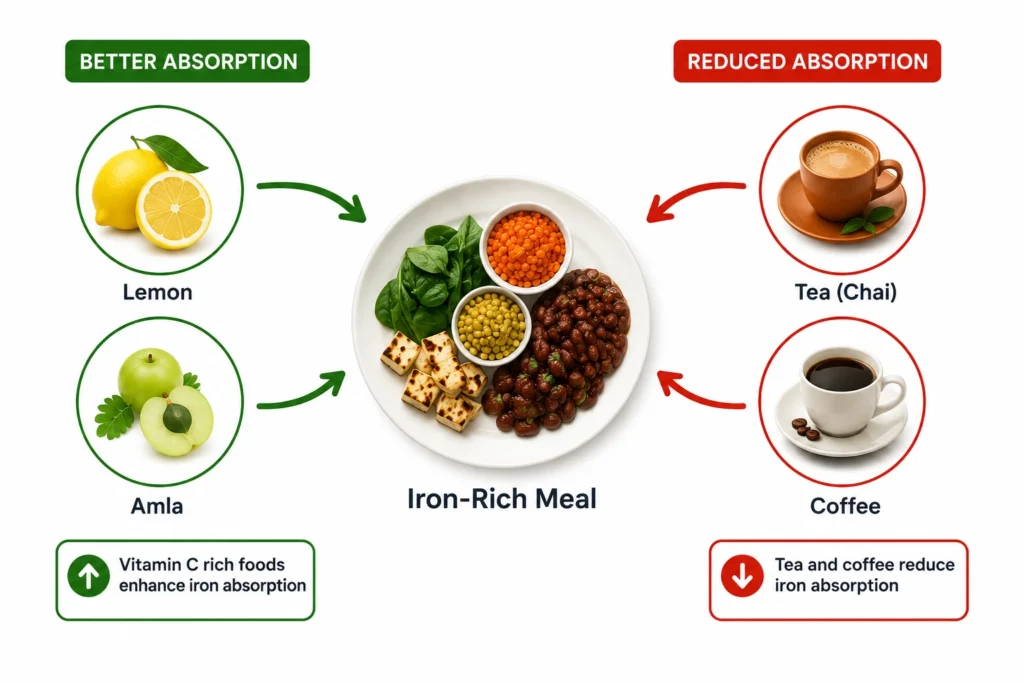
Iron absorption is the most context-dependent. Vitamin C dramatically increases non-heme iron absorption from plant foods. Eating a source of vitamin C (lemon, amla, guava) alongside iron-rich foods like spinach, lentils, or fortified cereals can increase absorption by up to 67%. Calcium and tannins (in tea and coffee) block iron absorption. Drinking chai immediately after a meal reduces the iron you absorb from that meal by up to 62%.
Vitamin D requires fat for absorption since it is fat-soluble. Taking a vitamin D supplement with a fat-containing meal increases absorption meaningfully. The same applies to vitamins A, E, and K.
B12 absorbs through a protein called intrinsic factor produced by the stomach. People who have taken long-term antacids or PPIs (common for acidity issues in India) may have reduced intrinsic factor production, which impairs B12 absorption regardless of dietary intake.
For timing: most of these nutrients do not have a performance window the way protein does for muscle. Consistency across the day matters more than timing. Take fat-soluble vitamins with your largest meal of the day.
What the Research Actually Says About Vitamin Deficiency and Hair Fall
The most comprehensive review on this topic is a 2017 paper published in Dermatology and Therapy, which examined the role of micronutrients in hair loss across multiple deficiency types. The authors concluded that iron and vitamin D have the strongest evidence base for connections to hair loss, while biotin’s role is primarily limited to confirmed deficiency states.
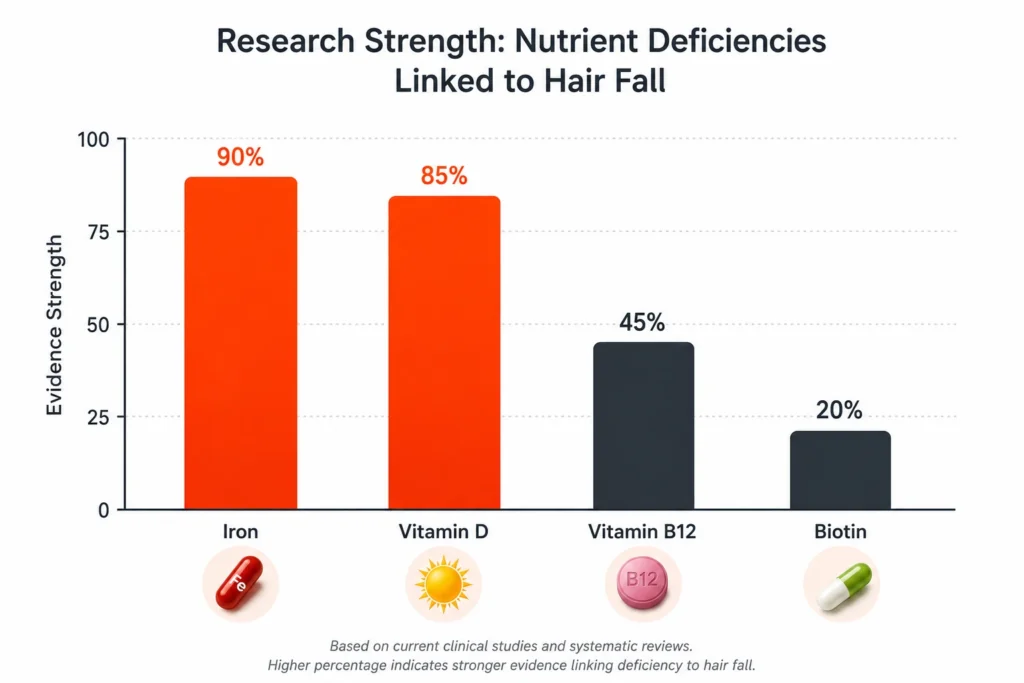
A separate 2020 study in the International Journal of Trichology measured micronutrient levels in 50 patients with telogen effluvium against healthy controls. Vitamin D and ferritin were significantly lower in the hair loss group. Zinc showed a trend but did not reach statistical significance in that sample size.
The honest reality check: research on hair loss is genuinely difficult to conduct. Hair growth cycles are slow, confounding variables are many, and placebo effects are significant in hair studies because shedding often stabilises naturally. Many studies that show dramatic results are small or industry-funded. That said, the mechanistic logic behind iron, B12, and vitamin D is solid enough that correcting confirmed deficiencies is reasonable even without a perfectly clean RCT for each nutrient.
Side Effects and Practical Concerns for Indian Readers
Supplementing without testing is where most people go wrong. Over-correcting iron causes constipation, nausea, and in some cases, iron toxicity. Excess vitamin A, as covered earlier, makes hair fall worse. Zinc supplements above 40mg daily consistently can impair copper absorption over time.
For vegetarians and vegans, the sequence that makes most sense is: test ferritin, B12, and vitamin D first. Supplement what is actually deficient, not what you guess might be low.
About 70% of South Asian adults are lactose intolerant, which matters primarily because dairy is sometimes recommended as a source of B12 and some B vitamins. For many Indian readers, dairy-based solutions are not practical or comfortable.
Heat and humidity in most parts of India do not meaningfully affect vitamin absorption from supplements, but they do accelerate degradation of supplements stored improperly. Keep supplements away from heat and direct sunlight, which in an Indian summer is more important than most packaging guidelines suggest.
Certain common Indian medications interact with nutrient absorption. Metformin (used for diabetes and PCOD/PCOS) significantly depletes B12. If you are on metformin long-term and have not tested your B12, that is a specific and real risk for hair fall and neurological symptoms. Hair fall in this context often gets attributed to the underlying condition rather than the medication effect.
Who Should Address Which Deficiency First
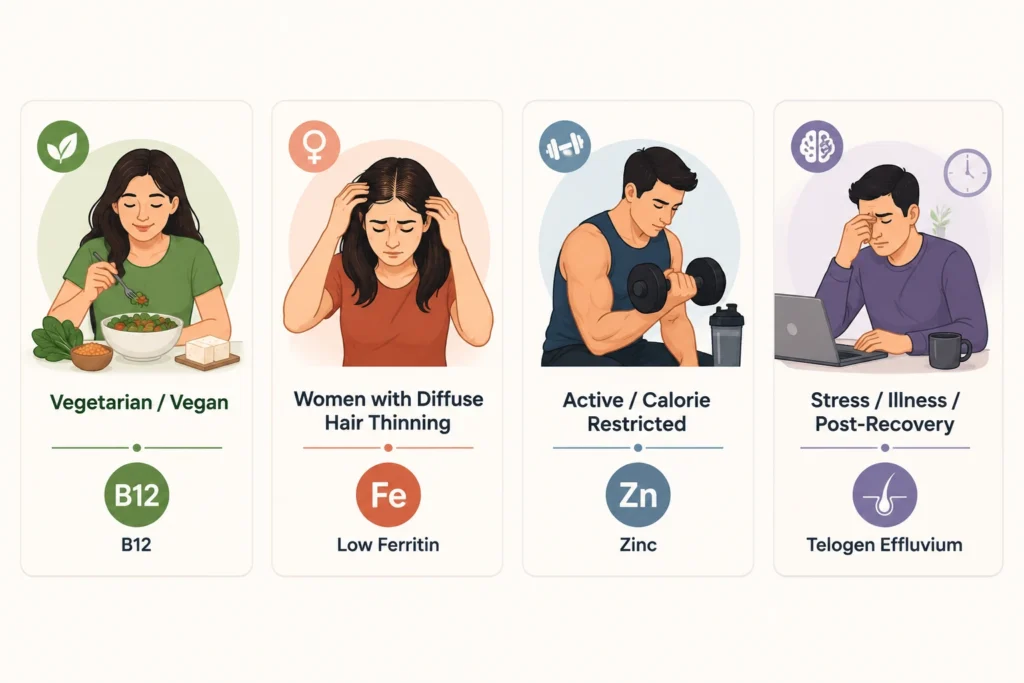
If you are a woman in your 20s or 30s with diffuse hair thinning
Get ferritin tested before anything else. Not haemoglobin. Ferritin. Aim for a level above 70 ng/mL, not just above the lab’s lower reference range. This is where most Indian women’s hair fall workups fall short. Iron supplementation with vitamin C on an empty stomach (if tolerated) is typically the first step. Avoid tea or coffee for 1 hour before and after.
If you follow a vegetarian or vegan diet
B12 and vitamin D are your two primary targets. A vegetarian diet done without attention to B12 creates a slow, cumulative deficiency that shows up in hair, mood, and energy simultaneously. A sublingual B12 supplement (methylcobalamin form, 1000 mcg daily) is standard for those not eating animal products.
If you are in an active calorie deficit or following a fat loss diet
Zinc is your underappreciated risk here. Calorie restriction that drops intake below 1500 kcal/day frequently under-provides zinc, especially if the diet is predominantly plant-based. If you are cutting weight for aesthetics or competition, add a zinc supplement at 25 to 30mg elemental zinc per day. Our article on 5 Best Fat Loss Supplements covers zinc’s role in metabolic function during cuts as well.
If your hair fall started 2 to 3 months after a stressful period or illness
This timeline is classic for telogen effluvium triggered by physiological stress, not a vitamin deficiency per se. Recovery often happens on its own within 6 months. Focus on eating enough total food (calorie restriction itself is a trigger), adequate protein (minimum 1.2g per kg bodyweight), and check for any deficiencies that the stressful period may have worsened.
If you have recently started or changed your workout programme significantly
Increased training intensity raises zinc, iron, and B12 requirements. What was sufficient before might not be enough now. This is common among people who have recently ramped up from casual exercise to training 4 to 5 days per week. Hair fall 2 to 4 months into a new intense training block is often nutritional in origin.
If you have a skin condition like psoriasis, eczema, or seborrhoeic dermatitis alongside hair fall
This combination suggests the hair fall may be inflammatory rather than purely nutritional. Vitamin D has anti-inflammatory properties relevant here, and zinc has shown benefit in seborrhoeic dermatitis specifically. But this profile warrants a dermatologist review, not just supplementation.
Final Verdict
Vitamin deficiency causing hair fall is a real, well-documented problem — but it has been turned into marketing fuel for supplements that most people do not need and have not confirmed they are actually deficient in.
The path that actually works: test first (ferritin, vitamin D, B12, zinc), identify what is genuinely low, address it specifically with diet and targeted supplementation, and give it 3 to 6 months before expecting visible change. Hair cycles are slow. Impatience leads to chasing new supplements before the current fix has had time to work.
If you want to understand the broader picture of nutrient gaps that most Indians are quietly carrying, our guide on 7 Early Signs of Nutrient Deficiency Most Indians Ignore is worth reading alongside this one. It covers how these deficiencies cluster together and why fixing one often reveals another.
Hair fall from nutrition is one of the more fixable problems in the category. You just have to be specific about which problem you are actually fixing.
FAQ
Can low vitamin D really cause hair fall, or is that just marketing?
Low vitamin D genuinely impairs hair follicle cycling through the vitamin D receptor (VDR) system present in hair follicles. Research published in Skin Pharmacology and Physiology found that patients with telogen effluvium had significantly lower vitamin D levels than controls. This is not a marketing claim. However, taking vitamin D supplements when you are not deficient will not stimulate extra hair growth. The benefit is real but specific to correcting an actual deficiency.
How do I know if my hair fall is from a vitamin deficiency or something else?
Deficiency-related hair fall is typically diffuse (affects the whole scalp, not one area), starts 2 to 3 months after the nutritional problem began, and often comes with other symptoms like fatigue, brain fog, or brittle nails. Patchy circular hair loss suggests alopecia areata. A receding hairline in a defined pattern suggests androgenetic alopecia, which is hormonal, not nutritional. A full panel including ferritin, vitamin D, B12, zinc, and thyroid function helps differentiate clearly.
Do biotin supplements actually grow hair back?
For most people, no. Biotin supplementation only restores hair growth when an actual biotin deficiency exists, which is uncommon. The marketing around biotin supplements exploits the fact that genuine biotin deficiency causes significant hair loss, and implies that more biotin equals more hair. The body does not work that way. Excess biotin is excreted in urine. If you are taking biotin supplements, they can also interfere with certain thyroid and hormonal blood test results, which is worth knowing before your next lab panel.
Is hair fall from vitamin deficiency permanent?
No, if the deficiency is corrected in time. Follicles damaged by prolonged severe deficiency can become inactive, but this requires sustained, severe deprivation over years. For most cases of deficiency-related hair fall, correcting the underlying cause results in regrowth over 3 to 6 months. The new growth often appears as short, finer hairs along the hairline and part first.
I eat dal and roti every day. Can I still have an iron deficiency?
Yes, and this is a very common misconception in India. Dal contains non-heme iron, which absorbs at a rate of 2 to 20% depending on what else you eat with it. Drinking tea or coffee with meals, eating calcium-rich foods alongside iron-rich ones, and cooking in iron-depleted water all reduce actual absorption. If you eat dal but also drink 3 to 4 cups of chai daily and are not including vitamin C-rich foods in the same meal, your effective iron intake from that dal may be much lower than you assume.
Can men also get hair fall from vitamin deficiency, or is this mainly a women’s issue?
Men are affected too, though the presentation differs. Male pattern baldness is primarily driven by DHT (dihydrotestosterone) and genetics, not nutrition. However, nutritional deficiencies can accelerate shedding in men and worsen a genetic predisposition. Zinc deficiency in particular may have implications for testosterone metabolism as well. Our article on Low Testosterone in Young Men covers how zinc and other micronutrients connect to hormonal health in men specifically.
Which vitamin deficiency causes hair fall the fastest?
Iron deficiency (specifically low ferritin) tends to show up the fastest because the follicle’s demand for oxygen is ongoing. A rapid drop in ferritin, as seen after heavy menstrual bleeding, post-surgery, or crash dieting, can trigger acute telogen effluvium within 6 to 8 weeks. Vitamin D and B12 deficiencies develop more gradually and their hair fall effects emerge over months rather than weeks.
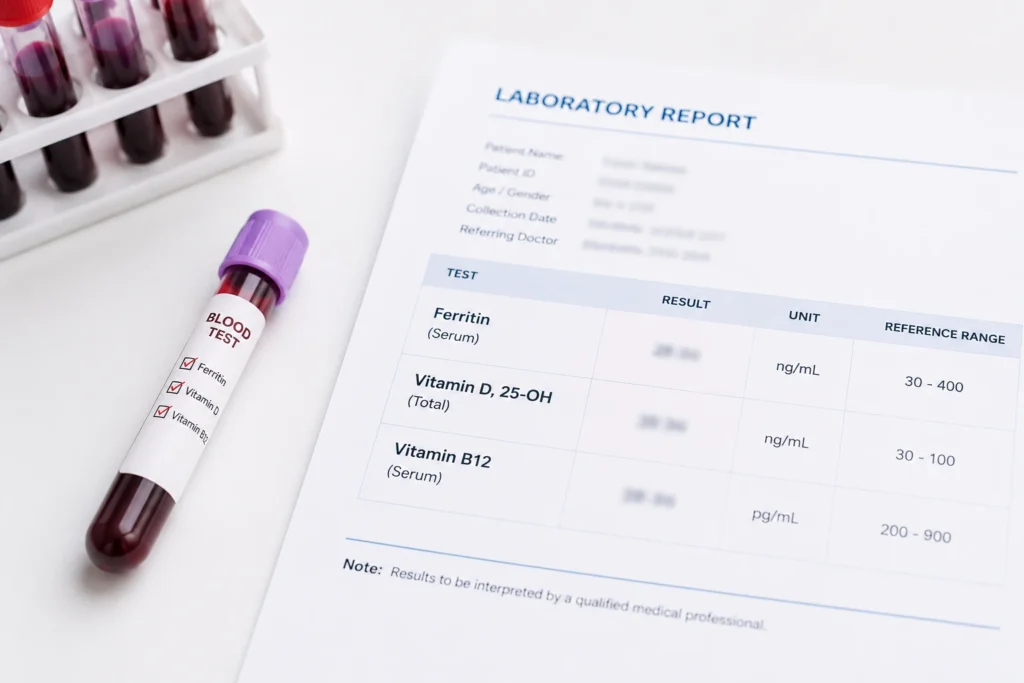
You have the information now. The next step is genuinely simple: get your ferritin, vitamin D, and B12 tested before buying a single supplement. One blood panel will tell you more than three months of guessing.
Pick the one deficiency most likely to apply to your situation based on what you read above. Fix that first. Give it 8 to 12 weeks before you judge results. Hair cycles are slow, and impatience is what keeps people cycling through products that were never the problem.
If you have already been through this — tested your levels, corrected a deficiency, seen your hair respond (or not respond) — share it in the comments below. Which nutrient was your gap? How long did it take to notice a difference? What did your doctor or dermatologist miss that you figured out yourself?
Real experiences from real people help more than any article can. Drop yours below.