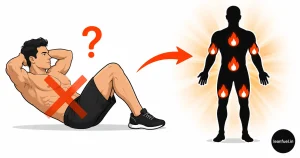
Can you lose weight in 30 days without crashing your metabolism? Discover the sustainable approach to 30-day weight loss that actually lasts.
Introduction: The Hard Truth About the 30-Day Promise

We have all seen the ads. A shredded influencer claims they lost twenty pounds in a month with a “simple detox tea” or a “military-grade shred.” The allure of rapid transformation is intoxicating. Who wouldn’t want to press a fast-forward button on their fitness journey?
But here is the hard truth the diet industry doesn’t want you to hear: Losing weight is easy. Keeping it off is the war.
When we talk about how to lose weight in 30 days, we have to stop chasing the illusion of “extreme transformation” and start chasing momentum. Is it possible to see significant changes in a month? Absolutely. But if you approach these 30 days with a starvation mindset, you will end up lighter on the scale but heavier in metabolic damage—primed to regain every pound (and then some).
In this guide, we aren’t going to pretend that crash diets work. Instead, we are going to do something radical: use the next 30 days to fix your biology so that the weight stays off for the next 30 years.
The “Biggest Loser” Effect: Why Starvation Fails
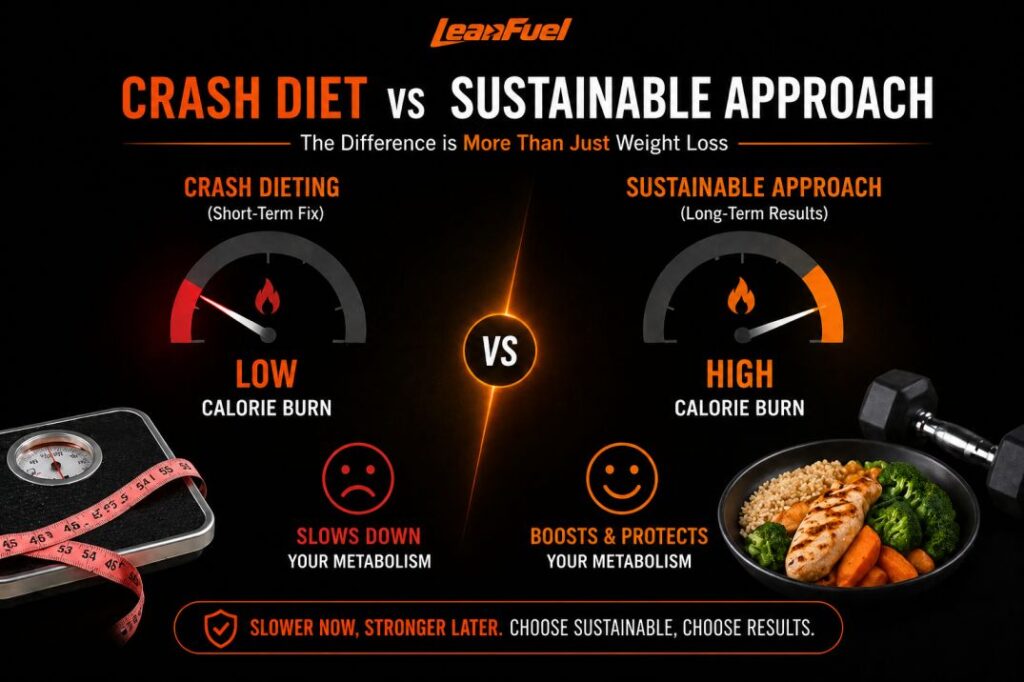
Before we write a single meal plan, we have to look at the science of failure. In 2016, researchers followed the contestants from The Biggest Loser—a show famous for dramatic 30-day (or less) weight drops. The results were devastating.
Six years after the show ended, most contestants had regained their weight. Worse, their metabolisms had slowed so drastically that they were burning 500 fewer calories per day than other people their size. Their bodies were in a state of permanent famine mode .
When you drastically slash calories to lose weight in 30 days, your body doesn’t think, “Great, I’m getting healthy.” It thinks, “We are in a famine. We must survive.”
To protect you, your body:
- Burns muscle instead of fat: Muscle is “expensive” for your body to keep. During a crash diet, your body cannibalizes muscle tissue because it burns more calories than fat. Less muscle means a slower metabolism .
- Spikes hunger hormones: Ghrelin (the hunger hormone) surges, while leptin (the satiety hormone) plummets. You feel biologically driven to eat everything in sight .
- Conserves fat: High cortisol (stress hormone) tells your body to hold onto belly fat specifically .
If you want to lose weight in 30 days and keep it off, your goal is not to “lose weight”—it is to lose fat while keeping muscle.
Part 1: The 30-Day Mindset Shift (The “Kickstart”)
Forget the “all-or-nothing” mentality. The most successful 30-day plans treat this month as a diagnostic tool, not a finish line. You are not “dieting” for 30 days and then returning to your old habits. You are experimenting.
The Realistic Goal: What does success look like?
According to the CDC and a consensus of obesity medicine physicians, a safe, sustainable rate of loss is 1 to 2 pounds per week . Over 30 days, that is roughly 4 to 8 pounds.
However, do not be discouraged if the scale moves slower than that. In one study of a 30-day fitness initiative involving over 20,000 women, the average weight loss was only 1.8 kg (approx 4 lbs) —BUT they also lost significant inches and body fat percentage . The scale lies; the mirror and the tape measure do not.
Part 2: The “Metabolic Damage Control” Protocol
To lose weight in 30 days without wrecking your engine, you cannot operate at a 1,000-calorie deficit. You need a “moderate deficit” paired with “high intensity” nutrition.
1. Calculate Your “Sweet Spot” Deficit
Your Basal Metabolic Rate (BMR) is the energy you need to survive if you lay in bed all day. For most women, this is ~1,400 calories; for men, ~1,700 .
- Do not eat below your BMR. Eating below your BMR triggers the “starvation mode” we want to avoid.
- Target: Eat 300–500 calories above your BMR but below your total daily energy expenditure.
2. Prioritize Protein (The Thermic Effect)
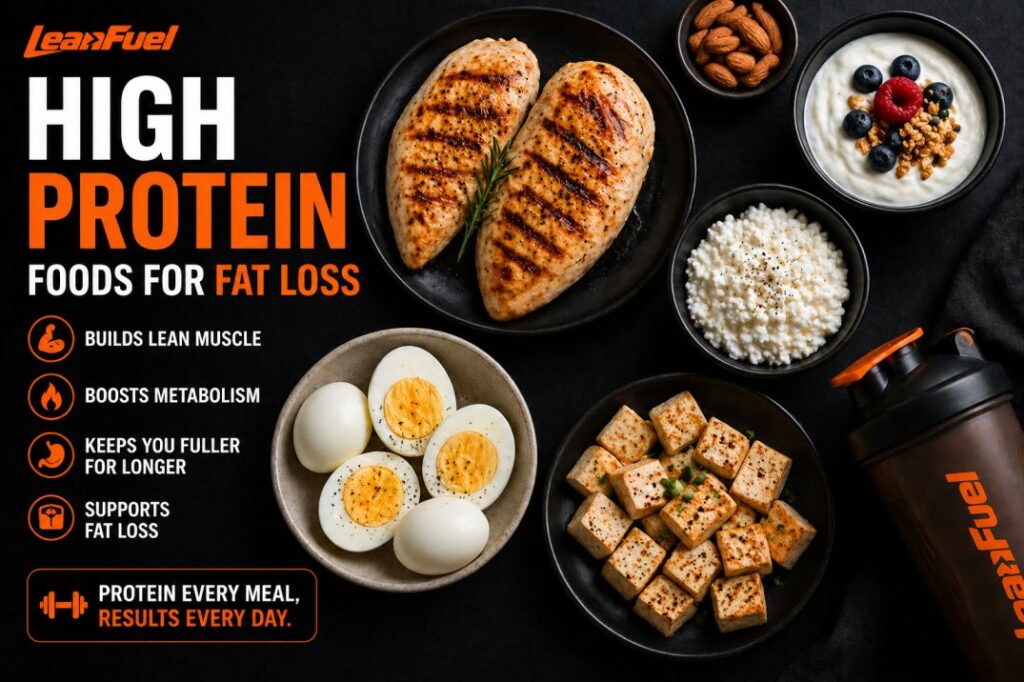
If you only remember one rule, remember this: Protein is the antidote to cravings.
When you lose weight in 30 days, you will inevitably lose some muscle unless you fight back. Protein fights back.
- Why it works: Protein has a high “thermic effect.” Your body burns 20-30% of the calories from protein just digesting it.
- The Rule: Aim for 0.7 to 1.0 grams of protein per pound of body weight . Eat eggs, Greek yogurt, chicken, or tofu at every single meal.
3. The Water & Vegetable “Hack”
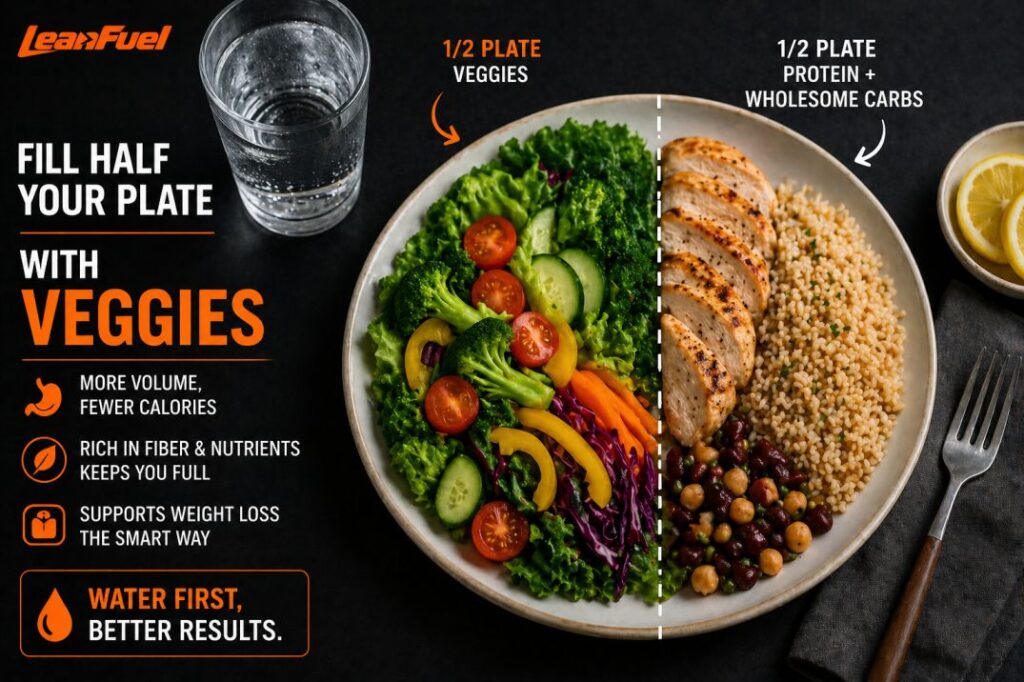
Dehydration mimics hunger. Many people eat an afternoon snack because they are actually thirsty .
- Strategy: Drink 16oz of water immediately upon waking and before every meal.
- Volume Eating: Fill half your plate with leafy greens or non-starchy vegetables (broccoli, zucchini, peppers). You can eat unlimited amounts of these. They fill your stomach, signal satiety to your brain, and provide the fiber necessary to regulate blood sugar .
4. The Sugar Detox (Days 1–7)
The first week is the hardest because sugar is addictive. Ultra-processed foods are engineered to bypass your fullness signals .
- The Fix: For the first 7 days, eliminate added sugar and white flour entirely. This isn’t just about calories; it is about lowering your insulin. Lower insulin = access to body fat for fuel.
- Result: After 7 days, your cravings will literally vanish. In a testimonial from a 30-day whole food challenge, one participant noted: “I’ve stopped eating sugar, fat, highly processed flour, and preservatives, too, because I don’t crave such things” .
Part 3: The “Non-Negotiable” Movement Matrix
You cannot out-exercise a bad diet, but you cannot optimize a 30-day challenge without exercise. The goal is to raise your metabolic rate, not just burn calories during the workout.
| Workout Type | Frequency | Why it matters for 30 days |
|---|---|---|
| Strength Training | 3x per week | Preserves muscle mass. More muscle means you burn more calories while sleeping. |
| Walking (Zone 2) | Daily (30-60 min) | Burns fat directly without raising cortisol. Lowers stress. |
| HIIT (High Intensity) | 1x per week | Boosts EPOC (after-burn effect), keeping metabolism high for hours post-workout. |
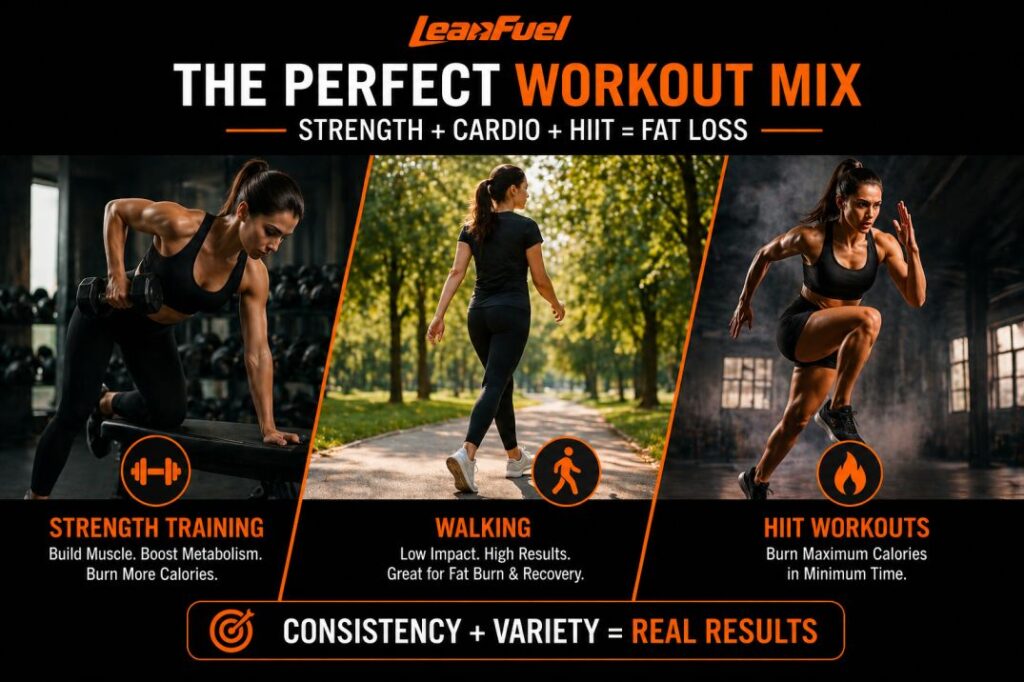
The “After-Meal” Walk: A fascinating study component suggests that just a 10-minute walk after dinner drastically improves blood sugar regulation . High blood sugar spikes tell your body to store fat. Walking blunts that spike.
Part 4: The 30-Day Blueprint (Week by Week)
If you want to lose weight in 30 days, you need a roadmap. Here is how to structure your month to avoid burnout.
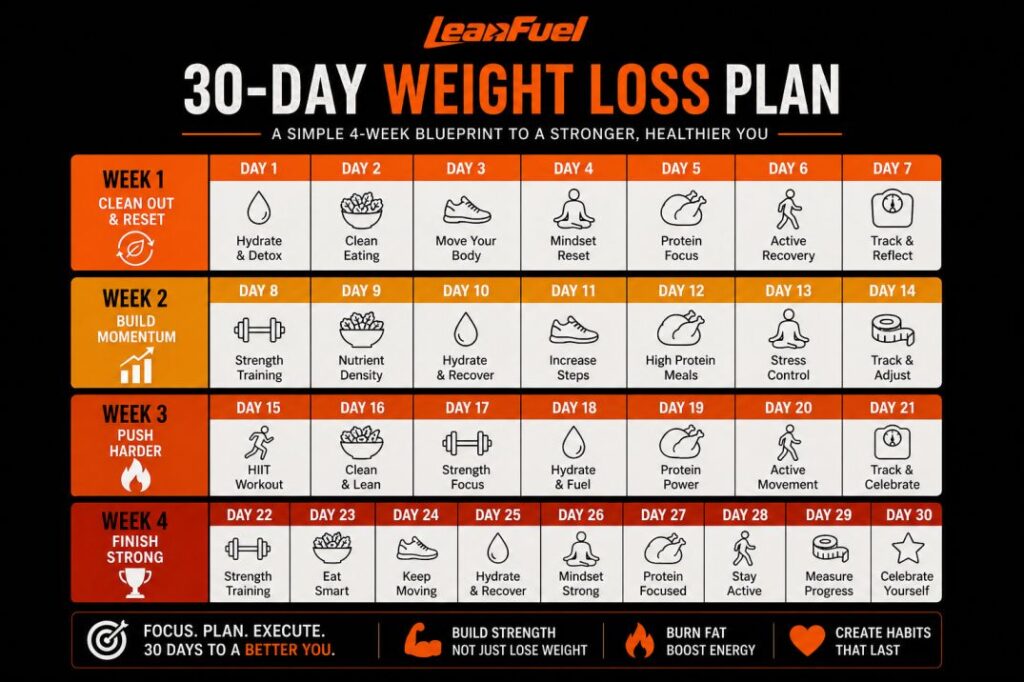
Week 1: The “Clean Out”
- Nutrition: Remove all processed foods, sodas, and alcohol. Focus only on whole foods: meat, fish, eggs, veggies, fruits, nuts, and seeds.
- Habit: Drink half your body weight (in lbs) in ounces of water. (e.g., 150lb person drinks 75oz).
- Movement: 30-minute walks. That’s it. Let your joints adapt.
Week 2: The “Protein Up”
- Nutrition: Add protein powder or a protein source to breakfast. If you ate cereal before, switch to eggs or a shake.
- Habit: Use the “Palm Rule.” Eat a palm-sized portion of protein at every meal. Your plate should look like: 1/2 Veggies, 1/4 Protein, 1/4 Starch (potatoes/rice).
- Movement: Add strength training 2x this week (Squats, Pushups, Rows).
Week 3: The “Intensity”
- Nutrition: Identify the one “healthy” food that is sabotaging you (e.g., nuts, nut butter, granola). Measure that portion strictly.
- Habit: Intermittent Fasting (Optional). Try a 12-hour overnight fast (8pm to 8am). This gives your digestion a rest and lowers insulin .
- Movement: Increase weights or reps. Add one HIIT session (20 seconds sprint, 40 seconds walk for 10 minutes).
Week 4: The “Integration”
- Nutrition: Practice eating out. Order protein + veggies. Ask for sauce on the side.
- Habit: Sleep hygiene. Get 7-9 hours. Sleep deprivation increases ghrelin by up to 20% . You cannot lose weight if you are tired.
- Movement: Try a fitness class or new sport. Fun is the ultimate sustainable metric.
The Verdict: Should You Do a 30-Day Challenge?
Yes. But not for the reason you think.
Doing a 30-day challenge is not about fitting into a dress for a specific date. It is about proving to yourself that you are capable of showing up. The research shows that short-term challenges do work to lower blood pressure, improve cholesterol, and reduce inches , provided you don’t starve yourself.
The people who successfully lose weight in 30 days and keep it off are not the ones with the most “willpower.” They are the ones who build systems: they walk after dinner, they eat protein at breakfast, and they lift heavy things to keep their metabolism roaring.
Your Next Step
Stop looking for the “perfect” diet. The best diet is the one you barely notice you are on because it feels good.

Related Articles You Should Read
- High Protein Foods for Fat Loss: A Simple Beginner’s Guide That Actually Works – Learn exactly which proteins burn the most calories during digestion and how to add them to every meal without breaking the bank.
- How to Lose Fat by Walking — Why It Works Better Than Running – Discover why a slow, 10-minute walk after dinner can be more effective for fat loss than a 30-minute sprint session.
Ready to stop starting over? Download our free 30-Day Fat Loss Tracker to log your weekly measurements, energy levels, and cravings. Don’t just guess—track your win.
*What is the #1 food you struggle to give up? Let me know in the comments below, and I’ll tell you how to make a low-calorie version!*