High Protein Foods for Fat Loss: A Beginner’s Guide (No Fluff)
Discover the best protein rich foods for fat loss. This simple beginner’s guide covers foods that have high protein, a high protein diet to lose weight, and science-backed tips.
The 3 PM Hunger Panic
Let me paint a picture you probably know too well.
It’s 3:00 in the afternoon. You had a decent breakfast—maybe toast, maybe cereal. Lunch was a sandwich or a sad desk salad. Now your stomach is growling like an angry dog. You’re eyeing the vending machine. The chips are calling your name. The cookie looks like salvation.
You give in. You eat the junk. And an hour later? You crash. You feel sluggish, guilty, and somehow still hungry.
Here’s the thing: That cycle isn’t your fault. It’s your meal plan.
You’ve been missing the one nutrient that actually shuts down hunger, fires up your metabolism, and helps your body burn fat instead of muscle. That nutrient is protein. And the good news? You don’t need expensive powders or weird supplements. You just need to know which protein rich foods actually work for fat loss.
This isn’t another complicated diet manifesto. This is your simple, no-BS beginner’s guide to using protein foods as your secret weapon. By the end, you’ll know exactly what to put in your grocery cart, how much you actually need, and why a high protein diet to lose weight is the closest thing to a cheat code that real science has ever found.
Let’s dive in.
Why Protein Is the Fat-Loss Superpower You’ve Been Ignoring
Before we talk about what to eat, let’s talk about why protein matters. Because once you understand the science, you’ll never skip it again.
It Kills Hunger (Without Willpower)
Here’s the brutally honest truth: Diets fail because people get hungry. Not because they lack discipline—because their bodies are screaming for food.
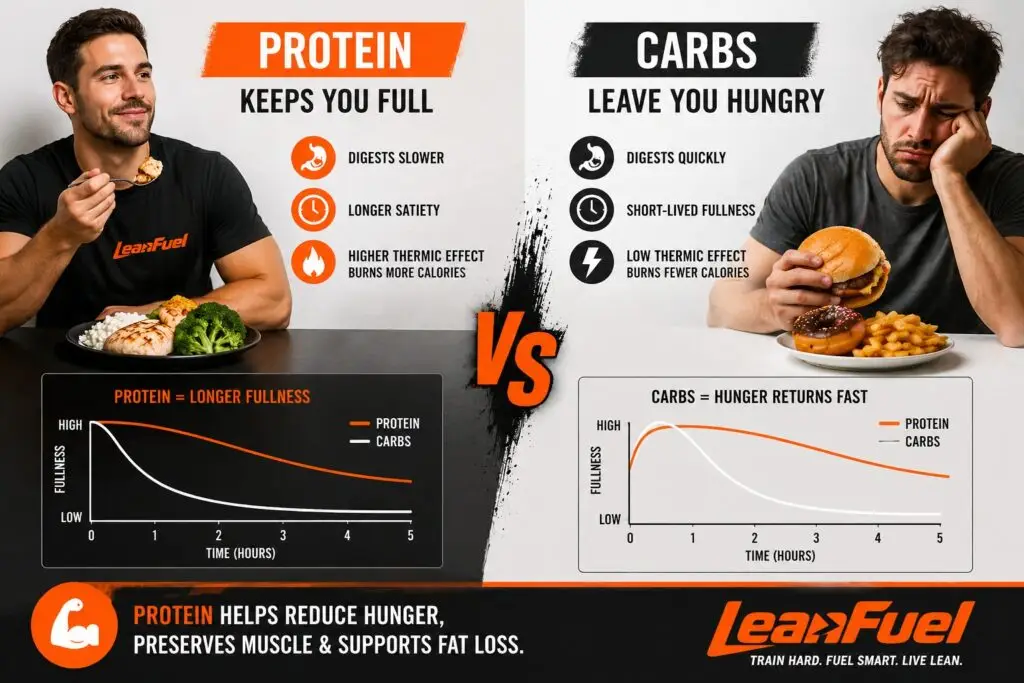
Protein changes that. Research shows that both protein and fiber are digested slower than simple carbohydrates, which means they keep you feeling fuller for longer . When you feel full, you don’t need superhero willpower to skip the vending machine. The craving just… isn’t there.
It Burns Calories Just by Digesting
This sounds like magic, but it’s pure biology.
Your body actually burns calories to break down the food you eat. This is called the thermic effect of food (TEF). And protein? It’s the king of TEF.
A major 2024 meta-analysis reviewing 52 studies confirmed that higher protein meals significantly increase diet-induced thermogenesis—meaning your body burns more calories digesting protein than it does digesting carbs or fats . We’re talking about a 20-30% burn rate for protein, compared to just 5-10% for carbs and 0-3% for fat.
Every time you eat protein rich foods, you’re literally torching extra calories just by existing.
It Protects Your Muscle (So You Lose Fat, Not Weight)
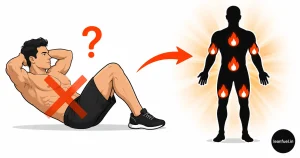
Here’s something most people don’t realize: When you lose “weight,” about 25% of that loss can come from muscle, not fat . That’s terrible news, because less muscle means a slower metabolism. And a slower metabolism means you regain weight the second you stop dieting.
A high protein diet to lose weight solves this. A massive analysis of 150 randomized controlled trials found that milk protein supplementation (whey and casein) consistently improved body composition by increasing lean muscle mass while reducing fat mass and waist circumference .
You don’t want to just lose weight. You want to lose fat. And protein is how you do it.
How Much Protein Do You Actually Need? (The Simple Math)
Let’s cut through the confusion. Forget the gym bros telling you to eat your body weight in chicken. Here’s what the evidence actually says.
The standard recommendation for the average adult is a measly 0.8 grams of protein per kilogram of body weight per day. But that’s the minimum to avoid deficiency—not the amount to thrive or lose fat.
For fat loss and muscle preservation, research suggests aiming for 1.2 to 1.6 grams per kilogram .
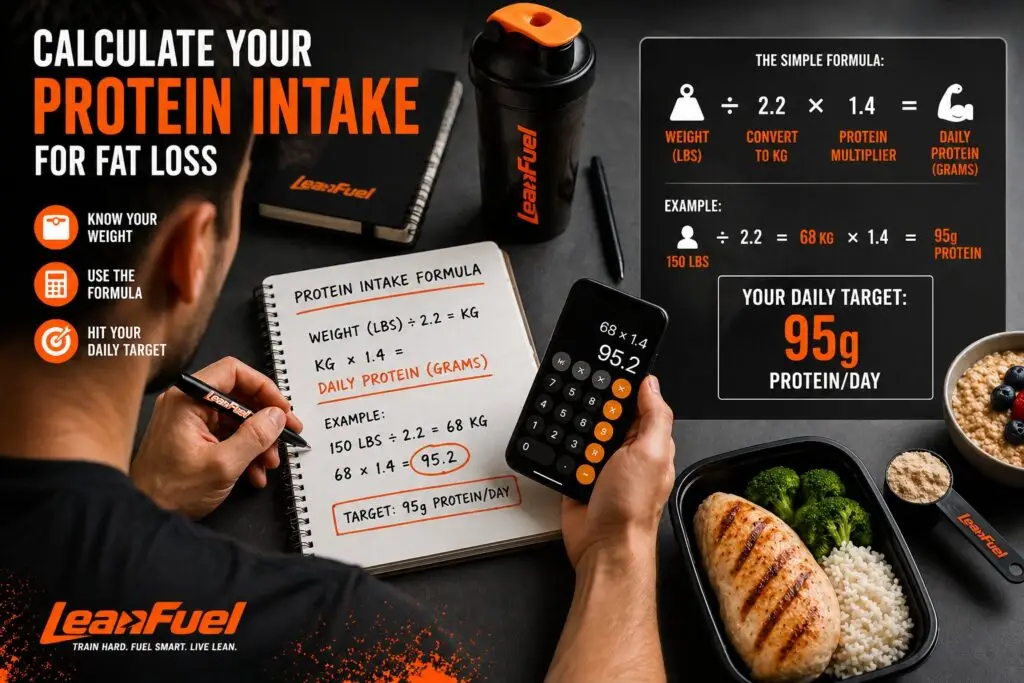
Here’s the simple formula:
Your weight in pounds ÷ 2.2 = Your weight in kilograms
Kilograms × 1.4 (middle of the range) = Daily protein target in grams
Example: A 150-pound person weighs 68 kilograms. 68 × 1.4 = 95 grams of protein per day.
That’s it. That’s your number. Now let’s get you there with real food.
The Best Protein Rich Foods for Fat Loss (Ranked by Simplicity)
You don’t need exotic ingredients or expensive “superfoods.” The best foods that have high protein are probably already at your grocery store. Here’s your ultimate shopping list.
Animal-Based Proteins (Fast-Absorbing & Powerful)
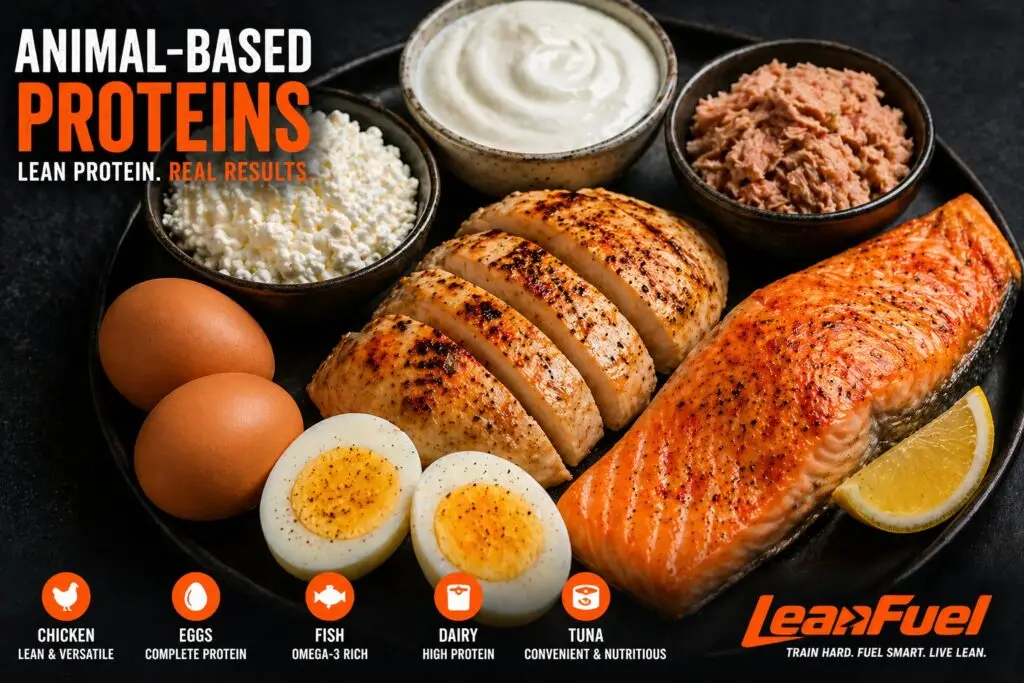
Research shows that animal-based protein results in higher energy expenditure (14.2% increase) compared to plant-based protein (9.55% increase) . That doesn’t mean plants are bad—it just means animal proteins give you a slightly bigger metabolic boost.
| Food | Protein (per serving) | Why It’s Great for Fat Loss |
|---|---|---|
| Chicken Breast | 31g (4 oz cooked) | Lean, versatile, cheap—the gold standard |
| Salmon | 25g (4 oz) | Omega-3 fats reduce inflammation and may support fat loss |
| Eggs | 6g (1 large) | Complete protein with all essential amino acids. Perfect for breakfast |
| Greek Yogurt (Unsweetened) | 15-20g (6 oz) | Probiotics + protein = gut health + fullness |
| Cottage Cheese | 28g (1 cup) | High in casein—slow-digesting protein that keeps you full for hours |
| Canned Tuna | 26g (100g) | Cheap, shelf-stable, and ridiculously high in protein |
Plant-Based Proteins (Fiber + Protein = Double Win)
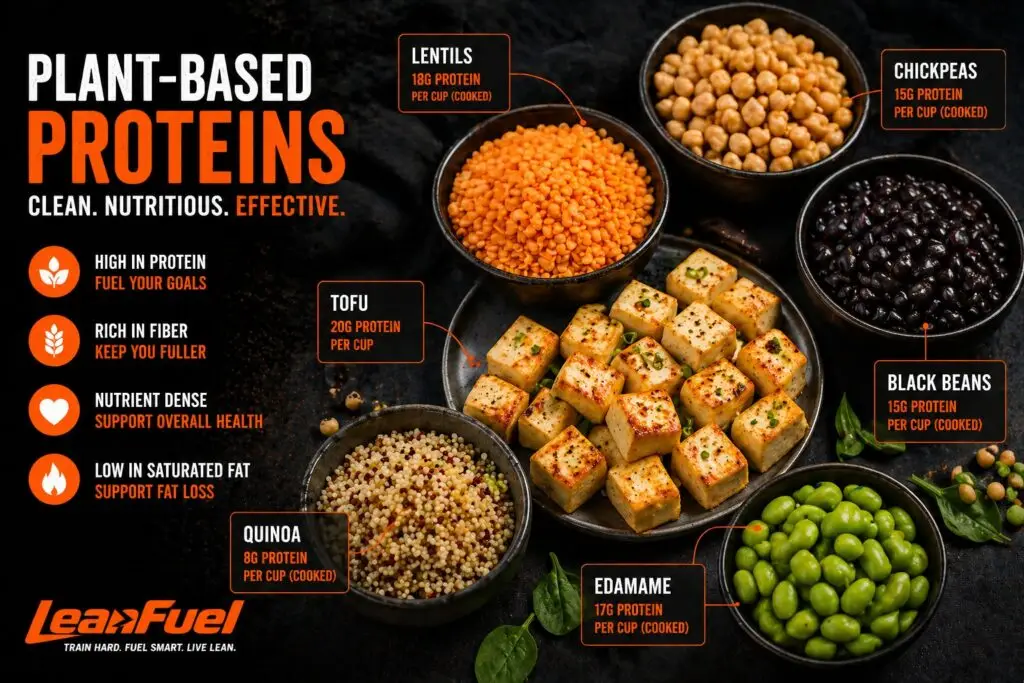
Plant proteins may have a slightly lower thermic effect, but they bring something animal proteins don’t: fiber. Remember that study about protein and fiber working together? Plant proteins deliver both in one package .
The “Secret Weapon” Category
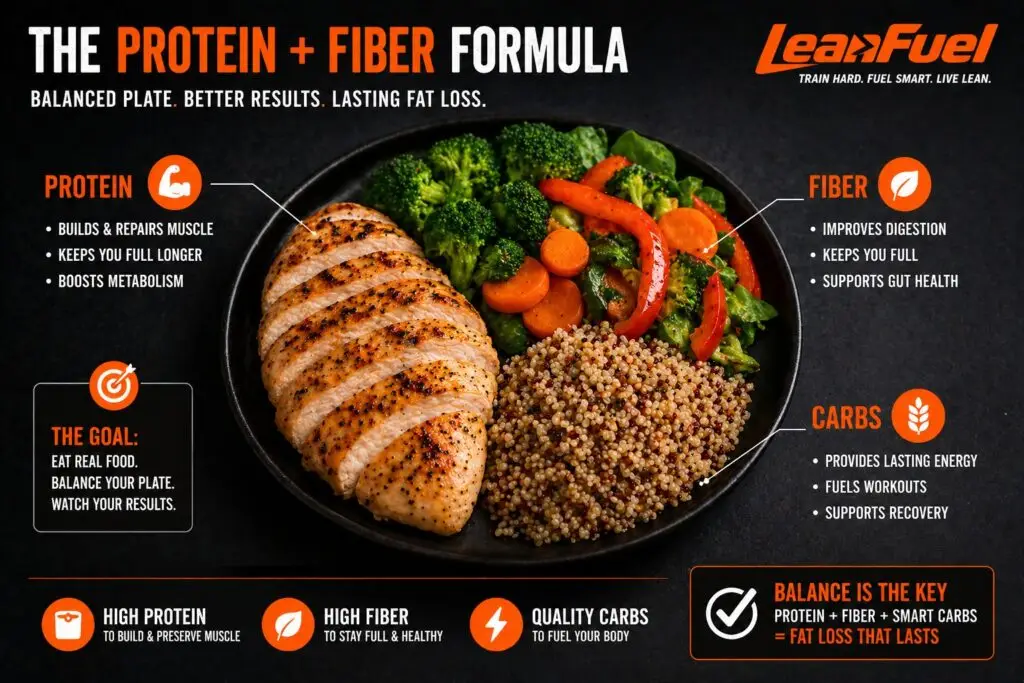
Whey Protein Powder – 20-25g per scoop
Whole food is always better. But let’s be real: some mornings are chaos. Some days you finish work and realize you’ve only eaten coffee. Whey protein is the emergency brake—it’s not for every day, but it’s a lifesaver when you need it.
A massive meta-analysis found that higher whey intakes (above 30g per day) over 8+ weeks led to greater reductions in waist circumference . Keep a tub in your pantry for the days when life gets in the way.
The Science-Backed Protein + Fiber Formula
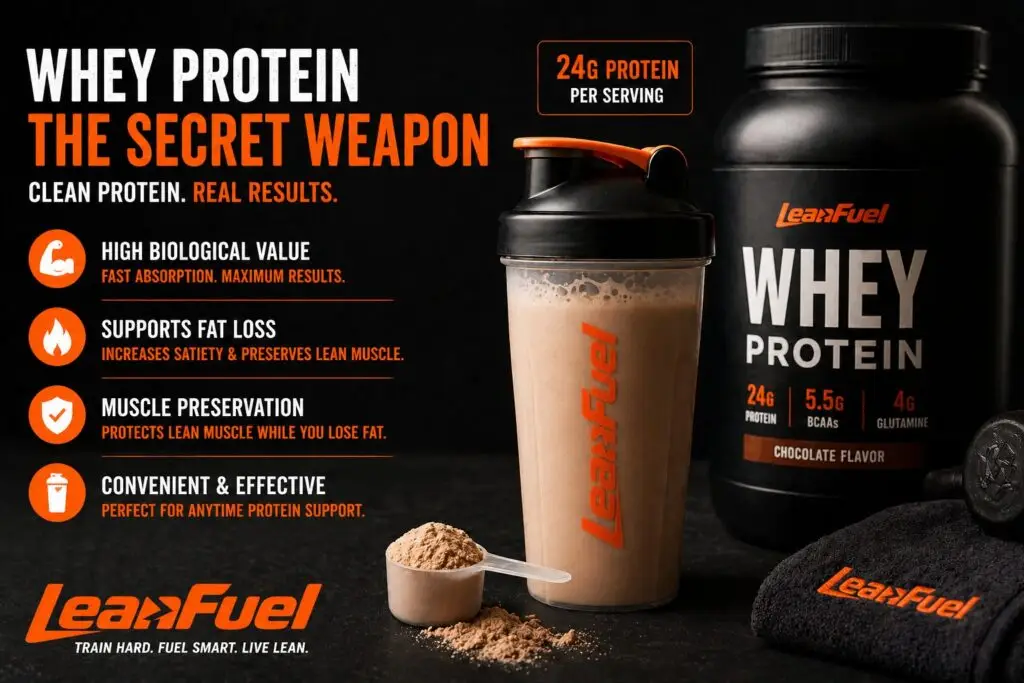
Here’s something most guides won’t tell you: Protein works even better when you pair it with fiber.
A 2024 study published in Obesity Science & Practice found that people who added both protein and fiber to their diets lost the most weight—up to 9.6% of their body weight—without even counting calories .
Why? Because fiber slows down digestion even further, stabilizes blood sugar, and feeds the good bacteria in your gut. When you combine protein foods with fiber-rich vegetables, legumes, and whole grains, you create a meal that keeps you full for 4-5 hours instead of 1-2.
The Simple Formula for Every Meal:
- One palm-sized portion of protein (chicken, fish, eggs, tofu, lentils)
- Two fists of fiber-rich vegetables (broccoli, spinach, peppers, cauliflower)
- One cupped handful of complex carbs (quinoa, sweet potato, brown rice)
- One thumb of healthy fat (olive oil, avocado, nuts)
Build your plate like this, and you won’t need to count another calorie.
How to Build a High Protein Diet to Lose Weight (Without Losing Your Mind)
Theory is great. But you need to know how to actually do this.
Start Your Day with Protein (Not Carbs)
Most breakfasts are sugar bombs disguised as “healthy.” Cereal, toast, oatmeal, granola, fruit smoothies—they all spike your blood sugar and crash it by 10 AM.
Swap to: 2-3 eggs, or Greek yogurt with berries, or a protein shake. One study on milk protein supplementation showed that women and adults under 60 experienced reductions in body weight and BMI with consistent protein intake . Start your day right, and the rest gets easier.
Use the “Protein First” Rule
When you sit down to eat, eat your protein first. Then your vegetables. Then your carbs. This simple habit ensures you get the most important nutrient before you’re too full to finish.
Snack Smart
Stop buying snack bars, pretzels, and chips. They’re empty calories that leave you hungrier.
Replace with:
- Hard-boiled eggs
- Cottage cheese with berries
- Handful of almonds (6g protein per ounce)
- Edamame
- Greek yogurt
Don’t Fear the Same Meals
The most successful fat-loss eaters don’t have gourmet variety. They have 5-10 go-to meals they rotate. Find 2-3 breakfasts, 2-3 lunches, and 2-3 dinners that work, and repeat them. Consistency beats creativity every time.
Realistic Sample Day (95g Protein Target)
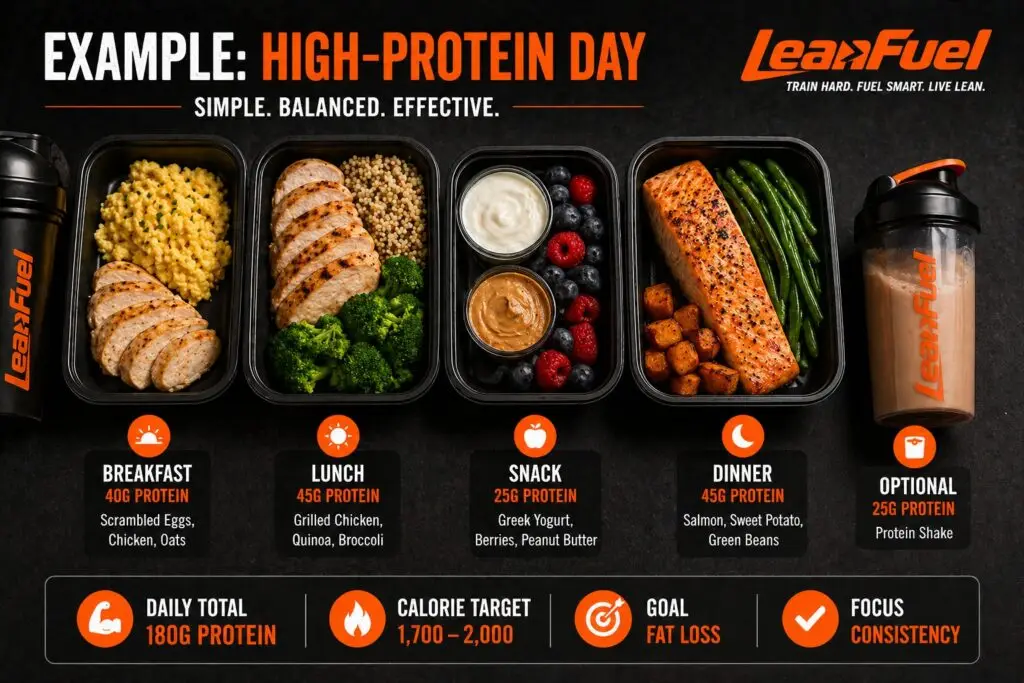
Here’s what a real day of eating looks like for that 150-pound person we calculated earlier:
| Meal | What to Eat | Protein |
|---|---|---|
| Breakfast | 2 scrambled eggs + 1 slice whole-grain toast | 12g |
| Morning Snack | 1/2 cup cottage cheese with berries | 14g |
| Lunch | 4 oz grilled chicken breast over large salad | 31g |
| Afternoon Snack | Handful of almonds + apple | 6g |
| Dinner | 4 oz salmon + roasted broccoli + 1/2 cup quinoa | 32g |
| TOTAL | 95g |
No powders. No weird ingredients. Just real food.
What About Protein Powders? (The Honest Answer)
You don’t need them. Whole protein rich foods are almost always better because they come with other nutrients (fiber, vitamins, minerals).
But protein powder is convenient. And sometimes convenience is the difference between sticking to your plan and ordering takeout.
If you buy one, look for:
- Whey protein isolate (less than 1% lactose, easier on digestion)
- No added sugar (check the label—many have 10g+ of sugar)
- Minimal ingredients (protein + natural flavor + maybe stevia)
Use it when you’re in a rush, not as a replacement for real food.
Common Beginner Mistakes (And How to Avoid Them)
Mistake #1: Eating Too Little Fat
Some people hear “high protein” and think “low fat.” Bad move. Your body needs fat for hormone function, vitamin absorption, and satiety. Keep healthy fats like avocado, olive oil, nuts, and fatty fish in your rotation.
Mistake #2: Forgetting About Fiber
A high protein diet to lose weight can sometimes lead to… digestive issues. You know what I mean. The fix is simple: eat your vegetables. Fiber keeps things moving. A systematic review found that high-protein diets effectively reduce fat mass while increasing lean body mass—but only when they’re balanced . Don’t skip the greens.
Mistake #3: Drinking Your Calories
Protein shakes are fine. But fruit juice, soda, sweetened coffee drinks, and alcohol are empty calories that wreck your progress. Stick to water, black coffee, and unsweetened tea.
The Bottom Line
Here’s the truth they don’t tell you in diet ads.
Fat loss isn’t about starvation. It isn’t about cutting out entire food groups. It isn’t about punishing yourself at the gym.
It’s about eating in a way that works with your biology instead of against it.
And that starts with protein rich foods.
When you eat foods that have high protein, you get fuller faster. You stay fuller longer. You burn more calories digesting your food. You protect your muscle so the weight you lose is actually fat. And you do it all without feeling like you’re on a diet.
The science is clear. The path is simple. And the only thing standing between you and results is putting one protein food on your plate at the next meal.
So here’s your challenge: At your very next meal, eat the protein first. Just that one change. See how you feel.
I think you’ll be surprised.
Frequently Asked Questions
Can I lose weight just by eating more protein?
Protein alone isn’t magic—you still need to be in a calorie deficit. But protein makes being in a deficit much easier by killing hunger and boosting metabolism .
Is too much protein bad for my kidneys?
If you have existing kidney disease, yes—talk to your doctor. But for healthy individuals, there’s zero evidence that high protein intake damages kidneys. This myth has been debunked repeatedly.
Can vegetarians and vegans get enough protein?
Absolutely. Lentils, tempeh, tofu, edamame, chickpeas, quinoa, and seitan are all excellent sources. Just eat a variety of plant proteins to get all essential amino acids. Research shows that eating plant-based proteins throughout the day meets all your needs .
How quickly will I see results?
If you consistently hit your protein target and stay in a calorie deficit, most people notice less hunger within 3-5 days and visible changes in 2-4 weeks. Sustainable fat loss is 0.5-2 pounds per week. Anything faster is usually water weight or muscle loss.
Ready to Start?
You’ve got the knowledge. You’ve got the science. You’ve got a simple plan.
Now it’s your turn.
Drop a comment below and tell me: Which protein rich food are you adding to your next grocery list? Or ask your question—I read every single one.
And if this guide helped you, share it with a friend who’s still stuck in the diet roller coaster. They’ll thank you later.
Here’s to eating more, suffering less, and finally losing the fat—not the muscle.