Discover how to lose fat by walking instead of running. Science shows low-intensity walking burns more fat, controls hunger, and keeps metabolism high.
Introduction: The Running Myth
We have been sold a lie.
The lie says that if you aren’t gasping for air, drenched in sweat, and questioning your life choices, you aren’t exercising hard enough. The fitness industry has glorified the “grind” for decades—the idea that pain equals progress.
But the science tells a very different story.
If you want to understand how to lose fat by walking, you need to understand something surprising: your body actually prefers walking over running when it comes to burning fat. Yes, running burns more calories per minute. But weight loss isn’t just about calories. It is about hormones, hunger signals, metabolic adaptation, and—most importantly—sustainability.
This isn’t a pitch for laziness. It is a pitch for strategy.
Let me show you why the humble walk might be the most underrated weight loss tool you own.
Part 1: The Fat-Burning Zone—What Exercise Science Actually Says
Why Low-Intensity Wins for Fat Oxidation
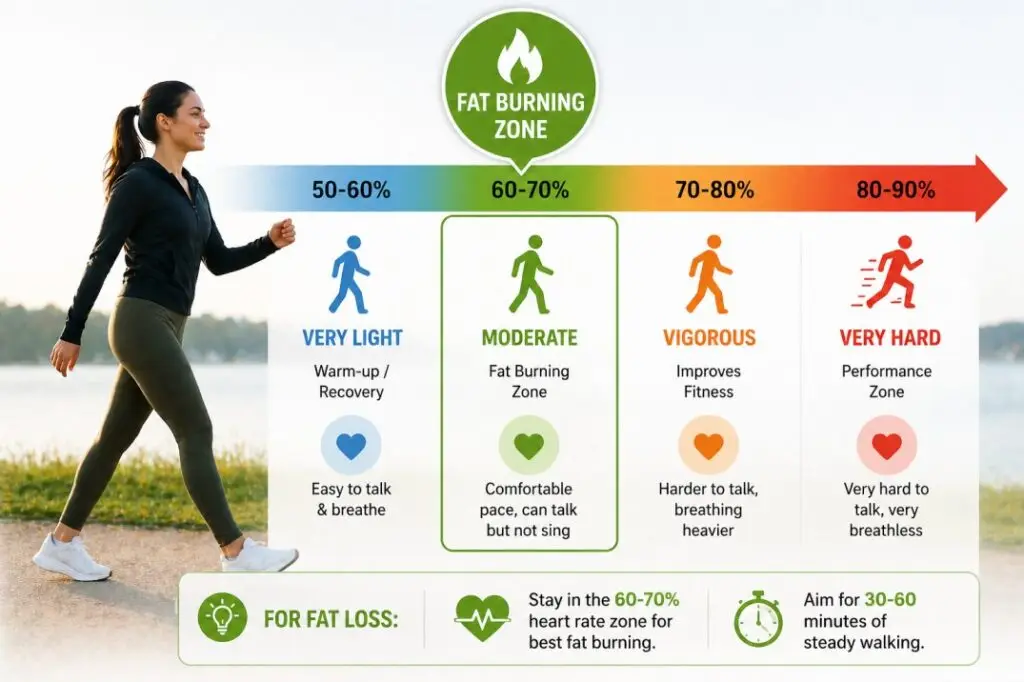
Here is a counterintuitive fact: your body burns a higher percentage of fat during low-intensity exercise than during high-intensity exercise.
This comes down to biology. Fat is a slow-burning fuel. It requires oxygen to be broken down into usable energy. When you walk at a gentle pace, your cardiovascular system can easily supply that oxygen, so your body happily pulls from fat stores for energy.
When you sprint or run hard, your body needs energy immediately. It cannot wait for fat to be processed. So it switches to carbohydrates—specifically glycogen stored in your muscles and liver—because carbs burn faster .
The landmark research on this dates back decades. Studies have consistently shown that fatty acids are the primary energy source during mild-to-moderate intensity exercise, particularly when you haven’t eaten recently .
The key takeaway: During a 30-minute walk, roughly 60-70% of the calories you burn may come from fat. During a 30-minute run, that number drops significantly. The trade-off is that running burns more total calories. But as you will see, that trade-off comes with hidden costs.
The “FATmax” Sweet Spot
Researchers have actually identified something called the FATmax—the specific exercise intensity where your body maximizes fat burning. For most people, this occurs at around 45-50% of your maximum heart rate.
How do you find that without a lab? The “talk test.” If you can walk and hold a conversation comfortably—but you cannot sing—you are likely in your fat-burning zone.
Part 2: The Hormonal Advantage of Walking
This is where walking pulls ahead of running in a major way.
Walking Suppresses Hunger (Running Might Do the Opposite)
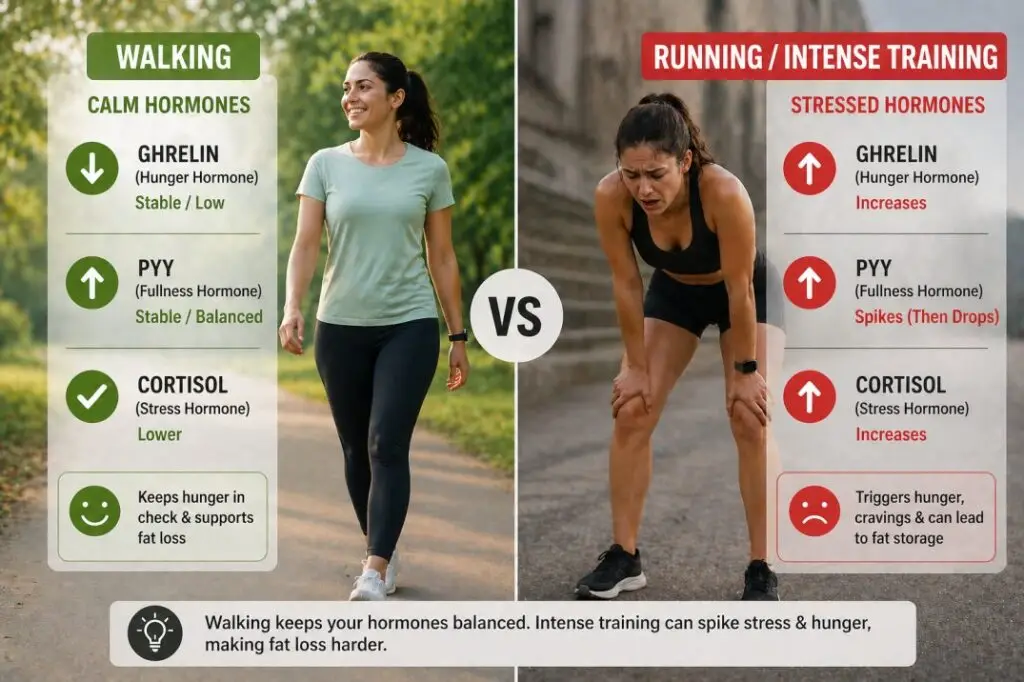
A fascinating study published in the Journal of Obesity compared running and walking head-to-head . The setup was clever: researchers had nine female runners and ten female walkers complete 60-minute sessions at the same relative intensity (70% of their VO2max). Then they measured appetite hormones and tracked what the participants ate afterward.
The results were striking.
After running: Both hunger-inducing hormones (ghrelin) AND satiety hormones (PYY, GLP-1) spiked simultaneously. The hormonal chaos seemed to confuse the appetite regulation system.
After walking: There were no significant changes in these appetite hormones .
But here is the real kicker: when participants ate a meal after exercising, the runners consumed less energy overall when accounting for calories burned—but only because their hormones were in flux. The walkers showed a more stable, predictable hunger response.
Another study found that 90 minutes of moderate exercise actually lowered ghrelin (the hunger hormone) and raised PYY (the “I’m full” hormone), resulting in participants eating fewer calories at a subsequent buffet meal compared to when they simply restricted calories through dieting .
The translation for real life? Walking won’t send your hunger hormones into a tailspin. Running might.
Cortisol: The Stubborn Fat Hormone
High-intensity exercise—especially when you are already stressed, sleep-deprived, or in a calorie deficit—raises cortisol. Cortisol is the stress hormone. In small doses, it is harmless. Chronically elevated cortisol tells your body to hold onto belly fat and break down muscle tissue.
Walking, by contrast, tends to lower cortisol. It is a stress reducer, not a stress inducer.
If you are trying to lose fat by walking, the hormonal math works in your favor: lower stress hormones + stable appetite hormones = a metabolic environment primed for fat loss.
Part 3: The NEAT Factor—Why Walking Changes Your Daily Metabolism
What is NEAT?
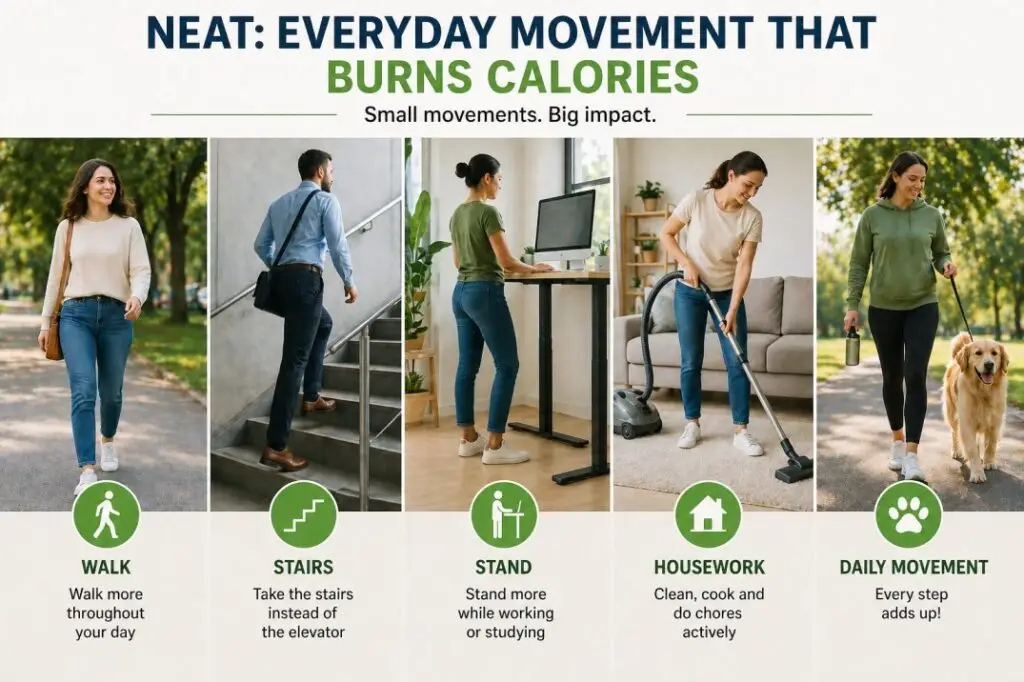
NEAT stands for Non-Exercise Activity Thermogenesis. It is the energy you burn doing everything that isn’t sleeping, eating, or formal exercise. Fidgeting. Typing. Cooking. Walking to your car. Taking the stairs .
Here is why NEAT matters enormously: NEAT can account for up to 50% of your total daily energy expenditure in highly active individuals .
The average person dramatically underestimates NEAT. We think weight loss happens in the gym. But research shows that the difference between people who successfully lose weight and keep it off versus those who regain is often non-exercise movement, not structured workouts.
Walking as NEAT Amplifier
A study on exercise intensity and NEAT found something fascinating: after a single session of high-intensity walking, participants showed a 25-33% increase in NEAT in the days following the workout compared to pre-exercise levels .
The mechanism? Researchers believe that high-intensity exercise creates a “metabolic debt” that unconsciously nudges you to move more in daily life—fidget more, stand more, pace while on the phone.
But here is the practical insight: walking itself is NEAT. Unlike running, which requires a block of dedicated time, a change of clothes, a shower afterward, and mental prep, walking can be layered into your existing life. Park farther away. Walk while taking calls. Do a 10-minute lap after lunch.
These micro-movements add up.
Part 4: The Post-Meal Walking Power Move
If there is one single walking habit that delivers the highest return on investment, it is this:
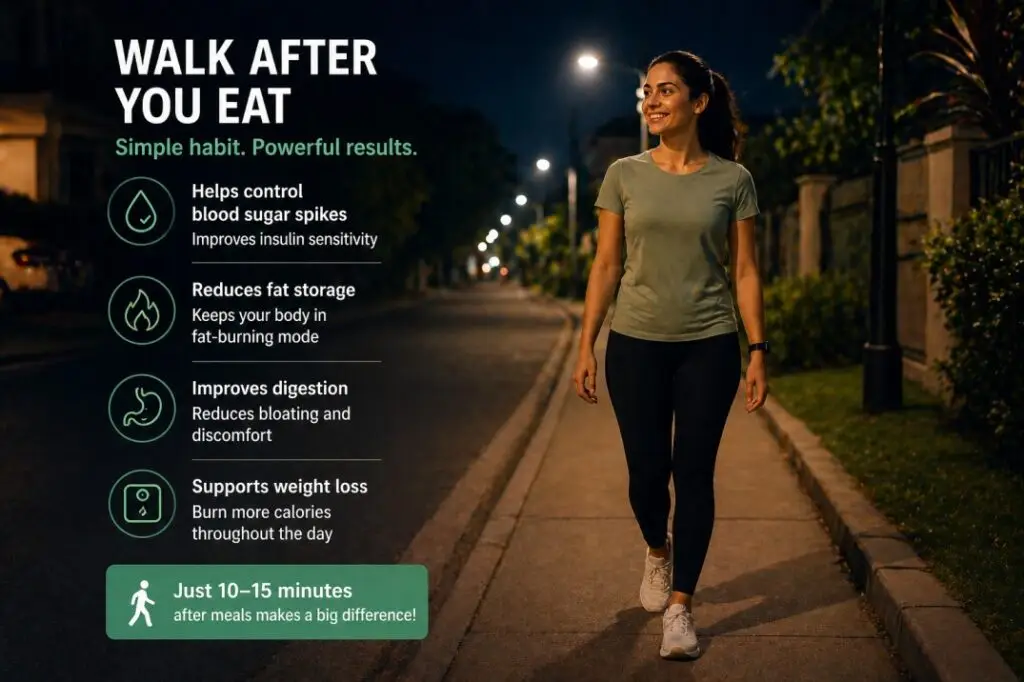
Walk immediately after eating.
Why Post-Meal Walking Works
When you eat carbohydrates, your blood sugar rises. Your pancreas releases insulin to shuttle that glucose into cells for energy or storage. If you have more glucose than your cells need immediately, insulin stores the excess as fat .
Walking after a meal interrupts this process.
Muscle contractions during walking increase glucose uptake without requiring as much insulin. The glucose gets pulled directly into your working muscles to be used as fuel. Less glucose available means less gets stored as fat .
The Research Backs This Up
A 2011 study had participants walk for 30-60 minutes immediately after lunch and dinner. After just one month, participants lost between 1.5kg and 3kg (roughly 3-6 pounds) .
A 2020 study in the European Journal of Physiology analyzed 48 participants and found that low-to-moderate activity immediately following breakfast lowered post-meal glucose levels. The key word is immediately. Walking before eating or waiting too long after eating did not produce the same effect .
A 2023 meta-analysis in the Journal of Sports Medicine examined eight trials with 116 participants and concluded: “Exercise, such as 20 minutes of walking, has an acute beneficial impact on postprandial hyperglycemia when undertaken as soon as possible after a meal.” The authors added that longer intervals between eating and exercising weaken the effect .
The Practical Protocol
- When: within 5-10 minutes after finishing your meal
- Duration: 10-20 minutes
- Intensity: light to moderate (able to talk, not gasping)
- Frequency: 3-5 times per week, ideally after your largest meal
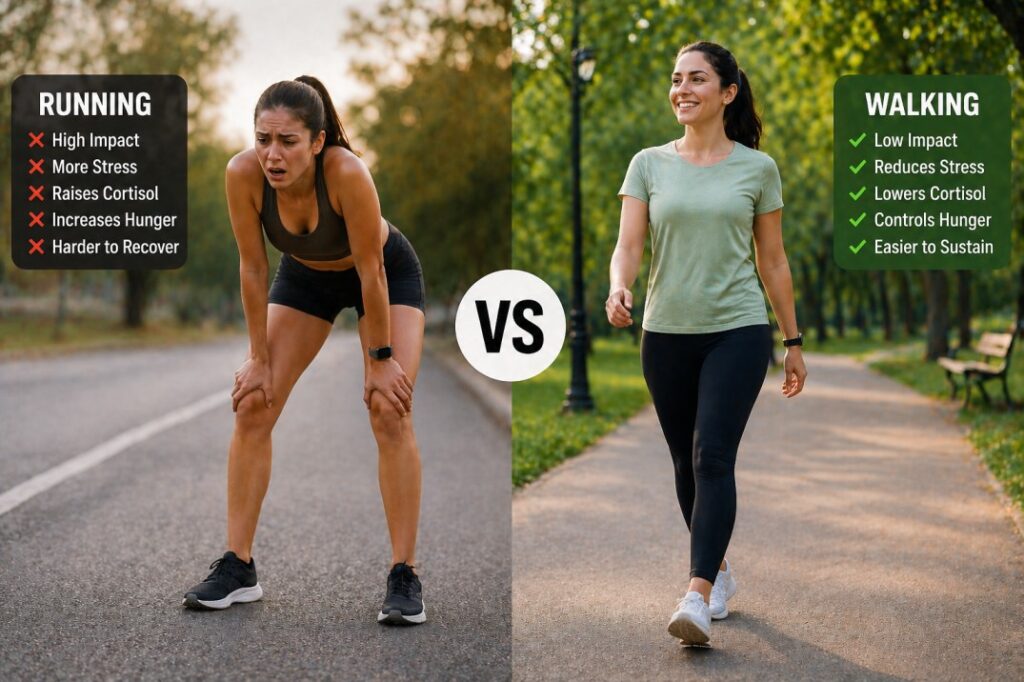
Part 5: Running vs. Walking—The Head-to-Head Comparison
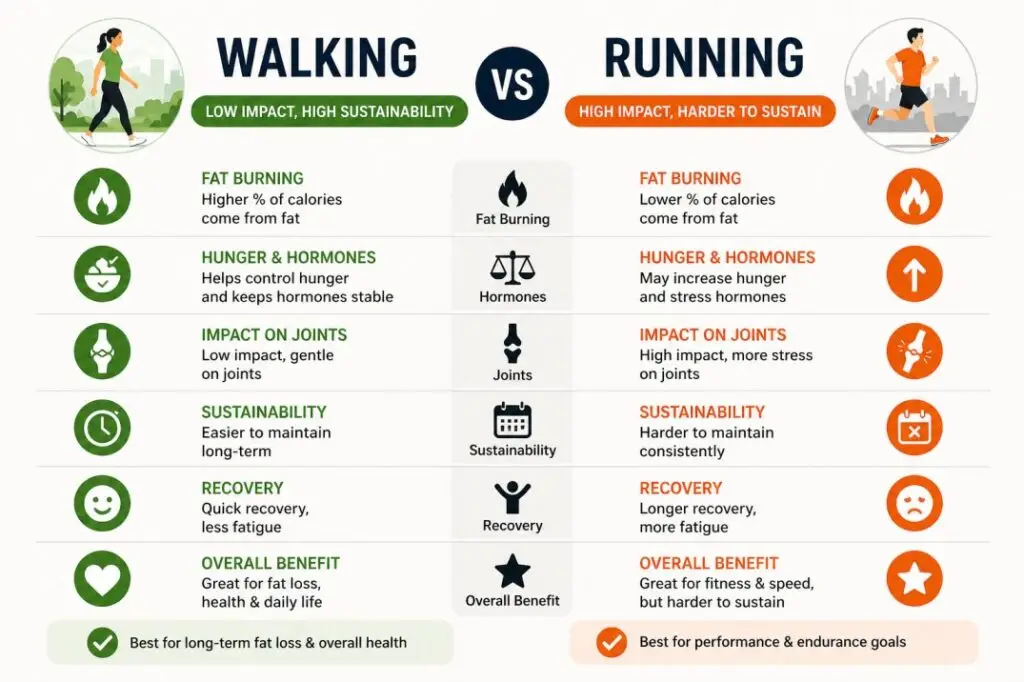
Part 6: How to Lose Fat by Walking—A Practical Protocol
Here is your actionable framework for the next 30 days.
Daily Walking Minimum
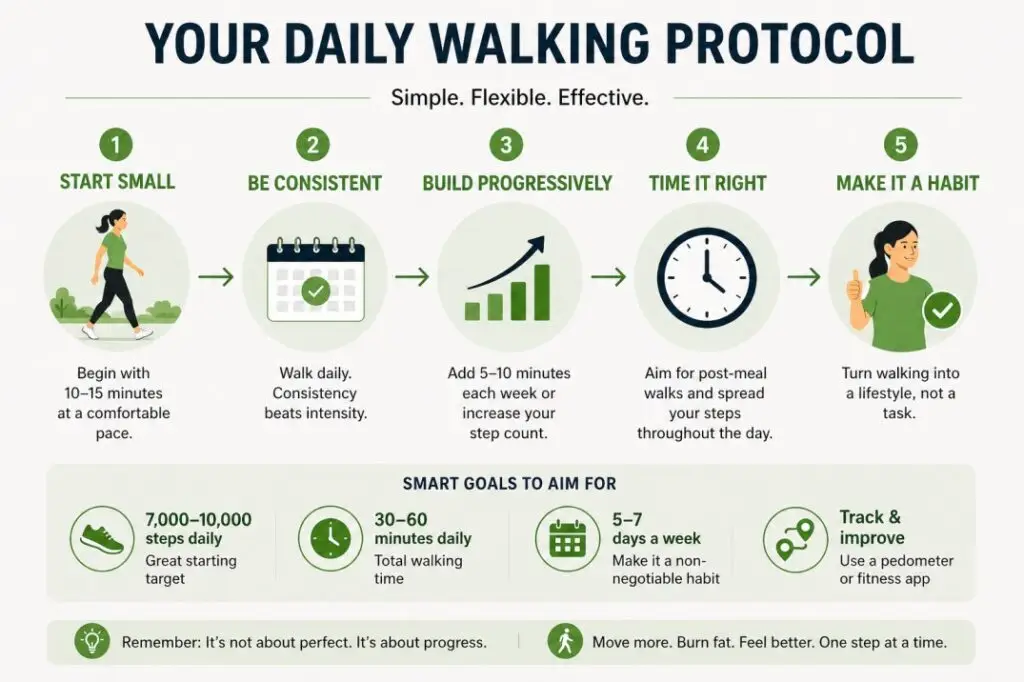
- Goal: 8,000-12,000 steps per day
- Strategy: Break it into chunks—morning walk (15 min), post-lunch walk (10 min), post-dinner walk (15 min)
The Power Walk (3x per week)
- 30-45 minutes at a brisk pace (still able to talk, but breathing noticeably heavier)
- This is your “moderate intensity” session for cardiovascular health
Post-Meal Non-Negotiable (Daily)
- 10-15 minutes immediately after your largest meal
- Even pacing around your living room counts
NEAT Boosters (Hourly)
- Stand up every 30-60 minutes
- Take a 2-minute walking break (to the bathroom, water cooler, or just around the room)
- Pace while on phone calls
The 30-Day Progression
- Week 1: Focus only on consistency—10 minutes after each meal is the only rule
- Week 2: Add a 20-minute morning walk
- Week 3: Increase one walk per day to a brisk pace
- Week 4: Add NEAT boosters (stairs, parking farther, walking meetings)
The Verdict: Why Walking Wins for Long-Term Fat Loss
If your only goal is to maximize calorie burn in the shortest time possible, running wins. That is simple physics.
But if your goal is to lose fat by walking—and keep it off—walking is the superior strategy for most people.
Why? Because the best exercise is the one you will actually do tomorrow. And the day after. And the day after that.
Running has a high dropout rate. It hurts. It requires recovery. It can trigger hunger spikes and stress responses.
Walking is gentle. It lowers stress. It stabilizes blood sugar. It fits into your life without requiring a complete wardrobe change. And when combined with the post-meal timing strategy, it actively works with your biology rather than against it.
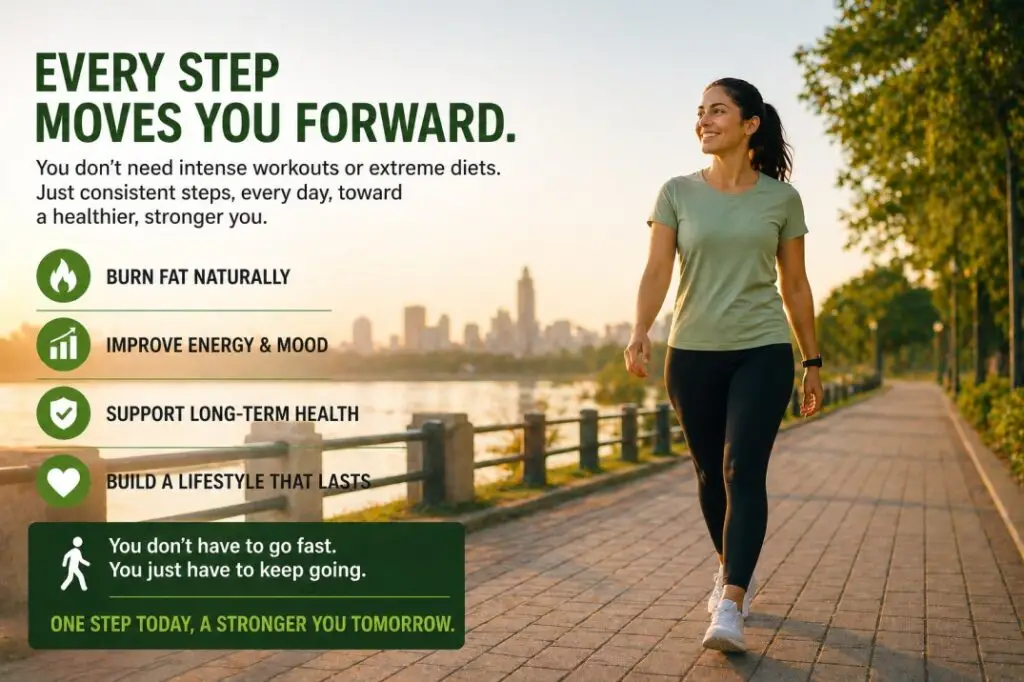
The research is clear: walking isn’t “lesser” exercise. It is different exercise. And for fat loss, different is exactly what works.
Explore More
Before you start your walking journey, these related articles will help you build a complete fat loss strategy:
How to Lose Weight in 30 Days: The Realistic, Science-Backed Plan That Works – A comprehensive 30-day protocol that pairs walking with strategic nutrition.
High Protein Foods for Fat Loss: A Simple Beginner’s Guide That Actually Works – Learn how pairing protein with your walking routine maximizes fat burning and preserves muscle.
Top 5 Supplements for Fat Loss That Actually Work in 2026 – Evidence-based supplements that support metabolism without gimmicks.
Ready to put this into practice?
Take the 30-Day Walking Challenge: Commit to a 10-minute walk after your largest meal every day for the next 30 days. That is it. No other changes required. Track how you feel—energy levels, bloating, cravings, sleep quality.
I want to hear from you: What is the one meal where you struggle to find time to walk afterward? Drop it in the comments, and I will help you problem-solve a solution.
And if you found this helpful, share it with someone who thinks they need to run themselves into the ground to see results. They might just need permission to walk.