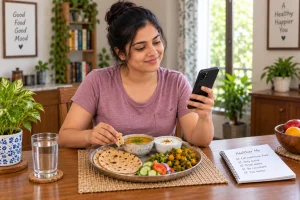
Best Vegetarian Protein Sources in India: 15+ Options Beyond Dal & Paneer
Discover the best vegetarian protein sources in India beyond paneer and dal. From soya chunks to sprouts, this guide helps you hit your daily protein goals on a budget.
The Protein Paradox: 73% of Indians Are Deficient
Here’s a startling fact that should make every Indian pause.
According to the Indian Council of Medical Research (ICMR), 73% of Indians are protein-deficient – and this includes 85% of non-vegetarians who still fall short of their daily recommended intake.
Yes, you read that correctly. Even many meat-eaters in India aren’t getting enough protein.
The result? Fatigue, muscle loss, stubborn belly fat, slow recovery from illness, and a metabolism that works against you.
But here’s the good news: You don’t need to eat meat to fix this. India has a rich tradition of vegetarian protein sources that are affordable, accessible, and culturally familiar. You just need to know where to look – and how much to eat.
In this guide, I’ll walk you through the best vegetarian protein sources India has to offer, ranked by protein density, digestibility, and practicality. No expensive imports. No exotic superfoods. Just real food from your local kirana store.
Let’s dive in.
Why Most Indians Are Protein-Deficient (Without Realizing It)
Before we talk solutions, let’s understand the problem.
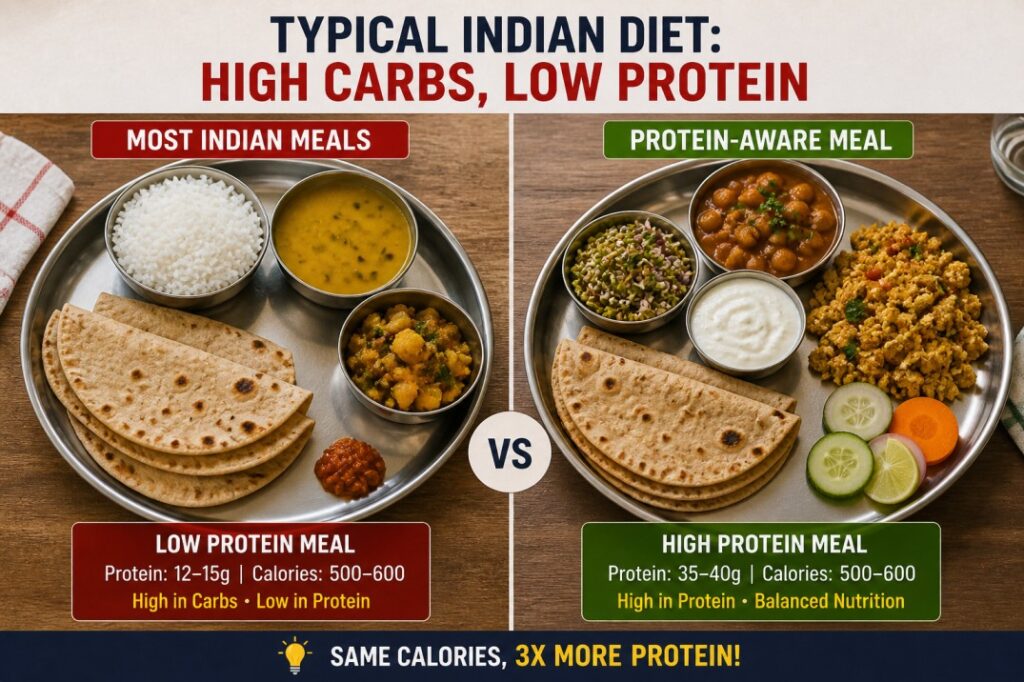
A typical Indian meal looks like this: 2-3 rotis or a large serving of rice, a bowl of dal, some sabzi, and maybe a spoonful of curd. This meal is carb-dominant and protein-poor.
Here’s the math: Two rotis give you about 6 grams of protein. A bowl of dal gives you 5-7 grams. The sabzi adds 1-2 grams. Total: 15 grams of protein for a meal that likely contains 500-600 calories.
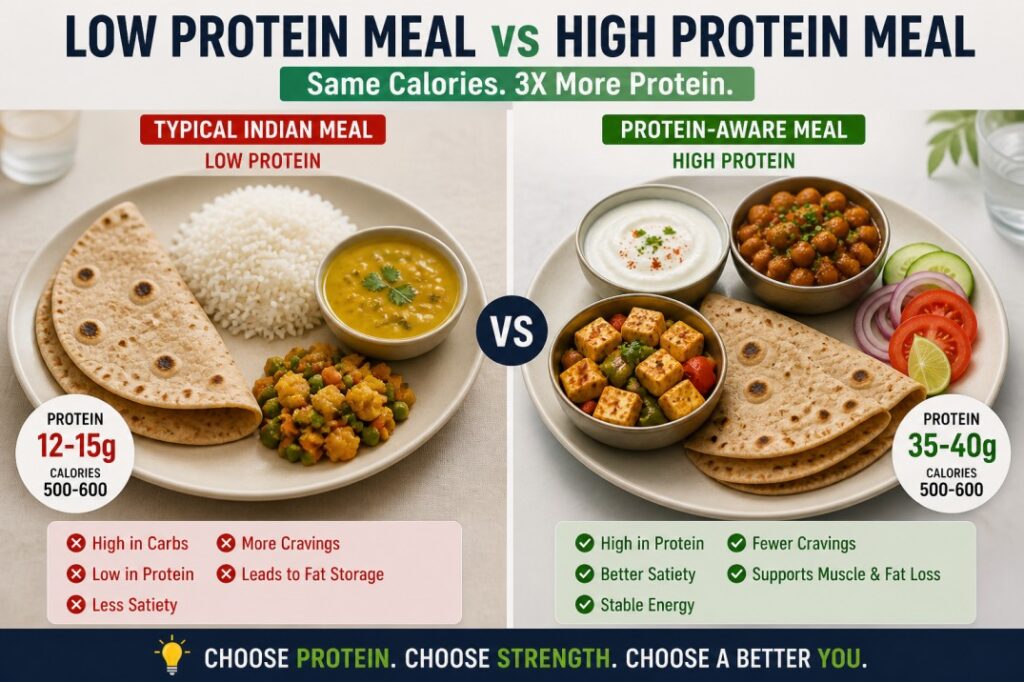
Now compare that to a protein-aware meal: A serving of soya chunks (25g protein), a bowl of curd (8g), and some vegetables. Same calories. Three times the protein.
The problem isn’t that vegetarian food lacks protein. The problem is that most Indians don’t know which vegetarian protein sources pack the biggest punch – and how much they actually need.
According to fitness coach Raj Ganpath, “Every Indian needs to focus on vegetarian protein. Even if you are a non-vegetarian. Because in India, non-vegetarians are essentially vegetarians who eat a little meat.”
Let’s fix that knowledge gap.
The Vegetarian Protein Pyramid: A New Way to Think
Fitness coach Raj Ganpath has created a useful framework called the Vegetarian Protein Pyramid to help Indians understand which foods to prioritize.
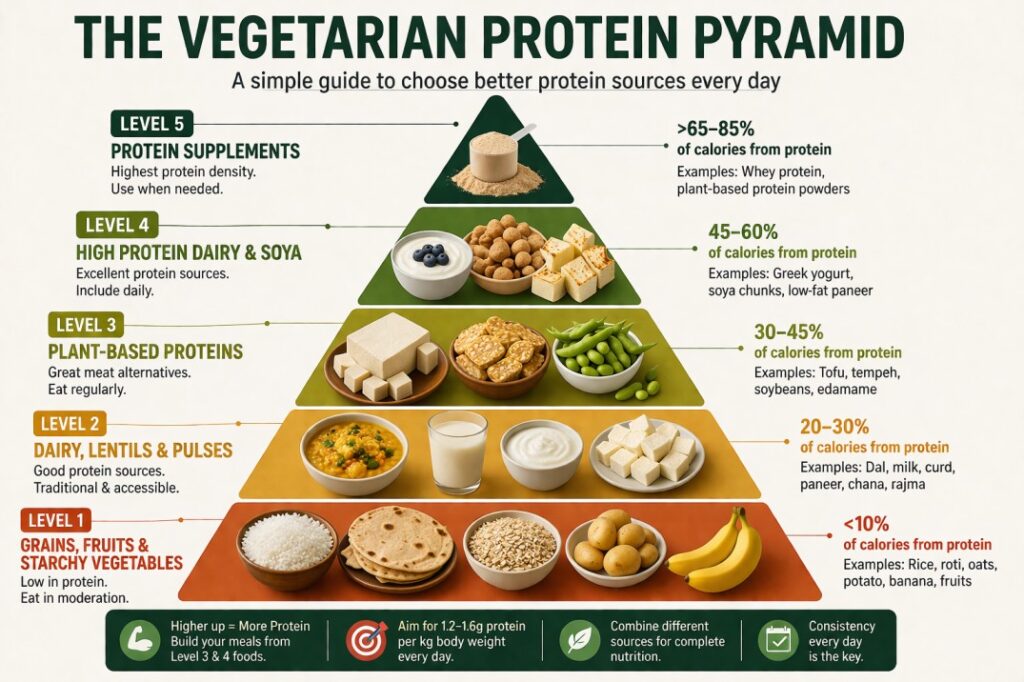
| Level | Food Category | % Calories from Protein | Examples |
|---|---|---|---|
| Level 1 (Lowest) | Grains, fruits, starchy vegetables | <10% | Rice, roti, potato, banana |
| Level 2 | Milk, yoghurt, lentils, cheese (paneer) | 20-30% | Dal, milk, regular curd, paneer |
| Level 3 | Tofu, tempeh, low-fat cheese, soybeans | 30-45% | Tofu, tempeh, edamame |
| Level 4 | Low-fat paneer, Greek yoghurt, soya chunks | 45-60% | Greek yogurt, soya chunks, low-fat paneer |
| Level 5 (Highest) | Protein supplements | >65-85% | Whey, plant-based protein powders |
The key insight? Most Indians rely heavily on Level 1 and Level 2 foods for their protein. That’s why they fall short. To hit your daily target, you need to intentionally include Level 3 and Level 4 foods in your diet.
The Top Vegetarian Protein Sources in India (Ranked)
Let’s get to the practical stuff. Here are the best vegetarian protein sources India has to offer, ranked by protein density per 100 grams.
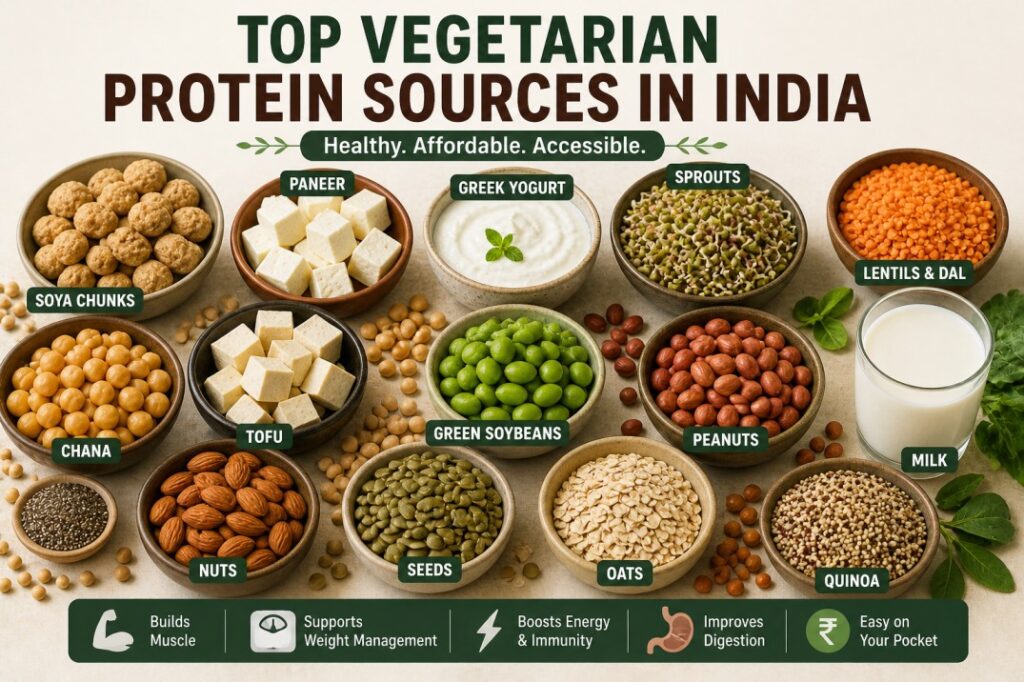
1. Soya Chunks (52g protein / 100g dry)
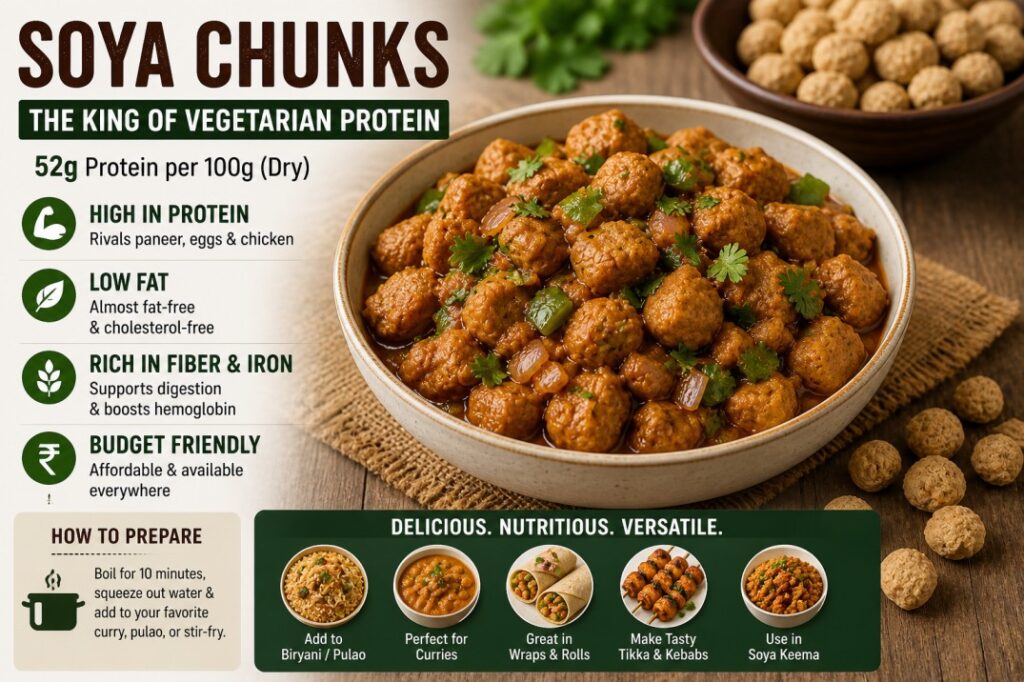
Soya chunks, often known by the brand name “Nutrela,” are the undisputed king of vegetarian protein. With a staggering 52 grams of protein per 100 grams of dry weight, they rival chicken and eggs in protein density.
Why they’re great:
- Almost fat-free and cholesterol-free
- High in fiber and iron
- Inexpensive (₹150-200 per kg)
- Contains all essential amino acids (complete protein)
How to eat them: Boil for 10 minutes, squeeze out water, and add to curries, biryani, pulao, or even paratha fillings. Soya chunk tikka and soya keema are delicious options.
Pro tip: Always boil soya chunks before cooking. Don’t skip this step – it removes the raw flavor and improves texture.
2. Greek Yogurt (10g protein / 100g)
Greek yogurt (hung curd) is a Level 4 protein source – meaning 45-60% of its calories come from protein. That’s significantly higher than regular curd.
Why it’s great:
- High in casein protein (slow-digesting, keeps you full longer)
- Contains probiotics for gut health
- Versatile for breakfast, smoothies, or raita
How to eat it: Have it with berries and nuts for breakfast, use it as a base for dips, or add it to smoothies. You can make it at home by hanging regular curd in a muslin cloth overnight.
3. Paneer (18-20g protein / 100g)
Paneer is India’s most famous vegetarian protein source – and for good reason. With 18-20 grams of protein per 100 grams, it’s a solid option that’s widely available and culturally familiar.
The catch: Paneer is also high in fat (about 20g per 100g). That doesn’t make it “bad” – your body needs fat – but it means paneer is calorie-dense. If weight loss is your goal, opt for low-fat paneer or pair paneer with high-fiber vegetables.
How to eat it: Paneer bhurji, tikka, stuffed parathas, salads, or simply grilled with spices.
4. Lentils and Pulses (7-9g protein / 100g cooked)
Dals are the backbone of Indian vegetarian cooking, but they’re often overestimated as protein sources. A cooked cup of dal contains about 7-9 grams of protein – respectable, but not enough on its own.
Best dals for protein: Urad dal, moong dal, and masoor dal top the list.
The key to making dal work: Pair it with a complementary protein source like rice (dal chawal) or roti. The combination of dal (limiting in methionine) and grains (limiting in lysine) creates a complete amino acid profile. This is the science behind traditional Indian food combinations.
5. Chickpeas (Chana) – 15g protein / cooked cup
Whether you prefer Kabuli chana (white) or Kala chana (black), chickpeas are a powerhouse of plant protein. A single cooked cup delivers about 15 grams of protein, along with significant fiber and folate.
Why they’re unique: Chickpeas provide slow-release energy, making them excellent for sustained satiety.
How to eat them: Chole (chickpea curry), roasted chana as a snack, hummus (blend with tahini, lemon, and garlic), or added to salads.
6. Sprouted Moong Dal (8-9g protein / cup)
Sprouting isn’t just a health fad – it actually increases protein bioavailability. Sprouted moong dal is easier to digest than regular dal and has higher Vitamin C content.
Why it’s great:
- Light and easily digestible
- Can be eaten raw in salads
- Sprouting reduces antinutrients that block protein absorption
How to eat it: Raw with lemon and chaat masala, lightly sautéed, or added to poha and upma.
7. Tofu (8-10g protein / 100g)
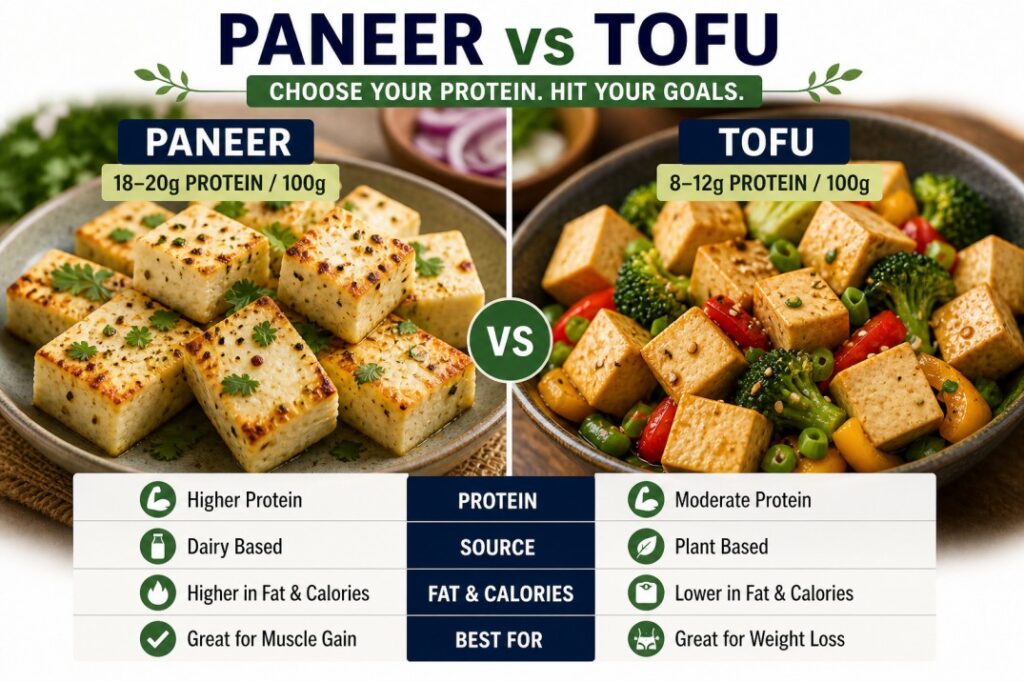
Tofu is essentially the vegan cousin of paneer – made from soy milk instead of dairy. It contains 8-10 grams of protein per 100 grams and is lower in fat than paneer.
Why it’s great:
- Low in calories and fat
- Absorbs flavors of whatever it’s cooked with
- Contains all essential amino acids
How to eat it: Tofu bhurji (scrambled like eggs), added to curries, grilled with spices, or blended into smoothies.
8. Quinoa (8g protein / cooked cup)
Quinoa is one of the few complete plant proteins, meaning it contains all nine essential amino acids your body cannot produce on its own.
How to eat it: Replace rice with quinoa in pulao, khichdi, or salads. Mix with vegetables and paneer for a high-protein meal.
*Budget note: Quinoa is more expensive than rice. Use it 2-3 times per week, not daily.*
9. Amaranth (Rajgira) – 9g protein / 100g
Amaranth is an ancient grain traditionally eaten during fasts in India. It’s a complete protein – rare for plant foods – and contains more protein than wheat or rice.
How to eat it: Amaranth porridge for breakfast, rajgira roti, or popped amaranth (like popcorn) as a snack.
10. Nuts and Seeds
Nuts and seeds are protein-dense and nutrient-rich, but they’re also calorie-dense. Use them strategically.
BONUS: Tempeh (19g protein / 100g)
Tempeh is a fermented soy product that’s gaining popularity in 2026. Because it’s fermented, it’s much easier to digest than regular soy and provides natural probiotics for gut health.
Availability note: Tempeh is becoming more available in major Indian cities, but it’s still more expensive than soya chunks.
The Protein Quality Factor: PDCAAS Explained
Here’s something most protein guides don’t tell you.
Not all protein is created equal. The quality of a protein is measured by its PDCAAS (Protein Digestibility Corrected Amino Acid Score) – a fancy term that basically means: how well can your body actually use this protein?
Research on wild legumes in southwest India has shown that cooking improves in vitro protein digestibility (IVPD) and PDCAAS scores. For example, cooking Ceylon spinach (Talinum triangulare) significantly improved its protein quality metrics.
What this means for you: Don’t eat raw legumes. Cooking, sprouting, and fermenting all improve protein digestibility. This is why traditional Indian cooking methods – soaking, sprouting, slow-cooking dals – are scientifically sound.
Vegetarian Protein Sources India: Complete Comparison Table
| Source | Protein/100g | Complete Protein? | Cost (₹ per 100g protein) | Best For |
|---|---|---|---|---|
| Soya chunks (dry) | 52g | ✅ Yes | ~₹30 | Max protein, min cost |
| Pumpkin seeds | 19g | ❌ No | ~₹150 | Snacking |
| Peanuts | 26g | ❌ No | ~₹20 | Budget protein |
| Paneer | 18-20g | ✅ Yes | ~₹250 | Taste + protein |
| Greek yogurt | 10g | ✅ Yes | ~₹300 | Breakfast, gut health |
| Tofu | 8-10g | ✅ Yes | ~₹250 | Low-fat option |
| Tempeh | 19g | ✅ Yes | ~₹400 | Gut health + protein |
| Chickpeas (cooked) | 15g/cup | ❌ No (pair with grains) | ~₹80 | Fiber + protein |
| Lentils (cooked) | 7-9g/cup | ❌ No (pair with grains) | ~₹60 | Everyday meals |
| Quinoa (cooked) | 8g/cup | ✅ Yes | ~₹400 | Complete plant protein |
Cost estimates are approximate and vary by city and season.
How Much Protein Do You Actually Need?
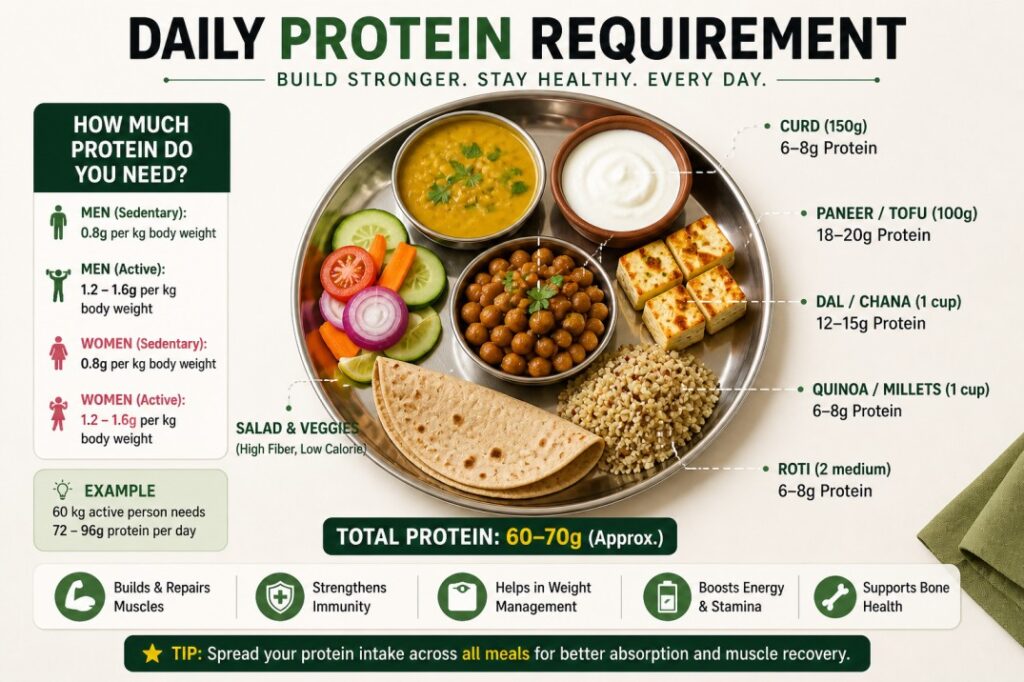
Here’s the simple formula.
For a sedentary adult: 0.8g of protein per kg of body weight
For an active adult (exercising 3-5 times/week): 1.2-1.6g per kg
For muscle gain or intense training: 1.6-2.2g per kg
Example: A 70kg active man needs 84-112 grams of protein per day.
Here’s what that looks like using vegetarian protein sources:
| Meal | Food | Protein (g) |
|---|---|---|
| Breakfast | Greek yogurt (150g) + pumpkin seeds (20g) | 15 + 4 = 19g |
| Lunch | 2 rotis + 100g paneer sabzi + salad | 6 + 18 = 24g |
| Snack | Roasted chana (50g) | 14g |
| Dinner | Soya chunk curry (50g dry soya) + 1 roti | 26 + 3 = 29g |
| Post-dinner | 1 cup milk | 8g |
| TOTAL | 94g |
No protein powder required. Just real food, strategically chosen.
The Protein Combining Myth (And Why You Can Stop Worrying)
You may have heard that plant proteins are “incomplete” and need to be combined perfectly at every meal.
Here’s the updated science: Your body maintains an amino acid pool. As long as you eat a variety of plant proteins throughout the day, you don’t need to combine them perfectly at each meal.
That said, Indian cuisine naturally solves this problem. Dal + rice and roti + dal are classic complementary pairs. The grains provide the methionine that dal lacks, and dal provides the lysine that grains lack.
So keep eating your dal chawal. It’s not just comfort food – it’s science.
Common Vegetarian Protein Mistakes
Mistake #1: Relying Only on Dal
A bowl of dal is not enough. At 7-9 grams of protein per serving, you’d need 10-12 bowls to hit 90 grams. Use dal as a supplement to higher-protein foods, not your primary source.
Mistake #2: Avoiding Soya Because of “Hormone” Myths
The “soya causes estrogen problems” myth has been thoroughly debunked. For men, moderate soya consumption (1-2 servings daily) has no negative hormonal effects. Soya chunks are safe, effective, and cheap.
Mistake #3: Eating Paneer at Every Meal
Paneer is great – but it’s also high in fat and saturated fat. Rotate paneer with tofu, soya chunks, and lentils for better nutrient diversity.
Mistake #4: Forgetting the Second Half of the Plate
Most Indian meals are carb-heavy (rice/roti) with protein as an “add-on.” Flip the script. Make protein the anchor of your meal, and use roti/rice as the accompaniment.
Budget-Friendly Protein: Eating Well Under ₹200/Day
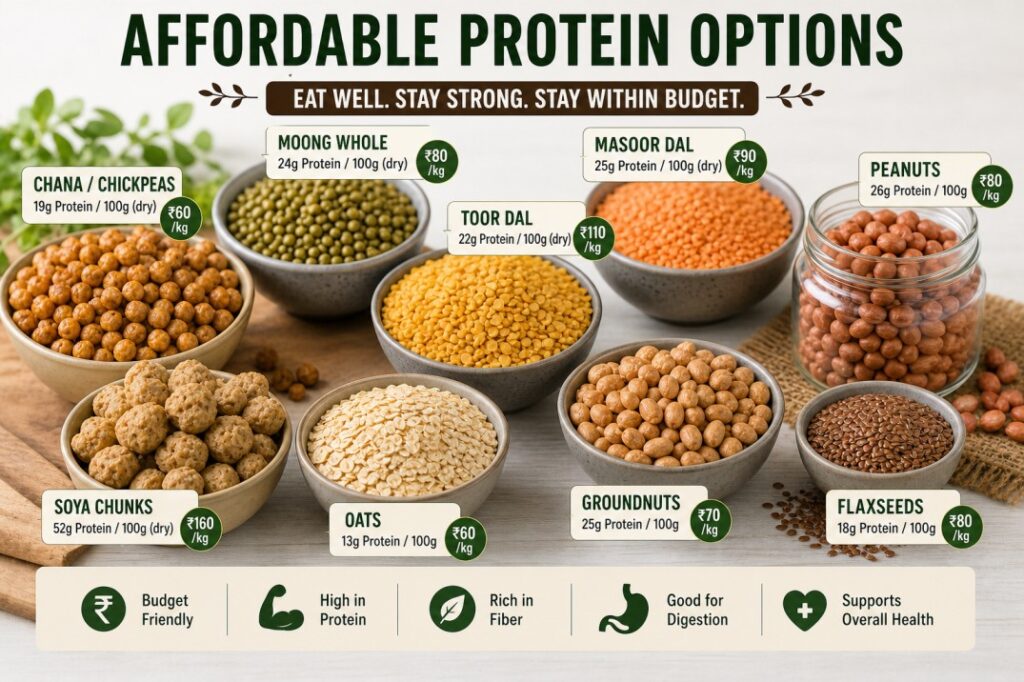
Protein doesn’t have to be expensive. Here are the cheapest vegetarian protein sources in India:
| Food | Cost per 100g protein | Daily cost (for 90g protein) |
|---|---|---|
| Soya chunks | ~₹30 | ₹27 |
| Roasted chana | ~₹40 | ₹36 |
| Peanuts | ~₹33 | ₹30 |
| Moong dal | ~₹60 | ₹54 |
| Eggs (for ovo-vegetarians) | ~₹35 | ₹32 |
| Paneer | ~₹250 | ₹225 (premium option) |
A realistic daily protein target on a budget: Soya chunks (50g dry → 26g protein, ~₹15) + Moong dal (100g cooked → 9g protein, ~₹6) + Greek yogurt (100g → 10g protein, ~₹30) + Peanuts (50g → 13g protein, ~₹10) + 2 rotis (6g protein, ~₹4) + Vegetables + Rice. Total daily cost: ~₹100-120 for 60-65g protein.
Final Thoughts: Building Your Vegetarian Protein Toolkit
Here’s what I want you to take away.
The best vegetarian protein sources India offers are already in your kitchen – or a short walk away at your local kirana store. You don’t need imported quinoa or expensive protein powders to hit your goals.
The core four to focus on:
- Soya chunks (for raw protein density)
- Lentils and beans (for everyday meals)
- Paneer or tofu (for taste and texture)
- Greek yogurt or curd (for breakfast and snacks)
Add nuts, seeds, and millet-based grains for variety and micronutrients.
The science is clear. The foods are available. The only missing piece is intentionality.
Start tomorrow morning. Replace your regular breakfast with Greek yogurt and roasted chana. Add a serving of sprouts to your lunch. Snack on peanuts instead of biscuits.
Do that for two weeks, and you’ll feel the difference.
Frequently Asked Questions
Can vegetarians build muscle without supplements?
Absolutely. Many Indian bodybuilders and athletes have proven that a well-planned vegetarian diet provides sufficient protein for muscle growth. The key is quantity and variety – not relying on any single source.
Which dal has the highest protein?
Urad dal and moong dal are among the highest in protein content among Indian pulses.
Is paneer better than soya chunks for protein?
For pure protein density, soya chunks win (52g vs 18g per 100g). However, paneer provides calcium and vitamin B12 that soya lacks. The best approach is to eat both – rotate them throughout the week.
What is the cheapest vegetarian protein source in India?
Roasted chana, soya chunks, and moong dal are the most affordable options, often costing under ₹50 per serving.
Are plant proteins incomplete?
Some are, but pairing them (like dal with rice) creates a complete amino acid profile. Plus, soya, quinoa, and amaranth are complete proteins on their own.
Ready to Transform Your Health?
Protein is the missing piece in most Indian diets. Fixing your protein intake will improve your energy, metabolism, muscle tone, and even your mood.
And here’s the best part: You already have access to all the tools you need.
If this guide helped you understand plant-based protein better, here are three more resources that complement it perfectly:
👉 Why Indians Are “Skinny Fat” – And How to Lose Belly Fat the Right Way – Understanding your body type is the first step. [Read here]
👉 10 Best Workouts for Home: A Complete Guide to Get Fit Without a Gym – Build muscle without equipment. [Read here]
👉 Budget Indian Diet Plan for Weight Loss Under ₹200/Day – Complete your transformation with this meal plan. [Read here]
Drop a comment below and tell me: Which vegetarian protein source are you adding to your diet this week? Or share your favorite high-protein Indian recipe.
And if this guide helped you, share it with a family member who’s still convinced that dal is “enough protein.” Let them know the truth.
Protein khao, strong bano. (Eat protein, be strong.)
Disclaimer: This information is for educational purposes only. Consult a qualified nutritionist or healthcare provider before making significant dietary changes, especially if you have pre-existing health conditions.