Introduction: Your Body is Warning You
Brittle nails that split before they grow. Cracks at the corners of your mouth that won’t heal. Night blindness that makes driving home a struggle. A heaviness in your legs that has nothing to do with your workout.
You’ve probably dismissed these as “nothing serious.”
Here’s what most people get wrong: Your body doesn’t hide problems. It sends signals. You’ve just stopped paying attention.
The seven signs I’m about to walk you through are the early signs of nutrient deficiency that most Indians ignore until the deficiency becomes severe enough to require hospitalization or chronic medication.
I’ve seen perfectly healthy-looking people discover they’re severely deficient in B12, iron, or vitamin D—not because they felt “sick,” but because a blood test finally revealed what their body had been screaming for years.
Let me show you what to look for. And more importantly, what to do about it.
Quick Answer: 7 Early Signs of Nutrient Deficiency Most People Miss
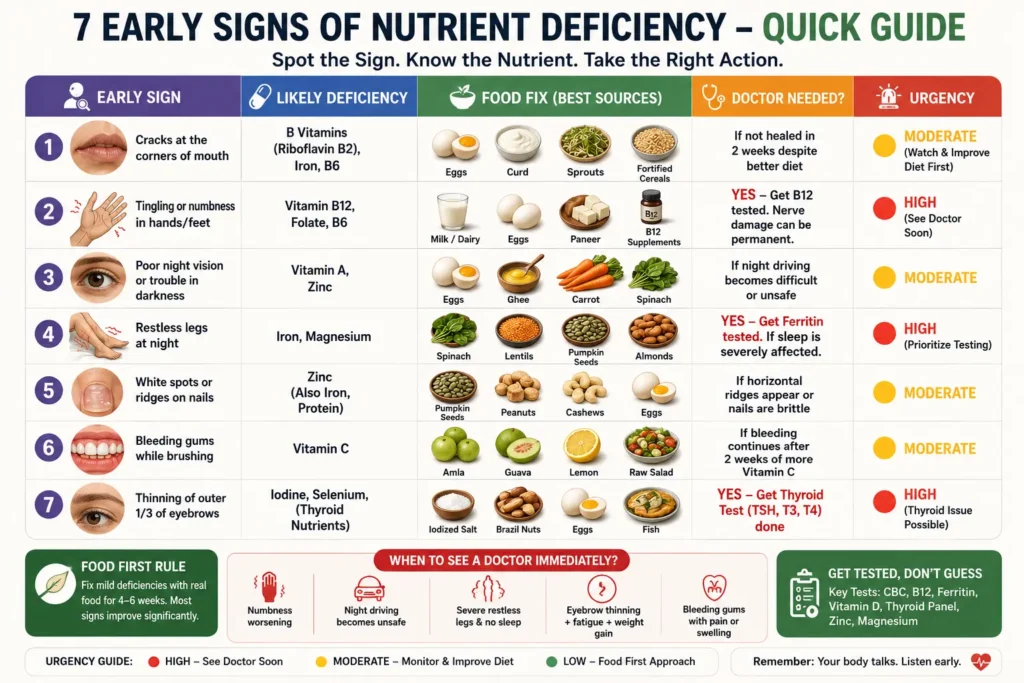
| Sign | Likely Deficiency | Why Most Ignore It |
|---|---|---|
| Cracks at mouth corners | B vitamins (riboflavin), iron | Assume it’s dry weather |
| Tingling fingers/toes | B12, folate | Blame posture or sleeping wrong |
| Poor night vision | Vitamin A | Think it’s age or eye strain |
| Restless legs at night | Iron, magnesium | Call it “anxiety” or “overthinking” |
| White spots on nails | Zinc | Ignore or cover with polish |
| Bleeding gums (brushing) | Vitamin C | Accept as “normal” brushing result |
| Thinning eyebrows (outer third) | Thyroid nutrients (iodine, selenium) | Blame aging or genetics |
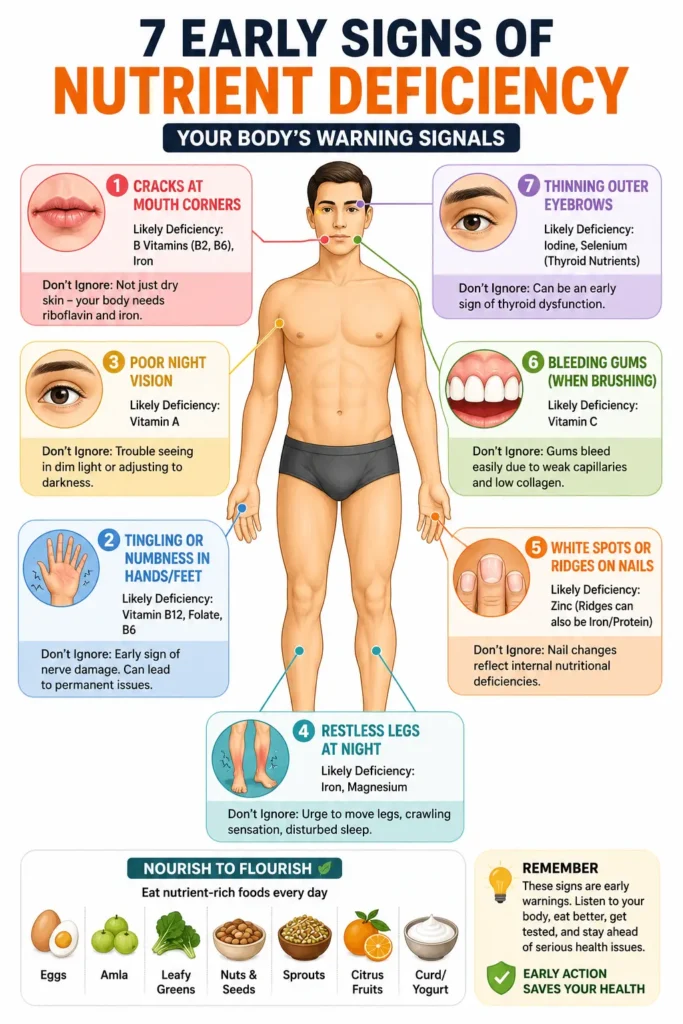
The hard truth: By the time you feel “sick” from a deficiency, the damage has been accumulating for months or years. These early signs are your body begging for help.
What Is a Nutrient Deficiency vs Normal Fatigue?
Most people confuse deficiency symptoms with “just being tired.” Here’s the difference.
Normal fatigue: You didn’t sleep enough. You trained hard. You’re stressed. It resolves with rest.
Nutrient deficiency symptoms: Specific, persistent, and don’t go away after a good night’s sleep. They’re tied to specific bodily functions that rely on specific vitamins or minerals.
Think of your body as a car warning system. Fatigue is the “low fuel” light—vague. A cracked mouth corner or tingling finger is the “check engine” light—specific to a system.
Indian context: Our diets are often carb-heavy (rice, roti) and nutrient-dilute. We eat plenty of calories but not enough vitamins and minerals. Add to that widespread vitamin D deficiency (we work indoors) and B12 deficiency (vegetarian diets), and you have a population walking around with chronic, low-grade deficiencies that everyone mistakes for “normal.”
Sign #1: Cracks at the Corners of Your Mouth (Angular Cheilitis)
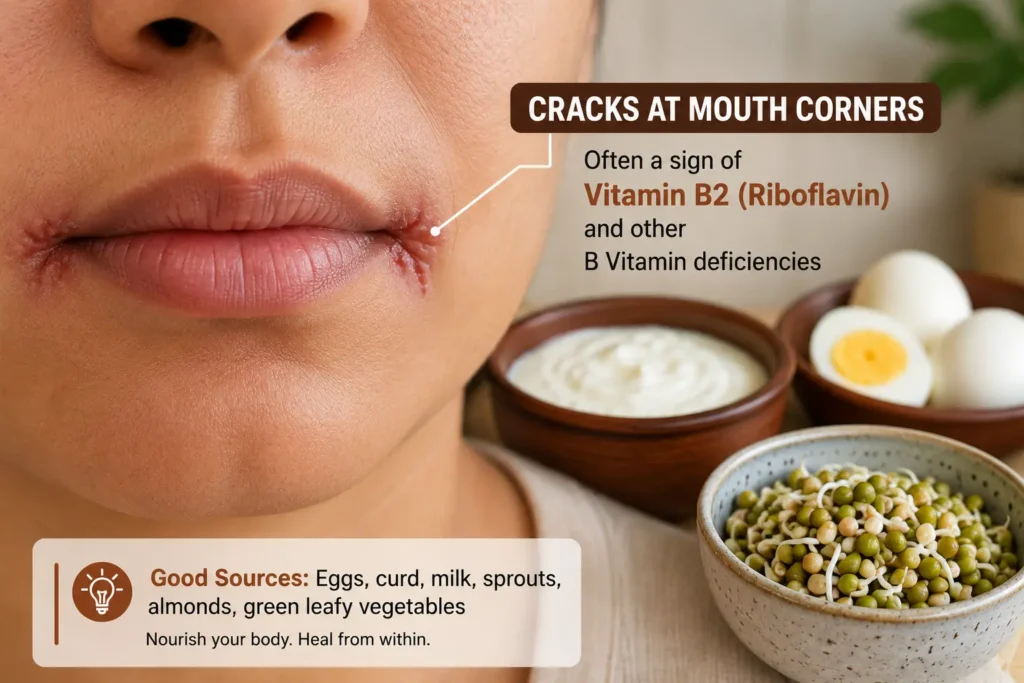
This isn’t dry skin or weather damage. It’s riboflavin (B2) deficiency, often accompanied by low iron and B6.
What it looks like: Red, inflamed splits at one or both corners of your mouth. They crack open when you open your mouth wide. They heal slowly, if at all.
Why most Indians ignore it: We blame “lodhi” (seasonal change) or “temperature changes.” We apply ghee or lip balm and move on.
The science: Riboflavin is essential for cell growth and skin integrity. Without it, the skin at the corners of the mouth—which undergoes constant movement and moisture exposure—breaks down and can’t repair itself.
What to do: If topical treatments don’t fix it in a week, you need internal help. Add:
- Eggs (2-3 daily if non-veg)
- Paneer or curd (daily)
- Sprouted moong dal
- Fortified cereals
B2 is water-soluble, so you can’t overdose from food. A multivitamin with B-complex usually resolves this within 2-3 weeks.
Sign #2: Tingling, Numbness, or “Pins and Needles” in Hands/Feet
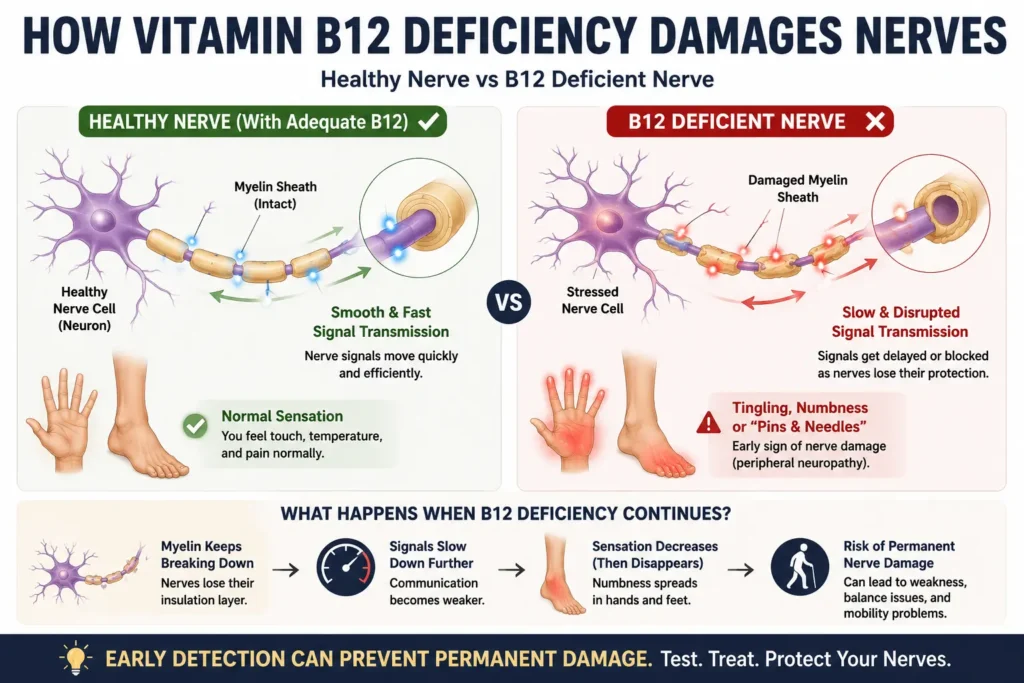
This feels like your limb “fell asleep” for no reason. It happens even when you haven’t been lying on it. It might come and go. You shake your hand to “wake it up,” but it doesn’t help.
Likely cause: Vitamin B12 deficiency. Sometimes folate or B6.
Why this is dangerous: B12 deficiency causes peripheral neuropathy—damage to the nerves outside your brain and spinal cord. The tingling is the first warning. If ignored, it progresses to numbness, weakness, and eventually difficulty walking.
Indian context: Vegetarian diets are extremely high-risk for B12 because B12 comes almost exclusively from animal products (eggs, meat, fish, dairy). While dairy contains some B12, absorption varies, and many Indians are lactose intolerant anyway.
Who’s most at risk:
- Strict vegetarians and vegans
- Anyone over 50 (absorption decreases with age)
- People on acid-reducing medications (common in India for acidity)
- Those with gut issues (IBD, celiac, Crohn’s)
What to do: Get a serum B12 blood test. “Normal” range (200-300 pg/mL) is often still symptomatic for many people. Optimal is above 500.
- Mild deficiency: Oral B12 supplements (1000-2000 mcg daily)
- Moderate to severe: B12 injections (prescribed by doctor)
Don’t ignore the tingling. By the time you have full neuropathy, some nerve damage may not be reversible. Read our guide on low testosterone signs in young men — B12 deficiency can mimic some hormonal symptoms.
Sign #3: Poor Night Vision or Trouble Adjusting to Darkness
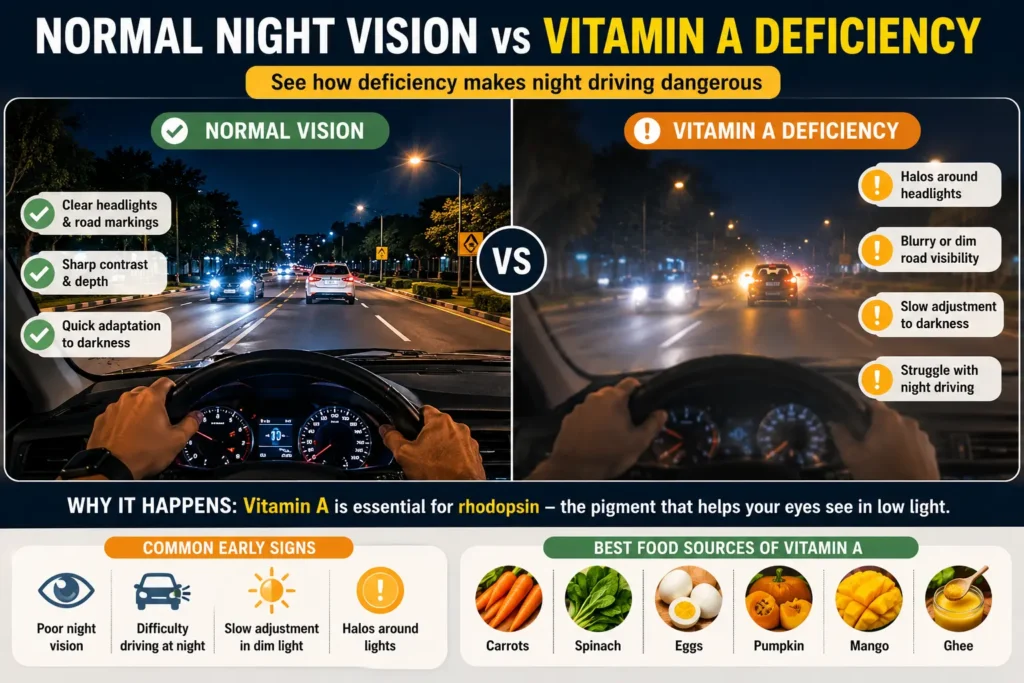
You walk from a bright room into darkness. It takes you longer than others to see. Driving at night feels harder. You see “halos” around headlights. You bump into furniture in dim light.
Likely cause: Vitamin A deficiency.
The science: Vitamin A is a component of rhodopsin, the pigment in your retina that allows you to see in low light. Without enough vitamin A, your eyes can’t regenerate rhodopsin quickly enough, and night vision suffers.
Why most Indians ignore it: We call it “age” or “eye strain from screens.” But vitamin A deficiency is still surprisingly common in India—despite it being available in affordable foods.
Indian context: The National Family Health Survey has consistently found vitamin A deficiency in significant percentages of the population, especially in lower-income groups and vegetarians who avoid animal sources.
Best sources of vitamin A:
- Animal sources (retinol — most absorbable): Eggs (especially yolk), ghee, butter, liver (if you eat it), fish liver oils
- Plant sources (beta-carotene — needs conversion): Carrots, pumpkin, spinach (palak), amaranth (chaulai), papaya, mango, red palm oil
The conversion problem: Beta-carotene from plants requires your body to convert it to active vitamin A. This conversion is inefficient (only 3-28% depending on genetics and fat intake). That’s why vegetarians are at higher risk despite eating carrots.
What to do: If you have night vision trouble:
- Add 2-3 eggs daily (if you eat eggs)
- Cook carrots, spinach, or pumpkin with ghee (fat increases absorption)
- Consider a multivitamin with vitamin A (or beta-carotene)
If you’re vegan, you may need a vitamin A supplement directly (not just beta-carotene), but consult a doctor first.
Sign #4: Restless Legs at Night — The Urge to Move That Won’t Stop
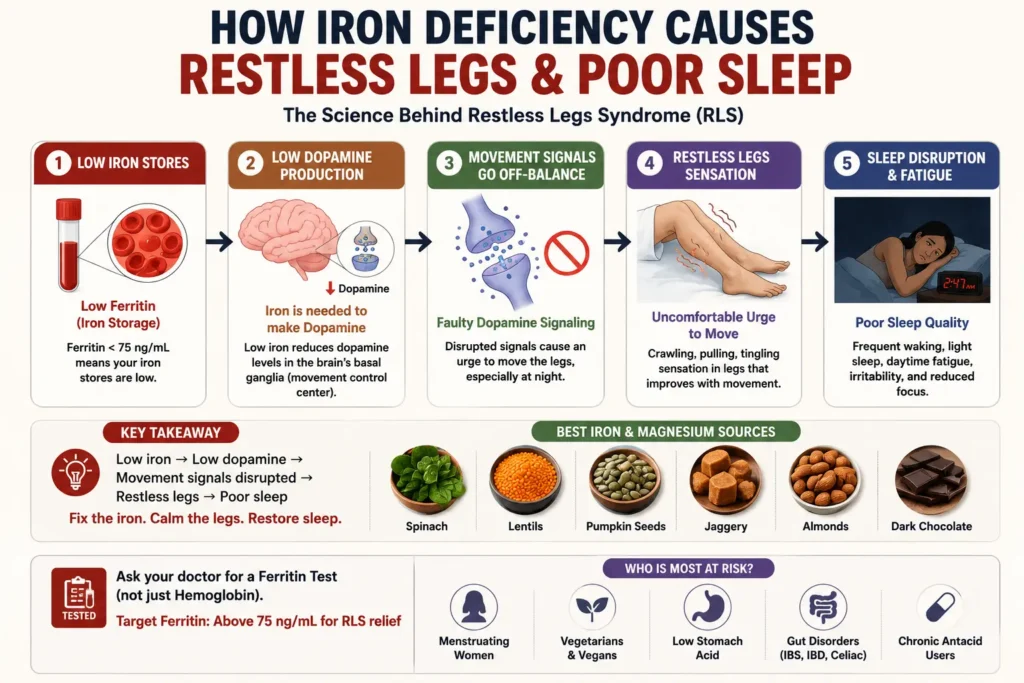
You’re lying in bed. Your legs feel… weird. Not painful exactly. More like an internal crawling, pulling, or itching sensation. Moving them relieves it temporarily, but it comes right back. It keeps you awake. You kick, stretch, or walk around the room at 2 AM.
Likely cause: Iron deficiency (with or without anemia). Magnesium deficiency can also contribute.
The connection: Iron is required for dopamine production in the brain. Dopamine controls movement. When iron is low, dopamine signaling in the basal ganglia (the brain’s movement control center) goes haywire, and you get the urge to move your legs.
Why this is overlooked: Doctors often call it “anxiety” or “poor sleep hygiene.” But a simple ferritin (iron storage) blood test can confirm.
Who’s most at risk in India:
- Vegetarians (non-heme iron from plants is poorly absorbed)
- Menstruating women (lose iron monthly)
- People with low stomach acid (common in India due to rampant antacid use)
- Those with undiagnosed celiac disease or gut inflammation
What to do: Ask your doctor for a ferritin test (not just hemoglobin). Many people have low iron stores without being anemic.
Target ferritin for restless legs: Many neurologists recommend ferritin above 75 ng/mL for RLS, though “normal” lab ranges start at 20-30.
Iron-rich foods for vegetarians:
- Cooked spinach (but oxalates block absorption)
- Lentils (especially masoor and moong)
- Fortified cereals
- Cooking in iron cookware (yes, it actually works)
Enhance absorption: Pair iron-rich foods with vitamin C (lemon squeeze on dal, chutney, or fruit).
Magnesium sources: Pumpkin seeds, almonds, dark chocolate, leafy greens. An Epsom salt bath (magnesium sulfate) before bed also helps some people.
Sign #5: White Spots or Horizontal Ridges on Your Nails
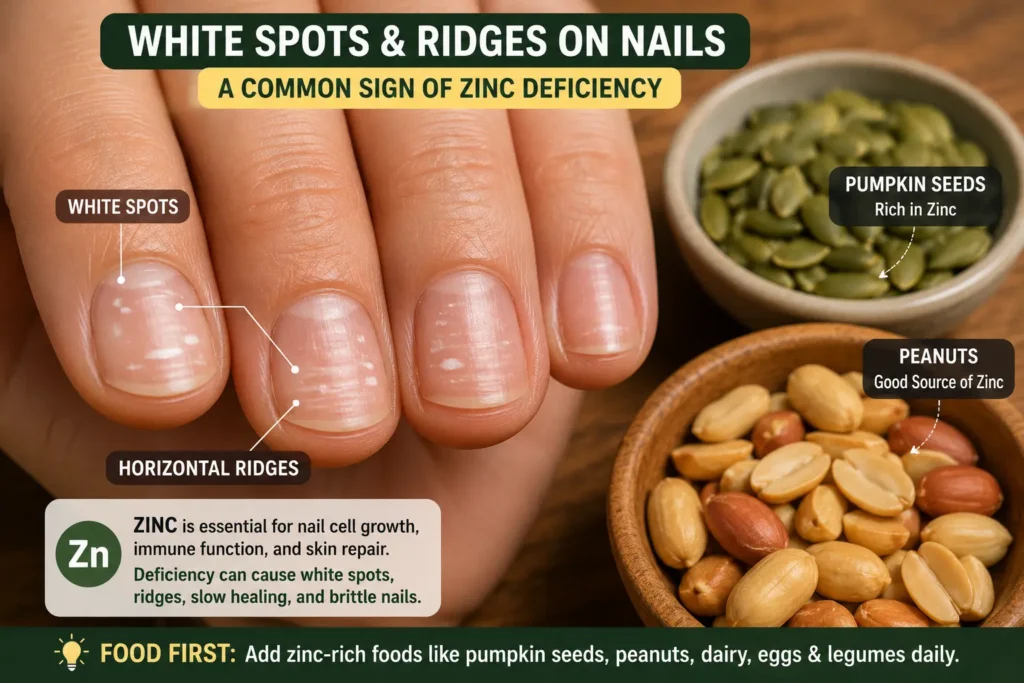
You look at your fingernails. There are small, chalky white spots. Or horizontal ridges that look like dents or depressions running across the nail. The spots don’t grow out for weeks.
Likely cause: Zinc deficiency. Ridges can also indicate low iron or protein.
Why it happens: Zinc is essential for nail cell division and keratin protein formation. Without enough zinc, nail matrix (the root of the nail) produces abnormal cells that appear as spots or ridges.
The myth: Everyone says white spots are “calcium deficiency.” That’s wrong. Calcium deficiency affects nails differently (brittleness, splitting). White spots are almost always zinc.
Indian context: Zinc deficiency is widespread in India because:
- Our diets are high in phytates (from whole grains, legumes, nuts) which bind zinc and prevent absorption
- Soil zinc depletion (Indian agricultural soils are zinc-deficient, meaning crops grown in them are also zinc-deficient)
What to do:
- Soak and sprout legumes before cooking (reduces phytates)
- Add zinc-rich foods: pumpkin seeds (20g/day = 2mg zinc), peanuts, cashews, eggs, dairy
- Consider a zinc supplement (15-30mg daily), but don’t exceed 40mg long-term
Warning: Too much zinc can cause copper deficiency, which also causes neurological symptoms. Don’t self-prescribe high-dose zinc long-term without testing.
Nail ridges: If you have horizontal ridges (Beau’s lines), they can also indicate a severe illness that temporarily stopped nail growth. If they appear after fever or surgery, they’re harmless and will grow out. If they appear for no reason, see a doctor.
Sign #6: Bleeding Gums When You Brush (Even Gently)
You brush your teeth. The sink water turns pink. You assume you “brushed too hard.” You switch to a softer toothbrush. It still bleeds. Your gums look swollen or red at the edges.
Likely cause: Vitamin C deficiency (early scurvy).
The science: Vitamin C is required to produce collagen, the structural protein that holds your gum tissue together. Without enough vitamin C, the capillary walls in your gums weaken, and they bleed at the slightest pressure.
Why most Indians have low vitamin C: Not because we don’t eat it. But because:
- Cooking destroys vitamin C (heat-sensitive). Our cooked sabzis have minimal vitamin C left.
- We don’t eat enough raw fruits and vegetables. The traditional Indian meal has cooked vegetables, but the salad (kheera, tomato, onion) is often skipped.
- Tea and coffee inhibit absorption (tannins bind vitamin C). And most Indians drink chai constantly.
The shocking statistic: Subclinical vitamin C deficiency (not full scurvy, but not optimal) is surprisingly common in India, especially in winter when fresh fruit is less available.
What to do:
- Eat 1 raw fruit daily: amla (Indian gooseberry) is the absolute king of vitamin C. One small amla has 20x the vitamin C of an orange.
- Other good sources: guava, kiwi, papaya, orange, lemon (add lemon juice to meals — it’s not just for taste, it also enhances iron absorption)
- Cook vegetables minimally. Eat some raw salad daily (cucumber, tomato, onion, carrot, beetroot) with lemon.
The bleeding test: After 2 weeks of adequate vitamin C intake (200-500mg daily from food or supplements), the bleeding should stop. If it doesn’t, see a dentist — you may have actual gum disease requiring professional cleaning.
Sign #7: Thinning Eyebrows — Especially the Outer Third
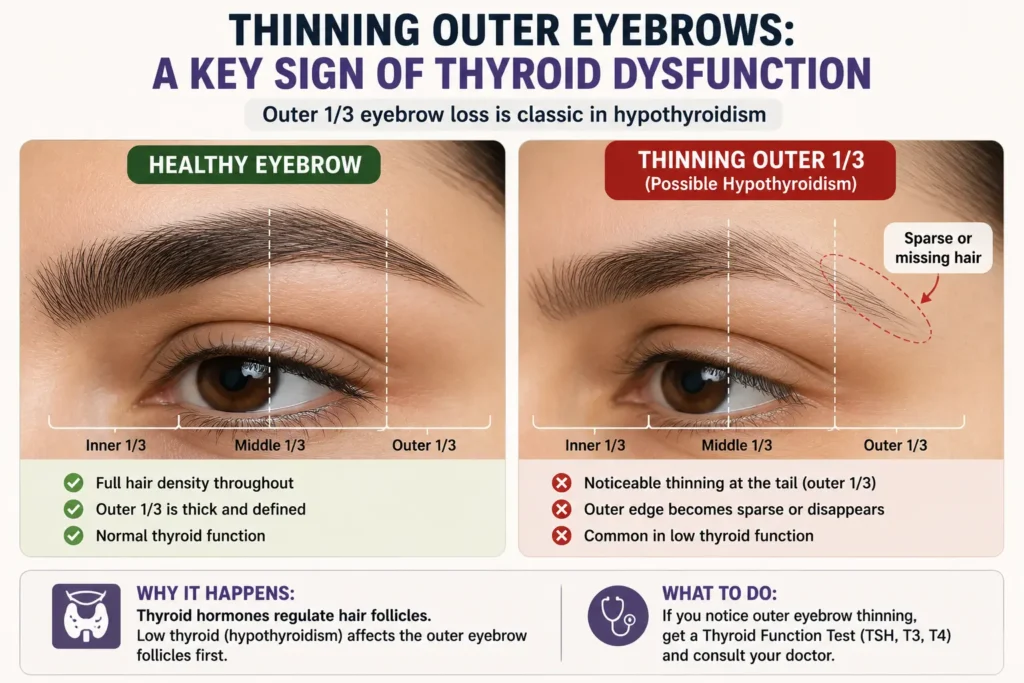
You look in the mirror. Your eyebrows look… sparse. Specifically, the outer third (the part closest to your temples) has thinned out or disappeared. The inner part near your nose is still fine.
Likely cause: Thyroid dysfunction — iodine or selenium deficiency. This sign is specific and serious.
Why the outer eyebrow: The hair follicles in the lateral (outer) eyebrow are exquisitely sensitive to thyroid hormone. When thyroid hormone levels drop (hypothyroidism), those follicles stop producing hair.
The nutrient connection:
- Iodine is required to make thyroid hormone. Deficiency causes hypothyroidism and goiter (enlarged thyroid).
- Selenium is required to convert T4 (inactive thyroid hormone) to T3 (active form). Without selenium, even adequate iodine won’t work properly.
Indian context: Iodine deficiency was common in India until universal salt iodization. But:
- Not everyone uses iodized salt consistently (especially in rural areas or with homemade pickles/ferments that use non-iodized salt)
- Selenium deficiency is emerging: Indian soils in many regions (including Punjab, Haryana, parts of UP) are selenium-depleted, so crops grown there are also selenium-low.
Other signs of thyroid deficiency:
- Unexplained weight gain (despite same diet)
- Hair loss from scalp (not just eyebrows)
- Constipation
- Fatigue and cold intolerance
- Slow heart rate
What to do: This is not a self-fix. See a doctor for a thyroid function test (TSH, T3, T4) and ferritin (iron deficiency worsens thyroid function).
Iodine sources: Iodized salt (stick to the brand you trust), fish, eggs, dairy.
Selenium sources: Just 2-3 Brazil nuts daily (₹5-10 each at specialty stores) provide the RDA. Otherwise: sunflower seeds, mushrooms, rice (but soil-dependent), eggs.
Do not supplement iodine without testing. Excess iodine can trigger or worsen autoimmune thyroid disease (Hashimoto’s).
Complete Comparison Table: Signs, Deficiencies & Solutions
| Early Sign | Primary Deficiency | Secondary | Quick Fix (Food-First) | When to See a Doctor |
|---|---|---|---|---|
| Cracks at mouth corners | Riboflavin (B2) | Iron, B6 | Eggs, curd, sprouts | If persists >2 weeks despite diet |
| Tingling hands/feet | B12 | Folate | Dairy, eggs, or B12 supplements | Immediately — nerve damage can be permanent |
| Poor night vision | Vitamin A | Zinc | Eggs, ghee, carrots with ghee | If night driving becomes unsafe |
| Restless legs at night | Iron | Magnesium | Cook in iron pot, spinach, pumpkin seeds | If sleep is significantly disrupted |
| White spots on nails | Zinc | None | Pumpkin seeds, peanuts, eggs | If ridges are horizontal (not just spots) |
| Bleeding gums | Vitamin C | None | Amla, guava, raw salad with lemon | If doesn’t resolve after 2 weeks of high C |
| Thinning outer eyebrows | Iodine or selenium | Iron | Iodized salt, Brazil nuts | Immediately — thyroid testing required |
Who Is Most at Risk? (Indian Context)
Vegetarians and vegans: Higher risk of B12, iron, zinc, and vitamin A (conversion inefficiency). Read best vegetarian protein sources in India for food-first solutions.
Pregnant and breastfeeding women: Increased demand for iron, B12, iodine, zinc, and vitamin A.
Older adults (50+): Reduced stomach acid means lower absorption of B12, iron, calcium, and magnesium.
People on restrictive diets: Keto, fasting, or elimination diets without careful planning.
Those with gut issues: IBS, Crohn’s, celiac disease, chronic diarrhea, or past GI surgery all impair absorption.
People taking chronic medications: Antacids (PPIs), metformin (diabetes), certain blood pressure drugs, and oral contraceptives all deplete specific nutrients.
How to Test Without Guesswork
The rule: Don’t guess. Test.
Essential blood tests (ask your doctor):
- Complete Blood Count (CBC) — looks for anemia (iron/B12/folate)
- Vitamin B12
- Vitamin D (separate issue — but almost all Indians are low. Read why Indians are skinny fat for metabolic links)
- Ferritin (iron stores — not just hemoglobin)
- Thyroid panel (TSH, T3, T4)
- Optional: Zinc, RBC magnesium, folate
Where to get tested: Most Indian labs (Thyrocare, Dr. Lal PathLabs, SRL) offer vitamin panels. A full micronutrient test costs ₹2,000-4,000. Worth it.
Timing matters: Some tests (iron, B12) should be done fasting (no food for 8-12 hours). Morning is best.
Final Verdict: Stop Ignoring Your Body’s Warnings
Here’s what I need you to take away.
These seven early signs of nutrient deficiency are not normal. They are not “just aging” or “just stress.” They are specific, biological signals that you are missing specific nutrients.
Most people wait until they feel “really sick” to take action. By then, the deficiency has often caused secondary problems — nerve damage, bone loss, immune dysfunction — that take months to reverse.
The hierarchy of solutions:
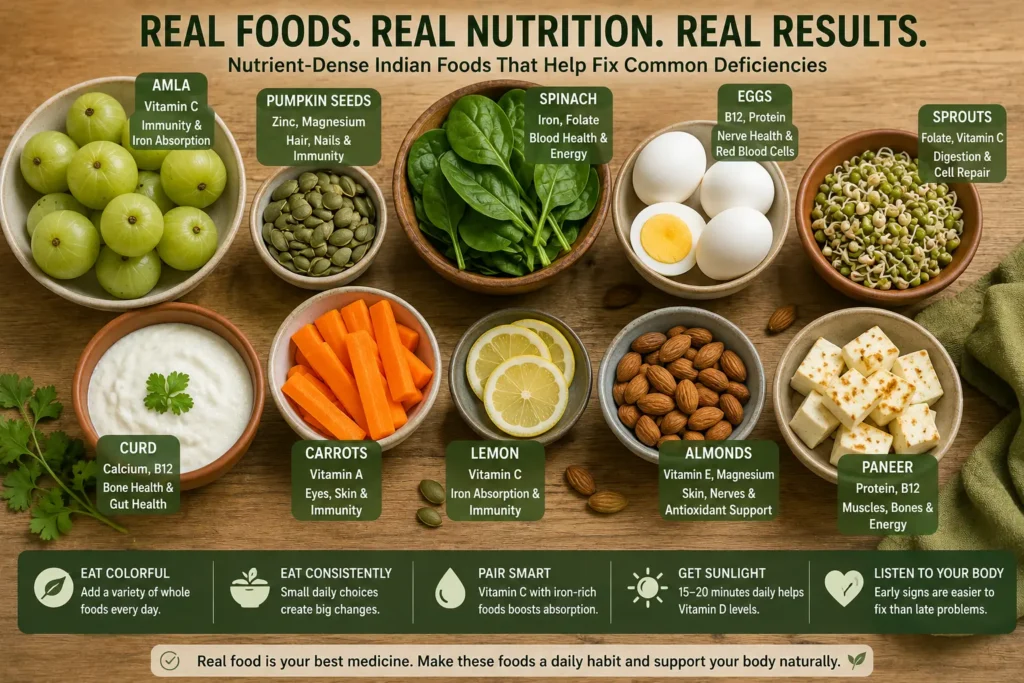
- Food first. Eggs, curd, amla, pumpkin seeds, sprouted dal, cooked greens with ghee. These fix 80% of deficiencies.
- Test, don’t guess. One blood test costs less than a month of random supplements.
- Supplement strategically — if your diet genuinely can’t provide enough (vegans need B12, North Indian winter needs D, low-selenium regions need selenium), then take the specific nutrient at the specific dose.
The single most important change you can make today: Add amla (Indian gooseberry) to your daily diet. One amla covers your entire day’s vitamin C requirement and improves iron absorption from everything else you eat. Eat it raw, as murabba, or drink amla juice.
Your body is not silent. It’s been talking. You just weren’t listening.
Frequently Asked Questions
1. Can you have multiple nutrient deficiencies at once?
Yes. Deficiencies often cluster. For example: low iron often occurs with low B12 (both cause anemia). Vitamin D deficiency often occurs with low calcium and magnesium (they work together). Vegans are at risk for B12, iron, zinc, and calcium simultaneously.
2. How long does it take to correct a deficiency with diet?
Depends on severity and the nutrient. Mild iron deficiency improves in 4-6 weeks. B12 deficiency with nerve symptoms can take 6-12 months of high-dose treatment. This is why testing is crucial — to gauge severity.
3. Are generic multivitamins enough to fix these signs?
Usually not. Most multivitamins contain low doses of each nutrient (RDA-level). If you have a frank deficiency, you need higher doses (therapeutic) of specific nutrients. A multivitamin may prevent deficiency but won’t fix an existing one.
4. I’m non-vegetarian. Can I still be deficient?
Absolutely. Non-vegetarians have lower risk for B12 and iron, but still at risk for:
- Vitamin D (sun exposure, not food)
- Magnesium (overfarming depletes soil)
- Zinc (if you don’t eat red meat or seeds)
- Vitamin C (if you don’t eat raw fruits/vegetables)
- Fiber (meat has none)
5. Can I fix these signs without supplements?
If the deficiency is mild and you can radically improve your diet, yes. For moderate to severe deficiency — especially B12 with nerve symptoms or iron with anemia — supplements or injections are faster and more reliable. Don’t be a hero. Blood tests will tell you.
6. I have no symptoms. Should I still worry?
Possibly. Many deficiencies are “subclinical” — meaning you don’t have obvious symptoms yet, but your body is operating below optimal. This shows up as low energy, slower recovery from workouts, or increased susceptibility to colds. If you’re vegetarian or have risk factors, testing once a year is smart.
7. Is there a link between nutrient deficiencies and stubborn belly fat?
Yes. Iron deficiency slows metabolism (thyroid connection). Low vitamin D is linked to obesity. Low B12 reduces energy for exercise. Read how to lose belly fat the right way for the full picture.
Ready to Stop Ignoring Your Body?
You now know the seven signs. You know what they mean. You know the fix.
Here’s your action step: Pick one sign from this list that you’ve been ignoring. Just one. Take it seriously. If it’s a sign that needs a blood test (restless legs → ferritin, thinning eyebrows → TSH), book the test this week. If it’s a dietary sign, add the specific food I recommended to your next grocery order.
Do this for one week. See what changes.
Drop a comment below: Which sign surprised you the most? Or share your own experience — did you have a deficiency you ignored for too long? Your story might help someone else take action.
And if this article helped you understand your body better, share it with a family member who’s always “tired” or “getting sick often.” They might not know their body is talking to them.
Body signals khao. Ignore mat karo. (Listen to your body’s signals. Don’t ignore them.)
Disclaimer: This information is for educational purposes only. Always consult a qualified healthcare provider for medical advice, diagnosis, or treatment. Blood tests should be ordered and interpreted by a doctor.