Norovirus in India is significantly more prevalent than official case counts suggest, and most people who get it never find out that is what they had. If you have had a sudden, violent onset of nausea, vomiting, and diarrhoea that appeared out of nowhere, resolved within 48 to 72 hours, and left you feeling hollowed out for days afterward — there is a good chance norovirus was the cause, not generic food poisoning or a stomach bug.
The virus spreads with startling efficiency. A single infected person can shed billions of viral particles, and exposure to as few as 18 to 20 of those particles is sufficient to cause infection. That is not a typo. Most food poisoning bacteria require ingesting thousands to millions of organisms. Norovirus makes that look slow.
For active people — gym-goers, runners, anyone on a training schedule — a norovirus infection is particularly disruptive. The rapid fluid and electrolyte loss compromises performance for days beyond the acute illness. Most people return to training too early, before gut function has genuinely recovered.
The infection is also almost universally misidentified. In India, it gets called acidity, food poisoning, a stomach infection, or simply “something I ate.” Understanding what it actually is changes what you do about it — and more importantly, how fast you genuinely recover.
Key Facts
What you need to know about norovirus in India:
- Norovirus is a highly contagious stomach virus that causes sudden-onset vomiting, diarrhoea, nausea, and stomach cramps, typically lasting 24 to 72 hours.
- It spreads through contaminated food, water, surfaces, and direct contact — not through the air, but through surfaces and food handled by infected people.
- There is no antiviral medication for norovirus. Treatment is oral rehydration and rest. Antibiotics do not work and should not be taken.
- Norovirus is frequently mistaken for food poisoning in India, but unlike bacterial food poisoning, it spreads person-to-person and survives standard hand sanitisers.
- Recovery typically takes 1 to 3 days, but full gut function restoration can take 7 to 10 days, particularly in people who train hard or eat high volumes of food.
What Norovirus Actually Is — The Simple Version
Norovirus is a single-stranded RNA virus belonging to the family Caliciviridae. It is the leading cause of acute gastroenteritis (inflammation of the stomach and intestines) globally, responsible for an estimated 685 million cases of stomach illness per year worldwide, according to WHO data. In high-income countries, it is well-tracked and frequently reported. In India, formal surveillance is limited, which means the actual burden is substantially underestimated in public health data.
The virus infects the cells lining the small intestine, disrupting nutrient absorption and fluid balance. The result is rapid fluid loss through vomiting and diarrhoea, which is where the real risk lies — not in the virus itself, but in the dehydration and electrolyte imbalance it causes.
What makes norovirus distinctly different from bacterial food poisoning is the infectious dose. Bacterial gastroenteritis from Salmonella or E. coli requires ingesting thousands to millions of organisms. Norovirus requires 18 to 1000 viral particles, depending on the strain. It also survives on surfaces for days, resists alcohol-based sanitisers, and persists through temperatures that would kill most bacteria.
In the Indian context, crowded food environments, shared meals, street food, temple prasad, wedding buffets, and contaminated water sources all represent meaningful transmission routes. The virus is most common in the cooler months — October through March — but outbreaks occur year-round in India, particularly in institutional settings like hostels, hospitals, and schools.
Norovirus Symptoms, Spread, and What Makes It Different
What Are the Main Norovirus Symptoms to Recognise?
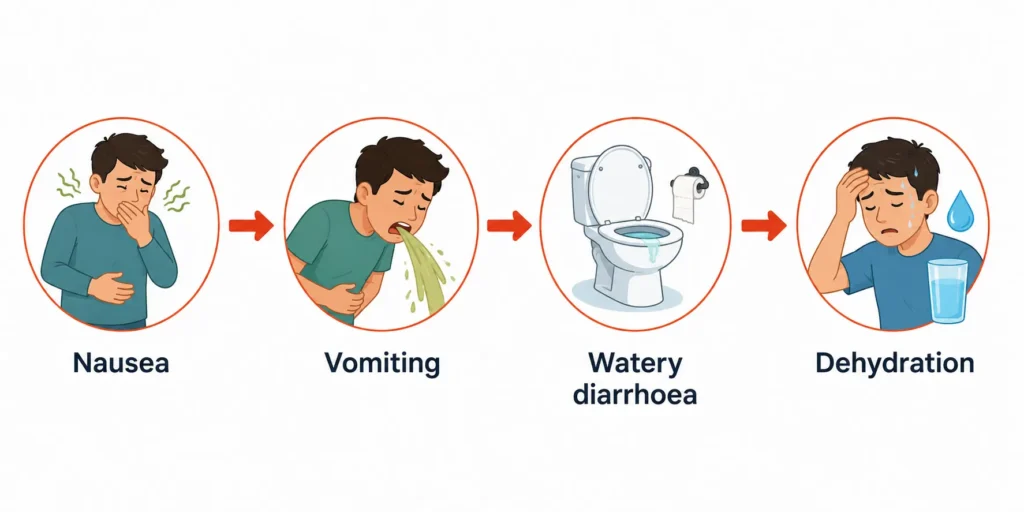
Norovirus symptoms appear suddenly, typically within 12 to 48 hours of exposure, and that rapid onset is one of its most distinguishing features. The primary symptoms are nausea, vomiting, watery non-bloody diarrhoea, and stomach cramps. Most people also experience fatigue, headache, and a low-grade fever (below 38.5 degrees Celsius), though fever is not always present.
The vomiting phase is often the most acute. Projectile vomiting in the first 12 to 24 hours is common and characteristic. What typically follows is 24 to 48 hours of frequent loose stools, progressive dehydration, and significant electrolyte loss.
The key distinguishing markers from other gut illnesses:
- Onset speed: Hours, not days. Bacterial food poisoning from contaminated meat can take 6 to 72 hours.
- Duration: 24 to 72 hours of acute illness, not a week-long illness.
- Blood in stool: Absent in norovirus. If blood is present, the cause is something else.
- High fever: Norovirus rarely produces fever above 38.5 degrees Celsius. Higher fever suggests bacterial infection.
Verdict: If symptoms appeared suddenly within 12 to 48 hours of eating or being around someone who was sick, resolution is expected within 72 hours, and there is no blood in stool — norovirus is the most likely diagnosis.

How Does Norovirus Spread in India — and Why Is It So Hard to Stop?
Norovirus spreads through the faecal-oral route, meaning viral particles from an infected person's stool or vomit reach another person's mouth through contaminated hands, food, water, or surfaces. The efficiency of this transmission is what makes outbreaks rapid.
An infected person sheds viral particles beginning 12 hours before symptoms appear and continuing for up to 2 weeks after symptoms resolve. That post-recovery shedding window is critical. A person who feels better on day 3 is still infectious through handling food, using shared bathrooms, or touching surfaces.
Alcohol-based hand sanitisers at the 60 to 70% ethanol concentration used in most Indian hand sanitisers do not inactivate norovirus reliably. This is not a minor point. The standard advice to "use sanitiser" fails against this particular virus. Soap and water hand washing for at least 20 seconds is the effective intervention — the mechanical action of washing removes the virus even when the soap itself does not kill it.
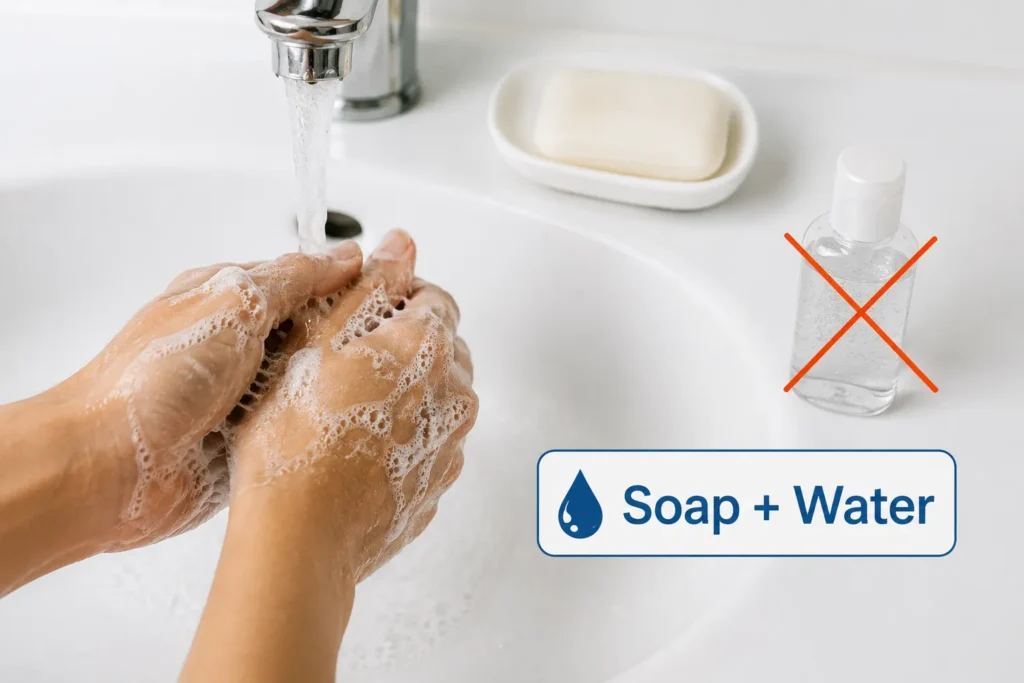
In Indian gyms specifically, shared equipment, toilet facilities, and water sources all represent viable transmission surfaces. A norovirus outbreak in a gym or group fitness class can move through dozens of people in 48 to 72 hours if surface disinfection with a bleach-based solution is not used.
Verdict: Extremely transmissible and alcohol-sanitiser resistant. Soap and water hand washing and bleach-based surface disinfection are the only reliable barriers.
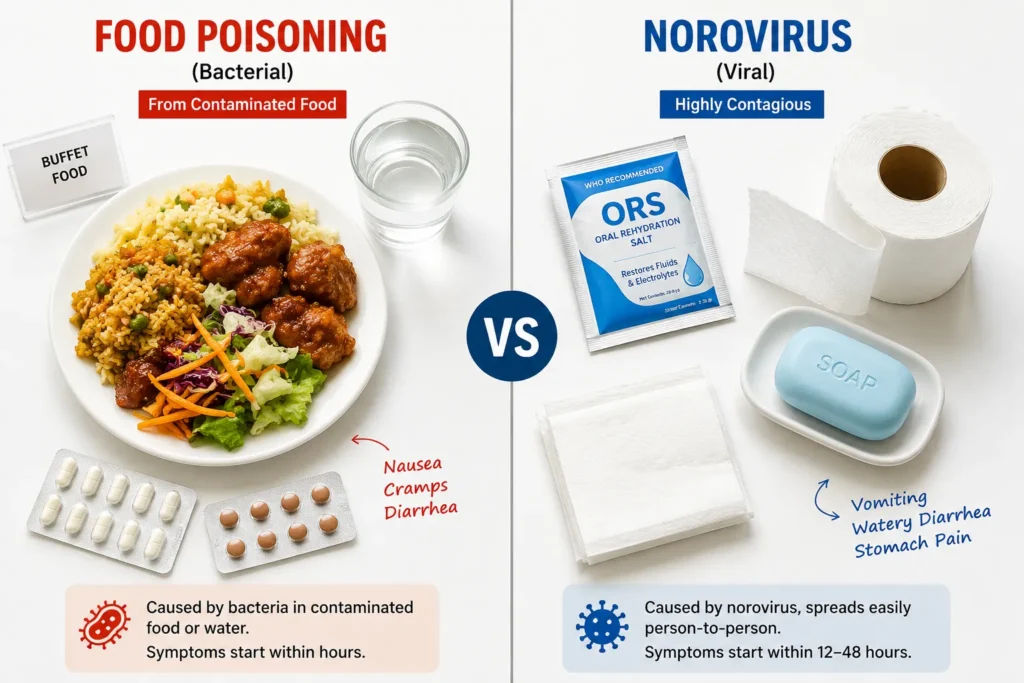
How Is Norovirus Different from Food Poisoning?
Norovirus infection and bacterial food poisoning are frequently confused in India, and the confusion matters because management differs. The table in the next section covers this in detail, but the short version is this: food poisoning from bacteria is typically tied to a specific meal, affects people who ate that meal, and does not spread to close contacts through normal household contact. Norovirus spreads easily from person to person.
Both cause vomiting and diarrhoea. Both can be traced to food. But if multiple members of a household who did not eat the same meal are developing symptoms 24 to 48 hours apart — that is norovirus spread by person-to-person contact, not a shared contaminated food source.
One specific myth worth addressing: antibiotics are frequently prescribed for stomach illness in India, including at chemists without a prescription. Antibiotics have no effect on norovirus. The virus is not a bacterium. Taking antibiotics for a norovirus infection risks disrupting the gut microbiome without providing any benefit to the acute illness.
Verdict: Clinically distinct from bacterial food poisoning in spread pattern, appropriate management, and treatment. Antibiotics are not the answer.
What Is the Risk of Dehydration and When Does It Become Serious?
Dehydration is the primary risk from norovirus infection, not the virus itself. Adults in otherwise good health will clear the infection without medical intervention. But significant fluid and electrolyte loss in 48 hours can impair kidney function, cause dangerous drops in blood pressure, and — in vulnerable populations — become life-threatening.
For healthy adults, the warning signs that indicate a hospital visit is warranted include:
- Inability to keep any fluid down for more than 8 hours
- Dizziness on standing, indicating blood pressure drop from dehydration
- Urine becoming dark yellow or orange, or no urination for 8 or more hours
- Rapid heartbeat at rest
- Extreme weakness or confusion
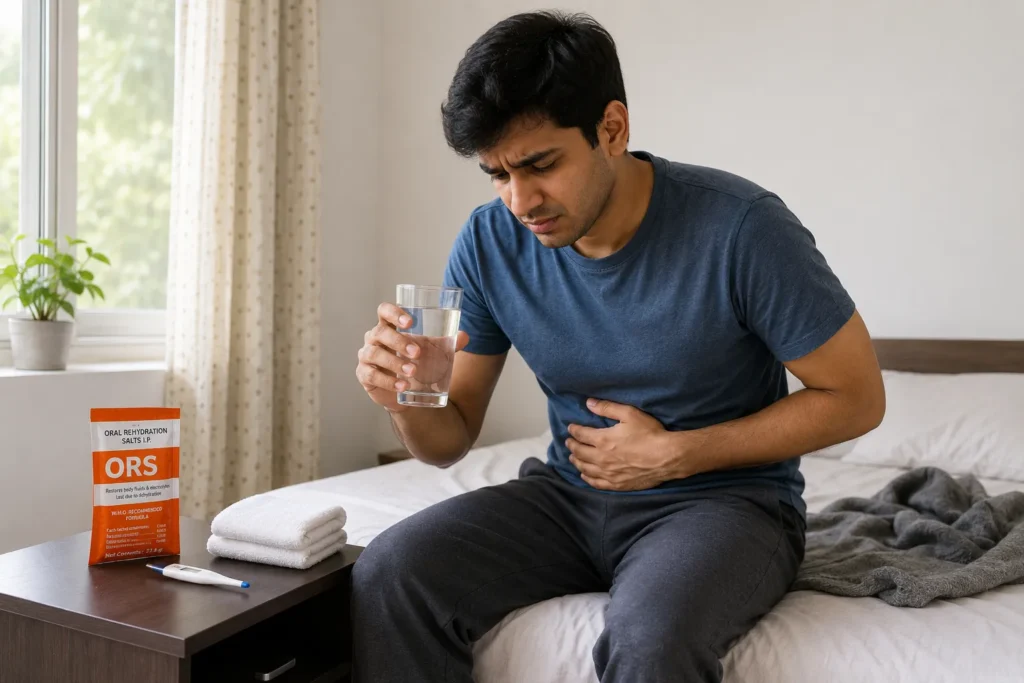
For gym-goers and athletes who are accustomed to higher training loads and are sometimes borderline dehydrated before illness, the threshold for aggressive oral rehydration should be lower, not higher. Starting ORS (Oral Rehydration Solution) at the onset of the first vomiting episode is not an overreaction.
Verdict: Dehydration is the real danger, not the virus. ORS started early changes the trajectory of recovery significantly.
Norovirus vs Stomach Flu vs Food Poisoning: Comparison Table
| Feature | Norovirus | Bacterial Food Poisoning | Rotavirus | Traveller's Diarrhoea |
|---|---|---|---|---|
| Onset after exposure | 12 to 48 hours | 6 to 72 hours (varies by bacteria) | 2 to 3 days | 1 to 5 days |
| Primary symptoms | Vomiting + watery diarrhoea + cramps | Diarrhoea (may have vomiting) | Watery diarrhoea + vomiting | Loose stools, low-grade fever |
| Duration | 24 to 72 hours | 1 to 7 days | 3 to 8 days | 3 to 5 days |
| Fever | Low or absent (below 38.5 C) | May be high | Common, moderate | Common |
| Blood in stool | Never | Possible (E. coli, Shigella) | Rare | Rare |
| Person-to-person spread | Very high | Low | High | Low |
| Antibiotic response | None | Sometimes | None | Sometimes |
| Alcohol sanitiser effective | No | Partially | No | Partially |
| Verdict | Most contagious | Tied to food source | Common in children | Travel-related |
How Norovirus Moves Through the Body — and What Recovery Actually Means
Norovirus infects enterocytes — the cells lining the villi of the small intestine. The villi are finger-like projections that dramatically increase surface area for nutrient absorption. When norovirus disrupts enterocyte function, the villi become temporarily blunted and less efficient at absorbing nutrients and water. This is why diarrhoea continues even after vomiting has stopped — the gut lining is not yet absorbing properly.
The acute immune response clears the virus from the system within 2 to 3 days in healthy adults. Viral shedding in stool continues for up to 2 weeks regardless of symptom resolution, as previously noted.
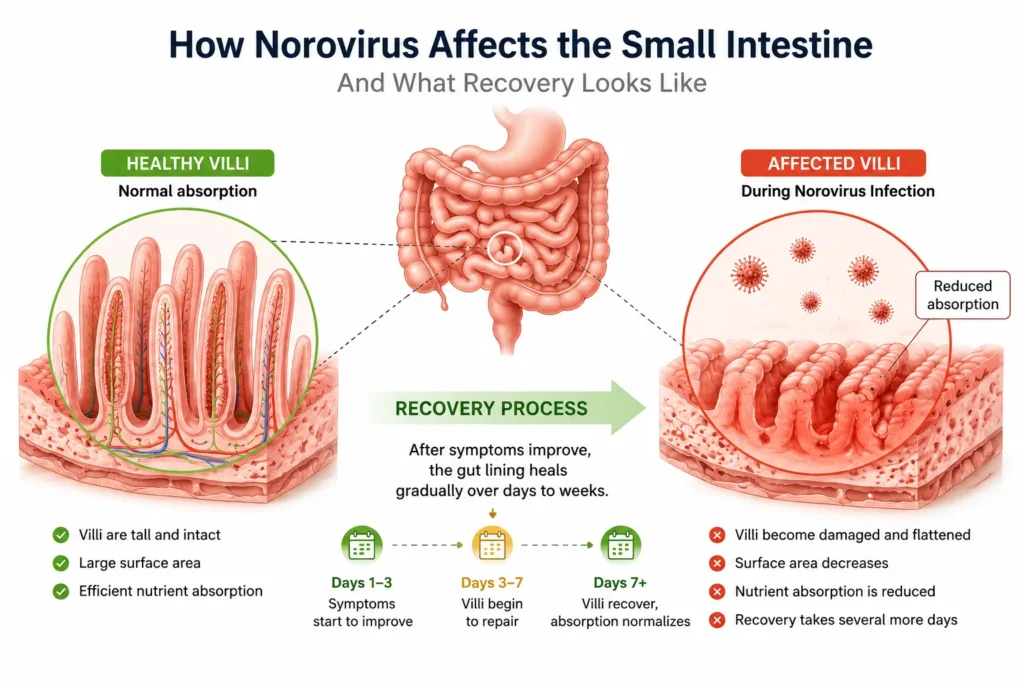
Recovery of the gut lining takes longer than symptom resolution. Most people feel well enough to eat normally by day 3 or 4. But the gut mucosa is still rebuilding. Reintroducing large meals, high-fat foods, or high volumes of food too quickly causes a relapse of symptoms — not because the virus has returned, but because a compromised gut lining cannot handle the load.
For timing guidance: the first 24 hours after symptom onset, nothing solid. Clear fluids and ORS only. Day 2 to 3, soft easily-digestible foods — plain rice, khichdi, banana, plain toast. Day 4 to 5, gradual return to normal eating. Day 6 and beyond, full meals as tolerated.
Training during this window is counterproductive. The gut lining uses the same protein and micronutrient resources needed for muscle repair. Competing for those resources during gut recovery delays both.
What the Research Actually Shows About Norovirus Outbreaks in India
India lacks a comprehensive national surveillance system for norovirus, which is itself a problem worth naming. Most data comes from outbreak investigations at hospitals, schools, and institutional settings rather than community-level monitoring.
A 2015 study published in PLOS ONE estimated that norovirus causes approximately 685 million cases of gastroenteritis globally each year, with 200 million of those affecting children under 5 in low and middle-income countries. India, given its population and infrastructure context, accounts for a disproportionate share of this burden.
A 2019 outbreak investigation published in the Indian Journal of Medical Microbiology documented a norovirus GII.4 outbreak in a hospital setting in South India affecting 47 healthcare workers and patients. The investigation traced spread to a contaminated shared food source and subsequent person-to-person transmission, with attack rates above 60% among exposed individuals.
"Norovirus is the most common cause of acute gastroenteritis across all age groups globally, and its burden in India is substantially underreported due to limited diagnostic capacity and surveillance infrastructure." — WHO Global Burden of Disease data, 2023
The honest reality check: most norovirus cases in India are never tested for the virus specifically, because rapid norovirus tests are not part of standard clinical workup. The diagnosis is clinical, the management is supportive, and the outcome in healthy adults is almost always full recovery. But knowing what it is matters for preventing spread to others.
Practical Concerns Specific to the Indian Context
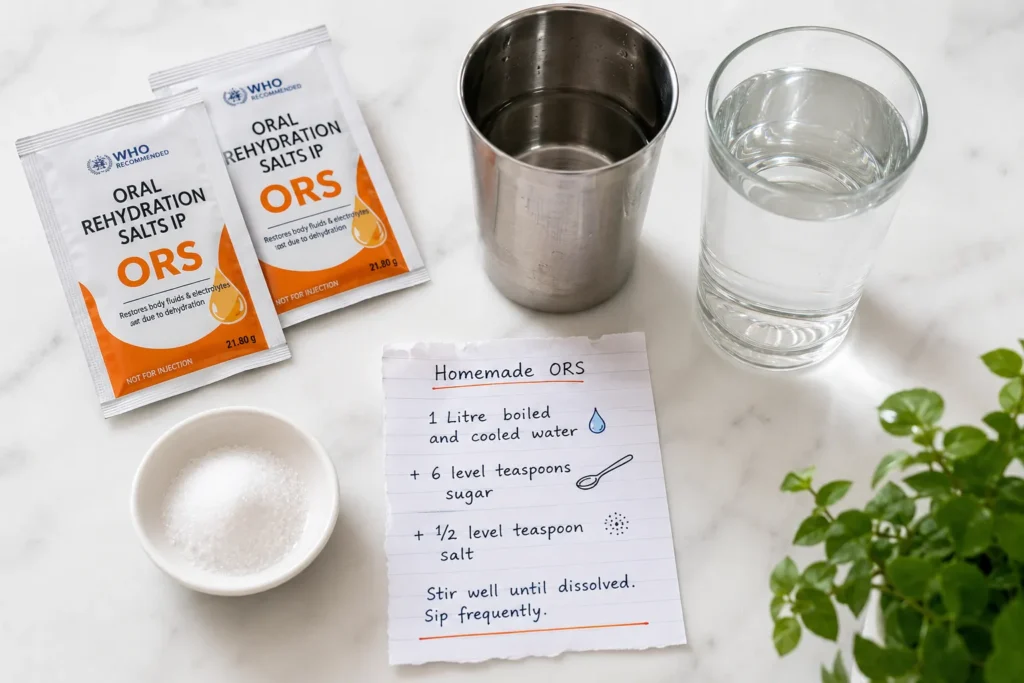
Oral Rehydration Solution (ORS) is the most important intervention for norovirus, and it is inexpensive and available everywhere in India. WHO-standard ORS sachets (Electral, Walyte, and generic pharmacy ORS) cost Rs. 5 to 15 per sachet. Making homemade ORS — one litre of clean boiled water, 6 teaspoons of sugar, and half a teaspoon of salt — is an effective alternative when sachets are not immediately available.
Standard hand sanitisers sold widely in India do not reliably kill norovirus. This includes the 70% alcohol products that became ubiquitous during the COVID pandemic. Soap and water hand washing remains the recommended approach. In settings where running water is limited, the transmission risk from norovirus is higher, not because the virus is more dangerous but because the most effective barrier is harder to access.
Street food, buffets, and shared platters represent higher transmission risk, not because Indian food is inherently unsafe, but because norovirus contamination occurs through infected food handlers who may themselves be presymptomatic. A person preparing food who has not yet developed symptoms is already shedding the virus.
Probiotics during and after recovery are a reasonable addition. The evidence for probiotics specifically reducing norovirus duration is limited, but Lactobacillus rhamnosus GG and Saccharomyces boulardii have reasonable evidence for reducing duration and severity of acute viral gastroenteritis more broadly. Indian probiotic options including Darolac, Vibact, and Bifilac are widely available at pharmacies without prescription.
Who Needs to Be Most Careful and What to Actually Do
If you are an active gym-goer or athlete during a norovirus outbreak
Stop training immediately at symptom onset. This is not optional or a conservative suggestion — training while actively vomiting and with diarrhoea accelerates dehydration to dangerous levels and extends gut recovery time. The rule is simple: no training for 48 hours after the last vomiting or diarrhoea episode. Return to light activity (walking) before returning to resistance training. Full training intensity after a full gut-functioning week.
If someone in your household has norovirus
Isolate the sick person's laundry. Use bleach-diluted cleaning solution (1 part household bleach to 49 parts water, or the equivalent of 1000ppm sodium hypochlorite) on bathroom surfaces and door handles. Wash hands with soap and water — not sanitiser — after any contact. The household member who is sick should not prepare food for 48 to 72 hours after full symptom resolution. These are not precautions for a mild situation. They are the difference between one sick person and an entire household.
If you develop norovirus while travelling or on a training camp
ORS is the immediate priority. Get ORS or the ingredients to make it before anything else. Avoid anti-diarrhoeal medications like loperamide (Imodium) in the first 24 hours — diarrhoea is the body's mechanism for clearing the virus, and blocking it too early can prolong the illness. If vomiting is preventing ORS from staying down, take small sips every 5 to 10 minutes rather than trying to drink a full glass.
If you have an underlying gut condition like IBS or IBD
A norovirus infection can trigger a significant flare of pre-existing gut conditions. The gut inflammation from the acute infection layered onto existing mucosal sensitivity can extend recovery to 2 to 3 weeks rather than the standard 3 to 5 days. If you have a diagnosed gut condition, monitor symptoms more closely and consult your gastroenterologist if recovery does not follow the normal trajectory.
If you are trying to protect yourself at high-risk venues in India
Crowded restaurants, wedding buffets, shared prasad at temples, and hostel or office canteen food are all higher-risk settings during norovirus season (October to March). You cannot fully avoid these in Indian social life. What you can do: wash hands with soap before eating rather than using sanitiser, avoid food that has been sitting out unrefrigerated, and be more cautious if you know someone around you has been recently ill.
Final Verdict
Norovirus in India is common, underdiagnosed, and genuinely disruptive for active people. The illness itself is self-limiting in healthy adults. The dehydration it causes is not. ORS started early, soap-and-water hand washing (not sanitiser), and a realistic recovery timeline are the three things that change outcomes.
The most important thing most articles miss: recovery from norovirus is not the same as feeling better. The gut lining needs 5 to 7 days to rebuild properly, and pushing food volume or training intensity before that happens extends the full recovery timeline. Patience with the gut is the fastest path back.
If you want to understand the broader picture of gut health and its interaction with training, our piece on signs of magnesium deficiency most people ignore covers how micronutrient deficiencies compound gut recovery issues. And if the fatigue from a recent illness has you questioning your baseline energy levels, our article on 7 early signs of nutrient deficiency most Indians ignore is worth reading once you are back on your feet.
Norovirus moves fast. Your response to it should too. ORS first. Everything else second.
FAQ
How do I know if I have norovirus or food poisoning?
Norovirus typically produces sudden onset vomiting and diarrhoea within 12 to 48 hours of exposure, resolves within 72 hours, produces no blood in stool, and commonly spreads to close contacts who may not have eaten the same food. Bacterial food poisoning is more often tied to a specific meal, may produce higher fever, and less commonly spreads to family members who did not eat the same food. If others around you fall sick 24 to 48 hours after the first case, norovirus person-to-person spread is the more likely explanation.
Can I use hand sanitiser to protect myself from norovirus?
No. Alcohol-based hand sanitisers at the concentrations available in India (60 to 70% ethanol) do not reliably inactivate norovirus. This is one of the most important and least-known facts about this virus. Soap and water hand washing for a minimum of 20 seconds is the effective intervention. The mechanical scrubbing action removes the virus from hands even when the soap itself does not kill it. In high-risk situations, carry a small amount of liquid soap and use bathroom facilities rather than reaching for sanitiser.
Should I take antibiotics for a stomach infection in India?
No, not for norovirus. Antibiotics have no effect on viral infections, and norovirus is a virus. Taking antibiotics for norovirus will not shorten the illness, will not reduce symptom severity, and will disrupt the gut microbiome at exactly the time when gut recovery matters most. This is a common practice in India, often driven by self-medication or well-meaning but incorrect advice from pharmacists. ORS is the treatment. Antibiotics are not relevant unless a bacterial cause has been specifically identified through stool testing.
When is it safe to go back to the gym after norovirus?
Wait a minimum of 48 hours after the last vomiting or diarrhoea episode before any training, and do not return to full intensity resistance training until your gut is tolerating normal food volumes without cramping or loose stools. Most people can return to light activity (walking, gentle stretching) within 4 to 5 days of symptom onset. Returning to heavy training within 2 to 3 days of illness is a reliable way to extend your total recovery time by another week.
Is norovirus common in India or is this something only reported in other countries?
Norovirus is common in India and significantly underreported. The absence of systematic national surveillance means most cases are never confirmed virologically. Outbreak investigations that have been conducted, including in South Indian hospitals and institutional settings, consistently identify norovirus as the causative agent. The combination of dense populations, shared food environments, warm months favouring certain transmission patterns, and limited access to piped water in some areas makes India a high-risk environment. It is not a Western problem that occasionally arrives here. It is a year-round burden that simply lacks the documentation.
How long is someone with norovirus contagious?
A person with norovirus begins shedding viral particles approximately 12 hours before symptoms appear and continues shedding for up to 2 weeks after full symptom resolution. Peak shedding occurs during the acute symptomatic phase. This is why the standard "stay home until you feel better" advice is insufficient. A person who is symptom-free on day 4 is still shedding and should not be preparing food for others or sharing bathroom facilities without rigorous soap-and-water hand washing protocol.
What should I eat and drink during norovirus recovery?
During the first 24 hours of active symptoms, stick to clear fluids only: ORS, plain water, clear broth, or diluted coconut water. Avoid juice, dairy, and caffeinated drinks. On days 2 to 3, move to soft easily digestible foods: plain rice, khichdi without heavy spices, banana, plain toast, and boiled potato. Avoid high-fat meals, raw vegetables, and large portions until day 5 or 6. The gut lining is rebuilding during this window and cannot handle the normal digestive demand from complex or high-volume meals.
You Know What It Is. Now Handle It Correctly.
If you or someone around you develops sudden vomiting and diarrhoea in the next few days, you now have what most people searching for this at 2 AM do not: a clear picture of what it is, what to do, and what not to do.
Get ORS into the house. Use soap, not sanitiser. Give the gut time to actually heal before going back to normal eating and training. And if someone in your household gets sick, treat it seriously enough to prevent it from moving through everyone else.
If you have been through a norovirus infection recently and have thoughts on what helped most or what made recovery worse, share it in the comments below. Practical, first-hand experience from people in Indian conditions is more useful here than any clinical guideline.
Sources and References
- Patel MM, Hall AJ, Vinjé J, Parashar UD. Noroviruses: a comprehensive review. Journal of Clinical Virology. 2009;44(1):1-8. https://pubmed.ncbi.nlm.nih.gov/19084472/
- Ahmed SM, Hall AJ, Robinson AE, et al. Global prevalence of norovirus in cases of gastroenteritis: a systematic review. Lancet Infectious Diseases. 2014;14(8):725-730. https://pubmed.ncbi.nlm.nih.gov/24981041/
- Troeger C, Khalil IA, Rao PC, et al. Rotavirus and norovirus and severe diarrhea in children: estimating the burden. PLOS ONE. 2015. https://pubmed.ncbi.nlm.nih.gov/26562307/
- Epidemiological investigation of norovirus GII.4 outbreak in a South Indian hospital setting. Indian Journal of Medical Microbiology. 2019;37(3):387-391. https://pubmed.ncbi.nlm.nih.gov/31793449/
- Lopman BA, Steele D, Kirkwood CD, Parashar UD. The vast and varied global burden of norovirus: prospects for prevention and control. PLOS Medicine. 2016;13(4):e1001999. https://pubmed.ncbi.nlm.nih.gov/27071072/
- Centres for Disease Control and Prevention (CDC). Norovirus: Prevention and Treatment guidelines. Updated 2023. https://www.cdc.gov/norovirus/prevention/index.html
- Siebenga JJ, Vennema H, Zheng DP, et al. Norovirus illness is a global problem: emergence and spread of norovirus GII.4 variants. Journal of Infectious Diseases. 2009;200(5):802-812. https://pubmed.ncbi.nlm.nih.gov/19627240/
- World Health Organization. Diarrhoeal disease fact sheet. WHO, 2023. (Includes norovirus as leading aetiological agent in acute gastroenteritis globally.) https://www.who.int/news-room/fact-sheets/detail/diarrhoeal-disease
- Atmar RL, Opekun AR, Gilger MA, et al. Norwalk virus shedding after experimental human infection. Emerging Infectious Diseases. 2008;14(10):1553-1557. https://pubmed.ncbi.nlm.nih.gov/18826818/
- Sattar SA. Microbicides and the environmental control of nosocomial viral infections. Journal of Hospital Infection. 2004;56(Suppl 2):S64-S69. (Covers efficacy of alcohol vs soap against norovirus.) https://pubmed.ncbi.nlm.nih.gov/15006254/