
Yeast protein is a complete protein with a PDCAAS of approximately 1.0 and a DIAAS of approximately 82, which places it above most plant proteins and in the same conversation as soy and pea for muscle-building purposes. The main reason most Indian gym-goers have never considered it is not because it performs poorly — it is because it is still a relatively niche supplement category in India compared to the decades-old dominance of whey and plant proteins.
Plant proteins, as a category, range from genuinely excellent (soy, pea) to functionally incomplete without blending (rice, wheat, hemp). The umbrella term “plant protein” covers proteins with DIAAS values from the low forties all the way to above 0.9, so comparing yeast protein to “plant protein” only makes sense if you specify which plant protein you mean.
For most Indian gym-goers, the relevant comparison is yeast protein against the plant proteins they might actually use: soy, pea, or rice-pea blends. On that comparison, yeast protein holds up well — better digestibility profile than most individual plant proteins, a genuinely strong leucine content, and additional benefits from beta-glucan fibre that no conventional plant protein provides. The tradeoff is cost and familiarity.
The Short Answer
- Yeast protein is a complete protein containing all nine essential amino acids, with a PDCAAS of approximately 1.0 and a DIAAS of approximately 82 — higher than most individual plant proteins and comparable to soy protein.
- Most plant proteins are not complete proteins on their own — exceptions include soy and quinoa. Rice protein is low in lysine. Pea protein is low in methionine. Wheat protein is low in lysine and other EAAs.
- Yeast protein contains approximately 6 to 7 grams of leucine per 100 grams of protein, which is higher than most plant proteins and sufficient to reliably trigger muscle protein synthesis at a standard 25 to 30 gram dose.
- Yeast protein contains beta-glucan fibre, a prebiotic fibre associated with improved cholesterol, immune function, and gut health — a meaningful nutritional advantage over most plant protein isolates, which strip out fibre during processing.
- For muscle building, yeast protein and well-formulated plant protein blends (pea-soy, pea-rice) produce similar results when total protein and leucine intake are matched, though direct head-to-head human trials on yeast protein specifically are limited.
What Most Articles on This Topic Get Wrong
Most comparisons between yeast protein and plant protein collapse “plant protein” into a single category and then compare it against yeast protein as if both are homogeneous. They are not.
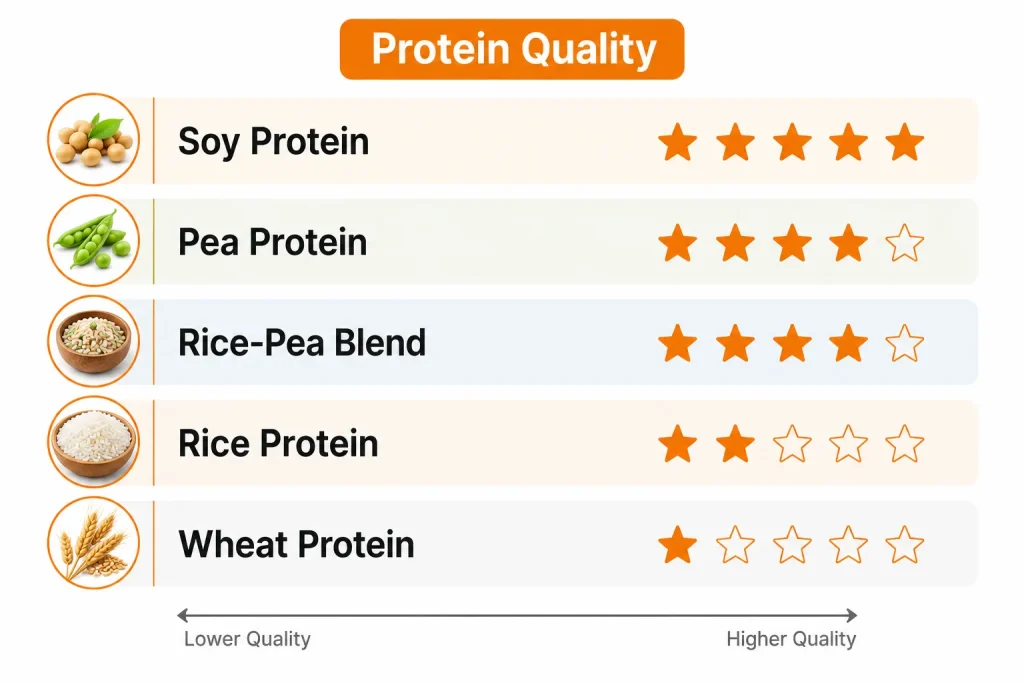
Plant proteins span an enormous quality range. Soy protein isolate achieves PDCAAS of 0.91 to 1.0. Pea protein achieves PDCAAS of 0.67 to 0.89. Brown rice protein achieves PDCAAS of approximately 0.42. Wheat protein sits around 0.4 to 0.6. Hemp protein scores in the 0.46 to 0.6 range. Treating all of these as equivalent when comparing to yeast protein is analytically meaningless.
The comparison that actually matters for the Indian fitness market is yeast protein against the plant proteins that Indian vegetarians and vegans actually use or consider: primarily soy (in the form of soya chunks, soy milk, or soy protein isolate), pea protein powder, and rice-pea blended powders. In that specific comparison, yeast protein’s profile is genuinely competitive.
The Indian context adds another layer. Yeast protein has only recently started appearing in Indian supplement stores through brands like Nutrabay, MyFitFuel, and a handful of newer fermented protein companies. It is more expensive per gram of protein than soy-based options and has far less mainstream recognition. Understanding both its genuine strengths and its practical limitations honestly is what this article attempts to do.
Yeast Protein vs Plant Protein: The Core Comparison
What Yeast Protein Actually Is
Yeast protein is derived from Saccharomyces cerevisiae — baker’s yeast or brewer’s yeast — through a fermentation and extraction process that concentrates the protein content of the yeast cell. The resulting powder typically contains 50% to 60% protein by weight, all nine essential amino acids, beta-glucan fibre from the cell wall, and a meaningful B-vitamin content.
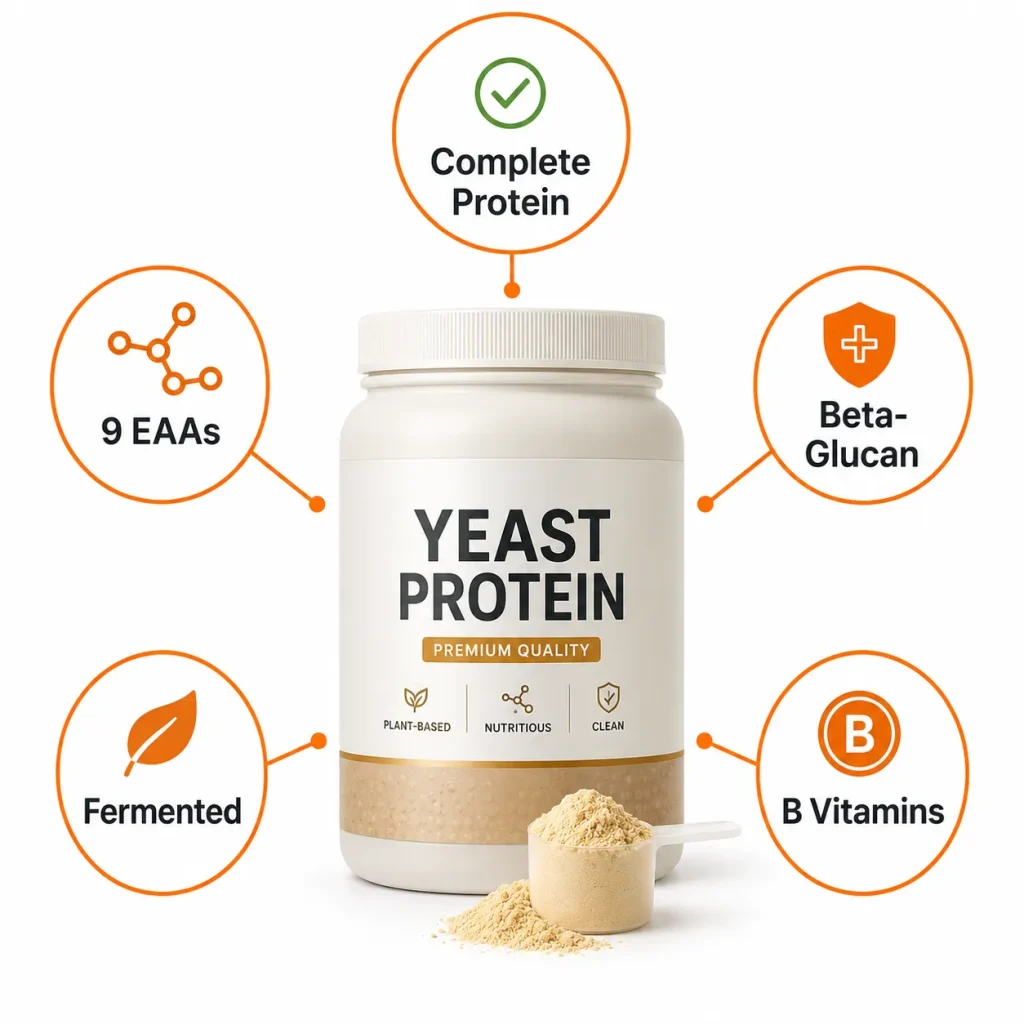
The FDA approved baker’s yeast protein for use as a protein nutritional supplement in 1977. In the EU, it has been consumed widely enough since before 1997 that it does not require novel food classification. Despite this history, yeast protein as a dedicated fitness supplement is a recent category, gaining traction primarily over the last five years in both Western markets and India.
Fermented yeast protein, which uses precision fermentation to increase yield and amino acid consistency, is the form most commonly sold as a supplement. The fermentation process also reduces the nucleic acid content of the yeast, which matters because unconcentrated yeast biomass has high nucleic acid (RNA) levels that can raise uric acid if consumed in large quantities. Properly processed yeast protein supplements have this concern addressed.
A 2024 study published in Food Chemistry by Chen et al. evaluated yeast protein quality against animal and plant proteins using growing rat models and found that yeast protein’s PDCAAS was 100% for individuals older than 3 years and DIAAS was 82.42% — surpassing plant proteins but below animal proteins primarily because of lower digestibility. Supplementing yeast protein with soy or whey in optimised ratios significantly improved DIAAS scores through complementary amino acid provision.
The one-sentence verdict: Yeast protein is a complete, nutritionally dense protein with a quality score above most plant proteins and a unique beta-glucan benefit no conventional plant protein shares.
What Plant Proteins Are and Why the Category Is Too Broad
Plant protein is not one thing. It is a category covering dozens of sources with widely varying protein quality, amino acid profiles, digestibility, and practical use cases.
PDCAAS (Protein Digestibility Corrected Amino Acid Score) ranges 0 to 1, measuring amino acid completeness versus human requirements after adjusting for digestibility. DIAAS (Digestible Indispensable Amino Acid Score) is the more precise successor, measuring amino acid absorption specifically in the small intestine. Both are necessary to assess muscle-building potential.
The limiting amino acid problem is the key issue with plant proteins. Each plant source has one or more amino acids that are insufficient relative to human needs: rice is low in lysine (DIAAS approximately 0.42), wheat is low in lysine (DIAAS approximately 0.4 to 0.6), pea is low in methionine (DIAAS 0.67 to 0.89), hemp is low in lysine and leucine. Soy is the notable exception, with a complete profile and DIAAS above 0.9.
Research from Gorissen et al. published in PMC measured amino acid composition and essential amino acid content across 16 plant and animal proteins. Key finding: essential amino acid contents of plant protein isolates like oat (21%), lupin (21%), and wheat (22%) were substantially lower than animal proteins like whey (43%) and egg (32%). Soy (29%) and pea (28%) performed better among plant options but still below animal sources.
A 2024 study in Current Developments in Nutrition found that plant-based protein blends stimulate muscle protein synthesis comparable to whey protein when leucine content is matched — confirming that the leucine threshold, not the protein source itself, is the primary determinant of MPS response.
The one-sentence verdict: Plant protein quality ranges enormously from genuinely competitive (soy, well-formulated pea-rice blends) to significantly inferior for muscle building (wheat, hemp, rice alone).
Yeast Protein vs Plant Protein: Leucine and the Muscle Trigger
Leucine is the rate-limiting amino acid for muscle protein synthesis (MPS) — the cellular process by which muscle fibres are rebuilt and grown after training. Research consistently identifies a threshold of approximately 2 to 3 grams of leucine per meal needed to maximally trigger MPS.
Yeast protein provides approximately 6 to 7 grams of leucine per 100 grams of protein. This means a standard 30-gram serving of yeast protein delivers approximately 2 to 2.1 grams of leucine — close to but slightly below the maximal stimulation threshold. A 35-gram serving clears the threshold comfortably.
For comparison: soy protein provides approximately 7 to 8 grams of leucine per 100 grams of protein. Pea protein provides approximately 8 grams per 100 grams of protein. Brown rice protein provides approximately 8 grams per 100 grams but at a significantly lower DIAAS, meaning less of it is actually absorbed. Wheat protein provides approximately 6.7 grams per 100 grams but with low overall digestibility.
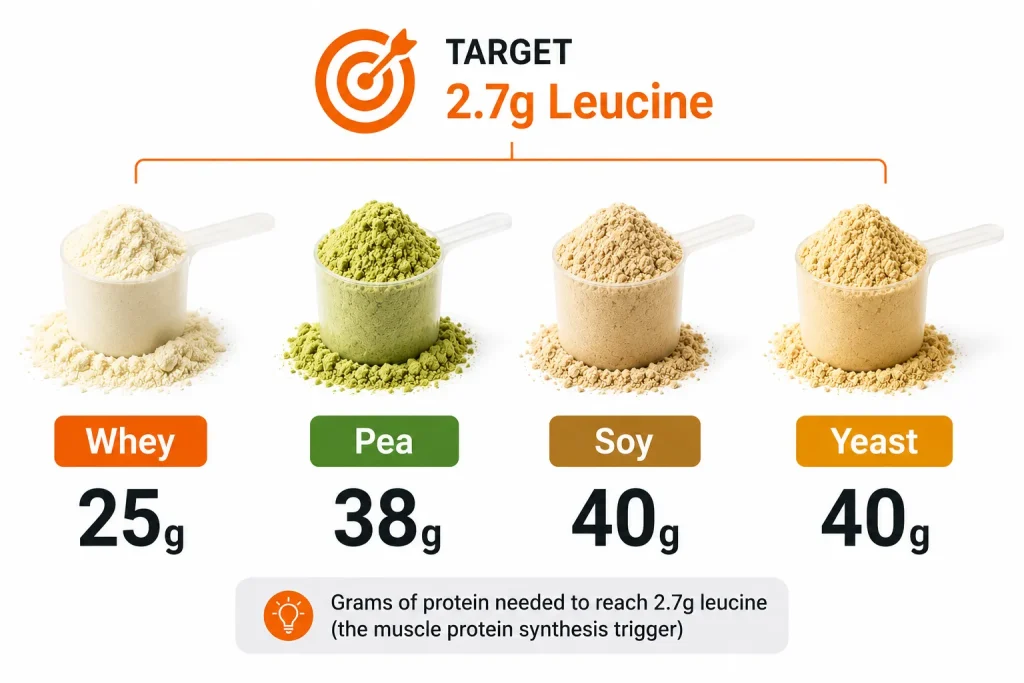
Based on research from a narrative review published in Applied Physiology, Nutrition, and Metabolism examining leucine thresholds across protein sources, to deliver the same 2.7 grams of leucine as 25 grams of whey protein, you need: 38 grams of pea protein, 37 grams of brown rice protein, or 40 grams of soy protein. Yeast protein at 6 to 7 grams leucine per 100g would require approximately 38 to 45 grams to match whey — comparable to other plant and yeast options.
The one-sentence verdict: Yeast protein’s leucine content is competitive with most plant proteins and slightly lower than soy and pea per gram of protein, but both are adequate for muscle building when serving sizes are adjusted upward from a standard 25-gram whey-equivalent dose.
Digestibility: Where Yeast Protein Has a Mixed Story
Digestibility is where yeast protein’s profile becomes more nuanced. The 2024 Food Chemistry study found that yeast protein demonstrated lower true protein digestibility and lower true ileal digestibility compared to animal proteins and some processed plant proteins despite its excellent amino acid score. This is why its DIAAS of 82 is lower than its PDCAAS of 100 — the amino acids are excellent, but not all of them reach the small intestine for absorption with the efficiency of, say, whey or egg.
The cell wall structure of yeast — which contains beta-glucan, chitin, and mannan — creates a physical barrier that can limit enzyme access during digestion. Processing methods that break down this cell wall (such as autolysis, enzymatic hydrolysis, or heat treatment) significantly improve digestibility. Quality yeast protein supplements use these processing steps, which is why finished supplement products outperform raw yeast biomass on digestibility measures.
In practice, this means well-processed fermented yeast protein supplements perform meaningfully better than the DIAAS of 82 from the cell model study suggests, because supplement-grade processing specifically addresses the cell wall digestibility problem.
The one-sentence verdict: Yeast protein digestibility varies significantly with processing quality — well-processed fermented yeast supplements close the gap with soy and pea, while raw yeast biomass shows more limited absorption.
Yeast Protein vs Plant Protein: Full Comparison Table
| Factor | Yeast Protein | Soy Protein | Pea Protein | Rice Protein | Rice-Pea Blend |
|---|---|---|---|---|---|
| Protein per 100g | 50 to 65g | 80 to 90g (isolate) | 80 to 85g (isolate) | 75 to 80g (isolate) | 75 to 80g |
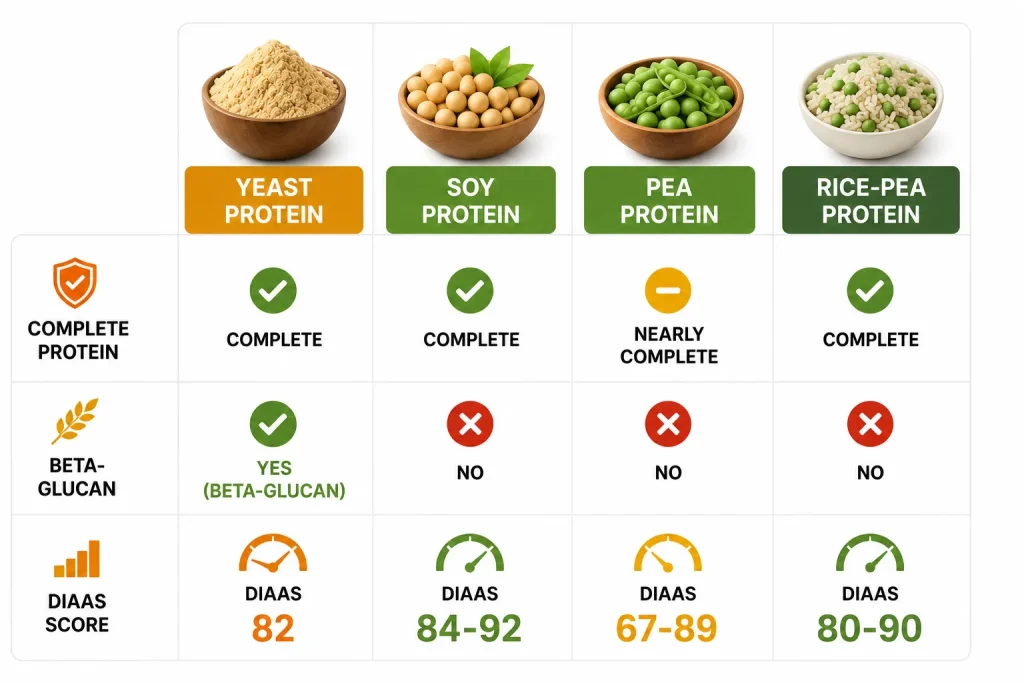
| PDCAAS | approximately 1.0 | 0.91 to 1.0 | 0.67 to 0.89 | approximately 0.42 | 0.85 to 0.95 |
| DIAAS | approximately 82 | 84 to 92 | 67 to 89 | approximately 42 | 80 to 90 |
| Leucine per 100g protein | 6 to 7g | 7 to 8g | 8g | 8g (low DIAAS) | 7 to 8g |
| Complete protein | Yes | Yes | No (low methionine) | No (low lysine) | Yes (complementary) |
| Beta-glucan fibre | Yes | No | No | No | No |
| B-vitamins | Yes (natural) | No | No | No | No |
| India availability | Limited (online) | Widely available | Available (online) | Available (online) | Available (online) |
| Approximate cost per 30g protein | Rs 80 to 150 | Rs 25 to 60 | Rs 60 to 100 | Rs 40 to 80 | Rs 60 to 100 |
| Allergen concern | Yeast sensitivity (rare) | Soy allergy | Legume allergy | None | Legume allergy |
How Your Body Processes Yeast Protein and Plant Proteins
Both yeast protein and plant proteins are digested through the same gastrointestinal pathway, beginning with stomach acid and pepsin for initial protein denaturation, and completing in the small intestine via pancreatic proteases including trypsin, chymotrypsin, and elastase.
The key variable is how efficiently each protein source survives this pathway and delivers its amino acids to the bloodstream. Yeast protein’s beta-glucan cell wall creates partial resistance to early-stage digestion, which is why processing quality determines digestibility so strongly. Soy protein, having gone through defatting and isolation processing, arrives at the gut already partially deconstructed. Pea protein is similarly processed and generally well-absorbed.
Once amino acids reach the bloodstream, they enter the free amino acid pool available for muscle protein synthesis (MPS). MPS — the process of rebuilding muscle fibres after training-induced damage — is primarily triggered by leucine acting through the mTOR (mechanistic target of rapamycin) signalling pathway, which is the cell’s master regulator of protein synthesis. The 2 to 3 gram leucine threshold per meal is the practical expression of this mechanism.
Beta-glucan from yeast protein serves a different but complementary function. As a prebiotic fibre, beta-glucan feeds beneficial gut bacteria, supports immune function through several mechanisms including immune cell activation, and has documented cholesterol-lowering effects in multiple clinical trials. No conventional plant protein isolate retains meaningful beta-glucan because fibre is typically removed during protein extraction.
Timing recommendation: For both yeast and plant protein supplements, consuming 30 to 40 grams within one to two hours after resistance training provides the amino acid supply the muscle needs during the MPS-elevated window post-workout. With yeast protein specifically, slightly larger servings of 35 to 40 grams may be needed to reliably cross the leucine threshold. Taking it with a carbohydrate source enhances insulin-mediated amino acid uptake.
What the Research Actually Says
The research base for yeast protein as a muscle-building supplement is smaller than for soy or pea, because it is a newer category receiving serious research attention. What exists is promising.
The Chen et al. 2024 study in Food Chemistry established yeast protein’s quality scores using growing rat models and in vitro digestion. Key finding: yeast protein mixed with soy protein isolate at optimised ratios achieved body weight gains comparable to casein — the gold standard for sustained protein delivery — suggesting the two proteins are meaningfully complementary.
For plant proteins generally, the evidence base is substantially larger. A 2024 study in Current Developments in Nutrition found that plant-based protein blends stimulate muscle protein synthesis comparable to whey when leucine is matched. This principle — that leucine adequacy matters more than protein source — is the fundamental reason why well-formulated plant proteins can match animal proteins for muscle building, and by extension, why yeast protein with its 6 to 7g leucine per 100g is a valid muscle-building option.
“The amount of plant protein that needs to be ingested to achieve the same 2.7g leucine as in 25g whey protein is: 38g pea, 37g brown rice, 40g soy.” — Gorissen et al., Applied Physiology, Nutrition, and Metabolism.
The honest reality check: most gym-goers, whether using yeast or plant protein, underestimate their serving size relative to leucine requirements and wonder why they are not recovering as well as whey users. The issue is usually not the protein source. It is the dose.
What to Watch Out For With Both Protein Types
Yeast protein is generally safe for healthy adults, but a few things are worth knowing.
Yeast sensitivity and allergies affect a small subset of people. Symptoms are typically digestive — bloating, gas, or loose stools — rather than systemic allergic reactions. If you have a diagnosed yeast allergy or Candida hypersensitivity, yeast protein supplements may cause reactions. This is uncommon but worth knowing before purchase.
Purine content is a consideration for people with gout or elevated uric acid. Unprocessed yeast biomass has high purine content, which the body metabolises to uric acid. Advanced purification of supplement-grade yeast protein typically reduces purines to levels comparable to chicken breast (approximately 150 to 200 mg/100g in standard processing, as low as 9 to 16 mg/100g with advanced purification per Angelyeast’s published data). For most people this is not a concern, but for those with gout, it is worth checking the specific product’s purine content.
Plant protein digestive issues are common, particularly with high doses of legume-based proteins. Pea protein and soy protein contain oligosaccharides that ferment in the colon, producing gas and bloating in some individuals. This is temporary and dose-dependent. Starting at 20 grams daily and building up over two weeks minimises this significantly.
Cost and availability in India matter practically. Yeast protein supplements are available through online platforms in India but are more expensive per gram of protein than soy-based options and have less brand variety than whey or pea protein. For budget-conscious Indian gym-goers, soy protein or soya chunks remain the more practical daily option with comparable quality.
For a broader picture of vegetarian protein sources in India, the best vegetarian protein sources in India guide covers practical options across different budgets and goals.
Which Option Is Right for Your Specific Situation
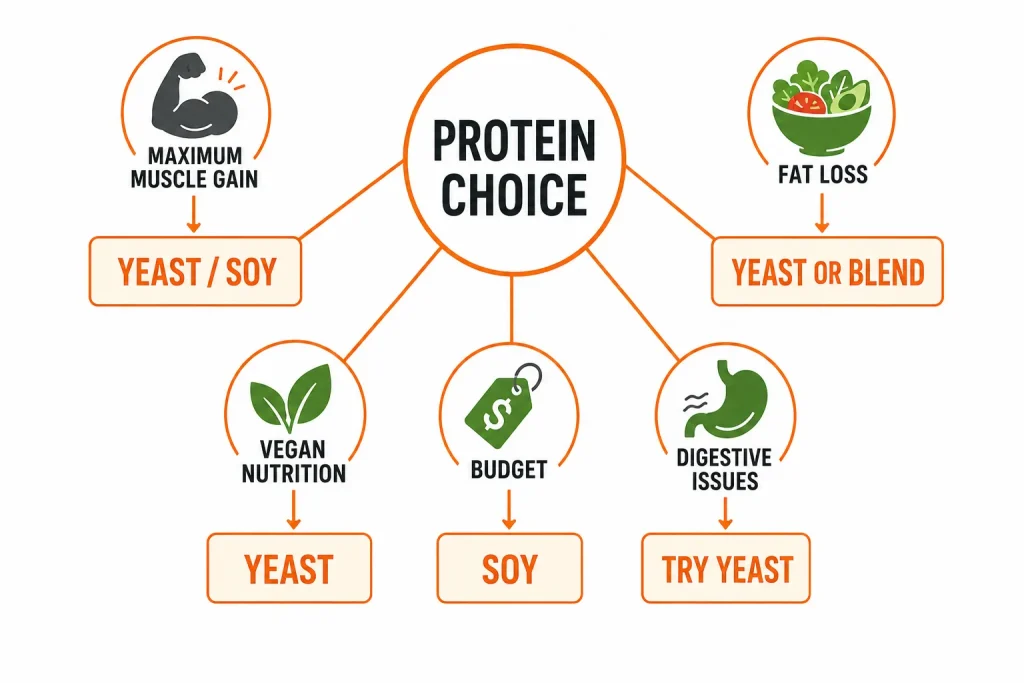
If Your Goal Is Maximum Muscle Gain
Both yeast protein and high-quality plant proteins (soy isolate, pea-rice blends) will support muscle gain effectively when taken in adequate doses. The key is hitting the leucine threshold per meal — roughly 2.5 to 3 grams. At a 30-gram serving, most options fall slightly short; at 35 to 40 grams, both yeast and plant blends reliably reach it. If you have access to yeast protein and can afford it, its complete amino acid profile and added beta-glucan make it a nutritionally richer choice than isolated plant proteins.
If Your Goal Is Fat Loss While Preserving Muscle
Yeast protein’s combination of complete protein and beta-glucan fibre makes it particularly useful in a calorie deficit. The beta-glucan improves satiety, supports gut health, and has cholesterol-lowering properties that are beneficial during a fat loss phase. Plant protein blends are equally effective for the protein component but lack the beta-glucan benefit. Both should be taken at 30 to 40 gram servings to protect muscle mass during the deficit.
If You Are Vegan or Strictly Vegetarian
Both yeast protein and plant proteins are vegan. Yeast protein has an advantage over most single-source plant proteins in amino acid completeness without requiring blending. If you are combining foods across a day — soya chunks at lunch, pea protein shake post-workout, dal at dinner — you will naturally complement amino acid profiles. A dedicated yeast protein supplement simplifies this. For a complete approach to hitting protein targets on a vegetarian Indian diet, the best protein sources for muscle gain and fat loss in India guide covers the practical combinations that work.
If You Have Digestive Issues With Conventional Plant Proteins
Yeast protein is worth trying if soy or pea protein causes significant digestive discomfort. The fermentation process in yeast protein production produces a different oligosaccharide profile than legume proteins, and many people who struggle with soy or pea report better tolerance with yeast protein. Start at 20 grams daily to assess response.
If You Are on a Tight Budget
Soy protein or soya chunks remain the most economical complete plant protein available in India. At Rs 25 to 60 per 30 grams of protein from soy versus Rs 80 to 150 for yeast protein, the cost gap is significant. Budget-conscious Indian gym-goers are better served by maximising soy-based protein with food sources like soya chunks, tofu, and soy milk than by paying a premium for yeast protein supplements.
If You Are a Complete Beginner
Start with what is accessible, affordable, and familiar enough that you will use it consistently. For most Indian beginners, that means soya chunks or a quality pea-soy blend. Both are complete, both work. Once your protein habits are established and you want to explore nutritionally richer options with functional benefits beyond pure protein, yeast protein becomes an interesting upgrade.
The Bottom Line
Yeast protein is a genuinely capable protein source — complete in amino acids, above most plant proteins in quality scores, rich in beta-glucan fibre, and well-tolerated by most people. The comparison with “plant protein” is only useful when you specify which plant protein you mean. Against soy, yeast protein is roughly equivalent in quality. Against pea, it is moderately better in amino acid completeness. Against rice or wheat, it is significantly better. Against a well-formulated pea-rice blend, it is comparable.
The practical limitation for Indian gym-goers is cost and availability. Soy-based protein sources — from cheap soya chunks in every kirana store to soy protein isolate powder — offer the same complete amino acid quality at a fraction of the price. Yeast protein earns its place for people who want the additional beta-glucan benefit, have specific digestive sensitivities to legume proteins, or are specifically seeking a fermented, non-legume complete protein.
Both options work for muscle building when total protein and leucine intake are adequate. The protein source matters less than most supplement marketing suggests. The total amount you eat matters most.
People Also Ask
Is yeast protein better than plant protein for muscle gain?
Yeast protein is better than most individual plant proteins for muscle gain because it is a complete protein with a PDCAAS of approximately 1.0, whereas many plant proteins are incomplete (rice is low in lysine, pea is low in methionine). However, yeast protein is comparable to soy protein and well-formulated pea-rice blends in practical muscle-building effectiveness. Both produce similar muscle protein synthesis when total protein and leucine intake are matched. For most purposes, the quality difference between yeast protein and a good plant protein blend is small.
What is yeast protein and how is it made?
Yeast protein is extracted from Saccharomyces cerevisiae, the same yeast used in baking and brewing. The yeast is fermented in controlled conditions, then the cells are broken down and protein is concentrated through autolysis, enzymatic hydrolysis, or heat treatment. This process removes excess nucleic acids and cell wall material, producing a powder with 50 to 65% protein content, all nine essential amino acids, beta-glucan fibre, and natural B vitamins. It is not a plant protein or an animal protein — it falls in a separate category as a microbial-derived protein.
Does yeast protein contain leucine for muscle building?
Yes. Yeast protein contains approximately 6 to 7 grams of leucine per 100 grams of protein. Leucine is the primary amino acid that triggers muscle protein synthesis through the mTOR signalling pathway. A 35 to 40 gram serving of yeast protein delivers approximately 2.1 to 2.8 grams of leucine, which meets or approaches the 2 to 3 gram per-meal threshold associated with maximal MPS stimulation. This makes yeast protein a practical muscle-building protein when consumed in adequate serving sizes.
Is plant protein or yeast protein better for vegans?
Both are vegan. For vegans specifically, yeast protein has an advantage over most single-source plant proteins because it is complete in all nine essential amino acids without needing blending. It also provides beta-glucan fibre and B vitamins that most plant protein isolates do not. However, soy protein is also a complete vegan protein and significantly less expensive per gram in India. The practical choice for most Indian vegans is soy-based protein for daily use, with yeast protein as a premium option for those who want additional nutritional benefits.
What are the benefits of yeast protein compared to plant protein?
Yeast protein has three advantages over most plant proteins. First, it is a complete protein on its own, unlike rice, wheat, or hemp proteins. Second, it contains beta-glucan fibre from the yeast cell wall, which supports gut health, immune function, and cholesterol management — no conventional plant protein isolate retains meaningful beta-glucan. Third, it provides natural B vitamins including B1, B3, B5, and B6, which most plant protein isolates do not. The tradeoff is higher cost and currently limited availability in India compared to soy or pea protein.
Can yeast protein cause any side effects?
Yeast protein is well-tolerated by most healthy adults. People with a diagnosed yeast allergy or known Candida hypersensitivity may experience digestive symptoms including bloating, gas, or loose stools. People with gout or elevated uric acid should check the specific product’s purine content, as standard yeast protein has moderate purine levels, though advanced-purification products reduce this significantly. Digestive discomfort in the first week is common with any new protein supplement and typically resolves. Starting at 20 grams daily and building up reduces initial adjustment symptoms.
Which plant proteins are actually complete like yeast protein?
Among commonly used plant proteins, soy is the only one that is truly complete on its own, with a PDCAAS of 0.91 to 1.0 and a DIAAS above 0.84. Quinoa is also complete but is rarely used as a protein supplement. Pea protein is close to complete but has a meaningful methionine deficit. Rice protein is significantly incomplete due to low lysine content. Well-formulated pea-rice blends are effectively complete because the two complement each other’s limiting amino acids. Hemp protein is incomplete and has moderate digestibility. For Indian gym-goers, soy remains the most accessible complete plant protein.
Sources and References
- Evaluation of the Nutritional Quality of Yeast Protein in Comparison to Animal and Plant Proteins Using Growing Rats and INFOGEST Model. Chen et al., Food Chemistry, 2024 — Source for yeast protein PDCAAS of 100% and DIAAS of 82.42% for adults, lower digestibility compared to animal proteins, and synergistic quality improvement when combined with soy or whey.
- Protein Content and Amino Acid Composition of Commercially Available Plant-Based Protein Isolates. Gorissen et al., PMC — Source for EAA content across 16 plant and animal proteins; oat, lupin, and wheat EAA contents of 21 to 22%; soy at 29%; leucine requirements per protein source for matching whey’s MPS trigger.
- Muscle Protein Synthesis in Response to Plant-Based Protein Isolates With and Without Added Leucine Versus Whey Protein. Current Developments in Nutrition, 2024 — Source for plant-based protein blends producing MPS comparable to whey when leucine is matched.
- Plant-Based Food Patterns to Stimulate Muscle Protein Synthesis and Support Muscle Mass in Humans: A Narrative Review. Applied Physiology, Nutrition, and Metabolism — Source for the leucine equivalence calculations showing grams of each protein source needed to match 2.7g leucine from 25g whey.





One Response
very detailed analysis took me 15 minutes to read