Best Protein Sources for Muscle Gain and Fat Loss in India (Complete Food-First Guide)
Discover the best protein sources for muscle gain and fat loss in India—vegetarian, non-vegetarian, and budget-friendly. No expensive supplements required.
Introduction: The Protein Question Every Indian Asks (But No One Answers Clearly)
I’ve seen this happen too many times.
A young professional in Mumbai decides to “get fit.” First thing they do? Buy whey protein. Then chicken breast. Then those expensive “high-protein” packaged foods. Monthly food bill doubles. Three months later? Zero progress.
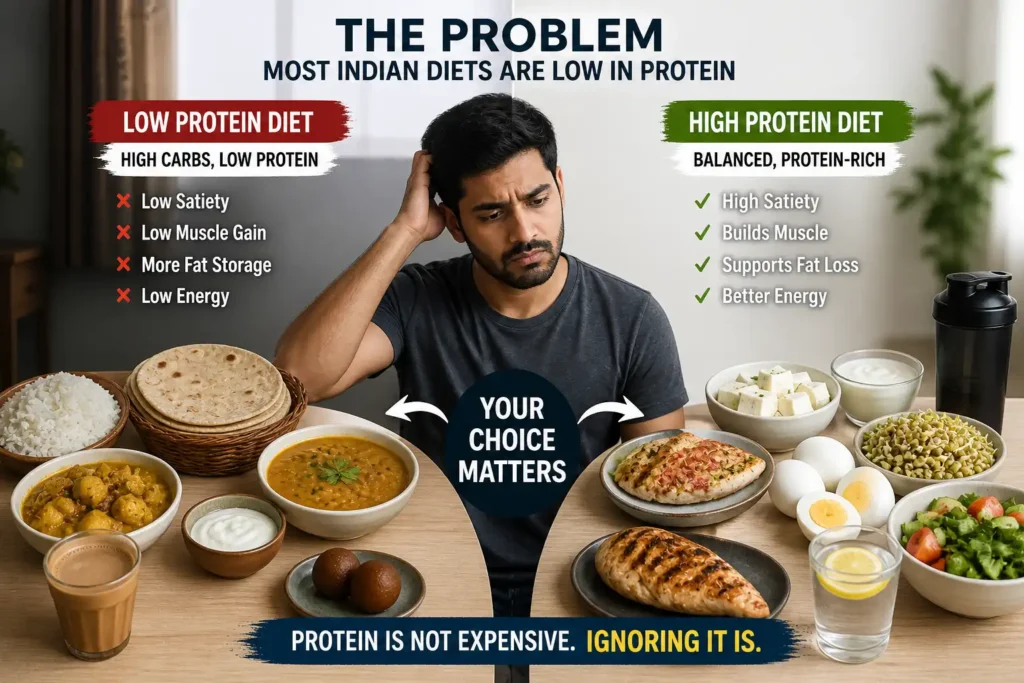
Not because protein doesn’t work. But because they never asked the right question.
The question isn’t “what has protein?”
The question is: What are the best protein sources for muscle gain and fat loss for your specific body, budget, and lifestyle?
A bodybuilder bulking needs different choices than a desk worker trying to lose belly fat. A vegetarian in a small town needs different options than a non-vegetarian in a metro.
This guide gives you the complete framework. By the end, you’ll know exactly what to eat, how much, and why. No supplement company bias. Just science and practicality.
Quick Answer: Best Protein Sources for Muscle Gain and Fat Loss
Direct answer: The best protein sources are whole foods that give you high protein per calorie (fat loss) and high leucine content (muscle gain).
Top picks by category:
| Goal | Best Sources | Why |
|---|---|---|
| Muscle Gain (Bulking) | Chicken breast, eggs, paneer, whey protein, soya chunks | High leucine, moderate calories |
| Fat Loss (Cutting) | Egg whites, fish, tofu, Greek yogurt, soya chunks, chicken breast | High protein, low calorie, high satiety |
| Budget | Soya chunks, roasted chana, peanuts, eggs, moong dal | Under ₹30 per 30g protein |
| Vegetarian | Soya chunks, paneer, Greek yogurt, tofu, edamame, lentils | Complete or complementary amino profiles |
| Non-Vegetarian | Chicken breast, eggs, fish (rohu, pomfret), prawns | Highest bioavailability and leucine |
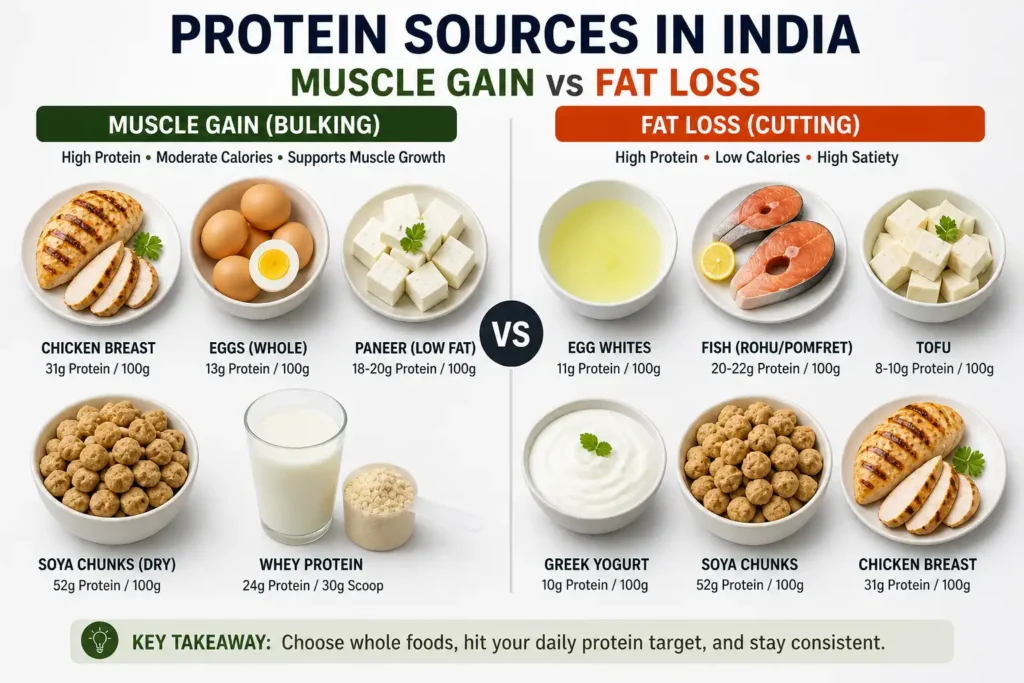
One non-negotiable rule: Food first, supplements second. No protein powder fixes a poorly planned diet.
Why Protein Matters for Both Muscle and Fat
Most people think protein is only for “bodybuilders.” Wrong.
For Muscle Gain
Muscle growth happens when muscle protein synthesis (MPS) exceeds muscle breakdown. MPS gets triggered primarily by leucine—an essential amino acid abundant in animal and soy proteins.
Without enough leucine (roughly 2-3g per meal), your body won’t build muscle. No matter how hard you train.
For Fat Loss
Protein does three things no other nutrient can:
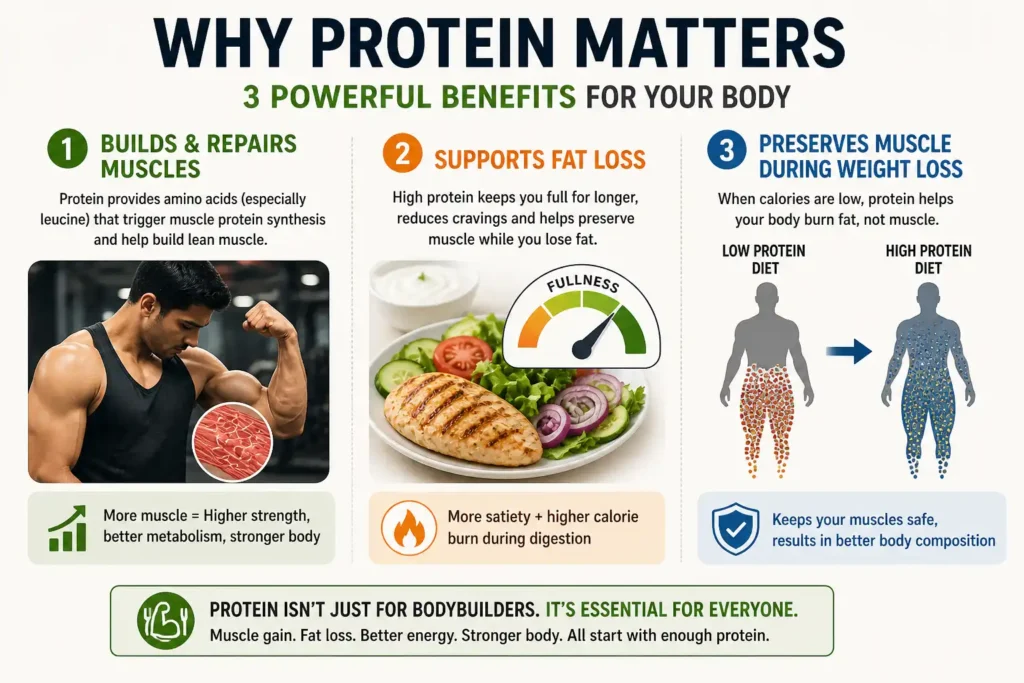
- Keeps you full (higher satiety than carbs or fat)
- Burns calories during digestion (20-30% of protein calories get burned just digesting it)
- Preserves muscle during a calorie deficit (so you lose fat, not weight)
Research consistently shows that high-protein diets (1.6g per kg or higher) lead to significantly more fat loss and muscle retention compared to standard-protein diets. A 2020 meta-analysis in the American Journal of Clinical Nutrition confirmed this effect across multiple studies.
The Thermic Effect Explained Simply
Eat 100 calories of carbs? Your body burns 5-10 calories digesting it.
Eat 100 calories of fat? Burns 0-5 calories.
Eat 100 calories of protein? Burns 20-30 calories.
Replace carb-heavy meals with protein-rich ones, and you automatically burn more calories daily. No extra effort.
How Much Protein You Actually Need (India Context)
Stop guessing. Here’s the exact math.
The Indian Council of Medical Research (ICMR) recommends 0.8-1.0g of protein per kg of body weight for sedentary adults. That’s the minimum to avoid deficiency. Not enough for muscle gain or fat loss.
For fat loss and muscle gain, aim for:
| Activity Level | Protein per kg | Example (70kg person) |
|---|---|---|
| Sedentary (no exercise) | 0.8-1.0g | 56-70g |
| Active (exercise 2-3x/week) | 1.2-1.5g | 84-105g |
| Muscle gain / intense training | 1.6-2.2g | 112-154g |
| Fat loss / calorie deficit | 1.6-2.4g | 112-168g |
Why higher protein for fat loss? When calories drop, your body wants to burn muscle (muscle is “expensive” to maintain). High protein intake signals your body to spare muscle and burn fat instead.
Here’s the problem: A typical Indian meal (2 rotis + dal + sabzi + curd) gives you about 15-20g protein. That’s one-third of what you need. You’re not failing because you lack willpower. You’re failing because your plate is missing protein.
Best Protein Sources in India (By Diet)
Let’s get practical. These are available at your local kirana store or sabzi mandi.
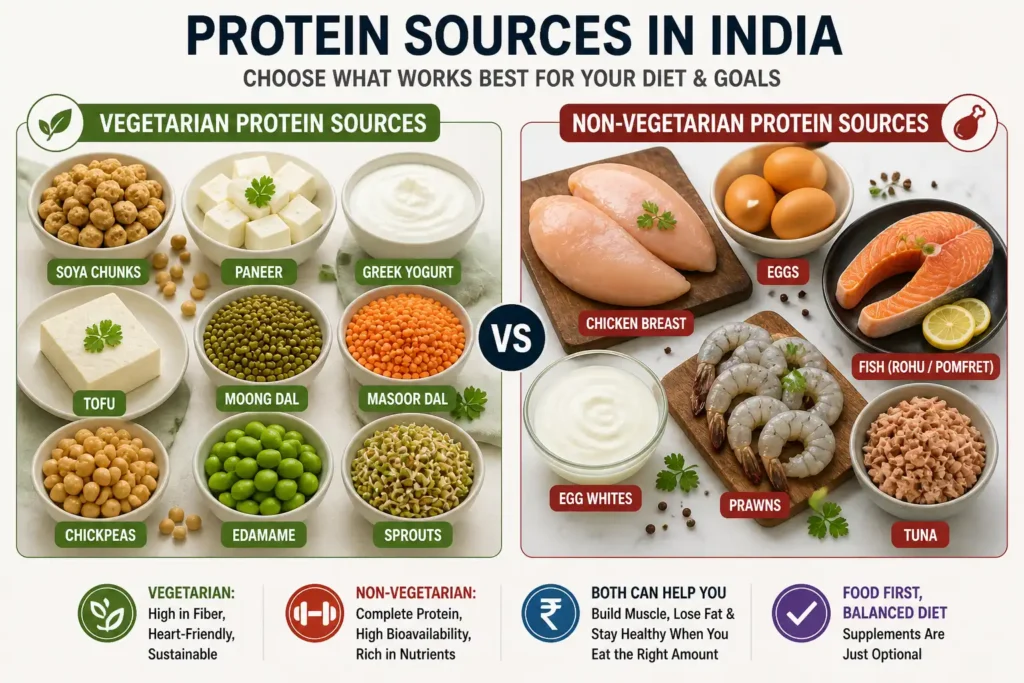
Vegetarian Protein Sources
Tier 1: High-Density Options
| Source | Protein per 100g | Calories | Cost (₹ per 30g protein) |
|---|---|---|---|
| Soya chunks (dry) | 52g | 330 | ~₹15-20 |
| Greek yogurt (hung curd) | 10g | 60 | ~₹30-40 |
| Paneer (low-fat) | 18-20g | 200-250 | ~₹60-70 |
| Tofu | 8-10g | 80-100 | ~₹50-60 |
| Edamame | 12g | 125 | ~₹80-100 |
Soya chunks are the king. 52g protein per 100g for ₹150-200 per kg. Nothing else comes close on cost-per-protein. And despite the myths, soya chunks do NOT cause man boobs.
Tier 2: Everyday Options
| Source | Protein per 100g (cooked) | Calories | Notes |
|---|---|---|---|
| Moong dal | 7-9g | 100-120 | Best among dals |
| Chana (chickpeas) | 8-9g | 120-140 | High fiber, great for satiety |
| Sprouted moong | 8-9g | 100-120 | Better absorption than unsprouted |
| Pumpkin seeds | 19g | 450 | Snack in small portions |
| Peanuts | 26g | 560 | Budget-friendly but calorie-dense |
| Quinoa | 8g (cooked cup) | 220 | Complete protein, expensive |
The dal reality check: A bowl of dal (150g cooked) gives 12-15g protein and 200+ calories. Good. Not enough. Use dal as a supplement to higher-protein foods, not your primary source.
For a deeper dive, read the complete guide on best vegetarian protein sources in India.
Non-Vegetarian Protein Sources
Animal proteins have better bioavailability and higher leucine content.
| Source | Protein per 100g | Calories | Cost (₹ per 30g protein) |
|---|---|---|---|
| Chicken breast (skinless) | 31g | 165 | ~₹50-60 |
| Eggs (whole) | 13g (2 large) | 155 | ~₹15-20 |
| Egg whites | 11g (4 whites) | 50 | ~₹10-15 |
| Fish (rohu/pomfret) | 18-20g | 120-150 | ~₹60-100 |
| Canned tuna | 26g | 130 | ~₹80-100 |
Best value among non-veg: Eggs (whole), chicken breast, and canned tuna.
Egg whites for fat loss: Four egg whites give 11g protein for only 50 calories. Best protein-to-calorie ratio of any whole food.
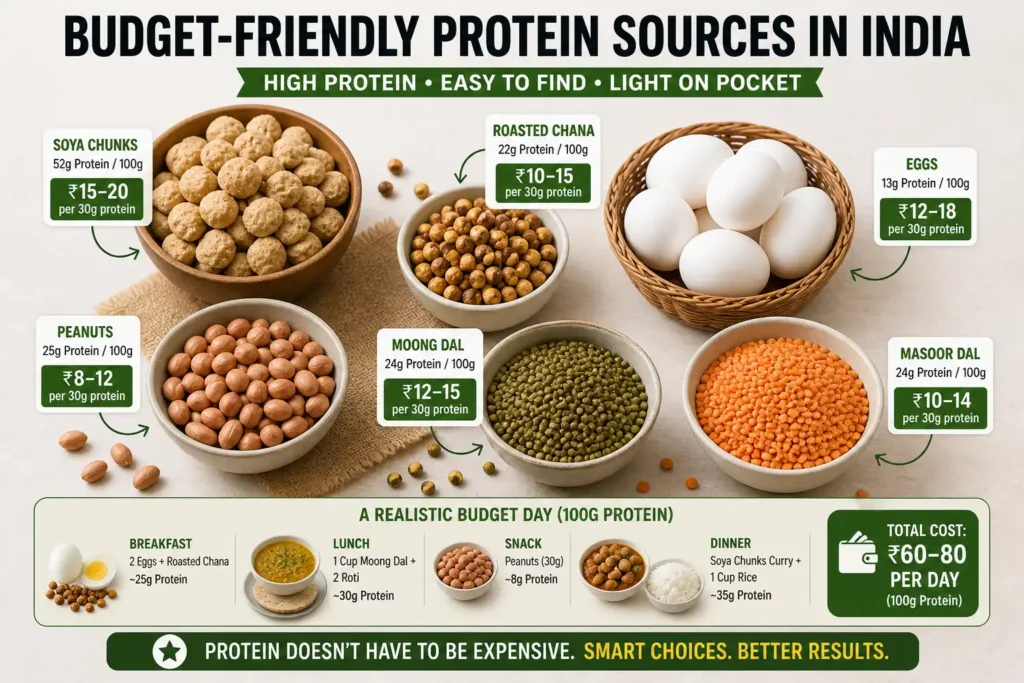
Budget-Friendly Options (Under ₹50 per 30g protein)
| Source | Cost per 30g protein | Daily cost (for 90g protein) |
|---|---|---|
| Soya chunks | ~₹15 | ₹45 |
| Roasted chana | ~₹20 | ₹60 |
| Peanuts | ~₹25 | ₹75 |
| Moong dal | ~₹35 | ₹105 |
| Eggs (whole) | ~₹20-25 | ₹60-75 |
A realistic budget day (₹100-120 for 70-75g protein):
50g soya chunks (26g protein, ₹15) + 100g moong dal (9g protein, ₹6) + 100g Greek yogurt (10g protein, ₹30) + 50g peanuts (13g protein, ₹10) + 2 eggs (12g protein, ₹12). Add vegetables and rice. Done.
Complete Comparison Table
| Source | Protein/100g | Calories | Leucine | Best For | Cost/30g protein |
|---|---|---|---|---|---|
| Soya chunks | 52g | 330 | High | Max protein, min cost | ~₹15 |
| Chicken breast | 31g | 165 | Very high | Lean muscle gain | ~₹50 |
| Eggs (2 large) | 13g | 155 | High | Budget, versatile | ~₹20 |
| Egg whites (4) | 11g | 50 | High | Fat loss | ~₹15 |
| Paneer | 18g | 280 | High | Taste, vegetarian | ~₹65 |
| Greek yogurt | 10g | 60 | Moderate | Breakfast, gut health | ~₹35 |
| Moong dal | 7-9g | 110 | Low | Everyday meals | ~₹35 |
| Peanuts | 26g | 560 | Low | Budget snacking | ~₹25 |
For a head-to-head comparison of specific plant proteins, read edamame protein vs paneer vs soya chunks.
Best Sources for Muscle Gain (Specific Picks)
To build visible muscle, you need:
- Leucine (minimum 2-3g per meal to trigger MPS)
- Enough calories (muscle gain requires a slight surplus)
Top picks:
- Chicken breast (31g protein, very high leucine)
- Eggs (whole) (13g protein, high leucine + healthy fats)
- Soya chunks (52g protein, high leucine, cheapest)
- Paneer (18g protein, high leucine, great for vegetarians)
- Whey protein (24g protein, highest leucine, convenient)
Sample Muscle Gain Day (150g protein, ~2500 calories)
| Meal | Food | Protein |
|---|---|---|
| Breakfast | 3 whole eggs + 2 slices bread | 22g |
| Mid-morning | Greek yogurt (150g) + pumpkin seeds | 18g |
| Lunch | 200g chicken breast + 1 cup rice | 62g |
| Evening | 50g soya chunks | 26g |
| Dinner | 150g paneer sabzi + 1 roti | 27g |
| Total | 155g |
Best Sources for Fat Loss (Specific Picks)
To lose fat while keeping muscle:
- High protein per calorie (lean proteins)
- High satiety (protein + fiber)
- Low calorie density (more volume, fewer calories)
Top picks:
- Egg whites (11g protein / 50 calories = 0.22g per calorie) 👑 winner
- Chicken breast (31g / 165 calories = 0.18g per calorie)
- Soya chunks (52g / 330 calories = 0.15g per calorie)
- Tuna (26g / 130 calories = 0.20g per calorie)
- Edamame (12g protein + 5g fiber per 100g)
Sample Fat Loss Day (123g protein, ~1450 calories)
| Meal | Food | Protein | Calories |
|---|---|---|---|
| Breakfast | 4 egg whites + 1 whole egg + vegetables | 22g | 180 |
| Mid-morning | 150g Greek yogurt | 15g | 90 |
| Lunch | 150g chicken breast + large salad | 46g | 260 |
| Evening | 30g soya chunks + 50g edamame | 25g | 180 |
| Dinner | 150g tofu stir-fry | 15g | 120 |
| Total | 123g | ~1450 |
More food volume, lower calories. That’s sustainable fat loss.
If you’re combining protein with a calorie deficit, check out the budget Indian diet plan for weight loss under ₹200/day.
Common Protein Mistakes
1. “Dal is enough protein”
A bowl of dal has 12-15g protein and 200+ calories. To hit 130g protein from dal alone: 10-11 bowls = 2,000+ calories. You’d gain fat before hitting your protein target.
Fix: Use dal as a side dish. Add soya chunks, paneer, eggs, or chicken to every meal.
2. Relying only on protein powder
Whole foods give you fiber, micronutrients, and higher satiety. Use powder for convenience, but get 80% of protein from real food.
3. Avoiding egg yolks
Outdated fear. Dietary cholesterol has minimal impact on blood cholesterol for most people. The yolk has half the protein, all the vitamin D, and most of the choline.
Fix: In a deficit, use 1-2 whole eggs + 3-4 whites. Bulking? Eat the whole egg.
4. Eating paneer at every meal
Paneer has 20g fat per 100g. Three servings daily adds 600 calories from fat alone.
Fix: Rotate paneer with tofu, soya chunks, and lentils. Use low-fat paneer when possible.
5. Obsessing over “protein timing”
You don’t need protein within 30 minutes of your workout. Your “anabolic window” is 2-4 hours. Total daily protein matters far more than precise timing.
Fix: Hit your daily target consistently. Spread 30-40g protein every 3-4 hours.
For more on the science of fat loss, read about the 3 pillars of a sustainable fat loss plan.
Real-World Practical Tips
The “Protein First” Rule
When you sit down to eat, eat protein first. Then vegetables. Then carbs. Guarantees you get the most important nutrient before you’re full.
Batch Cook Sundays
Boil 500g soya chunks. Cook 1kg chicken. Make a large dal batch. Hard-boil 12 eggs. Store in fridge. Now protein is faster than ordering Zomato.
Upgrade Your Breakfast
Stop starting with empty carbs. Switch to:
- 3 eggs + 1 slice bread
- Greek yogurt + roasted chana
- Paneer bhurji + 1 roti
Double the Protein in Lunch
Restaurant thali: 20g protein.
Upgraded: 150g chicken + 1 bowl dal + 2 rotis = 50g+ protein.
Smart Snacking
Replace biscuits and samosas with:
- Roasted chana (50g = 14g protein)
- 2 hard-boiled eggs (12g protein)
- 100g Greek yogurt (10g protein)
If Vegetarian, Rotate Sources
Don’t eat paneer daily. Rotate: soya chunks, paneer, tofu, lentils, Greek yogurt, edamame.
See the complete guide to vegetarian protein sources beyond dal and paneer.
What About Plant-Based Protein Powders?
If you’re vegan or lactose-intolerant, plant proteins are your best option. But not all are equal.
Best plant isolates:
- Soy protein isolate (complete amino profile)
- Pea protein (slightly lower methionine)
- Yeast protein (complete, highly digestible, lactose-free)
Can yeast protein replace whey? For most people, yes. A 2024 systematic review found yeast protein effectively stimulates muscle protein synthesis similar to animal proteins. It has a PDCAAS score of 0.95-1.0 (whey is 1.0). Good enough for almost everyone.
For a detailed comparison, read can yeast protein replace whey protein.
Final Verdict
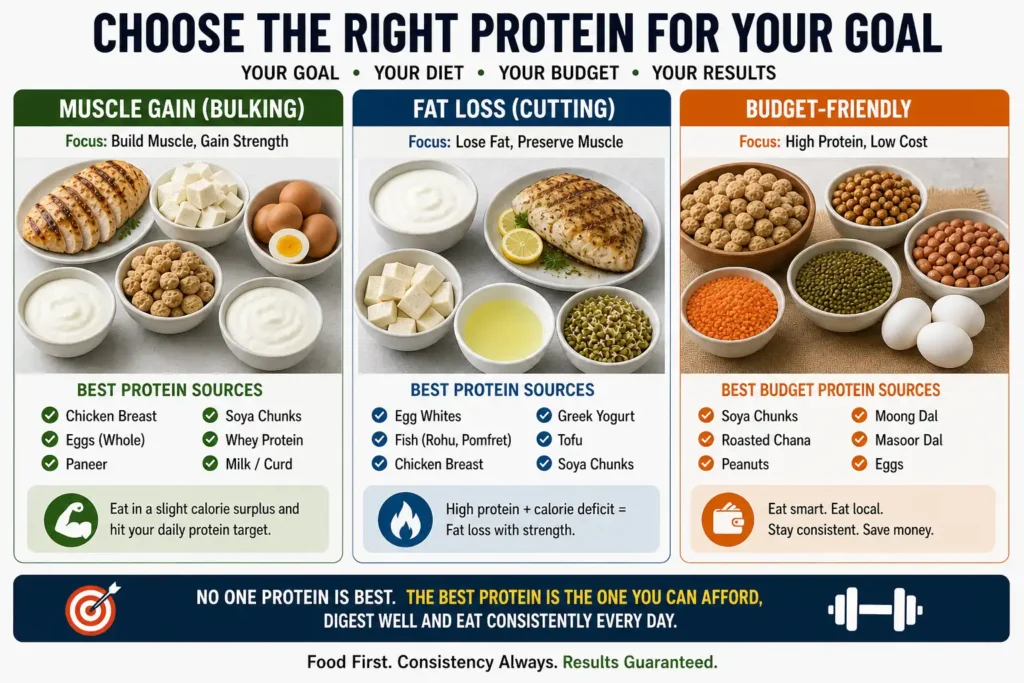
| Goal | Best sources | Avoid/Limit |
|---|---|---|
| Muscle gain | Chicken breast, whole eggs, paneer, soya chunks, whey | Low-protein foods (plain rice, white bread) |
| Fat loss | Egg whites, chicken breast, soya chunks, tofu, Greek yogurt, edamame | High-fat proteins (mutton, full-fat paneer) |
| Budget | Soya chunks, eggs, roasted chana, moong dal, peanuts | Expensive powders, imported quinoa |
| Vegetarian | Soya chunks, Greek yogurt, paneer, tofu, edamame | Relying only on dal |
| Non-vegetarian | Chicken breast, eggs, fish, tuna | Over-reliance on red meat |
The bottom line: You don’t need expensive supplements. You need to eat more protein from whole foods, consistently, every single day.
If you’re a beginner starting from zero, read the high protein foods for fat loss (simple beginner’s guide) first.
Frequently Asked Questions
1. Which protein source is best for muscle gain and fat loss simultaneously?
Chicken breast and soya chunks. Both high in leucine (muscle growth) and low in calories (fat loss). Egg whites are great for fat loss but lack the calories for bulking.
2. Can vegetarians build muscle without whey?
Yes. Soya chunks (52g protein/100g) and paneer (18g/100g) work perfectly. Combine with Greek yogurt, lentils, and sprouted grains.
3. How much protein for fat loss?
1.6-2.4g per kg of body weight. For a 70kg person: 112-168g daily. Higher intake preserves muscle during calorie deficit.
4. Is soya chunks safe for men?
Yes. A 2021 meta-analysis of 41 clinical studies found no effect of soy on male testosterone or estrogen. The “soya causes man boobs” myth is debunked. Read the full science in do soya chunks cause man boobs.
5. What are the cheapest protein sources in India?
Soya chunks (₹15 per 30g protein), eggs (₹20-25), roasted chana (₹20), peanuts (₹25). A budget of ₹100-120 daily gets you 70-80g protein.
6. Is one protein source better than others for muscle gain?
No. Variety matters. Different sources have different amino profiles. Rotate animal and plant proteins. Prioritize leucine-rich sources: chicken, eggs, soya chunks, whey, paneer.
Ready to Transform Your Body?
You now have the framework. You know:
- How much protein
- Which sources work for your goal
- How to eat protein on a budget
- What mistakes to avoid
Here’s your first step: Pick ONE meal this week—breakfast, lunch, or dinner—and add 20g protein. That’s it. One meal. One change.
Do that for 3 days. Then add another meal. Within 2 weeks, you’ll hit 100g+ daily without feeling like you’re “dieting.”
Drop a comment below: What’s your biggest challenge with eating enough protein? Cost? Time? Digestion?
And if this guide helped, share it with a friend still stuck in the dal-and-roti cycle.
Protein khao. Strong bano. Desi protein se daro nahi.
Related Articles
👉 How to Start Workout at Home – Build muscle without a gym.
👉 10 Best Workouts for Home – Specific routines to pair with protein.
👉 Lose Weight in 30 Days – Complete fat loss system.
👉 High Protein Foods for Fat Loss (Beginner’s Guide) – Start here if you’re new.
Disclaimer: This information is for educational purposes only. Consult a qualified healthcare provider before making significant dietary changes, especially if you have kidney disease, diabetes, or other medical conditions.