
Delhi’s air pollution is actively damaging sperm quality, and the research to support that statement is no longer preliminary. Studies across high-pollution Asian cities have shown measurable reductions in sperm count, motility, and DNA integrity in men with sustained exposure to PM2.5 levels comparable to — and often lower than — what Delhi residents breathe for months at a time. If you are a man aged 18 to 35 living in Delhi or any other high-pollution Indian city, the air you breathe is affecting your reproductive health whether you are thinking about fertility right now or not.
The mechanism is not complicated once you understand it. Fine particulate matter enters the bloodstream, crosses the blood-testis barrier, generates oxidative stress inside the testes, and damages sperm cells at the DNA level. The damage is cumulative. It builds over months and years of exposure.
What makes this worth paying attention to beyond fertility is that sperm quality is a proxy for overall male health. Low sperm count and high DNA fragmentation are associated with reduced testosterone, higher systemic oxidative stress, and worse long-term cardiovascular outcomes.
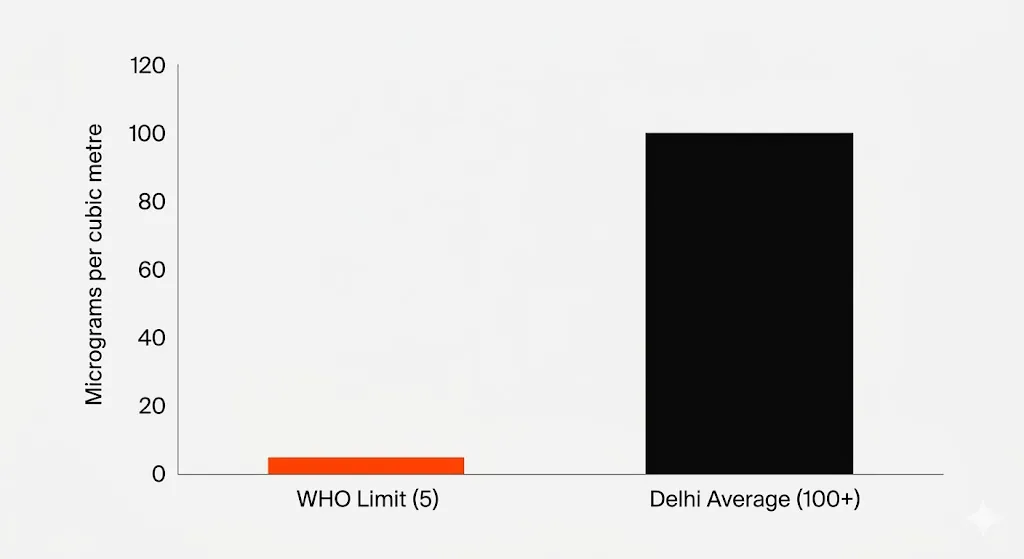
Delhi’s average annual PM2.5 concentration regularly exceeds 100 micrograms per cubic metre. The WHO’s safe annual limit is 5 micrograms per cubic metre. That is a 20-fold gap, and it matters in ways most men in Delhi have never been told.
Quick Answer
Can Delhi’s AQI affect sperm health?
- Yes. PM2.5 air pollution at levels routinely recorded in Delhi is directly associated with reduced sperm count, lower motility, and increased sperm DNA fragmentation in multiple peer-reviewed studies.
- The primary mechanism is oxidative stress. Fine particulate matter generates reactive oxygen species (ROS) inside testicular tissue, damaging sperm cells during production.
- Spermatogenesis takes approximately 74 days, meaning current sperm quality reflects exposure over the past 2.5 months, not just recent days.
- The damage is partially reversible through antioxidant nutrition, reduced exposure, and lifestyle changes — but only if addressed consistently over 3 to 6 months.
- Every major Indian metro is affected, not only Delhi; Mumbai, Kolkata, Lucknow, and Patna all frequently record AQI levels in the hazardous range.
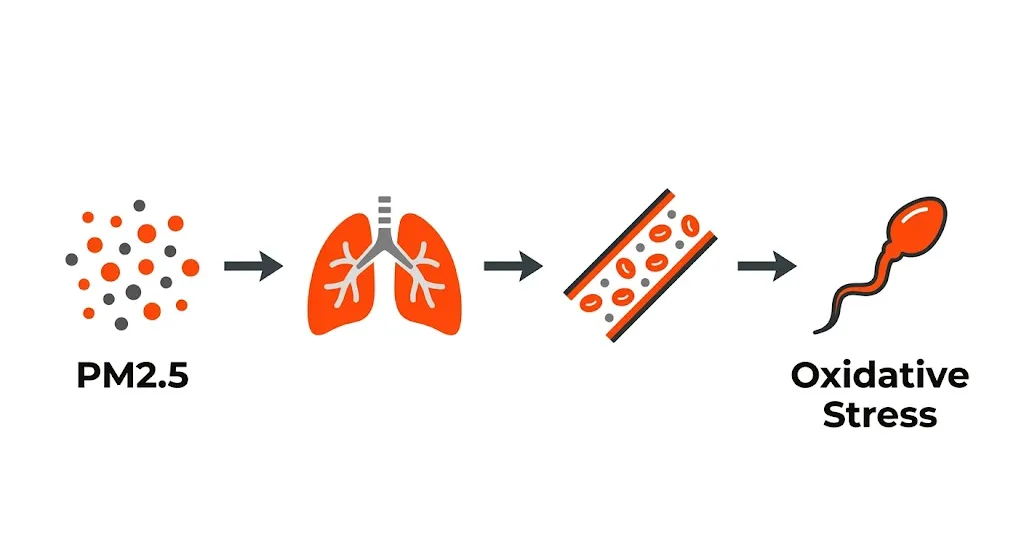
What Air Pollution Actually Does to Sperm: The Simple Version
AQI (Air Quality Index) is a composite score that reflects the concentration of multiple pollutants: PM2.5, PM10, nitrogen dioxide (NO2), ozone (O3), sulphur dioxide (SO2), and carbon monoxide (CO). PM2.5 — particulate matter with a diameter of 2.5 micrometres or less — is the fraction most relevant to sperm health because its small size allows it to penetrate lung tissue, enter the bloodstream, and reach organs that larger particles cannot access.
The testes are particularly vulnerable because sperm production (spermatogenesis) is a continuous, metabolically intense process. Cells that divide and differentiate rapidly are more susceptible to oxidative damage than stable tissue. When PM2.5 reaches testicular circulation, it triggers the release of reactive oxygen species (ROS) — unstable molecules that damage cell membranes, proteins, and DNA.
A useful comparison: think of ROS like rust forming on metal. A small amount of oxidative activity is normal and even necessary for cellular signalling. But continuous high-level pollution creates a rust load that the body’s antioxidant defences cannot keep up with. The result is structural damage to sperm cells that accumulates over the 74-day production cycle.
In the Indian context, this issue is poorly communicated. Men who ask doctors about fertility are rarely asked about air quality exposure as a variable. Pollution is accepted as a background fact of life in most Indian cities rather than as an active health exposure with measurable biological consequences.
How Different Air Pollutants Affect Sperm Quality
How Does PM2.5 Specifically Damage Sperm?
PM2.5 is the most studied and most damaging air pollutant for male reproductive health. A 2021 meta-analysis published in Environment International reviewed data from 13 studies across China, Europe, and the United States and found that each 10 micrograms per cubic metre increase in annual PM2.5 exposure was associated with a 1.29% decrease in sperm concentration and a measurable reduction in total motile sperm count.
Delhi’s winter PM2.5 averages frequently exceed 200 to 300 micrograms per cubic metre for weeks at a time. At 200 micrograms per cubic metre above the WHO baseline, that association projects to a 20 to 25% reduction in sperm concentration from PM2.5 exposure alone.
PM2.5 particles carry adsorbed chemicals including polycyclic aromatic hydrocarbons (PAHs) and heavy metals. These compounds are endocrine disruptors — they interfere with testosterone signalling and the hormonal cascade that drives spermatogenesis. The physical particle and the chemical cargo it carries both contribute to damage.
Verdict: The single most documented pollutant for sperm damage. Cumulative, dose-dependent, and clinically significant at Delhi’s ambient levels.
Does Nitrogen Dioxide from Delhi’s Traffic Affect Sperm Health?
Nitrogen dioxide (NO2) is produced primarily by vehicle combustion engines. Delhi’s traffic density means NO2 levels in central areas and near highways regularly exceed safe thresholds, particularly during peak hours and winter inversions.
NO2 generates nitrosative stress, a process similar to oxidative stress, that damages sperm mitochondria. Sperm motility is entirely dependent on mitochondrial function — the tail of a sperm cell is powered by ATP produced in the midpiece mitochondria. Mitochondrial damage from NO2 exposure directly translates to reduced progressive motility, meaning the sperm’s ability to swim in a straight line toward the egg.
A 2017 study in Human Reproduction found that men living in high-traffic areas had significantly lower sperm progressive motility and higher rates of abnormal sperm morphology compared to men in low-traffic areas, after controlling for smoking, BMI, and dietary factors.
Verdict: Highly relevant for men commuting daily in Delhi’s traffic or living near major roads. Affects motility more directly than count.
How Do Heavy Metals in Delhi’s Air Affect Sperm DNA?
Delhi’s air carries lead, cadmium, arsenic, and manganese from vehicle exhaust, industrial emissions, and waste burning. These metals accumulate in testicular tissue over time and are not easily eliminated. Lead in particular has been shown to concentrate in semen at levels that directly correlate with serum blood lead levels.
Sperm DNA fragmentation (SDF) — the percentage of sperm with broken or damaged DNA strands — is the parameter most affected by heavy metal exposure. Normal SDF is below 15%. SDF above 25% is associated with significantly reduced natural conception rates and higher IVF failure rates, even when sperm count and motility appear normal on a standard semen analysis.
This is the part that catches most men off guard. A standard semen analysis at an Indian fertility clinic measures count, motility, and morphology. It does not measure DNA fragmentation unless specifically requested. A man can have a “normal” semen analysis and still have SDF levels that significantly reduce fertility due to pollution-related DNA damage.
Verdict: Long-term risk that a standard semen analysis will not detect. Men who have been urban-dwelling for years should specifically ask for SDF testing.
Does AQI Affect Sperm Health Through Hormonal Disruption?
Air pollutants function as endocrine-disrupting chemicals (EDCs) — compounds that mimic or block hormone signalling. PAHs and certain heavy metals mimic oestrogen and interfere with androgen (testosterone) receptor function. Chronic EDC exposure suppresses the hypothalamic-pituitary-gonadal (HPG) axis, the hormonal cascade that signals the testes to produce both testosterone and sperm.
This creates a direct link between air pollution and declining testosterone. The sperm damage and the hormonal suppression are not separate problems. They are two expressions of the same underlying mechanism: sustained oxidative and endocrine disruption from environmental exposure.
For men who are already dealing with signs of low testosterone, living in a high-pollution environment is an active ongoing stressor on the same hormonal system. Addressing lifestyle factors while ignoring pollution exposure is addressing the symptom while leaving a significant cause in place.
Verdict: Significant and underappreciated. Pollution-driven hormonal disruption compounds every other testosterone and fertility concern simultaneously.
Air Pollutant Impact on Sperm Quality: Comparison Table
| Pollutant | Primary Mechanism | Sperm Parameter Most Affected | Onset of Damage | Partially Reversible? | Verdict |
|---|---|---|---|---|---|
| PM2.5 | Oxidative stress, ROS generation | Concentration, DNA integrity | 74-day sperm cycle | Yes, with antioxidants | Most damaging overall |
| Nitrogen Dioxide (NO2) | Nitrosative stress, mitochondrial damage | Progressive motility | Weeks to months | Partially | High-traffic exposure risk |
| Lead (heavy metal) | DNA fragmentation, testicular accumulation | DNA fragmentation (SDF) | Months to years | Poorly reversible | Missed by standard analysis |
| PAHs (on PM2.5) | Endocrine disruption, oestrogen mimicry | Morphology, hormone levels | Months | Partially | Underdiagnosed mechanism |
| Ozone (O3) | Systemic oxidative stress | Motility, viability | Acute and chronic | Yes, with reduced exposure | Seasonal concern (summer) |
How Quickly Does Pollution Damage Sperm — and How Long Does Recovery Take?
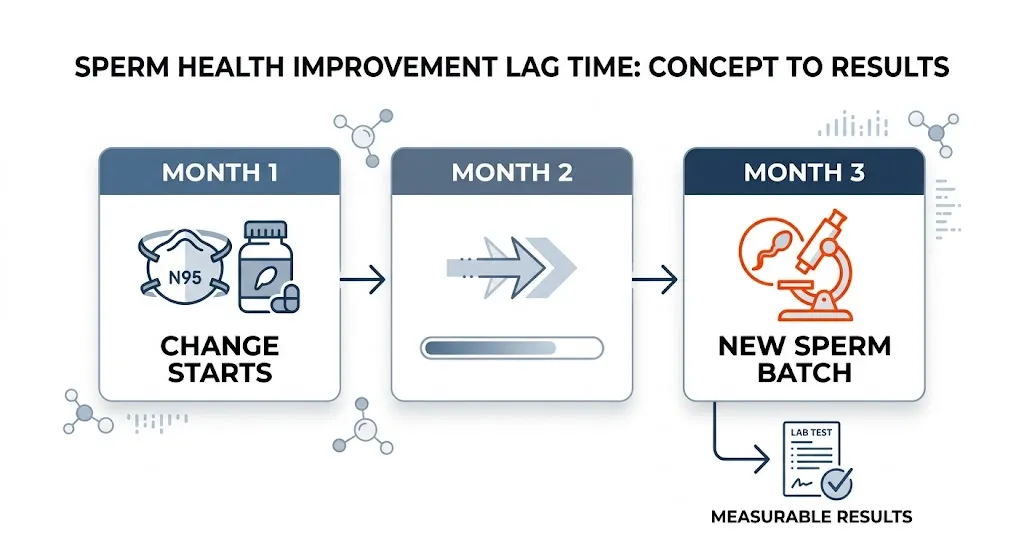
Spermatogenesis, the process of producing a mature sperm cell from a stem cell, takes approximately 72 to 74 days in humans. This means the sperm in a man’s ejaculate today reflects his cellular environment from roughly 2.5 months ago. Exposure to a severe pollution event in November affects sperm quality in January, not immediately.
The practical implication: if a man reduces his pollution exposure — relocates temporarily, uses N95 masks consistently, or supplements with targeted antioxidants — improvements in sperm quality will not appear on a semen analysis for at least 3 months. Many men test after 4 to 6 weeks of lifestyle changes, see no improvement, and conclude the changes were not working. The timeline simply does not support that conclusion.
Recovery from pollution-related sperm damage depends on the type of damage. Oxidative damage to sperm membranes and mitochondria is substantially reversible over 2 to 3 sperm cycles (approximately 5 to 6 months) with sustained antioxidant support and reduced exposure. DNA fragmentation from heavy metal accumulation is less reversible because heavy metals persist in testicular tissue for much longer.
For men actively trying to conceive, the relevant window is the 3 months before attempting conception. Interventions started earlier than that compound over the full production cycle and are more likely to produce meaningful improvement on a test.
What the Research Actually Shows About Pollution and Male Fertility
The evidence base here is stronger than most people realise, and it has been building rapidly since 2015.
A landmark cohort study published in Occupational and Environmental Medicine (2016) followed 6,475 men in China across regions with varying air pollution levels and found that men in the highest PM2.5 quartile had a 26% higher risk of below-normal sperm concentration compared to men in the lowest quartile, after adjusting for age, BMI, smoking, and alcohol.
“Ambient air pollution, even at concentrations below current regulatory standards in some countries, may adversely affect human semen quality.” — Liao et al., Environment International, 2021
A separate analysis from the US Environment and Reproductive Health study published in Human Reproduction (2015) found that men with higher residential PM2.5 exposure had significantly lower sperm motility and a higher proportion of morphologically abnormal sperm, independent of lifestyle variables.
The honest reality check: most of this research is observational, not experimental. You cannot ethically assign men to live in polluted cities for 5 years to measure the effect. But the biological mechanism is clear, the signal is consistent across multiple countries and populations, and the effect sizes are not trivial. Waiting for a perfect randomised controlled trial before taking this seriously is not a rational position given what the current evidence already shows.
Practical Concerns and What Delhi Men Specifically Need to Know
The most practical problem in the Indian context is awareness. Most men in Delhi know the air is bad. Very few connect that knowledge to sperm health, testosterone, or fertility in any concrete way.
N95 respirators filter approximately 95% of PM2.5 particles and are the only meaningful mechanical barrier during commuting or outdoor exercise. Standard surgical masks filter roughly 50 to 60% of PM2.5 at best. Cloth masks provide minimal PM2.5 protection. Using a surgical mask and believing you are adequately protected from PM2.5 is a false sense of security that matters for real biological exposure.
Outdoor exercise during high-AQI periods is a specific concern for gym-goers. Running outdoors when Delhi’s AQI is above 150 significantly increases pollution inhalation because exercise increases respiratory rate 3 to 5 times above resting levels, dramatically increasing the volume of polluted air entering the bloodstream. Training indoors with HEPA-filtered air is meaningfully better during winter months.
Home air purifiers with HEPA filters reduce indoor PM2.5 by 50 to 80% depending on room size and filter quality. Budget-friendly options from brands like Xiaomi and Philips are available in India at Rs. 5,000 to 15,000 — a fraction of what any fertility treatment costs.
Cigarette smoking multiplies the oxidative stress from ambient pollution. A man who smokes in Delhi is not experiencing additive damage. The effects compound. Stopping smoking is the single highest-impact individual intervention available in this context.
Who Needs to Act Most Urgently — and What to Do
If you are planning to conceive in the next 6 to 12 months
Start now, not the month before you start trying. The 74-day sperm cycle means interventions need at least 3 months of consistency to show up in results. Get a semen analysis with DNA fragmentation specifically requested — it costs Rs. 2,000 to 4,000 at most diagnostic labs in Delhi. Supplement with antioxidants: Vitamin C at 500mg, Vitamin E at 400 IU, CoQ10 at 200mg, and zinc at 25mg daily. This combination has the best evidence for reducing ROS-related sperm damage.
If you have been living in Delhi for more than 3 years
Your cumulative exposure is real and worth taking seriously regardless of immediate fertility plans. Get a baseline semen analysis with SDF testing. The result tells you whether chronic exposure has caused measurable damage. If SDF is above 25%, act on it now rather than when you are actively trying to conceive and under time pressure.
If you train outdoors regularly in Delhi
Shift outdoor training to indoor alternatives during the October to February period when Delhi’s AQI is consistently in the hazardous range (AQI 300 plus). A 45-minute outdoor run in severe AQI conditions delivers more pollution load than hours of resting indoor exposure due to the respiratory amplification effect. This is not about permanently avoiding outdoor activity — it is about not amplifying the worst exposure windows.
If you are vegetarian or vegan
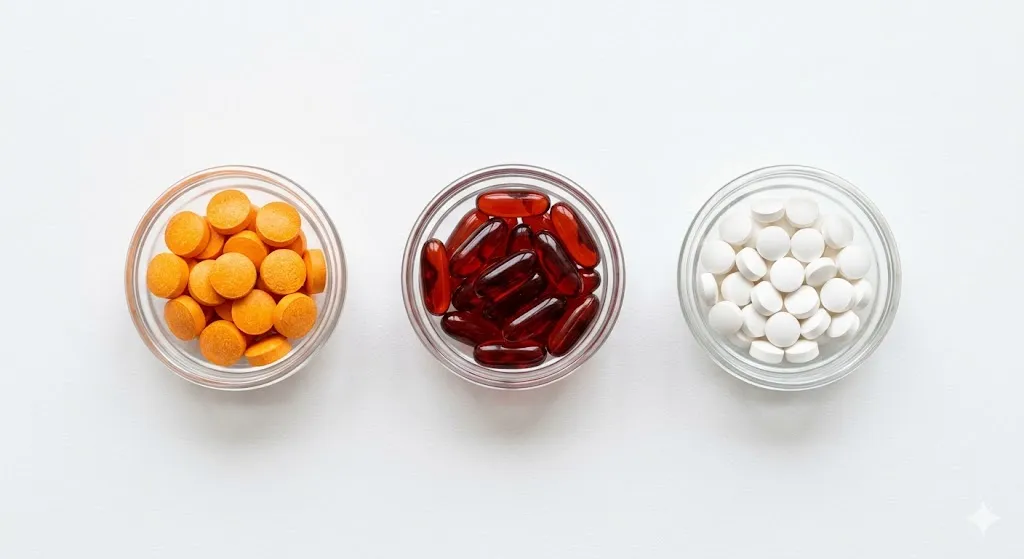
Your antioxidant nutrition deserves specific attention. Vitamin C, Vitamin E, and zinc are the primary dietary antioxidants that protect sperm from oxidative damage. Vegetarian diets can provide adequate C and E through fruits and vegetables, but zinc bioavailability from plant sources is 40 to 50% lower than from animal sources due to phytic acid binding. A zinc supplement at 25mg elemental zinc daily is reasonable if your diet is predominantly plant-based and you live in a high-pollution environment. Our article on best vegetarian protein sources in India covers zinc-rich plant options worth building into your diet.
If you have already been diagnosed with low sperm count or poor motility
Ask your urologist or andrologist specifically whether sperm DNA fragmentation has been measured and whether air pollution exposure has been discussed as a contributing variable. Most standard fertility evaluations in India do not include either. If SDF is elevated and you live in a high-pollution area, this connection is worth making explicitly before moving straight to assisted reproduction.
If fertility is the last thing on your mind right now
The sperm health picture still matters because of what it reflects about broader health. High oxidative stress, disrupted testosterone, and elevated DNA damage are not isolated to the reproductive system. They signal systemic physiological stress relevant to energy, mood, and long-term cardiovascular health. If your testosterone numbers look concerning, our guide on low testosterone in young men and this article are describing the same underlying environmental pressure from different angles.
Final Verdict
Delhi’s AQI does affect sperm health, and the evidence is strong enough to act on. The primary mechanism — PM2.5 driving oxidative stress and DNA damage in testicular tissue — is biologically clear, replicated across populations, and measurable in real clinical outcomes.
The practical hierarchy for men in Delhi and other high-pollution Indian cities: use N95 masks during outdoor exposure, avoid outdoor exercise on severe AQI days, run an air purifier at home, supplement with antioxidants, stop smoking if you smoke, and get a semen analysis with DNA fragmentation if you have been urban-dwelling for years.
None of this requires relocating or a dramatic lifestyle overhaul. The question is whether you take the problem seriously before it affects something you care about, or after.
If you are working on overall hormonal and reproductive health, our piece on signs of magnesium deficiency most people ignore is worth reading alongside this — magnesium plays a direct role in antioxidant enzyme function and its deficiency compounds oxidative damage from pollution exposure.
FAQ
Does living in Delhi actually lower sperm count, or is that exaggerated?
Living in Delhi is associated with measurably lower sperm count and quality based on multiple population studies. Men in cities with annual PM2.5 above 50 micrograms per cubic metre consistently show lower sperm concentrations, reduced motility, and higher DNA fragmentation rates compared to men in cleaner air environments, after controlling for lifestyle variables. Delhi’s annual PM2.5 average frequently exceeds 100 micrograms per cubic metre, placing it well into the range where research shows significant reproductive effects. This is not exaggerated. It is an underreported consequence of long-term urban air exposure.
Can wearing a mask protect sperm from AQI damage?
An N95 respirator can reduce PM2.5 inhalation by approximately 95% and meaningfully reduces the pollution load reaching your bloodstream during daily commuting and outdoor time. Standard surgical masks reduce PM2.5 exposure by 50 to 60% at best, and cloth masks offer minimal protection against fine particulate matter. Masks reduce new exposure but do not reverse existing damage. For men with years of prior urban exposure, addressing accumulated oxidative stress through antioxidant nutrition alongside mask use is the more complete approach.
Which antioxidants actually help with pollution-related sperm damage?
The combination with the strongest evidence for reducing oxidative damage to sperm is Vitamin C at 500mg daily, Vitamin E at 400 IU daily, CoQ10 at 200mg daily, and zinc at 25mg elemental daily. CoQ10 specifically protects sperm mitochondria and has been shown in a 2012 randomised trial in the Journal of Urology to improve both sperm motility and concentration in infertile men with high oxidative stress. These are not miracle supplements. They work by reducing the oxidative burden, and consistency over at least 3 months is required to see measurable results in a semen analysis.
Is Mumbai or Bangalore safer than Delhi for sperm health?
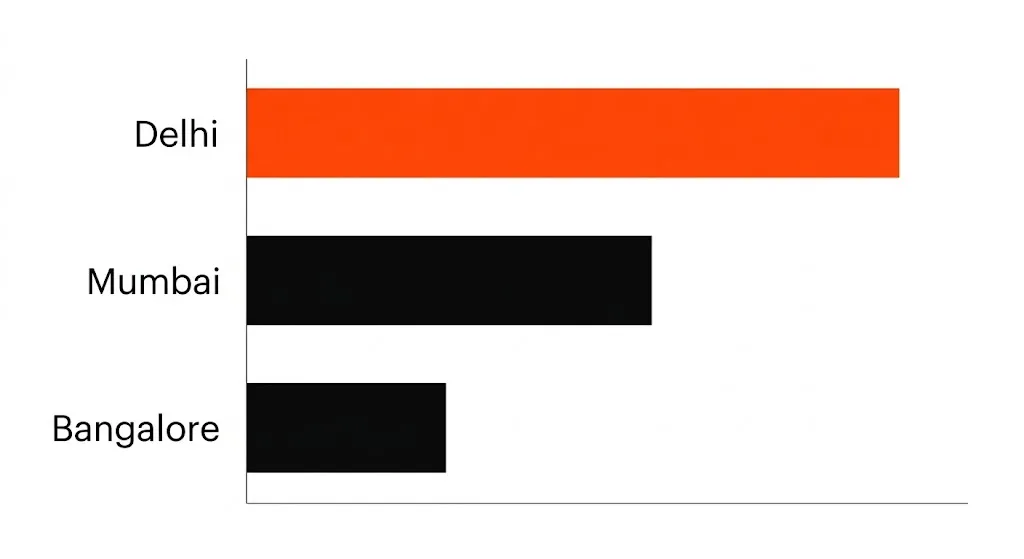
Relative to Delhi, yes. Mumbai’s annual PM2.5 typically runs 40 to 60 micrograms per cubic metre. Bangalore runs 20 to 40 micrograms per cubic metre. Both still exceed the WHO annual guideline of 5 micrograms per cubic metre and are associated with some degree of increased oxidative stress in male reproductive tissue. The risk is substantially lower than Delhi, Lucknow, or Patna, but it is not zero. Men in any Indian metro with consistent AQI above 100 should treat air quality as a relevant health variable.
Does pollution-related sperm DNA damage pass on to children?
Studies in animal models have shown that PM2.5-induced sperm DNA damage can lead to epigenetic changes affecting offspring development. Human data on transgenerational effects are limited but emerging. What is already established is that high sperm DNA fragmentation increases miscarriage rates and reduces IVF success rates. The intergenerational epigenetic question is scientifically real but not yet fully answered in humans. Reducing exposure and addressing oxidative stress is the practical response regardless of how that question eventually resolves.
I got a normal semen analysis. Does that mean pollution has not affected me?
Not necessarily. A standard semen analysis measures sperm count, motility, and morphology. It does not measure sperm DNA fragmentation, which is the parameter most directly affected by oxidative stress from air pollution. A man can have a completely normal count and motility with SDF above 25%, which is the threshold associated with significantly reduced natural conception rates and increased miscarriage risk. If you have been living in a high-pollution city for years, a standard normal semen analysis is reassuring but not a complete picture.
How long does it take to improve sperm quality after reducing pollution exposure?
Because spermatogenesis takes approximately 74 days from stem cell to mature sperm, any intervention requires a minimum of 3 months before its effect appears in a semen analysis. A realistic improvement window is 3 to 6 months of consistent effort including reduced exposure and antioxidant supplementation. Men who test at 4 to 6 weeks and see no change are testing too early. The biological timeline is fixed and cannot be compressed by taking more supplements or making more aggressive changes.
You Live Here. Act Like It Matters.
The pollution is not disappearing soon. What you eat, whether you supplement with antioxidants, whether you train indoors during severe AQI days, whether you run a HEPA filter at home — those are inside your control and they move the needle on real biological outcomes.
If you have been living in Delhi or another high-pollution metro for more than two or three years and have never had your sperm quality checked, this is a reasonable prompt to go get that done. Not out of alarm. Out of knowing where you actually stand.
Share in the comments if you have had a semen analysis done or if you have made specific changes based on AQI concerns. What did you find? What actually worked?
Sources and References
- Liao C, Li Y, Tjong SC. Reported biological links between PM2.5 and semen quality: a systematic review and meta-analysis. Environment International. 2021;155:106681. https://pubmed.ncbi.nlm.nih.gov/33993052/
- Xiao-Ling H, Ying-Ying L, Xiao-Dong X, et al. Effect of long-term exposure to ambient air pollution on semen quality: a cross-sectional study in 6475 healthy men. Occupational and Environmental Medicine. 2016;73(7):462-469. https://pubmed.ncbi.nlm.nih.gov/26740026/
- Gaskins AJ, Mínguez-Alarcón L, Bhatt DL, et al. Residential proximity to major roadways and traffic and semen quality parameters in the EARTH study. Human Reproduction. 2017;32(5):1062-1070. https://pubmed.ncbi.nlm.nih.gov/28938741/
- Wu H, Estill MS, Shershebnev A, et al. Preconception urinary phthalate concentrations and sperm DNA methylation profiles among men undergoing IVF treatment. Human Reproduction. 2015;32(11):2159-2169. https://pubmed.ncbi.nlm.nih.gov/25904637/
- Lafuente R, González-Comadrán M, Solà I, et al. Coenzyme Q10 and male infertility: a meta-analysis. Journal of Assisted Reproduction and Genetics. 2013;30(9):1147-1156. https://pubmed.ncbi.nlm.nih.gov/23912751/
- Sharma R, Agarwal A, Rohra VK, et al. Effects of increased paternal age on sperm quality, reproductive outcome and associated epigenetic risks to offspring. Reproductive Biology and Endocrinology. 2015;13:35. https://pubmed.ncbi.nlm.nih.gov/25928123/
- Hamada A, Esteves SC, Agarwal A. Sperm DNA fragmentation and its impact on male infertility. Asian Journal of Andrology. 2011;13(1):29-34. https://pubmed.ncbi.nlm.nih.gov/21057526/
- WHO Global Air Quality Guidelines: Particulate matter (PM2.5 and PM10), ozone, nitrogen dioxide, sulfur dioxide and carbon monoxide. World Health Organization. 2021. https://www.who.int/publications/i/item/9789240034228
- Central Pollution Control Board (CPCB), India. National Air Quality Index city-level data reports. https://cpcb.nic.in/
- Benedetti D, Nunes E, Sarmento M, et al. Genetic damage in semen samples from men living in a highly polluted urban environment. Environmental Science and Pollution Research. 2013;20(10):7368-7375. https://pubmed.ncbi.nlm.nih.gov/23661262/