
Shilajit is not a harmless ancient tonic that works for everyone with zero consequences. The side effects are real, and they range from mild digestive upset to serious heavy metal toxicity when the product is poorly sourced or unpurified. Most articles about shilajit spend 90 percent of the word count glorifying its benefits and maybe one paragraph vaguely mentioning “consult a doctor.” That is a dangerous omission. Shilajit can absolutely cause harm, and understanding those risks before you take it is not optional.
For the leanfuel.in reader in India, where shilajit is sold everywhere from high-end Ayurvedic stores to roadside stalls and Instagram ads with zero quality control, the gap between what is promised and what is actually inside the jar is wider than most people want to believe. The conversation around shilajit has become so marketing-heavy that the average buyer assumes it is as safe as a multivitamin. It is not. Shilajit is a concentrated resin collected from rocks in mountainous regions, and its safety depends entirely on how it was processed, purified, and tested. Skip that part, and you are gambling with your liver, your kidneys, and your hormonal balance.
The part most people get wrong is assuming that “natural” means “safe.” Raw shilajit, the kind sometimes sold directly by local collectors without any purification, contains contaminants that can accumulate in your body over months and years. Even processed shilajit from reputable brands carries risks for specific groups of people. Knowing which risks apply to you is how you make a decision that does not backfire.
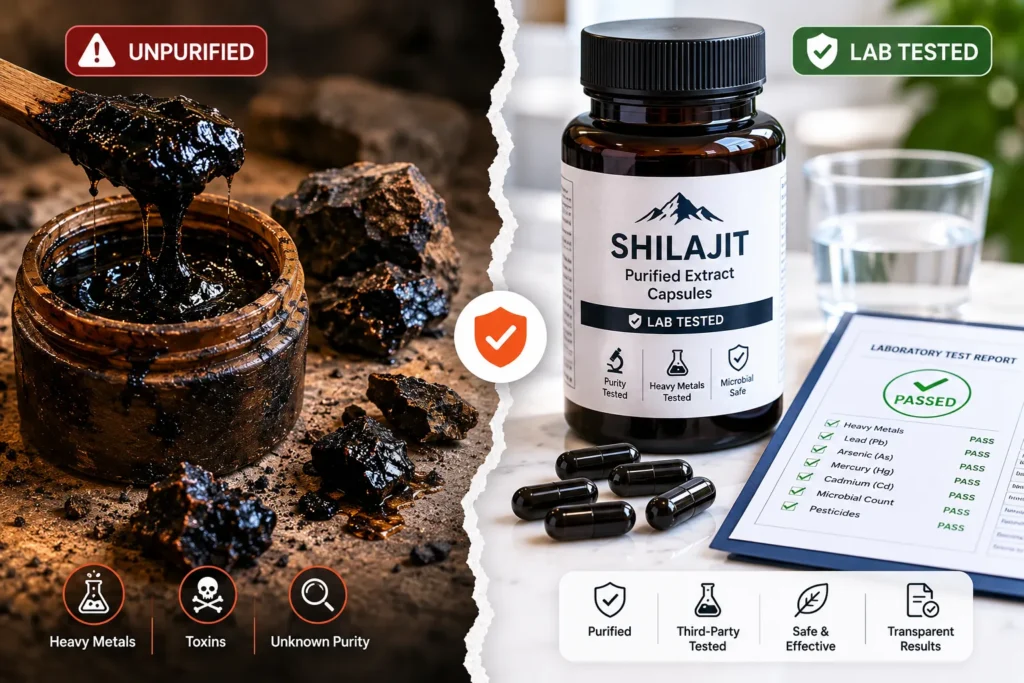
What You Need to Know Before Taking Shilajit
- Unpurified shilajit can contain dangerous levels of heavy metals including lead, arsenic, and mercury, which can cause long-term organ damage.
- Shilajit can lower blood pressure, making it potentially unsafe for anyone already taking blood pressure medication or with naturally low blood pressure.
- Some people experience allergic reactions to shilajit, ranging from mild skin rashes to more serious respiratory symptoms.
- Shilajit may increase testosterone levels, which sounds good in theory but can cause acne, mood swings, and hair thinning in susceptible individuals.
- Digestive side effects including nausea, diarrhea, and stomach cramps are common when starting shilajit, especially at higher doses.
Why Most People Don’t Hear About Shilajit’s Dark Side
The shilajit conversation online is dominated by sellers. Most of the content you find when you search for shilajit benefits is written by brands that sell it, affiliates who earn commissions from it, or influencers who received a free jar. None of them have an incentive to spend much time on the side effects. The result is a one-sided narrative that makes shilajit sound like a miracle substance with no downside.
The reality is that shilajit is a complex substance with over 85 minerals and a high concentration of fulvic acid, which is what gives it its reported health effects. But that same complexity makes it unpredictable. Fulvic acid is a natural chelator, meaning it can bind to minerals and help transport them into cells. That is great if the minerals are beneficial. It is terrible if the minerals are toxic heavy metals that should not be entering your cells in the first place.
In India specifically, the shilajit market is a regulatory blind spot. Genuine purified shilajit from reputable Ayurvedic pharmacies is tested for heavy metals and standardized for fulvic acid content. That kind of product is expensive and hard to find. What dominates the market instead is cheap shilajit resin sold in unmarked jars, often by the gram, with no certificate of analysis, no heavy metal testing report, and no indication of where the raw material actually came from. Some of it is authentic shilajit that simply skipped the purification step. Some of it is not shilajit at all but a mixture of resins and dark powders designed to look convincing. In either case, the risk of contamination is real and the consumer has no way of verifying safety from the label alone.
The Side Effects That Actually Show Up in Real People
Heavy metal toxicity from unpurified shilajit is not a theoretical concern. It has been documented in Ayurvedic products and shilajit is one of the substances most at risk.
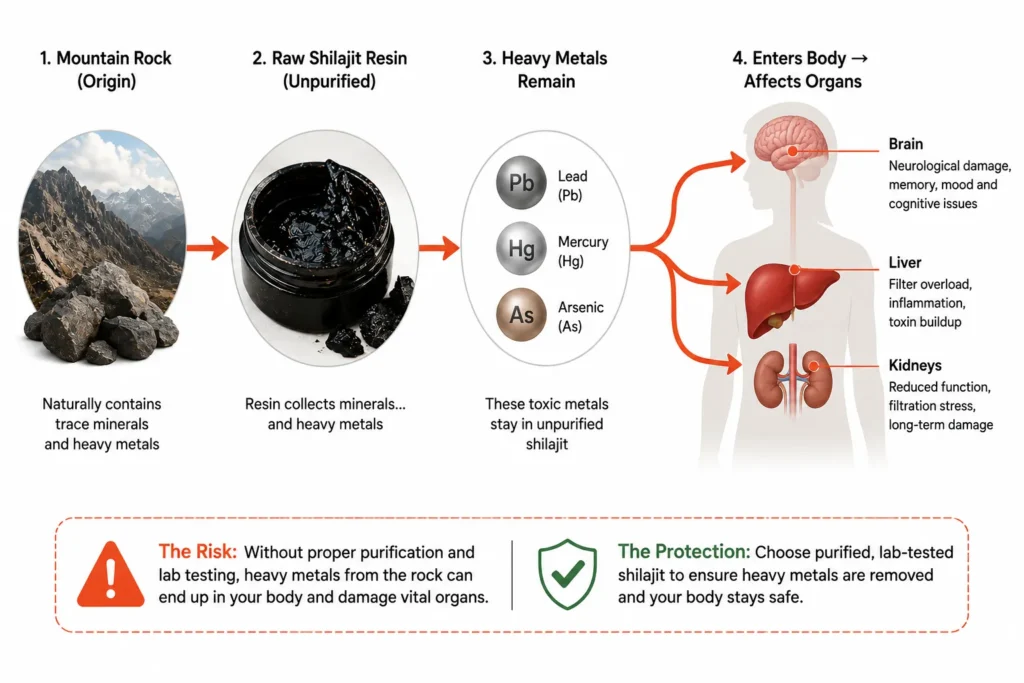
A landmark study published in JAMA in 2004 tested Ayurvedic medicines manufactured in India and sold online in the United States. The researchers found that one-fifth of the products contained detectable levels of lead, mercury, or arsenic. Shilajit was not the only substance tested, but as a mineral pitch collected directly from rock crevices in the Himalayas, Altai, and Caucasus mountains, it naturally picks up whatever metals are present in the surrounding geology. Without proper purification, those metals stay in the final product. When you consume that shilajit daily, thinking you are improving your health, you are slowly accumulating heavy metals in your bones, brain, and organs.
Symptoms of chronic low-level heavy metal exposure are vague and easy to dismiss. Fatigue that does not improve with rest. Brain fog that you blame on stress. Digestive issues that come and go. Joint pain that you assume is from your workout. By the time a blood test reveals elevated lead or mercury levels, months or years of damage may have already occurred. The kidneys and liver take the brunt of the burden, and if those organs are already under strain from other factors like poor diet, alcohol, or medications, the added load from contaminated shilajit can push them into dysfunction.
Shilajit can drop your blood pressure enough to cause dizziness, fainting, or dangerous interactions with blood pressure medication.
Shilajit contains fulvic acid and other compounds that promote nitric oxide production. Nitric oxide relaxes blood vessels and lowers blood pressure, which is why some studies have investigated shilajit for managing hypertension. If your blood pressure is already normal or low, this vasodilation effect can push it into a range where you feel lightheaded when standing up, tired during the day, and unable to exercise without feeling faint. If you are taking prescription antihypertensives, the combined effect can cause a sudden, potentially dangerous blood pressure crash.
This effect is often framed as a benefit. For someone with uncontrolled high blood pressure and no medication, that might be true. For the average person who simply wants more energy and better workouts, an unintended drop in blood pressure is the opposite of helpful.
Digestive side effects are the most common complaint among first-time shilajit users.
Nausea, stomach cramps, loose stools, and a general feeling of digestive unease are frequently reported, especially in the first week of use. The most likely reason is the high mineral and fulvic acid content, which can irritate the gut lining if the body is not accustomed to it. Some people also react poorly to the resin base itself. Starting with a very small dose, roughly 100 mg instead of the standard 300 to 500 mg, and taking it with food can reduce these symptoms significantly. If they persist beyond two weeks, shilajit is probably not right for your digestive system.
Shilajit can raise testosterone, which sounds good until it causes acne, aggression, and hair thinning.
A 2016 clinical study published in Andrologia found that men who took 500 mg of purified shilajit daily for 90 days experienced a significant increase in total testosterone and free testosterone compared to placebo. For men with clinically low testosterone, this can be a genuine benefit. For men whose testosterone is already in the normal range, artificially pushing it higher can cause androgenic side effects. Acne breakouts, particularly on the back and shoulders, are common. Some men report increased irritability or a shorter temper. And if you are genetically prone to male pattern baldness, elevated testosterone provides more substrate for the conversion to dihydrotestosterone, or DHT, which is the hormone that shrinks hair follicles.
These side effects are not dangerous in the same way heavy metals are dangerous, but they are real and they can be distressing. Nobody likes waking up to a face full of acne in their late twenties because they thought a supplement would give them better energy.
Shilajit Source Quality and Side Effect Risk
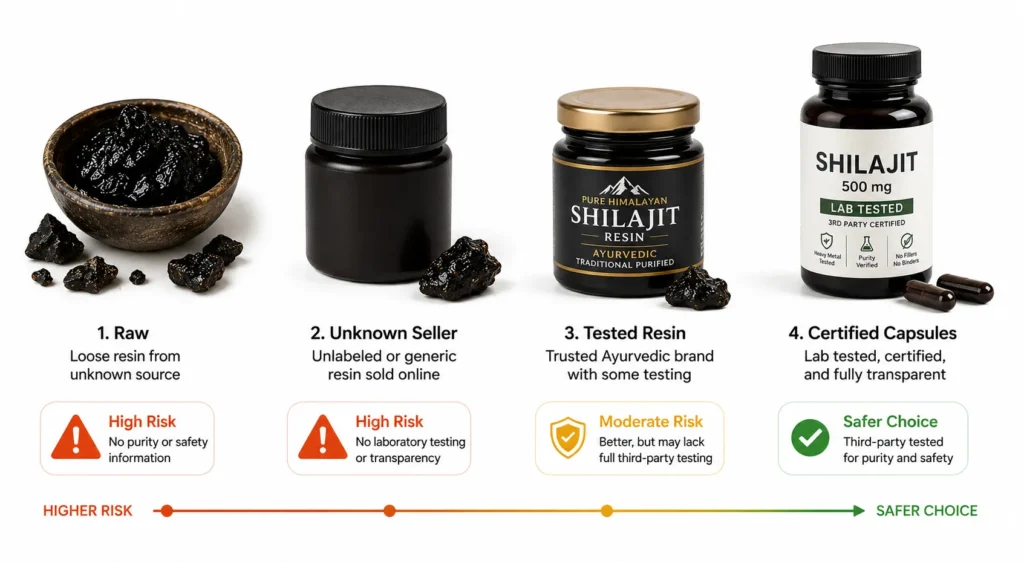
| Source Type | Heavy Metal Risk | Purification Level | Side Effect Likelihood | Price Range (per gram) | Verdict |
|---|---|---|---|---|---|
| Raw, unprocessed resin from local collectors | Very high | None | High, unpredictable | ₹50–₹150 | Avoid completely |
| Mass-market resin from unknown online sellers | High | Minimal or none | High, digestive plus toxicity risk | ₹100–₹300 | High risk, avoid |
| Branded Ayurvedic pharmacy resin with lab testing | Low if tested | Standardized purification | Moderate, mostly digestive | ₹400–₹800 | Safer option, check reports |
| Purified shilajit capsules from reputable brand | Very low if tested | Full purification, standardized fulvic acid | Low to moderate | ₹500–₹1,000+ | Safest choice for beginners |
| Imported shilajit from Himalayan sources with third-party certification | Low | High | Low | ₹800–₹1,500+ | Best quality, highest cost |
How Your Body Responds to Shilajit and Why That Can Go Wrong
Shilajit’s primary active component is fulvic acid, a low-molecular-weight organic acid that acts as a natural chelator. Chelation means the fulvic acid binds to minerals and other compounds and transports them across cell membranes more efficiently than they would cross on their own. This is the mechanism behind shilajit’s reputed ability to improve nutrient absorption and energy production at the mitochondrial level.
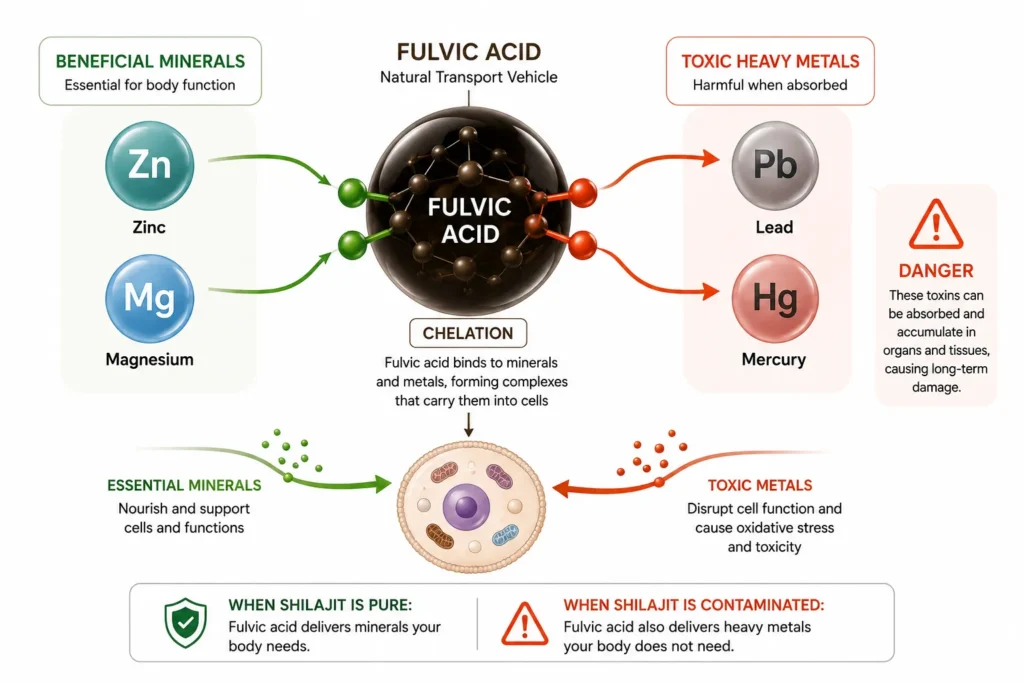
The problem is that fulvic acid does not discriminate between beneficial minerals like zinc and toxic minerals like lead. If the shilajit contains contaminants, the fulvic acid will actively help those contaminants enter your cells. This is why unpurified shilajit is so much more dangerous than, say, eating a vegetable that happened to be grown in soil with some heavy metals. The chelation effect amplifies absorption of whatever is in the resin.
Shilajit also contains dibenzo-alpha-pyrones, which are compounds that support mitochondrial function. This is generally positive but puts additional demand on the body’s antioxidant systems. If those systems are already taxed by poor diet, stress, or environmental pollution, the sudden increase in mitochondrial activity can temporarily worsen oxidative stress before it improves. Some of the initial fatigue people feel when starting shilajit may be related to this adaptation period.
Timing matters for managing side effects. Taking shilajit on an empty stomach increases the likelihood of nausea and digestive upset because the fulvic acid and minerals hit the gut lining directly. Taking it with a small amount of food, ideally in the morning or early afternoon, reduces digestive side effects without significantly impairing absorption. Do not take shilajit late in the evening, because the mild stimulatory effect on mitochondrial energy production can interfere with sleep in some people.
What the Research Actually Says About Shilajit Safety
The research on shilajit’s benefits is modest but real. The research on its side effects is thin. This is not because side effects do not exist. It is because the studies that exist are short-term, use purified standardized extracts, and exclude participants with underlying health conditions. The average real-world user does not match those conditions.
The 2016 Andrologia study on testosterone mentioned earlier used a purified shilajit preparation and reported no significant adverse events over 90 days. That tells you that purified shilajit at 500 mg per day is well tolerated in healthy men over a three-month period. It does not tell you what happens after a year of use. It does not tell you what happens with unpurified shilajit, which is what a large number of Indian consumers end up buying because it is cheaper.
A comprehensive review published in the Journal of Ethnopharmacology in 2012 examined the traditional uses and pharmacological properties of shilajit and noted that while fulvic acid toxicity is rare, the primary safety concern is contamination with heavy metals, free radicals, and fungal toxins if the raw material is not properly processed. The review emphasized that purification is not optional for safe consumption.
“The major safety issue related to Shilajit use is the presence of heavy metal ions, free radicals, and fungal toxins in unpurified or improperly purified preparations.” — Agarwal et al., Journal of Ethnopharmacology, 2012
This is not a minor footnote. It is the core safety finding, and it directly contradicts the way shilajit is marketed across most of India today. The cheap products that dominate the market are the exact kind the research warns against.
What Nobody Mentions in the First 5 Articles You Read
Heavy metals are the headline risk, but they are not the only one. People with gout or high uric acid levels should be cautious with shilajit because the high mineral content, particularly iron and certain other trace elements, can theoretically increase purine metabolism and trigger flare-ups. This is not well studied, but clinicians who work with Ayurvedic medicine often advise patients with gout to avoid shilajit or use it only under close supervision.
People with kidney disease or reduced kidney function should avoid shilajit entirely. The kidneys process and excrete the minerals and fulvic acid metabolites in shilajit. If kidney function is impaired, those substances can accumulate and cause toxicity even if the product itself is pure. This is not a supplement to experiment with if your kidney function tests have ever come back abnormal.
In India, the practice of dissolving shilajit resin in hot milk and consuming it daily, often in the morning, can mask the early signs of digestive intolerance. Milk coats the stomach and can reduce the immediate nausea, but it does not eliminate the underlying problem if the shilajit is low quality or the dose is too high. Some people compound this by adding honey, ghee, or other ingredients, thinking they are enhancing the effect, when they are actually just making it harder to identify what is causing the stomach upset.
How to Know If Shilajit Is Safe for Your Situation
If you have high blood pressure or are on blood pressure medication.
Do not take shilajit without talking to your doctor first. The blood pressure lowering effect is real and can interfere with your medication dose. If you take both and your blood pressure drops too low, you may not notice until you stand up too fast and find yourself on the floor.
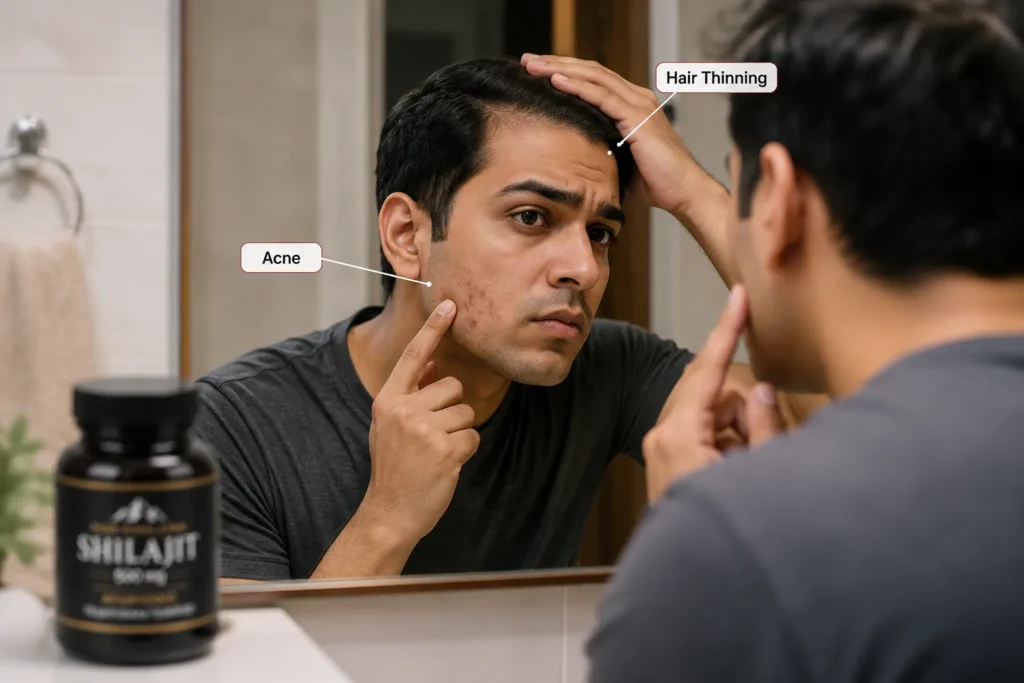
If you have a history of acne, oily skin, or hair thinning.
Shilajit’s testosterone-boosting effect can make these conditions worse. This is not a universal reaction, but it is common enough that you should watch for it carefully. If you start shilajit and notice increased breakouts within two to three weeks, the shilajit is the likely cause.
If you are buying shilajit from a local shop, a street vendor, or an unknown online seller with no lab testing reports.
Do not buy it. The price is low because the purification was skipped. The long-term cost of heavy metal accumulation in your body is not worth the short-term savings. A good shilajit product comes with a certificate of analysis from a third-party lab that specifically tests for lead, arsenic, mercury, and cadmium. If the seller cannot produce that certificate, walk away.
If you are on a tight budget and want a safe energy and performance supplement.
Shilajit is the wrong choice. The risk of getting a contaminated product at a low price point is too high. Instead, focus on fixing common nutrient deficiencies that cause fatigue. Sometimes low energy is a sign of magnesium deficiency, not something shilajit will fix. The 7 Signs of Magnesium Deficiency Most People Ignore article covers what to look for, and supplementing with a clean magnesium glycinate product is cheaper and safer than gambling on low-grade shilajit. For a broader comparison of mineral supplements, the Magnesium vs Zinc guide helps you figure out which mineral you actually need.
If you are a complete beginner to supplements and want something natural for energy.
Start with basics like sleep, hydration, and a good diet before reaching for shilajit. If you still want to try it, buy the smallest quantity from a reputable Ayurvedic pharmacy that provides a heavy metal testing report. Start with 100 mg per day, which is roughly the size of a grain of rice, and take it with food. Watch for nausea, skin changes, and any unusual fatigue. Give it two weeks before increasing the dose. Your body will tell you clearly whether shilajit agrees with you, and you should listen.
The Bottom Line
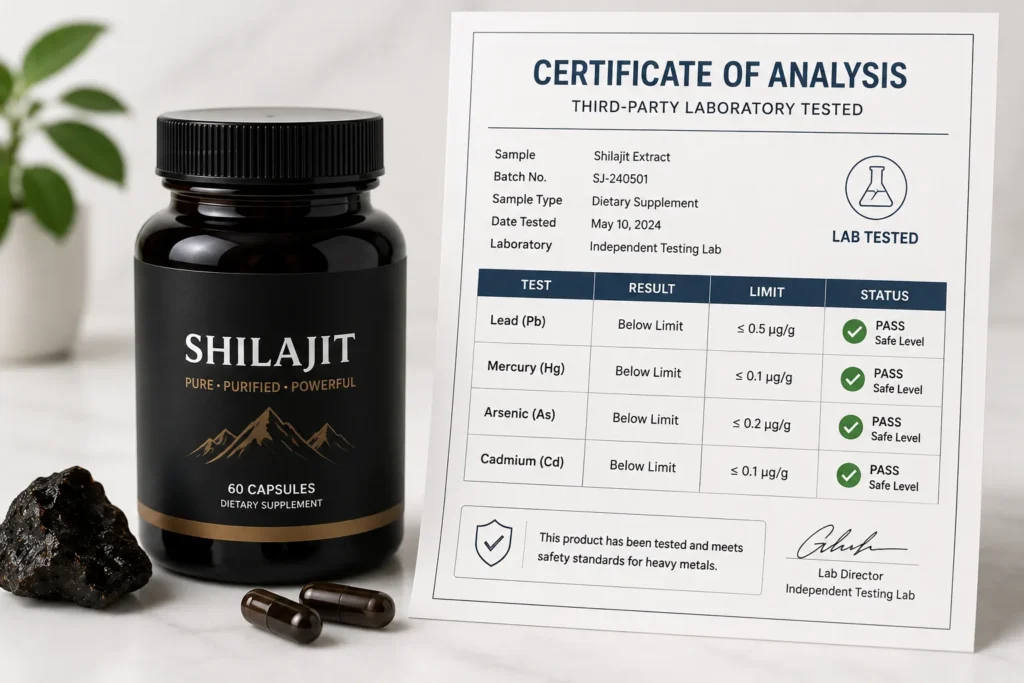
Shilajit is not a casual supplement. It can offer real benefits when it is purified, tested, and taken at the right dose by the right person. It can also cause heavy metal poisoning, hormonal disruption, and chronic digestive distress when it is not. The difference between those two outcomes is not visible to the naked eye. You cannot look at a jar of dark resin and know whether it is safe. You can only rely on third-party lab testing and a brand’s willingness to share those results publicly.
Most cheap shilajit sold in India is not safe. That is not an exaggeration. The regulatory framework is weak, the supply chain is opaque, and the incentives favor cutting corners. If you cannot afford properly tested shilajit from a reputable source, you are better off not taking it at all. The upside of a cheaper product is never worth the downside of slowly poisoning yourself with heavy metals. Nobody will warn you about this when you are scrolling through product listings with thousands of positive reviews. The reviews were written by people who have not had their blood tested for lead. Be smarter than the reviews.
People Also Ask
Can shilajit cause liver damage?
Yes, shilajit can potentially cause liver damage if it is unpurified and contaminated with heavy metals or fungal toxins. The liver is the body’s primary detoxification organ, and a steady intake of lead, arsenic, or aflatoxins from poorly processed shilajit can overwhelm it over time. Purified shilajit from reputable sources is unlikely to cause liver issues in healthy individuals, but anyone with existing liver conditions should avoid it unless medically supervised.
Is shilajit safe to take every day long-term?
Daily long-term use is safe only if the shilajit is properly purified and free from heavy metals and contaminants. Even then, most clinical studies have only tracked users for three to six months, so data beyond that period is limited. Cycling off shilajit periodically, such as one week off every eight weeks, is a sensible precaution that gives the body a break from processing the concentrated minerals and fulvic acid.
Does shilajit cause kidney stones?
There is no direct evidence that purified shilajit causes kidney stones. However, because shilajit contains high levels of minerals including calcium and iron, individuals who are prone to calcium oxalate stones or who have impaired kidney function should be cautious. Staying well hydrated while taking shilajit is important. If you have a history of kidney stones, consult a doctor before use.
Can shilajit cause hair loss instead of stopping it?
Yes, shilajit can contribute to hair loss in men who are genetically predisposed to androgenic alopecia. Shilajit may raise testosterone levels, which provides more substrate for conversion to DHT, the hormone that triggers hair follicle miniaturization. If you notice increased shedding after starting shilajit, the supplement may be accelerating an existing genetic tendency.
Why do I feel sick after taking shilajit?
Feeling nauseous or experiencing stomach cramps after taking shilajit is usually a sign that the dose is too high, the product is low quality, or you are taking it on an empty stomach. Reduce the dose to 100 mg or less, take it with food, and see if symptoms resolve. If they do not, stop taking that particular product. Persistent digestive distress is your body rejecting something that is not right.
Is raw shilajit safer because it is unprocessed and natural?
No, raw shilajit is the most dangerous form because it has not been purified to remove heavy metals, dirt, and other contaminants. The idea that unprocessed equals safer is a dangerous misconception. Proper purification is what makes shilajit safe for human consumption. Raw shilajit collected from rocks can contain toxic levels of lead and arsenic that cause harm over time.
How do I know if my shilajit is contaminated?
You cannot tell from looking at it or tasting it. The only way to know if shilajit is contaminated is to see a certificate of analysis from a third-party laboratory that explicitly tests for lead, arsenic, mercury, and cadmium, and shows that all are below safe limits. If the seller cannot provide this, assume the product is not tested and avoid it.
Sources and References
- Saper, R.B., Kales, S.N., Paquin, J., Burns, M.J., Eisenberg, D.M., Davis, R.B., & Phillips, R.S. (2004). Heavy metal content of Ayurvedic herbal medicine products. JAMA, 292(23), 2868-2873. View on PubMed
- Pandit, S., Biswas, S., Jana, U., De, R.K., Mukhopadhyay, S.C., & Biswas, T.K. (2016). Clinical evaluation of purified Shilajit on testosterone levels in healthy volunteers. Andrologia, 48(5), 570-575. View on PubMed
- Agarwal, S.P., Khanna, R., Karmarkar, R., Anwer, M.K., & Khar, R.K. (2012). Shilajit: A Review. Journal of Ethnopharmacology, 144(2), 179-187. [Search on PubMed]