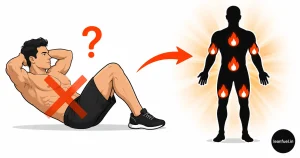
Low testosterone in young men is far more common than most doctors acknowledge, and far more consequential than most young men realise. A 25-year-old with the hormonal profile of a 55-year-old is not unusual anymore — it is becoming the norm in urban India. If you feel chronically tired, struggle to build muscle despite training consistently, have low drive, and generally feel like you are running at 60% capacity, your testosterone levels deserve a serious look.
The frustrating part is that most men dismiss these signs for years. Fatigue gets blamed on work stress. Low libido gets blamed on a relationship phase. Poor gym progress gets blamed on the programme. The hormone picture never gets investigated.
Testosterone is the primary male sex hormone. It governs muscle protein synthesis, red blood cell production, bone density, mood regulation, and sexual function. When it drops below the optimal range in a man under 35, the effects touch almost every area of health and performance simultaneously.
The numbers have been moving in the wrong direction for decades, and most of the causes are lifestyle-driven and fixable.
Quick Answer
7 signs of low testosterone in young men most commonly ignored:
- Persistent fatigue that does not improve with adequate sleep and is not explained by anaemia or thyroid issues.
- Difficulty building or maintaining muscle despite consistent resistance training and adequate protein intake.
- Low libido or reduced sexual function, including weaker erections or reduced morning erections.
- Increased body fat, particularly around the abdomen and chest, even without significant dietary changes.
- Mood changes including irritability, low motivation, mild depression, and brain fog.
- Poor sleep quality, specifically difficulty staying asleep or feeling unrefreshed despite 7 to 8 hours.
- Reduced body and facial hair growth, or thinning of hair where it was previously dense.
What Low Testosterone Actually Means for a Young Man
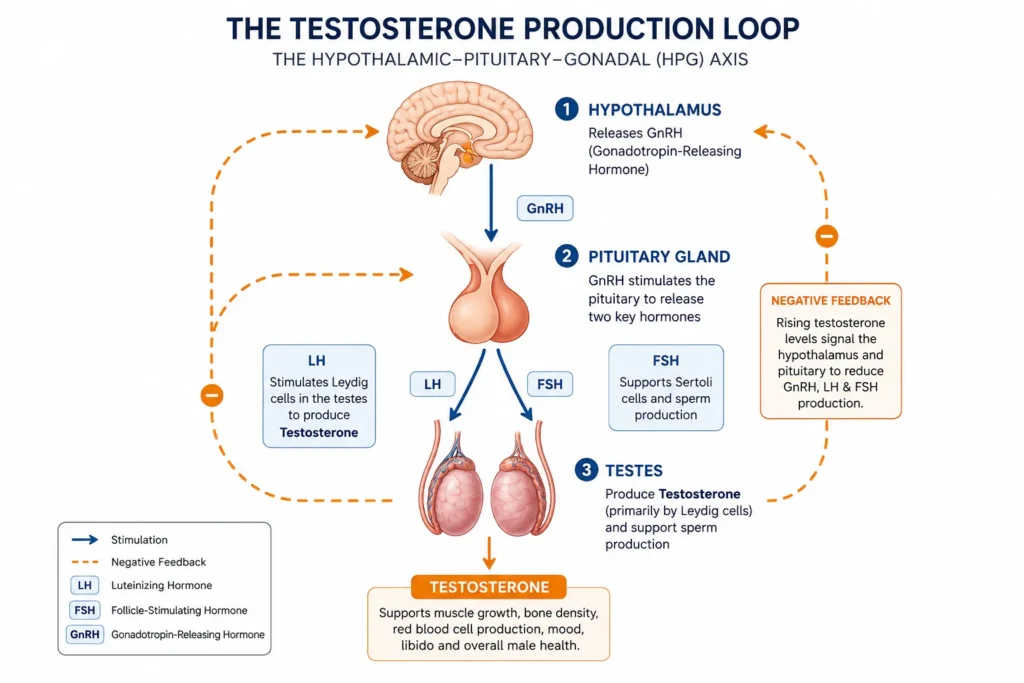
Testosterone is produced primarily in the Leydig cells of the testes, with a smaller amount from the adrenal glands. The hypothalamus and pituitary gland regulate how much is made through a feedback loop involving LH (luteinizing hormone) and FSH (follicle-stimulating hormone).
Normal total testosterone in healthy adult men typically falls between 300 and 1000 ng/dL, with most labs placing the lower threshold around 300 ng/dL. Free testosterone — the biologically active fraction not bound to proteins — is an equally important number that often gets ignored on basic panels.
The issue for young men is not just falling below the clinical cutoff. A 28-year-old at 320 ng/dL is technically “not deficient” by most lab references. But that level is associated with symptoms, impaired recovery, and long-term health consequences. The question is not just whether you are below the line. It is whether your level is optimal for your age.
Think of it like tyre pressure. A tyre at 15 PSI is not flat. But it is not performing properly, and driving on it is quietly doing damage. Optimal testosterone for a man in his 20s looks more like 600 to 900 ng/dL. Sitting at 320 ng/dL at age 26 is a problem worth addressing, even if your doctor does not flag it.
In India, this issue is compounded by poor dietary habits, chronic sleep deprivation, high psychological stress, sedentary desk jobs, and pollution. Research indicates testosterone levels in men globally have been declining by approximately 1% per year since the 1980s, and there is no indication that India is an exception to this trend.
The 7 Signs of Low Testosterone in Young Men — Explained
Sign 1: Chronic Fatigue That Sleep Does Not Fix

Persistent fatigue that persists despite 7 to 8 hours of sleep is one of the earliest and most consistent symptoms of low testosterone in young men. Testosterone directly influences mitochondrial function and energy metabolism at the cellular level. When levels drop, cells produce less ATP — the basic energy currency of the body — and everything runs slower.
This is different from the tiredness that comes from a bad night’s sleep or a hard training week. This is a background heaviness that is always present. Getting up in the morning feels like a serious task. By mid-afternoon, focus collapses. Coffee helps temporarily and then makes things worse.
In Indian urban environments, this symptom is almost universally attributed to work pressure or lifestyle. The hormonal explanation rarely gets explored unless the person specifically pushes for testing.
Verdict: One of the most common early signs. If fatigue is persistent, unexplained by sleep quality, anaemia, or thyroid issues, testosterone testing is warranted.
Sign 2: Inability to Build Muscle Despite Consistent Training
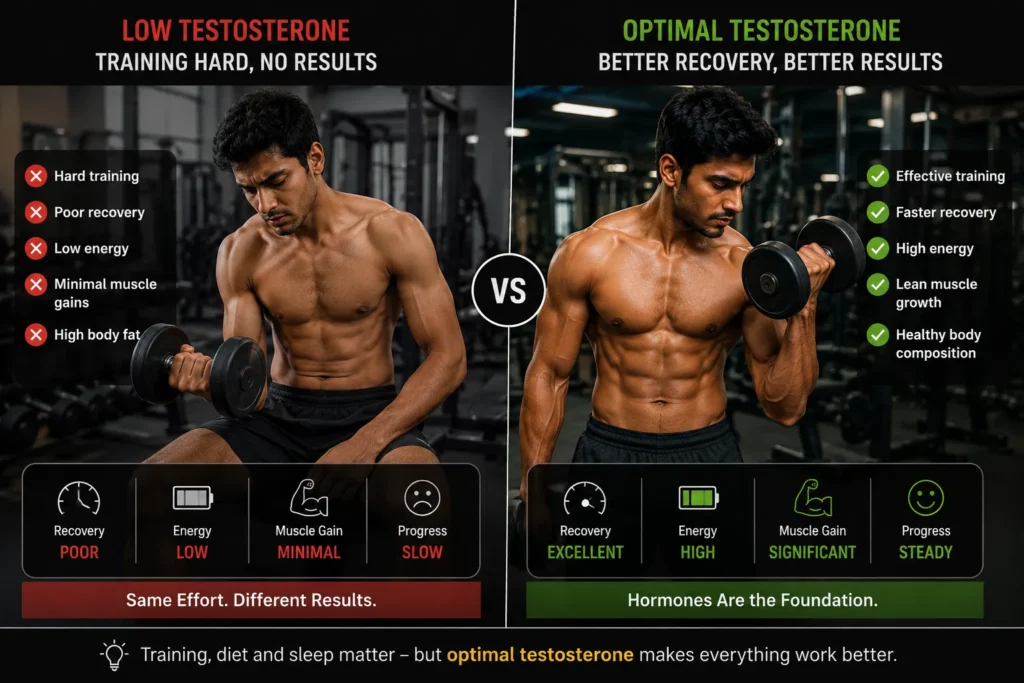
Testosterone is the primary driver of muscle protein synthesis (MPS) — the process by which the body repairs and builds muscle tissue after training. Without adequate testosterone, the anabolic signal from resistance training is blunted. You can train hard, eat adequate protein, sleep well, and still see minimal progress.
The gym-specific version of this is frustrating and confusing. You follow the programme. You hit the protein targets. Your numbers go up slowly. Your physique barely changes. Other people in the gym progress faster. Most coaches assume the issue is effort, diet, or technique. Hormones are rarely the first diagnosis.
Free testosterone is particularly relevant here. Even when total testosterone looks acceptable, low sex hormone binding globulin (SHBG) or elevated SHBG (which reduces free testosterone) can impair muscle building. A full hormonal panel matters more than a single number.
Verdict: A strong signal when combined with consistent training and good nutrition. Poor gym progress despite doing everything right deserves a hormonal evaluation.
Sign 3: Low Libido and Reduced Sexual Function
Reduced sexual desire is one of the most diagnostically reliable signs of low testosterone in young men. Testosterone does not just influence sexual function — it is the primary biological driver of libido in men. When levels drop, so does interest, spontaneous desire, and the frequency of morning erections.
This symptom carries more weight when it represents a change from a previous baseline. A man who previously had a healthy libido and notices a consistent decline over 6 to 12 months is describing a hormonal shift, not just a lifestyle phase.
Erectile function is more complex. Low testosterone alone is not always sufficient to cause erectile dysfunction — other factors including vascular health, psychological stress, and dopamine signalling play roles. But reduced morning erections, specifically, have a strong correlation with testosterone levels and are one of the cleaner physiological markers available without a blood test.
Verdict: One of the most direct and reliable symptoms. A consistent reduction in libido or morning erections over months is worth investigating hormonally.
Sign 4: Increased Body Fat, Particularly in the Chest and Abdomen
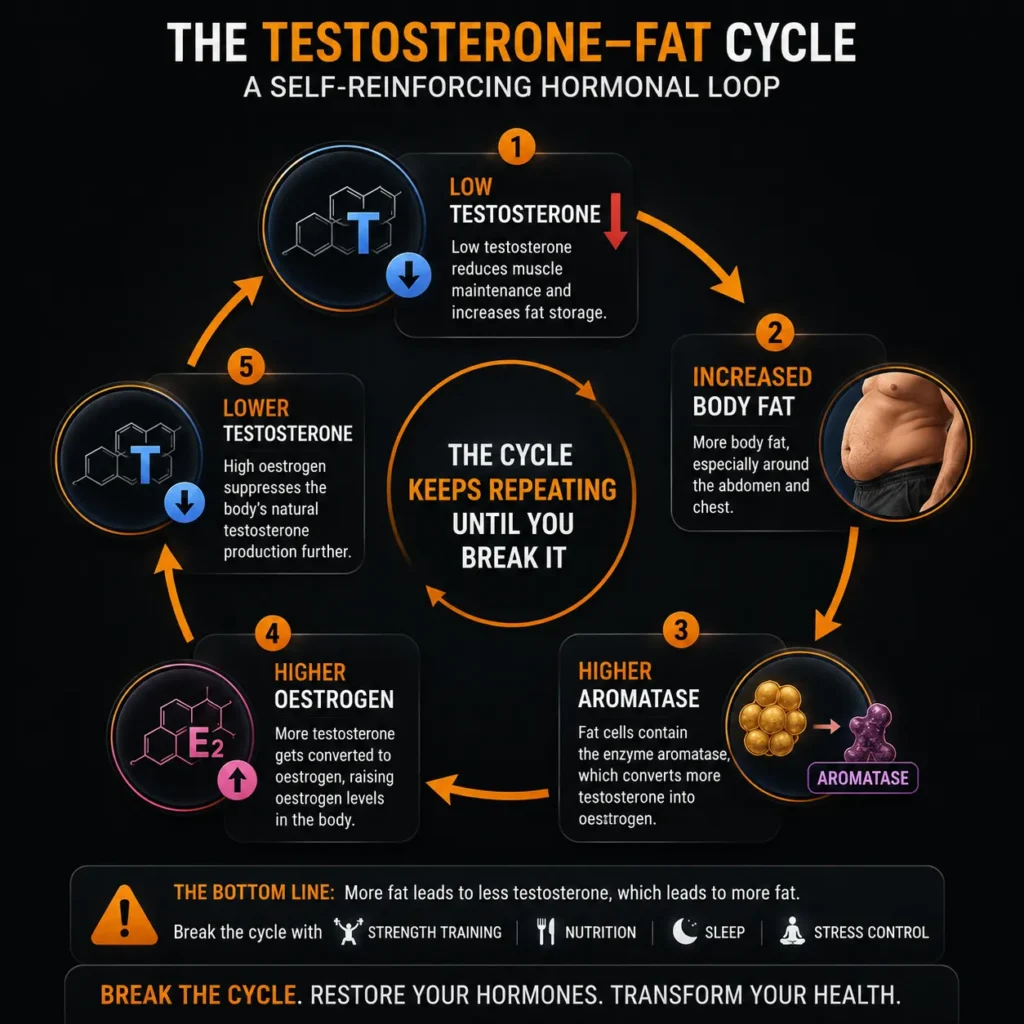
Low testosterone and high body fat exist in a reinforcing cycle. Testosterone inhibits fat storage. When it drops, fat accumulates more readily, especially visceral fat around the abdomen and subcutaneous fat around the chest.
More importantly, body fat contains an enzyme called aromatase, which converts testosterone into oestrogen. More body fat means more aromatase activity, which converts more testosterone into oestrogen, which reduces testosterone further, which promotes more fat storage. This cycle is self-reinforcing and worsens progressively without intervention.
In young Indian men, this often presents as what is colloquially called “skinny fat” — a lean face and limbs with a disproportionate amount of fat around the belly and chest despite not being obese by weight standards. Our article on why Indians are skinny fat and how to lose belly fat covers the full picture here.
Verdict: Highly relevant, particularly when fat gain is disproportionately abdominal and occurs without major dietary changes.
Sign 5: Mood Changes, Irritability, and Brain Fog
Testosterone has well-documented effects on mood regulation, dopamine sensitivity, and cognitive function. Low testosterone is associated with increased risk of depression, reduced motivation, irritability, and what is often described as “brain fog” — difficulty concentrating, slower processing, and reduced mental clarity.
This symptom is consistently underdiagnosed because mood changes in young men are so readily attributed to lifestyle, relationship stress, or mental health conditions without any investigation of underlying hormonal drivers.
A 2016 review published in the Journal of Psychiatric Research found a significant inverse relationship between testosterone levels and depressive symptoms in men, independent of other variables. This does not mean low testosterone causes depression in every case. It means hormonal status is a legitimate and often unexplored variable in male mood disorders.
Verdict: Frequently missed and misattributed. Mood symptoms plus other physical signs on this list should prompt hormonal evaluation before assuming a purely psychological cause.
Sign 6: Poor Sleep Quality and Disrupted Sleep Architecture
Testosterone and sleep have a bidirectional relationship. Most testosterone is produced during sleep, particularly during deep sleep (slow-wave sleep) and REM stages. Poor sleep reduces testosterone. Low testosterone disrupts sleep. Both directions of the relationship are clinically documented.
Young men with low testosterone often report waking frequently at night, difficulty reaching deep sleep, and feeling unrefreshed despite spending adequate time in bed. This is distinct from insomnia driven by anxiety or screen exposure, though those factors can coexist.
Sleep apnea is worth mentioning specifically. It is increasingly common in young overweight men, significantly suppresses testosterone production, and goes undiagnosed at high rates in India where sleep study access is limited outside major cities.
Verdict: Both a symptom and a cause. Fixing sleep quality is one of the most impactful interventions for testosterone levels, and it costs nothing.
Sign 7: Reduced Facial and Body Hair, or Notable Hair Thinning
Testosterone and its derivative DHT (dihydrotestosterone) drive male body and facial hair development. When testosterone drops significantly, beard growth slows or becomes patchy. Body hair on the chest, arms, and legs may thin. Axillary (underarm) hair may reduce.
This sign is less obvious and less commonly noticed unless the person is specifically paying attention. It also overlaps with genetic variation — some men naturally have less facial and body hair regardless of testosterone levels.
The distinguishing factor is change from a previous baseline. If beard growth that was previously dense begins to noticeably thin or slow, that is a relevant observation. Alongside other symptoms on this list, it strengthens the case for testing.
Verdict: A supporting sign rather than a primary diagnostic signal. More meaningful when combined with other symptoms.
Testosterone Signs and Severity Comparison Table
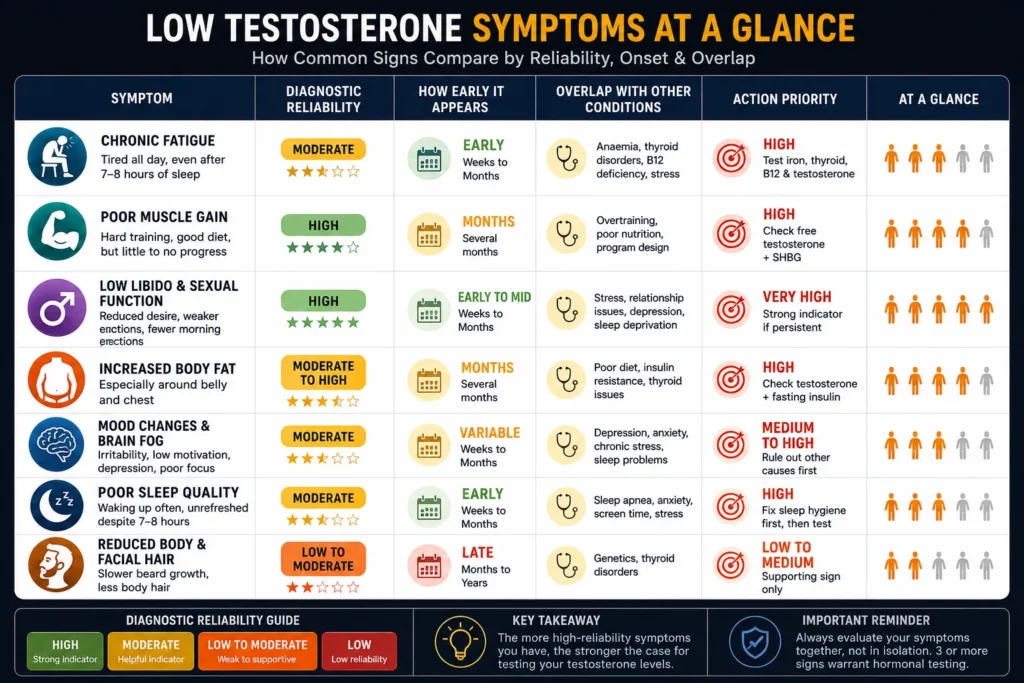
| Sign | Diagnostic Reliability | How Early It Appears | Overlap With Other Conditions | Action Priority |
|---|---|---|---|---|
| Chronic fatigue | Moderate | Early (weeks to months) | Anaemia, thyroid, B12 deficiency | Test ferritin, thyroid, testosterone together |
| Poor muscle gain | High (with training) | Months | Overtraining, poor diet | Check free testosterone + SHBG |
| Low libido | High | Early to mid | Stress, relationship factors | Strong indicator if persistent |
| Increased abdominal fat | Moderate-High | Months | Diet, insulin resistance | Check testosterone + fasting insulin |
| Mood changes, brain fog | Moderate | Variable | Depression, stress, sleep issues | Rule out other causes first |
| Poor sleep quality | Moderate | Early | Apnea, anxiety, screen time | Fix sleep hygiene first, then test |
| Reduced hair growth | Low-Moderate | Late | Genetics, thyroid | Supporting sign only |
How Testosterone Works in the Body and Why Timing Matters
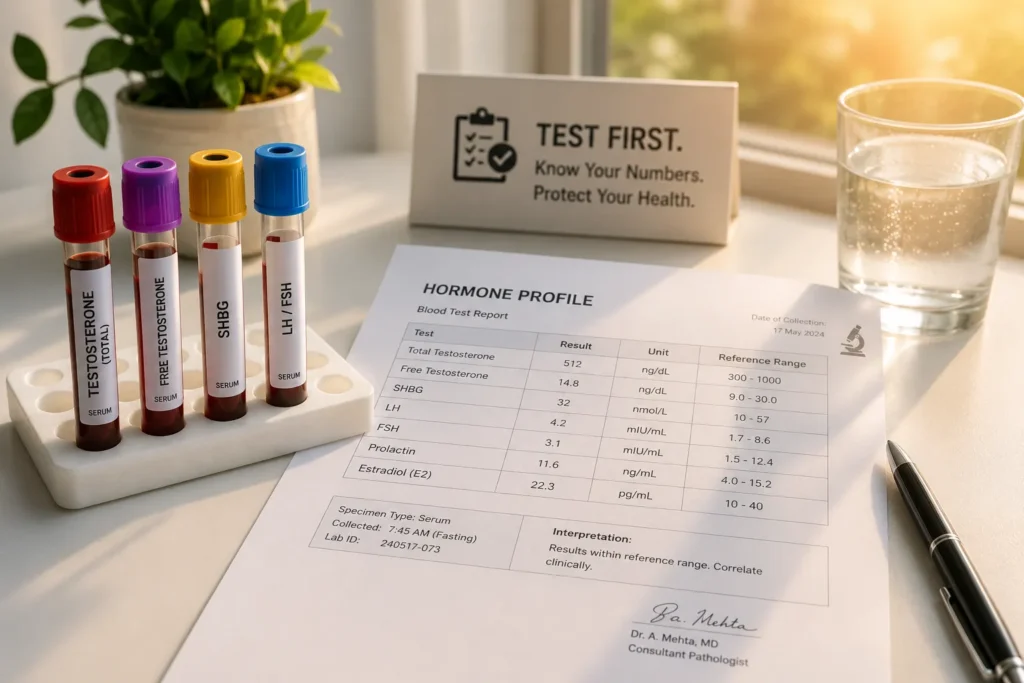
Testosterone levels follow a circadian rhythm. They peak in the morning, typically between 7 and 10 AM, and decline through the day, reaching their lowest point in the evening. This is why blood tests for testosterone should always be done fasting, in the morning, ideally before 10 AM. A late-afternoon testosterone reading can be 20 to 30% lower than a morning reading in the same person, making the result appear more concerning than it is.
Free testosterone is the fraction not bound to sex hormone binding globulin (SHBG) or albumin. It is the biologically active form. Total testosterone can look normal while free testosterone is low if SHBG is elevated. SHBG increases with age, chronic stress, low-fat diets, and excess alcohol. A complete panel should include: total testosterone, free testosterone, SHBG, LH, FSH, and prolactin at minimum. Oestradiol (E2) is worth adding, as elevated aromatase activity raises oestrogen and suppresses the HPG axis.
For lifestyle interventions, timing of sleep is the most impactful single variable. Testosterone production is gated by sleep quality, not just quantity. Seven hours of fragmented sleep produces less testosterone than six hours of uninterrupted deep sleep.
What the Research Says About Declining Testosterone in Young Men
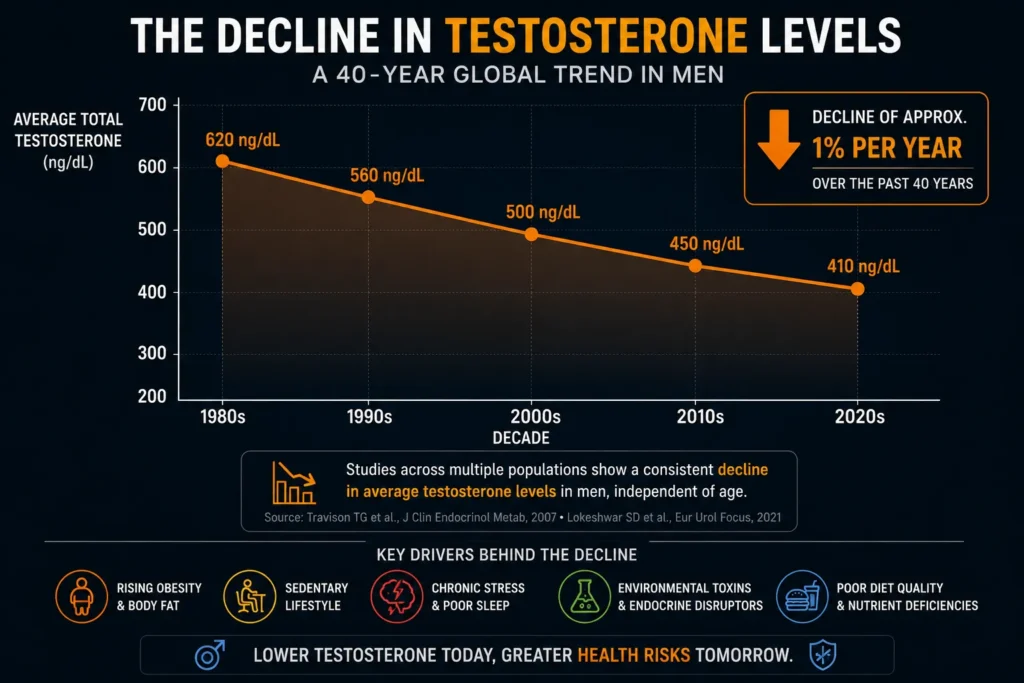
A landmark study published in the Journal of Clinical Endocrinology and Metabolism (2007) by Travison et al. analysed testosterone data across three generations of men in the Massachusetts Male Aging Study and found a population-level decline of approximately 1% per year in testosterone levels independent of age. A 60-year-old man in 2000 had significantly lower testosterone than a 60-year-old in 1970.
A 2020 systematic review in the World Journal of Men’s Health confirmed that lifestyle factors including obesity, sedentary behaviour, chronic stress, sleep deprivation, and endocrine disrupting chemical (EDC) exposure are the primary drivers of this decline across populations.
“The evidence supports a secular decline in testosterone levels among men, and this decline is largely driven by modifiable lifestyle and environmental factors.” — Lokeshwar et al., World Journal of Men’s Health, 2021
The honest reality check: most young men who get their testosterone tested and find it in the 300 to 400 ng/dL range are told they are “normal” and sent home. That number is normal for a 55-year-old. For a 25-year-old, it reflects a significant opportunity to improve hormonal health through lifestyle before any medical intervention becomes necessary.
Practical Concerns and What Indian Young Men Should Know

The most important practical concern for Indian men is that awareness of hormonal health in this age group is genuinely low — among both patients and general practitioners. Testosterone testing is not routinely ordered during standard health checks. Men who bring up fatigue, mood changes, or poor gym progress are more likely to be told to sleep better or reduce stress than to be sent for a hormonal panel.
Pushing for a morning total testosterone, free testosterone, and SHBG test is reasonable if you have 3 or more symptoms on the list above. Private labs like SRL, Dr. Lal Path Labs, and Thyrocare offer these panels at reasonable cost across most Indian cities, typically between Rs. 500 and 1500 for a basic hormonal panel.
Endocrine-disrupting chemicals (EDCs) are a real concern that gets minimal attention in the Indian context. Plastic food containers heated in microwaves, pesticide residues on produce, and certain personal care products with parabens and phthalates are all sources of EDC exposure that can suppress testosterone over time.
Chronic stress deserves specific mention. Cortisol (the primary stress hormone) directly suppresses the HPG axis, reducing LH and testosterone production. Young working professionals in Indian cities carrying high chronic stress loads are effectively suppressing their own testosterone through a mechanism that has nothing to do with diet or training.
Who Should Act First and What They Should Do
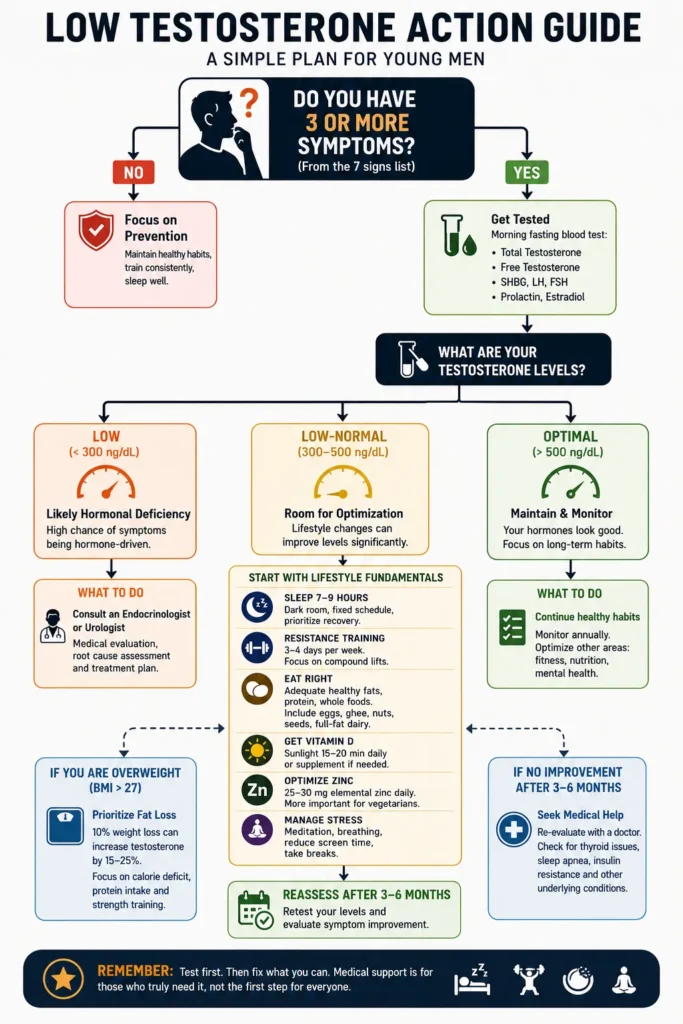
If you have 3 or more symptoms and are under 30
Get tested first. Do not start supplements or make major dietary changes based on assumed deficiency. Know your numbers. A morning testosterone panel (total, free, SHBG, LH, FSH, prolactin) gives you a baseline to work from. Everything else follows from what those numbers show.
If your testosterone is in the low-normal range (300 to 500 ng/dL) and you want to optimise naturally

Start with the lifestyle fundamentals before anything else:
- Sleep 7 to 9 hours in a dark, cool room. This is the highest-impact single variable.
- Resistance train 3 to 4 days per week with compound movements. Squats, deadlifts, presses, and rows have the strongest evidence for acutely raising testosterone.
- Eat adequate dietary fat. Testosterone is synthesised from cholesterol. Low-fat diets consistently suppress testosterone. Aim for 25 to 35% of calories from fat, including saturated fat from sources like ghee, eggs, and full-fat dairy.
- Reduce chronic stress. This sounds vague, but the cortisol-testosterone relationship is concrete. Meditation, reduced social media consumption, and structured recovery time are not optional extras.
- Optimise zinc and vitamin D. Both are required for testosterone synthesis. Vegetarian Indian diets are frequently low in zinc. Zinc from plant sources has 40 to 50% lower bioavailability than from animal sources due to phytic acid competition.
If you are vegetarian or vegan and training seriously
Your two primary nutritional concerns for testosterone are zinc and dietary fat. Supplement zinc at 25 to 30mg elemental zinc per day (separate from calcium-rich foods). Include healthy fats through sources like pumpkin seeds, almonds, full-fat dairy if you eat it, and cold-pressed oils. Our article on best vegetarian protein sources in India covers the dietary picture for plant-based Indian athletes in more depth.
If you are significantly overweight (BMI above 27) with these symptoms
Prioritise fat loss above all else. The aromatase-driven testosterone-to-oestrogen conversion in adipose tissue is a major suppressive mechanism. A 10% reduction in body weight has been shown to increase testosterone levels by 15 to 25% in overweight men. Creatine supplementation during the cut can help preserve lean mass. Our guide on fat loss supplements that actually work covers what the evidence supports for this goal.
If lifestyle changes for 3 to 6 months show no improvement in symptoms or numbers
This is when a consultation with an endocrinologist or urologist is appropriate. Testosterone replacement therapy (TRT) and other medical interventions exist and are legitimate options for men with clinically confirmed hypogonadism. Self-prescribing testosterone or prohormones without confirmed deficiency and medical supervision is a different category entirely and carries real risks.
Final Verdict
Low testosterone in young men is a real, measurable, and largely addressable problem that the Indian fitness conversation is only beginning to take seriously. The signs are present in a significant portion of men under 35. Most of them are being ignored or misattributed.
The order of operations matters here. Test first. Know your numbers. Then address the modifiable lifestyle factors: sleep, training, dietary fat, zinc, stress management. For most men in the low-normal range, those interventions move the needle meaningfully over 3 to 6 months.
If you want to understand the nutritional deficiencies that frequently sit underneath low testosterone, our piece on signs of magnesium deficiency most people ignore covers a mineral that is directly involved in testosterone synthesis and is chronically low in Indian diets. And if you are also dealing with unexplained hair fall alongside these symptoms, the vitamin deficiency and hair fall guide explains how these issues connect.
Testosterone at 25 should not look like testosterone at 55. If it does, that is a problem worth solving — and for most men, it is solvable.
FAQs
What is a normal testosterone level for a man in his 20s?
Total testosterone in healthy men aged 19 to 39 typically falls between 400 and 900 ng/dL, with the upper range of normal closer to 950 ng/dL. Free testosterone should be above 9 ng/dL for men in this age bracket. A result in the 300 to 400 ng/dL range is technically within the broad “normal” reference range used by many labs, but it reflects the lower end of an elderly male’s normal range and is associated with symptoms in younger men. Always interpret results alongside your symptoms and age, not just against the lab’s reference range.
Can low testosterone in young men be fixed without medication?
Yes, for many men in the low-normal range, lifestyle interventions produce meaningful improvements. Consistent resistance training, 7 to 9 hours of quality sleep, adequate dietary fat, zinc optimisation, vitamin D correction, and stress reduction have all shown measurable effects on testosterone levels in clinical studies. Men with genuinely low testosterone (below 300 ng/dL with confirmed symptoms) may need medical support, but the majority of young men in the low-normal range have substantial room to improve through lifestyle changes alone before any medication is warranted.
Does watching too much pornography lower testosterone?
This is a genuinely debated topic without a clean research consensus. Frequent pornography use does not directly lower testosterone in the way that sleep deprivation or obesity does. The mechanism being discussed is dopamine receptor downregulation, which can reduce motivation, drive, and libido without directly suppressing hormonal production. Some men report significant improvements in energy and libido after abstaining, but controlled trials are limited. The honest answer is that the direct testosterone effect is uncertain, but the impact on dopamine signalling and motivation appears real for heavy users.
Is stress actually making my testosterone low?
Yes, chronic stress suppresses testosterone through a well-documented mechanism. Cortisol — produced by the adrenal glands in response to stress — inhibits the hypothalamic-pituitary-gonadal (HPG) axis, which regulates testosterone production. When cortisol is chronically elevated, LH (which signals the testes to produce testosterone) is suppressed. Young professionals in high-stress Indian urban environments carrying consistent work, financial, and social stress are genuinely suppressing their testosterone through cortisol, often for years before the effects become obvious.
Should I take a testosterone booster supplement?
Most testosterone booster supplements sold in India and globally are either ineffective or only effective for correcting specific nutrient deficiencies. Zinc and vitamin D supplementation genuinely improves testosterone in men who are deficient in those nutrients. Ashwagandha has the strongest adaptogen evidence and has shown modest but real effects on cortisol reduction and testosterone in men under chronic stress. Beyond those, most proprietary testosterone booster blends are overpriced and overhyped. Fixing sleep, training hard, eating adequate fat, and managing stress will do more than most supplements ever will.
At what age does testosterone start dropping in men?
Testosterone levels peak in men around age 17 to 19 and begin a gradual decline from approximately age 30, at roughly 1 to 2% per year. However, the population-level trend of declining testosterone across generations means many men now reach their 20s with levels that would previously have been seen only in their 40s or 50s. Lifestyle factors — particularly obesity, chronic stress, and sleep deprivation — accelerate this decline significantly. The “natural” decline is not inevitable at the rate many young men are currently experiencing it.
You Now Know What to Look For
Get a morning blood test if three or more of these signs apply to you. That is all the next step requires. The results will tell you whether this is a lifestyle problem you can fix yourself, or something that warrants medical attention.
In the meantime, improve your sleep before anything else. Nothing else on the list moves the needle faster, and nothing else costs less.
If you have already tested your levels or have been working on this for a while, share your experience in the comments. What symptom first made you pay attention? What actually changed your numbers? There is more useful information in real experiences than in most articles on this topic.
Sources and References
- Travison TG, Araujo AB, O’Donnell AB, Kupelian V, McKinlay JB. A population-level decline in serum testosterone levels in American men. Journal of Clinical Endocrinology and Metabolism. 2007;92(1):196-202. https://pubmed.ncbi.nlm.nih.gov/17062768/
- Lokeshwar SD, Patel P, Fantus RJ, et al. Decline in Serum Testosterone Levels Among Adolescent and Young Adult Men in the USA. European Urology Focus. 2021;7(4):886-889. https://pubmed.ncbi.nlm.nih.gov/31345554/
- Grossmann M, Hoermann R, Matsumoto AM. Hypothesis: Low testosterone levels in men with type 2 diabetes and obesity—A clinical dilemma. World Journal of Men’s Health. 2020. https://pubmed.ncbi.nlm.nih.gov/31364316/
- Shores MM, Moceri VM, Sloan KL, Matsumoto AM, Kivlahan DR. Low testosterone levels predict incident depressive illness in older men: effects of age and medical morbidity. Journal of Clinical Psychiatry. 2005. https://pubmed.ncbi.nlm.nih.gov/15669884/
- Aydogan U, Aydogdu A, Akbulut H, et al. Increased frequency of anxious and depressive symptoms in hypogonadal men with the metabolic syndrome. Journal of Psychiatric Research. 2016. https://pubmed.ncbi.nlm.nih.gov/27032998/
- Kumagai H, Zempo-Miyaki A, Yoshikawa T, et al. Increased physical activity has a greater effect than reduced energy intake on lifestyle modification-induced increases in testosterone. Journal of Clinical Biochemistry and Nutrition. 2016. https://pubmed.ncbi.nlm.nih.gov/27257351/
- Prasad AS, Mantzoros CS, Beck FW, Hess JW, Brewer GJ. Zinc status and serum testosterone levels of healthy adults. Nutrition. 1996;12(5):344-348. https://pubmed.ncbi.nlm.nih.gov/8875519/
- Pilz S, Frisch S, Koertke H, et al. Effect of Vitamin D Supplementation on Testosterone Levels in Men. Hormone and Metabolic Research. 2011;43(3):223-225. https://pubmed.ncbi.nlm.nih.gov/21154195/
- Wankhede S, Langade D, Joshi K, Sinha SR, Bhattacharyya S. Examining the effect of Withania somnifera supplementation on muscle strength and recovery: a randomized controlled trial. Journal of the International Society of Sports Nutrition. 2015. https://jissn.biomedcentral.com/articles/10.1186/s12970-015-0104-9
- Penev PD. Association between sleep and morning testosterone levels in older men. Sleep. 2007;30(4):427-432. https://pubmed.ncbi.nlm.nih.gov/17520786/