
Toxic Air Pollution Iran War: Black Rain, Health Risks & Environmental Fallout
Toxic air pollution from Iran war has created black rain and a health crisis. Learn how war pollution health risks are impacting millions in Tehran and beyond.
Introduction: When the Sky Turns Black
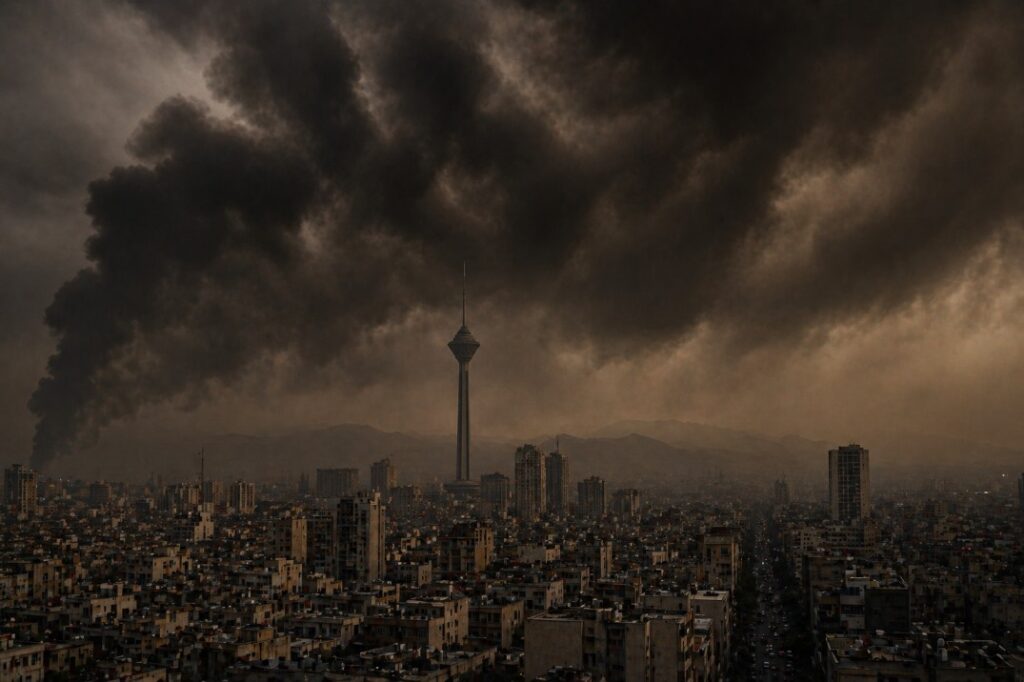
I remember the first time I truly understood what “toxic air” meant. It wasn’t from a textbook. It was from a video—a woman standing on a balcony in Tehran, holding her phone out over the edge. The sky was blue with puffy white clouds. She sounded almost surprised. “Hello, good morning,” she said. “It’s been a few days since I’ve shown you the daytime sky in Tehran.” Then she added, quieter: “And here are the birds, still going on with their lives.”
That video stopped me cold. Because what she was really saying was: we didn’t expect to see blue sky again.
The toxic air pollution Iran war has unleashed is not a side effect of conflict. It is a weapon. And the black rain Iran health effects are just beginning to be understood by scientists—who are already calling this an unprecedented environmental catastrophe.
Let me walk you through what is actually happening, why it matters, and why the war pollution health risks will outlast the fighting by decades.
Part 1: What Is “Black Rain” and Why Is It Falling on Tehran?
A Phenomenon from Nightmares
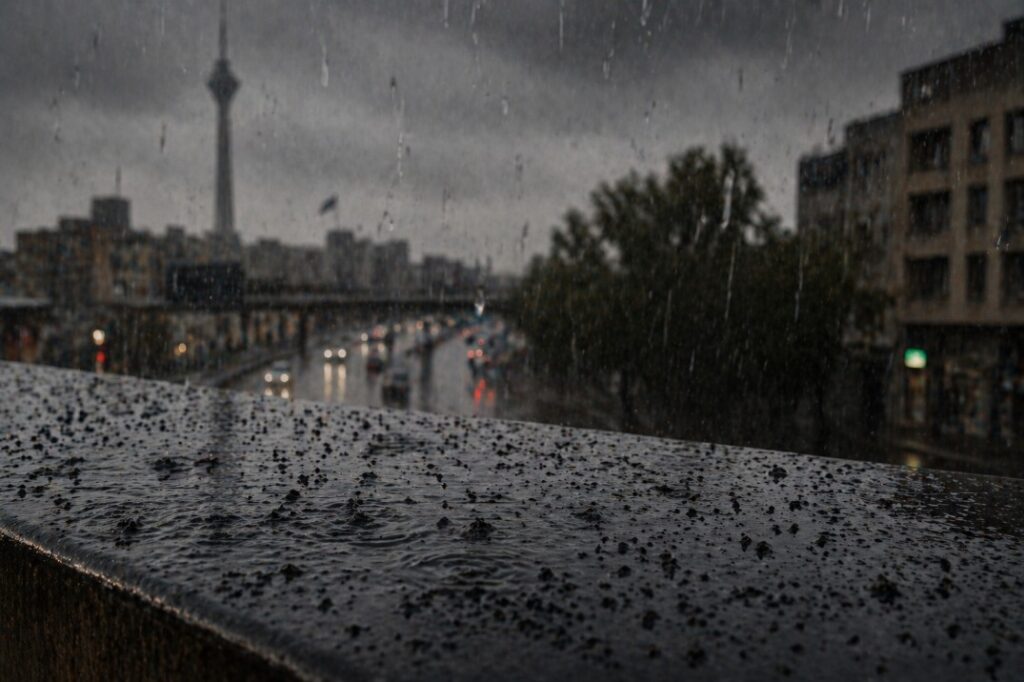
On March 8, 2026, after Israeli strikes hit four oil storage facilities and an oil production transfer center on the outskirts of Tehran, residents reported something extraordinary. The rain falling from the sky was black. Thick, oily, and dark as crude.
This wasn’t a metaphor. It was literal petroleum mixing with precipitation.
Here is what happens: When oil facilities are bombed, massive fires erupt. These fires send plumes of incompletely combusted hydrocarbons, soot, sulfur compounds, and volatile organic compounds into the atmosphere. When water vapor condenses around these particles, the rain that falls carries the pollution back to earth—black, toxic, and dangerous.
The World Health Organization (WHO) issued an urgent warning. Spokesperson Christian Lindmeier told reporters: “The black rain and the acidic rain coming with it is indeed a danger for the population, respiratory mainly.”
Why Tehran Is Particularly Vulnerable
Tehran sits in the shadow of the Alborz mountain range. This geography creates a temperature inversion—a layer of warmer air traps cooler, polluted air near the ground. Normally, pollutants would disperse. In Tehran, they stay concentrated, sometimes for weeks.
This means that airborne pollutants bombing releases don’t blow away. They settle over the city of nearly 10 million people and stay there.
One resident described the scene to The New York Times: “The night turned into morning and the morning into night. With the fire, it felt like night became day, and then with all the smoke the day turned back into night again.”
Part 2: What Is Actually in the Air? The Chemical Cocktail
More Than Just Smoke
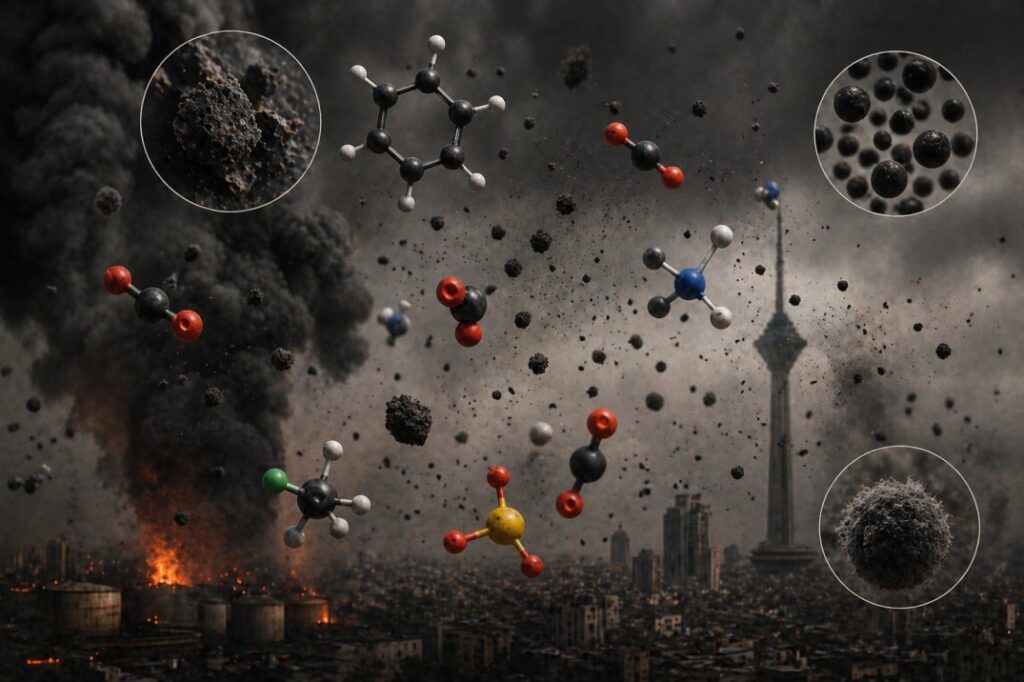
When you burn crude oil—especially in an uncontrolled fire caused by an explosion—you don’t just get “smoke.” You get a chemical nightmare.
According to Professor John Balmes, professor emeritus of environmental health sciences at UC Berkeley: “The smoke from a bombed oil depot would include benzene, formaldehyde and other carcinogens.”
The WHO has documented the massive release of toxic hydrocarbons, sulfur oxides, and nitrogen compounds into the air over Tehran.
Black rain Iran health effects stem from exposure to a chemical cocktail that includes:
- Benzene – A known human carcinogen linked to leukemia
- Formaldehyde – Carcinogenic, causes respiratory irritation
- Toluene – Affects the nervous system
- Methylene chloride – Linked to liver and lung cancers
- Polycyclic aromatic hydrocarbons (PAHs) – Formed during incomplete combustion, these neurotoxic compounds cross the placenta and affect fetal development.
The Particulate Problem: PM2.5
The fires create particles smaller than 2.5 micrometers in diameter—known as PM2.5. These particles are so tiny they bypass your body’s natural defenses and penetrate deep into the lungs. From there, they enter the bloodstream.
The health effects of breathing PM2.5 are well-documented: cardiovascular disease, stroke, increased blood pressure, decreased cognitive function, and respiratory illness.
But in Tehran, residents aren’t just breathing wildfire smoke. They are breathing oil-fire smoke Iran—a much more toxic brew.
Part 3: Immediate Health Effects—What Residents Are Experiencing
Reports from the Ground
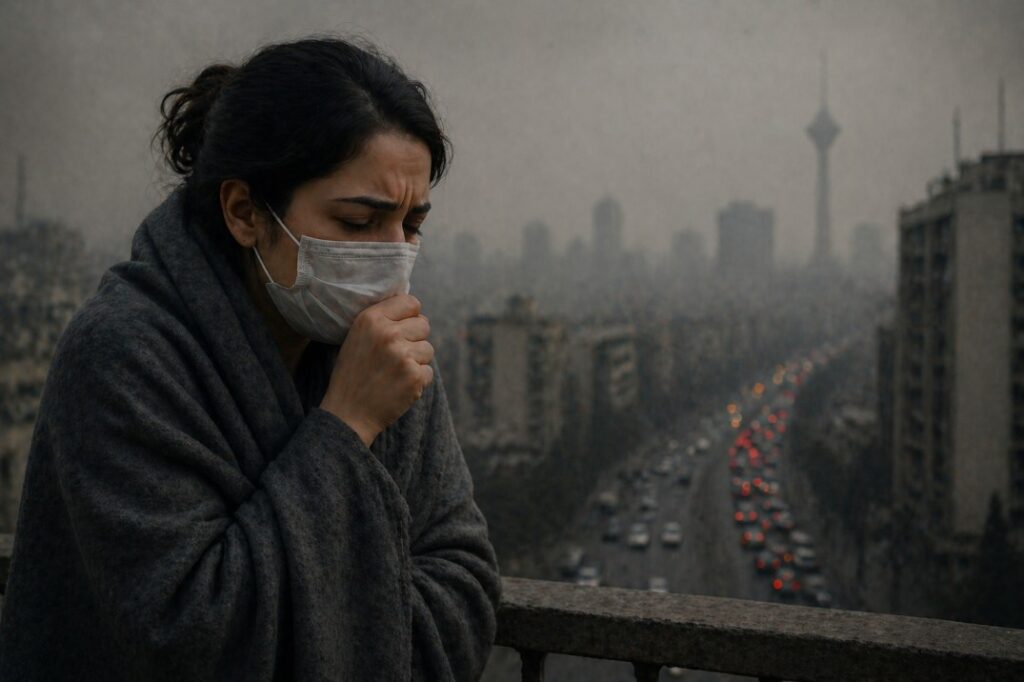
In the days following the strikes, Tehran residents flooded social media with reports of symptoms. People described:
- Burning sensations in their eyes
- Migraines and severe headaches
- Dizziness and disorientation
- Coughing and difficulty breathing
The Iranian Red Crescent Society warned that the black rain can cause serious lung damage and chemical burns to the skin.
Peter Ross, a pollution specialist and senior scientist at the Raincoast Conservation Foundation, told CBC News that when toxic gases from oil fires are inhaled, they “can make them very dizzy, can render them unconscious, it can kill them.”
Who Is Most at Risk?
As with any air pollution crisis, the most vulnerable suffer first and worst. WHO Director-General Tedros Adhanom Ghebreyesus warned that the contamination “can have severe health impacts especially on children, older people, and people with pre-existing medical conditions.”
But there is another vulnerable group that rarely makes headlines: pregnant women and unborn children.
Part 4: The Hidden Reproductive Crisis
Pollution That Crosses the Placenta
This is the part of the story no one is talking about—and it may be the most important.
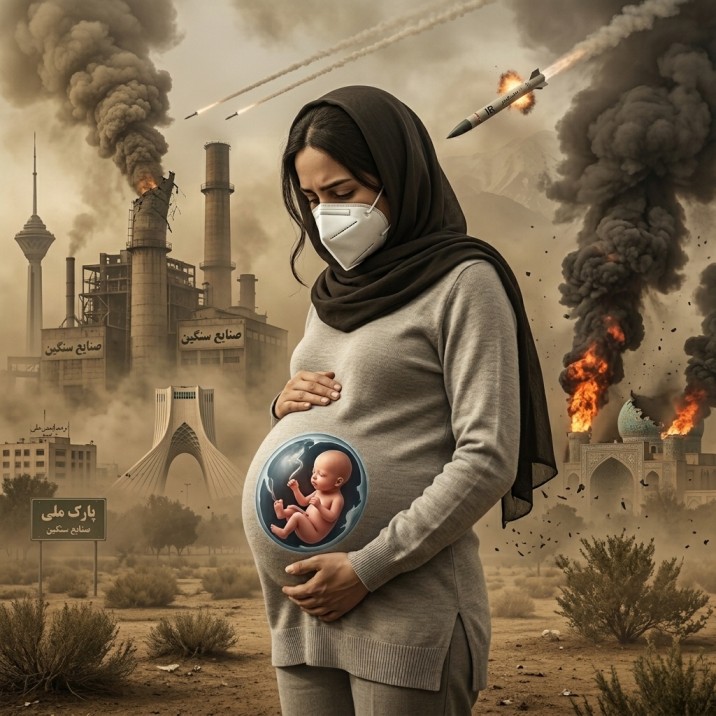
The International Planned Parenthood Federation (IPPF) has issued a stark warning: the toxic air pollution from the Iran war is creating a reproductive health emergency.
Here is what the science shows. Studies on polycyclic aromatic hydrocarbons (PAHs)—which are abundant in oil fire smoke—have found that these compounds cross the placenta. Once in fetal circulation, they are associated with:
- Reduced birth weight
- Smaller head circumference
- Longer-term cancer risk
- Cognitive deficits in offspring
The evidence comes from multiple sources: studies in New York, Krakow, and research following the Gulf War oil fires.
What the Numbers Tell Us
According to the Institute for Health Metrics and Evaluation’s 2023 Global Burden of Disease study, 32% of preterm births in 2023 were attributed to exposure to PM air pollution.
A systematic review published in JAMA Network Open analyzed data from over 32 million births across more than 50 studies. The findings were striking: exposure to fine particulate matter was associated with an increased risk of preterm birth in 79% of studies and low birth weight in 86% of studies.
A global meta-analysis published in PLOS Medicine found an 11% greater risk of low birth weight and a 12% greater risk of preterm birth for every 10 micrograms per cubic meter increase in PM exposure.
Virginia Rauh, Professor of Population and Family Health at Columbia University’s Mailman School of Public Health, puts it bluntly:
“This multi-layered mixture of pollutants has an immediate adverse impact on fetal growth and longer-term consequences for newborn lungs and brain development, resulting in a devastating public health scenario for reproductive and child health.”
A Crisis with No Historical Parallel
Doug Weir, director of the UK-based Conflict and Environment Observatory (CEOBS), emphasizes that there is no historical parallel for an attack on oil infrastructure of this magnitude in a city of over nine million people.
The effects will not end when the fires are extinguished. Contamination lingers in the air, in the water, in soil, and in people’s bodies.
Part 5: How War Affects Air Quality—The Bigger Picture
Beyond Tehran: Pollution Without Borders
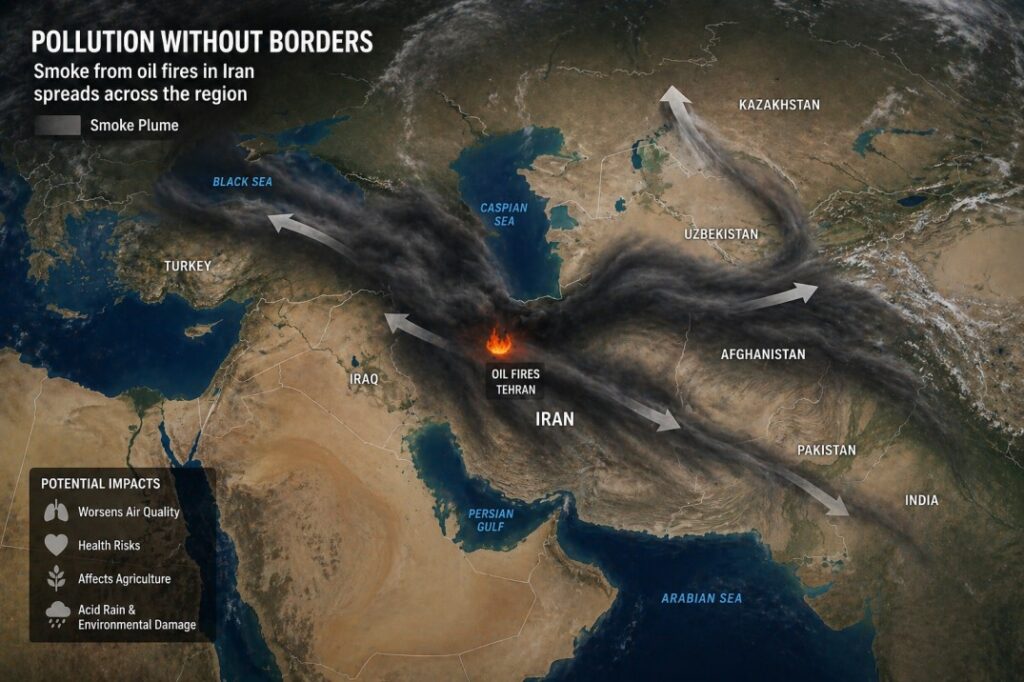
The environmental impact of war does not respect national boundaries.
Satellite tracking by the Conflict and Environment Observatory shows that the plume of smoke from the Tehran oil fires traveled east—across Afghanistan, China, and into Russia.
This means that how war affects air quality is a regional and even global question. The soot accumulating at high altitudes can accelerate glacier melting in the Himalayas—thousands of miles from the conflict zone.
The Gulf War Precedent
This is not the first time oil fires have caused a cross-border pollution crisis. During the 1991 Gulf War, Iraqi forces set fire to over 600 Kuwaiti oil wells. The resulting smoke plumes drifted over Iran, contributing to widespread pollution and accelerating the melting of Himalayan glaciers.
But there is a crucial difference: those fires burned in relatively unpopulated areas. The current fires are burning inside a megacity of 10 million people.
As Dr. Balmes put it: “Can you imagine an oil depot fire in Manhattan? That’s what we’re talking about.”
Part 6: The Long-Term Legacy—Decades of Contamination
Soil and Water Contamination
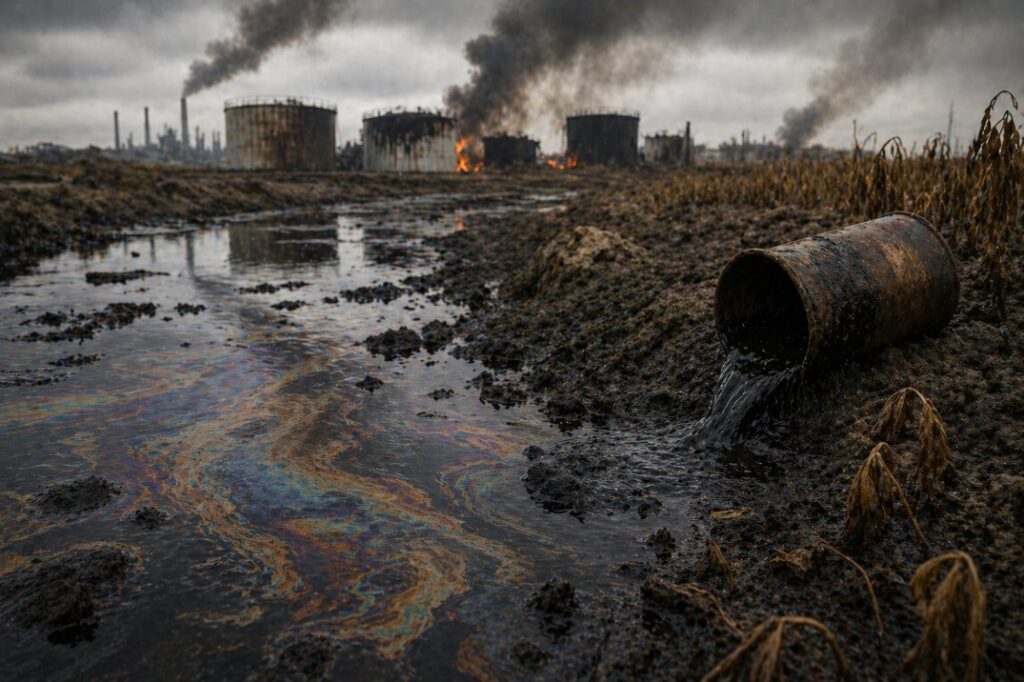
The toxic smoke health effects are the most immediate concern. But the long-term contamination of soil and water may prove equally devastating.
When the black rain falls, it doesn’t just disappear. The oil-laden precipitation coats streets, cars, plants, and—most critically—crops and water sources.
Peter Hodson, an ecotoxicologist and retired professor at Queen’s University, warns that “the contamination of plants and soils and water present the possibility of a chronic exposure, and the unknown effects of an acute exposure, to things that we just don’t know about.”
Military Sites Add Another Layer
Beyond the oil facilities, strikes on missile bases and military installations release their own toxic cocktail. TNT—classified as a possible human carcinogen by the US EPA—can remain in soil for years, harming vegetation and potentially entering the food chain.
Heavy metals, PFAS (forever chemicals), propellants, and explosives residues all join the contamination mix.
The CEOBS has identified more than 300 incidents of potential environmental harm since the conflict began—but they acknowledge this is “just the tip of the iceberg.” The US alone has claimed strikes on 5,000 sites.
Part 7: The Marine Dimension—Pollution Spreading to the Sea
The environmental disaster isn’t confined to the air and land. The Persian Gulf—home to extensive reefs, seagrass beds, endangered dugongs, and fishing communities—is also under threat.
At least five tankers have been hit during the conflict, including a 273-meter ship struck by a naval drone off the coast of Muscat and a crude tanker off Kuwait that resulted in an oil spill.
An Iranian frigate torpedoed during the conflict is now leaking a kilometers-long oil slick off Sri Lanka—showing how far the pollution is spreading.
Key Insights: What We Have Learned
| Health Impact | Immediate Effect | Long-Term Risk |
|---|---|---|
| Respiratory | Breathing difficulty, coughing, burning sensations | Chronic lung disease, reduced lung function |
| Cardiovascular | Increased heart rate, chest pain | Heart disease, stroke |
| Cancer | None immediately | Leukemia (benzene), lung/liver cancers |
| Reproductive | Pregnancy complications | Preterm birth, low birth weight, developmental deficits |
| Neurological | Dizziness, headaches | Cognitive decline, developmental issues in children |
Conclusion: A Crisis We Cannot Ignore
The toxic air pollution Iran war has unleashed is not a footnote to the conflict. It is a central feature of it. The war pollution health risks will outlast the fighting by years, perhaps decades.
Iran’s ambassador to the UN called the attacks a “manifest environmental crime.” The Iranian Foreign Ministry spokesperson went further, calling them “intentional chemical warfare.”
Hyperbole? Consider the evidence. Deliberately bombing oil facilities inside a megacity of 10 million people releases known carcinogens, neurotoxins, and endocrine disruptors into an environment where the geography prevents their dispersal. Pregnant women, children, the elderly, and the chronically ill are being exposed without their consent to a chemical cocktail that scientists know causes cancer, birth defects, and respiratory disease.
The question of how war affects air quality is no longer academic. It is playing out in real-time over Tehran, and the consequences are spreading across continents.
As Naghmeh Mobarghaee Dinan, a member of the Supreme Council for Environmental Protection of Iran, said after a previous conflict: war is “a crisis that goes beyond the battlefield—with consequences for ecosystems, wildlife and public health that we are only beginning to understand.”
We are only beginning to understand. But what we already know should alarm us all.
Explore More
Before you go, these articles provide additional context on health, pollution, and environmental crises:
[Why Are Indians Shorter Than Chinese? The Real Reason No One Talks About] – Understanding how environmental factors like nutrition and pollution shape human growth across populations.
[How to Lose Fat by Walking — Why It Works Better Than Running] – Learn how low-intensity exercise protects your respiratory and cardiovascular health while improving metabolic function.
[High Protein Foods for Fat Loss: A Simple Beginner’s Guide That Actually Works] – Build nutritional resilience with protein-focused eating that supports lung and immune health.
What You Can Do Now
This is a rapidly evolving situation. If you have family or friends in Iran, or if you work in public health, environmental science, or humanitarian aid, share this information. Awareness of the toxic air pollution Iran war has created is the first step toward accountability.
What questions do you have about how war affects air quality and long-term health? Drop them in the comments—I will do my best to find answers from the scientific literature.
And if you found this analysis valuable, share it with someone who needs to understand that war’s casualties aren’t only counted in bombs.