
Vitamin B12 Deficiency in Vegetarians: Why Dairy & Eggs Won’t Save You
Why vegetarians lack vitamin B12 despite eating dairy and eggs. Learn the real causes, why plant foods fail, and the exact supplement strategy that fixes deficiency.
Introduction: The Dairy Illusion That’s Fooling Millions
You’re vegetarian. You eat paneer, drink milk, have curd with every meal. You assume your B12 levels are fine.
The data says otherwise.
Why vegetarians lack vitamin B12 comes down to one uncomfortable fact: this nutrient is found almost exclusively in animal tissue. The small amounts in dairy and eggs are often not enough to maintain optimal levels, no matter how much ghee you smear on your paratha.
You can eat dairy every single day and still end up with neurological symptoms you never connected to your diet. Fatigue. Brain fog. Tingling fingers. Balance issues. Most vegetarians never suspect B12 deficiency until the damage is already done.
This isn’t a fringe concern. It’s one of the most underdiagnosed nutrition problems in India’s predominantly vegetarian population. In this guide, I’ll show you exactly why dairy fails, why plant “sources” are a lie, and the supplement strategy that actually works—no hype, no pseudoscience.
Quick Answer: Why Vegetarians Lack Vitamin B12
| Fact | Explanation |
|---|---|
| B12 comes from bacteria, not plants or animals | Animals concentrate it in their tissues. Plants don’t. |
| Dairy and eggs have modest, unreliable B12 | A glass of milk gives ~1 mcg; an egg ~0.5 mcg. Absorption is limited. |
| No unfortified plant food contains active B12 | Not spirulina, not fermented batters, not seaweed. They contain inactive analogues that may block real B12. |
| Testing + deliberate supplementation is the only reliable fix | You cannot guess your way to optimal levels. |
| In India, 60–80% of vegetarians have suboptimal B12 | Even those who consume milk daily. |
The bottom line: If you’re vegetarian and not supplementing, assume you’re deficient until proven otherwise.
What Is Vitamin B12 and Why Do Vegetarians Lack It?
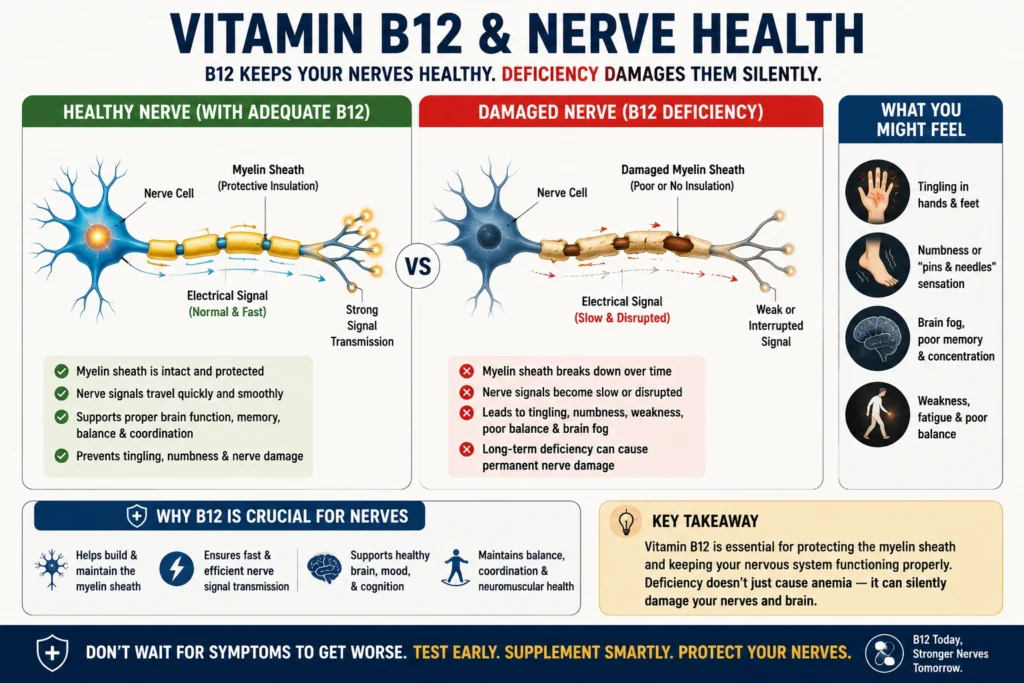
Vitamin B12 (cobalamin) is a water-soluble vitamin your body needs to make red blood cells, maintain nerve insulation (myelin), and synthesize DNA. Without it, things fall apart slowly—nerve signals deteriorate, anaemia develops, cognition gets patchy.
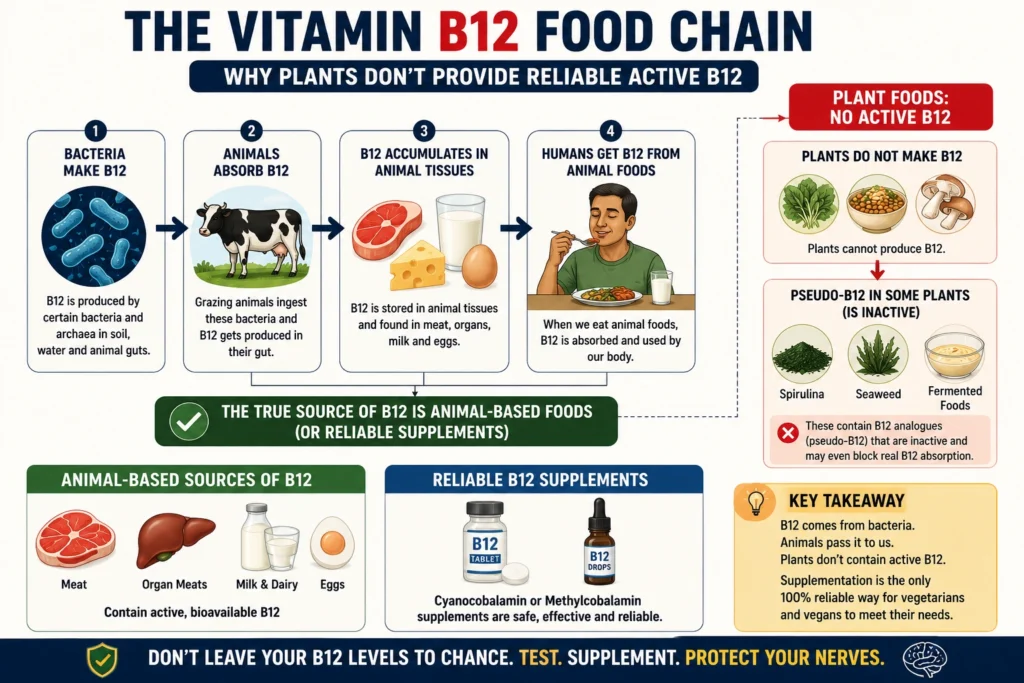
Here’s the critical point: B12 isn’t made by animals or plants. It’s produced by certain bacteria and archaea in soil and animal guts. Grazing animals accumulate B12 from soil and gut bacteria, and then it moves into meat, organs, milk, and eggs. When humans eat those foods, the B12 transfers.
Take animal foods off the plate—the pipeline stops.
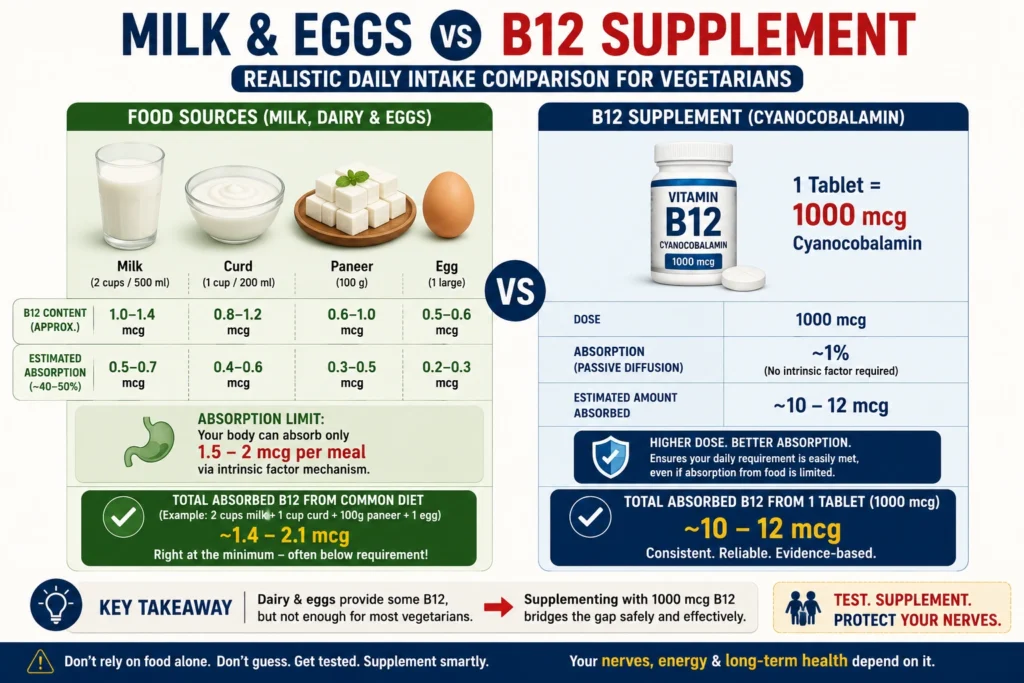
The simple reason why vegetarians lack vitamin B12 is that they cut off the main natural source. Dairy and eggs still carry some, but it’s unreliable. A glass of milk averages 1–1.2 mcg of B12. A large egg gives roughly 0.5–0.6 mcg.
The body can only absorb about 50% of the B12 from a food dose up to roughly 1.5–2 mcg via the intrinsic factor mechanism. So a lacto-vegetarian who avoids eggs and relies on two cups of milk and a bowl of curd might absorb 1–1.5 mcg at best—right at the bare-minimum requirement, often below it.
Add cooking losses, variable feed quality, and inconsistent intake, and the buffer evaporates fast.
The irony? Many vegetarians feel safe because they eat dairy. But “low-normal” B12 labs don’t always rule out functional deficiency, and subtle neurological damage can begin well before red blood cells change.
In India, where a large percentage of the population is lacto-vegetarian and lactose intolerance is common, dairy intake often drops with age—silently removing the last meaningful dietary source.
Why Vegetarians Lack Vitamin B12: The Real Reasons
The widely accepted “truth”—that milk and dairy are enough—collapses under even gentle scrutiny. Here are four core reasons deficiency is so common.
1. Dairy and Eggs: A False Sense of Security
Milk, curd, paneer, and eggs do contain B12. But counting on them as a reliable source is a gamble.
The B12 content of milk depends largely on the cow’s feed and cobalt levels in the soil. A 2017 Indian study found that B12 concentration in milk from different regions can vary by a factor of two to three. Pasteurisation causes 10–30% loss. Cooking paneer or milk further chips away at what’s left.
Absorption is the bigger constraint. The stomach can only absorb about 1.5–2 mcg of food-bound B12 per meal through the intrinsic factor pathway. So even if you eat four eggs and drink a half-litre of milk in a day, you might absorb at most 2–2.5 mcg. That’s the ceiling.
For many, that ceiling is lower because of chronic gastritis, H. pylori, or proton pump inhibitor use—all surprisingly common among Indians.
For the lacto-vegetarian who doesn’t eat eggs (and there are many), the daily B12 maths rarely adds up. Dairy is not a guarantee. It’s a hope. And hope is a terrible supplement strategy.
2. The Plant-Based Trap: No, Spirulina and Seaweed Won’t Save You
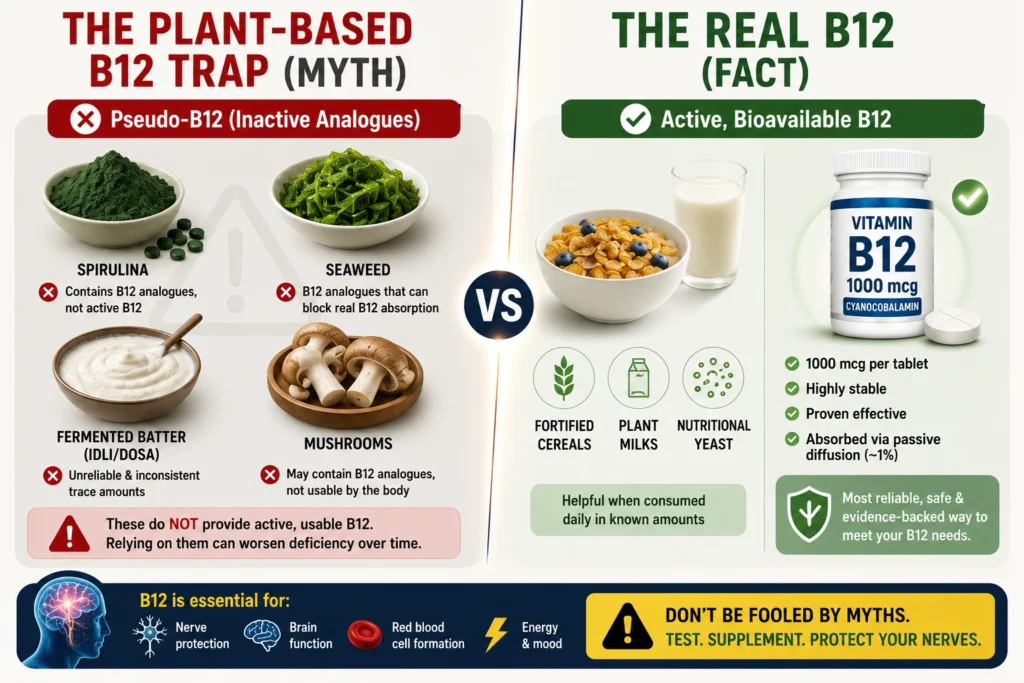
The nutrition internet is packed with lists claiming that mushrooms, spirulina, chlorella, fermented foods, and even grains contain B12. Almost all of it is functionally useless.
The “B12” in spirulina is predominately corrinoid analogues—pseudo-B12 that binds to intrinsic factor receptors but provides no vitamin activity. Worse, these analogues can actually block the absorption of real B12, making things worse over time. Multiple studies on raw food vegans who relied on algae for B12 showed progressive neurological decline despite “high” reported intakes of analogues.
Fermented batters like idli/dosa batter, kanji, and homemade pickles are often cited in Indian households as natural B12 sources. A handful of lab studies did detect trace B12 in these foods, but the concentrations are wildly inconsistent, entirely unpredictable, and in most cases biologically irrelevant.
You’d need to eat litres of kanji daily to meet even a fraction of the requirement. And the likelihood of contamination with inactive analogues is high.
The truth: No unfortified plant food provides reliable, active B12.
3. Fortified Foods: Helpful, But You Can’t Guess Your Dose
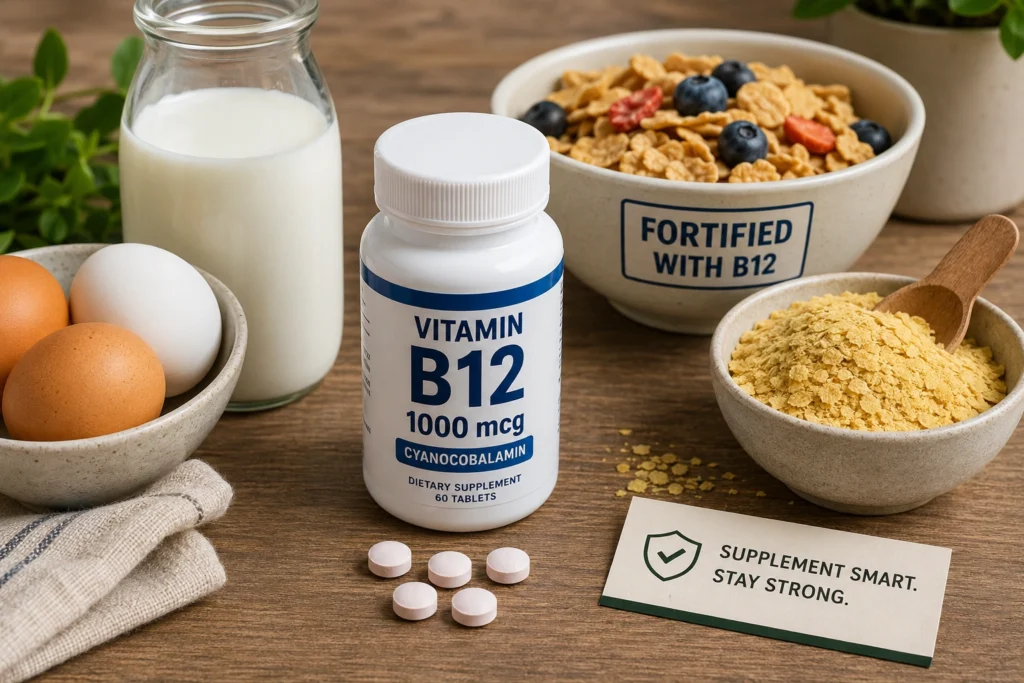
Some cereals, plant milks, and nutritional yeast are fortified with B12-generally cyanocobalamin in stable form. When consumed daily in known quantities, fortified foods can absolutely prevent deficiency.
The problem comes with real-world habits. A bowl of fortified cereal might give 2–4 mcg, but the same person might skip it on weekends, switch brands, or use an unfortified porridge the next week. Plant milks vary between 0.4 and 3 mcg per cup depending on the brand and batch.
In India, affordable fortified foods are still scarce outside major cities. The government’s fortification initiative for milk and cereals exists, but implementation is patchy. Relying on fortification alone means your B12 status depends on processing decisions made in a factory you’ve never seen.
For a nutrient this critical, that’s fragile.
4. Supplements: The No-BS Fix
Cyanocobalamin is the cheapest, most studied, and most stable form of B12. The body converts it into active coenzyme forms (methylcobalamin and adenosylcobalamin) exactly where needed.
There’s a persistent myth that “natural” methylcobalamin is superior. It’s not. Methylcobalamin is less stable, degrades faster in light and heat, and costs more—without delivering better clinical outcomes for most people.
Injectable B12 bypasses absorption issues altogether and is the go-to for severe deficiency with neurological signs. But high-dose oral cyanocobalamin (1000–2000 mcg daily or weekly) is equally effective in the majority of patients because passive diffusion picks up roughly 1% of a large dose.
For vegetarians, there is no reason to overcomplicate this. A straightforward, affordable cyanocobalamin supplement like this one costs next to nothing and works exactly as the research says it should. Start with a known dose, adjust based on lab values, and stay consistent. The supplement doesn’t care about your food philosophy—it just works.
B12 Sources for Vegetarians: At a Glance
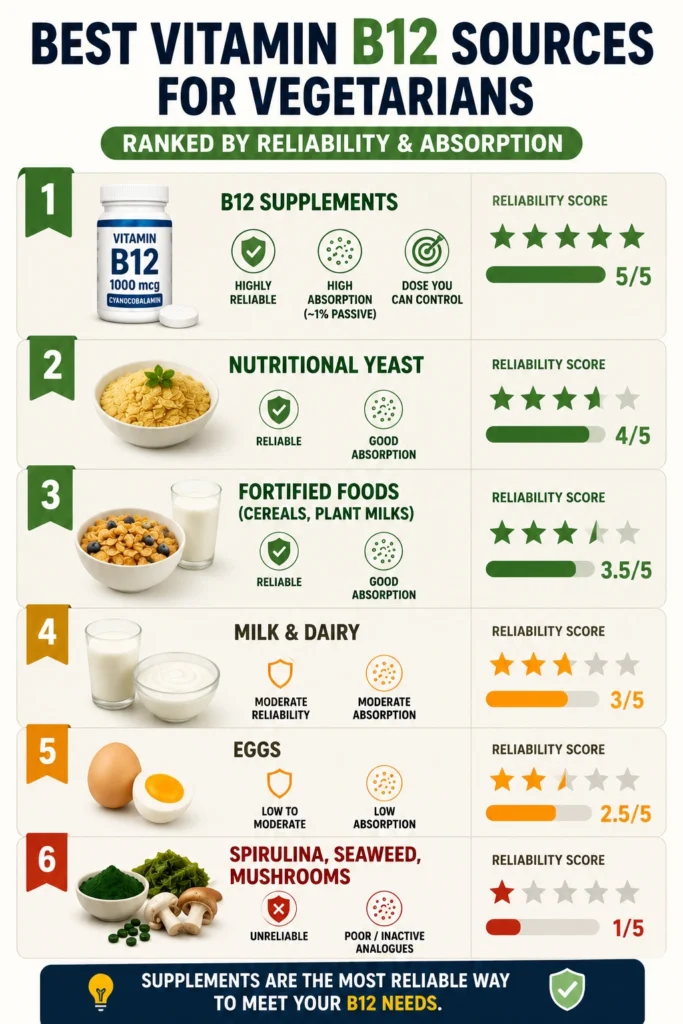
| Source | Typical B12 per serving (mcg) | Bioavailability | Reliability | Verdict |
|---|---|---|---|---|
| Milk, whole (1 cup) | 1.0–1.4 | ~40–50% | Unreliable | Supplementary, not primary |
| Curd/yogurt (1 cup) | 0.8–1.2 | ~40–50% | Unreliable | Too variable to count on |
| Paneer (100g) | 0.6–1.0 | ~40–50% | Low | Don’t bet your nerves on it |
| Egg, whole (1 large) | 0.5–0.6 | ~40–50% | Unreliable | Better than nothing, not a plan |
| Fortified cereal (30g) | 2.0–6.0 | ~50% plus passive | Moderate if eaten daily | Works as part of a layered strategy |
| Fortified plant milk (250ml) | 1.0–3.0 | Moderate | Moderate if daily intake tracked | Good when labels checked carefully |
| Fortified nutritional yeast (1 tbsp) | 5.0–10.0 | ~50% plus passive | High if used regularly | Exceptionally useful |
| Cyanocobalamin tablet (1000 mcg) | 1000 | ~1% passive = ~10 mcg absorbed | Very high, dose-controllable | The gold standard |
| Methylcobalamin tablet (1000 mcg) | 1000 | Similar, stability concerns | High if stored correctly | Overpriced with no clear advantage |
Absorption, Timing, and Bioavailability
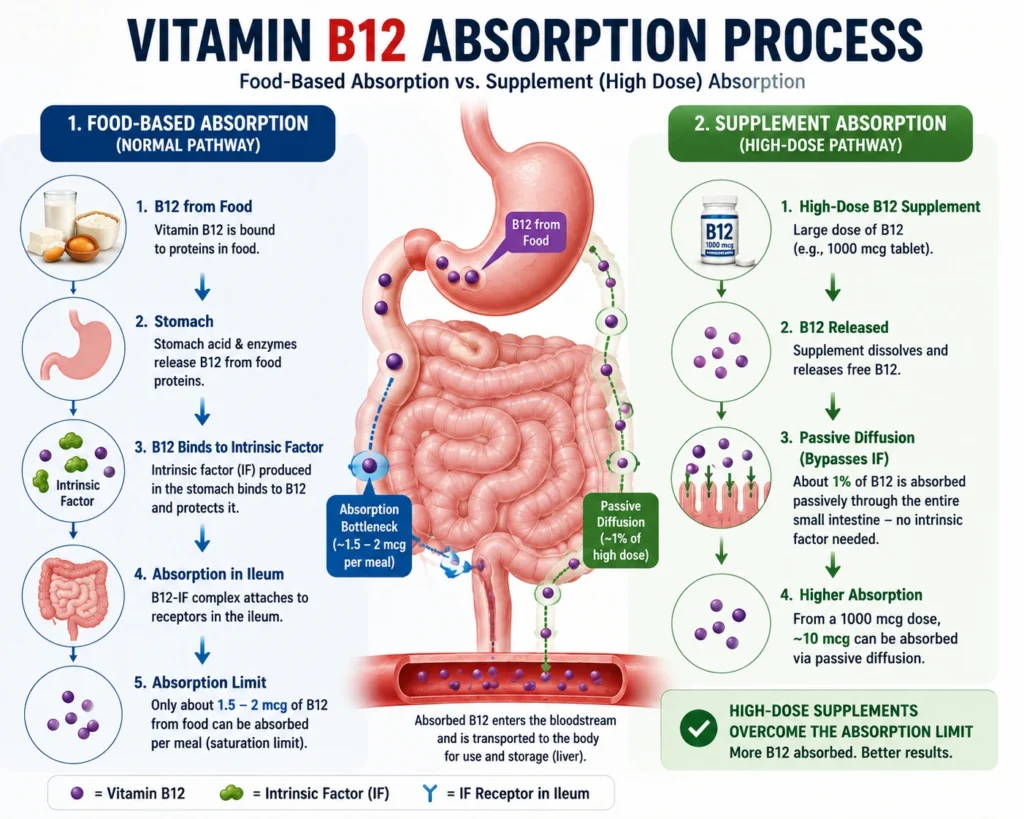
Understanding B12 absorption separates guesswork from a real plan.
The stomach and small intestine run a two-step system. First, stomach acid and pepsin free B12 from food proteins. Then the freed B12 binds to haptocorrin, travels to the duodenum, and is handed off to intrinsic factor-a glycoprotein that escorts B12 to specific receptors in the ileum. This receptor system maxes out around 1.5–2 mcg per meal. That’s the bottleneck. Any excess food-bound B12 above that threshold largely passes through unabsorbed.
High-dose supplements (above 500 mcg) cheat the system. Around 1% of a large oral dose slips through by simple passive diffusion along the entire small intestine, no intrinsic factor needed. So a 1000 mcg tablet delivers roughly 10–12 mcg even in someone with severely impaired intrinsic factor function. That’s why oral mega-dosing can replace injections—and why the “injections are always required” story is outdated for most mild-to-moderate cases.
Timing doesn’t affect absorption meaningfully. Take it with a meal if larger doses cause mild stomach discomfort. Sublingual forms promise superior absorption, but nearly all controlled studies show equivalent serum B12 rises compared to swallowing the same dose. Save your money.
What matters for fitness outcomes: Low B12 impairs oxygen transport (anaemia), depresses energy metabolism, and can cause nerve-driven weakness that tanks performance. Absorption speed? Irrelevant. Fixing the deficiency over weeks to months is what makes the difference.
Results & Performance: What the Research Says
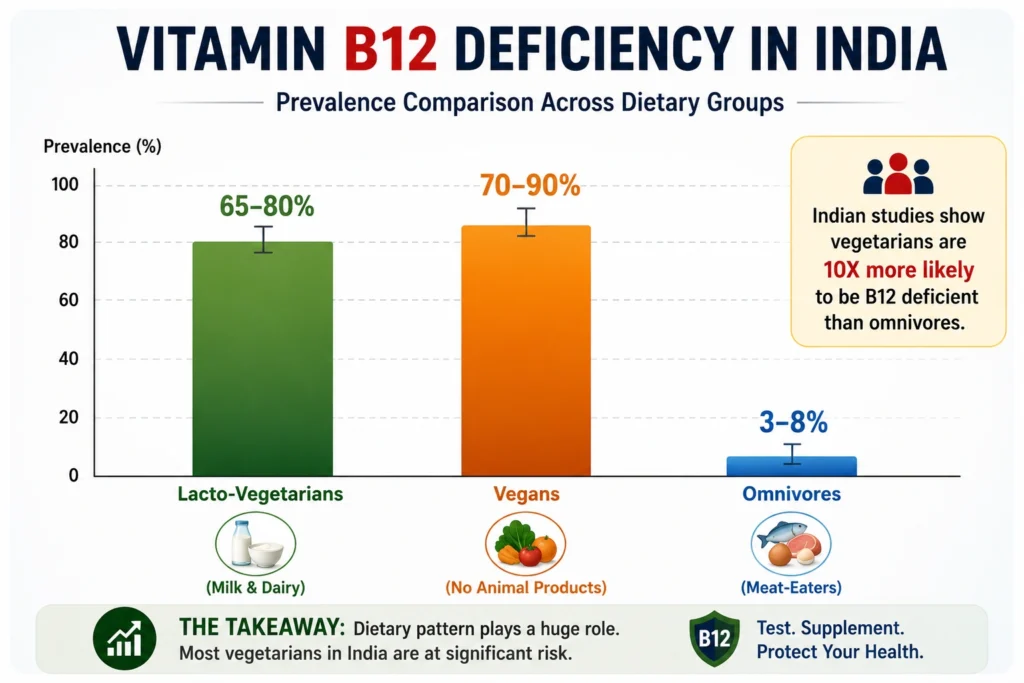
The numbers are not subtle.
A 2015 cross-sectional study from Pune found that 65% of lacto-vegetarians had serum B12 below 200 pg/mL, compared to only 5% of omnivores. More recent data from Delhi’s diabetes cohort and rural surveys paint a similar picture: anywhere from 50–80% of vegetarians in India are either deficient or borderline deficient.
One of the cleaner intervention studies, published in the Food and Nutrition Bulletin, compared 1000 mcg oral cyanocobalamin daily against injectable B12 in patients with deficiency. The result? Equivalent normalisation in serum markers and neurological symptom improvement over 90 days.
Another review from the Indian Journal of Medical Research emphasised that neurological symptoms often precede haematological signs in vegetarians. That means many active, seemingly healthy people are walking around with subclinical nerve damage that won’t show on a standard CBC.
The real-world experience confirms the data. People who go from deficient to replete routinely describe sharper cognition, less random tingling, disappearance of “heavy leg” feeling, and better recovery from training.
The takeaway: A serum B12 level below 300 pg/mL with symptoms should be treated, not watched. Don’t let a “normal” lab range fool you—many ranges haven’t kept up with clinical evidence.
Side Effects, Digestibility & Practical Concerns
Cyanocobalamin at any reasonable dose has no toxicity ceiling—the body excretes the excess.
High-dose B12 can, in a subset of people, trigger mild acne or acneiform eruptions by altering the metabolic activity of skin bacteria. This usually settles within weeks or responds to a slight dose reduction.
Injections can cause local pain or, very rarely, hypersensitivity from preservatives. Oral supplements may occasionally cause mild nausea or loose stools if taken on an empty stomach in large doses—taking them with food solves that.
The Indian context adds layers:
- Massive segments of the population avoid meat and eggs for religious or cultural reasons, making B12 a structural vulnerability
- Lactose intolerance further chips away at dairy intake as people age
- Many still believe that cooking in cast iron pans or eating sattvic diets will magically provide all nutrients
Cost is not the barrier people think. A month’s supply of high-quality cyanocobalamin tablets (1000 mcg) costs between ₹30 and ₹80—this option is affordable, reliable, and gets the job done without any fuss.
If you’re also trying to dial in your overall health, read our guide on 7 early signs of nutrient deficiency most ignore.
Decision Guide: What You Should Do Right Now
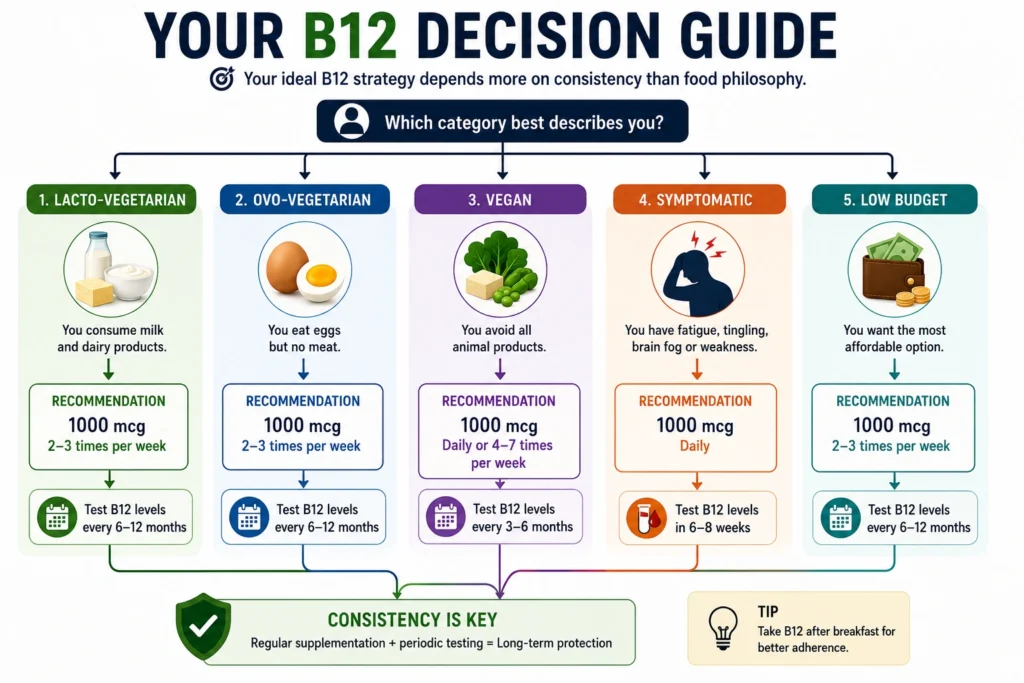
If You’re a Lacto-Vegetarian (Dairy Daily, No Eggs)
Take 1000 mcg cyanocobalamin orally every day, or 2000–2500 mcg once a week. Don’t rely on milk and curd alone—the math doesn’t work for most. If you’re over 40 or on antacids or metformin, absorption may already be compromised. Get a serum B12 and homocysteine test now.
If You’re Ovo-Vegetarian (Eggs but No Dairy)
Eggs don’t lift you out of the risk zone. Follow the same protocol as above. Two eggs a day adds maybe 0.5–0.6 mcg absorbed—not enough.
If You’re Vegan or Avoid All Animal Products
You have zero dietary active B12. Start supplementation immediately. 1000–2000 mcg cyanocobalamin daily, or a weekly 2500 mcg dose, and get labs every six months. Fortified foods help as an adjunct, but don’t place all your trust in a splash of almond milk.
If You Have Symptoms (Tingling, Brain Fog, Fatigue, Balance Issues)
Don’t self-experiment. See a doctor. Get serum B12, methylmalonic acid, and homocysteine tested. If results suggest deficiency, start with injection therapy if neurological signs are present, then transition to high-dose oral maintenance. Nerve damage can be permanent if left too long.
If You’re on a Tight Budget
Cyanocobalamin tablets are the answer. An effective supplement is available for less than the price of a chai per day. Test yearly-it’s cheaper than treating irreversible neuropathy.
If You Have Digestion Issues or Absorption Concerns
High-dose oral still works via passive diffusion, so don’t jump to injections unless labs prove oral has failed. Try a 1000 mcg daily dose for three months, retest, and adjust.
For those building a supplement stack, check out our whey vs plant protein comparison.
Final Verdict
For almost every vegetarian, the number one gap isn’t protein—it’s B12.
Cyanocobalamin supplementation at 1000 mcg daily, or a weekly 2000–2500 mcg, is the simplest, cheapest, and most evidence-backed solution.
Dairy and eggs can contribute, but they’re not reliable pillars. Plant foods and fermented batters are not sources-they are folklore masquerading as nutrition. Fortified foods are useful but demand label vigilance and consistency most people can’t sustain.
The vegetarian who takes one tiny tablet and stops worrying will almost certainly outperform the one who reads blog posts about spirulina and hopes for the best.
This isn’t about ideology. It’s about protecting nerve function, cognition, and long-term health in a dietary pattern that otherwise gets a lot right.
And if you’ve been ignoring other deficiency warning signs, read our guide on reasons for vitamin D deficiency in India– the overlap with B12 symptoms is striking.
FAQs
1. Can I get enough B12 from dairy and eggs alone?
In theory, drinking a litre of milk and eating several eggs daily might hit the requirement. But that intake is unrealistic for most. Cooking losses, variable B12 content, and the absorption ceiling of around 1.5–2 mcg per meal make dairy-and-eggs-only strategies unreliable. Regular testing consistently finds deficiency in vegetarians who consume both. Planning for a supplement is safer than planning on theoretical maths.
2. Which is better, cyanocobalamin or methylcobalamin?
Cyanocobalamin wins on stability, cost, and evidence volume. The body strips the cyano group and converts it into active coenzyme forms naturally. Methylcobalamin is less stable, degrades faster, and costs more. No large trials show superior clinical outcomes for neurological symptoms over cyanocobalamin. Most vegetarians don’t need the “natural” form.
3. Is it true that idli, dosa batter, and fermented foods contain B12?
These foods may contain trace B12 from bacteria, but the amount is inconsistent, typically sub-physiologic, and often involves inactive analogues. Relying on traditional fermented foods for B12 is a dangerous gamble. Use them for gut health—not for B12 status.
4. How long does it take to fix a B12 deficiency?
Symptom relief often starts within 2–4 weeks of high-dose oral or injectable therapy. Full neurological repair can take months. Blood markers improve faster than nerve healing. If you’ve had symptoms for a long time, some changes may be permanent—which is why early detection matters.
5. Do I need to take B12 every day or can I take it weekly?
Both work. A daily dose (1000 mcg) or a weekly dose (2000–2500 mcg) raises and maintains B12 levels effectively thanks to passive absorption. The weekly protocol is useful for people who forget daily tablets. Choose whichever habit you’ll stick to consistently.
6. Can B12 supplements cause any harm?
No known toxicity exists from oral B12, even at very high doses. The main adverse effect reported is acne in a small percentage of users, generally transient. Injections carry minor site discomfort. The real harm is letting a deficiency go untreated.
Ready to Stop Ignoring Your B12 Status?
You now know why dairy and eggs won’t save you, why plant “sources” are a lie, and exactly what to do about it.
Your one action step today: If you’re vegetarian and not supplementing, buy a bottle of cyanocobalamin (1000 mcg). Start taking it daily. Then book a serum B12 blood test this month. Cost? Less than ₹1000. Value? Potentially preventing years of nerve damage and fatigue.
Have you been diagnosed with B12 deficiency? What symptoms made you finally test? Drop a comment below -your story might help someone else stop suffering in silence.
And if this guide saved you from wasting money on spirulina or hoping your morning curd was enough, share it with a vegetarian friend who needs to hear the truth.
Disclaimer: This information is for educational purposes only. Always consult a qualified healthcare provider before starting any new supplement regimen, especially if you have neurological symptoms or pre-existing medical conditions.