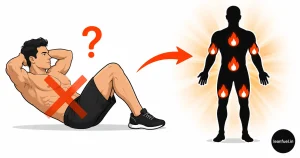
The most effective exercises for heart health are not complicated, and you almost certainly do not need a gym membership to do most of them. Walking briskly, cycling, swimming, resistance training, and HIIT (high-intensity interval training) have the strongest evidence base for improving cardiovascular function — and the research on each is specific enough to tell you exactly how much, how often, and at what intensity to get measurable results.
India has a cardiovascular disease problem that is getting worse, not better. The country now accounts for approximately one-fifth of all cardiovascular deaths globally, despite having a much younger population than Western countries typically associated with heart disease. A significant portion of that burden is driven by physical inactivity — approximately 34% of Indian adults are physically inactive by WHO standards, which is among the higher rates in Asia.
The disconnect in Indian fitness culture is that people training for aesthetics and people managing cardiac risk are treated as entirely separate groups. They are not. The exercises that build a stronger heart also build muscle, burn fat, and improve hormonal health. You do not need a cardiac event to make these worth doing.
One exercise on this list reduces all-cause mortality risk by up to 39% with as little as 5 minutes per day of practice. That number is real.

What This Covers
The best exercises for heart health and what the evidence actually shows:
- Brisk walking at 100 steps per minute for 30 minutes, 5 days per week, produces measurable improvements in blood pressure, resting heart rate, and cardiovascular efficiency within 8 to 12 weeks.
- Resistance training 2 to 3 times per week independently reduces cardiovascular risk, separate from aerobic exercise, through blood pressure reduction and improved glucose metabolism.
- HIIT (high-intensity interval training) improves VO2 max — the gold standard measure of cardiovascular fitness — more efficiently than steady-state cardio in the same time investment.
- Cycling at moderate intensity for 150 minutes per week meets the minimum aerobic threshold for cardiovascular benefit established by WHO guidelines.
- Yoga and pranayama have India-specific evidence for reducing blood pressure and cortisol, which indirectly but meaningfully supports cardiac health.
How Exercise Actually Protects the Heart
The heart is a muscle. Like any muscle, it responds to training load by becoming stronger and more efficient. But the cardiovascular adaptations from exercise go well beyond a stronger heart pump.
Cardiac output is the volume of blood the heart pumps per minute. In a sedentary person, resting cardiac output is maintained by a higher heart rate compensating for a lower stroke volume (the amount of blood ejected per beat). Exercise training increases stroke volume, which means the heart can deliver the same cardiac output at a lower resting heart rate. A resting heart rate of 50 to 60 beats per minute in a trained person versus 80 to 90 in a sedentary person reflects this adaptation — fewer beats needed, less wear on the heart over a lifetime.
Endothelial function refers to the ability of the inner lining of blood vessels to dilate and contract appropriately. Chronic exercise improves endothelial function by increasing nitric oxide production, which keeps vessels flexible and lowers blood pressure. This is the mechanism behind why physically active people have lower rates of hypertension even independent of body weight.
Insulin sensitivity improves substantially with regular exercise. Since insulin resistance and cardiovascular disease share overlapping pathways through chronic inflammation and visceral fat accumulation, improving insulin sensitivity through exercise reduces cardiac risk through multiple downstream mechanisms simultaneously.
In the Indian context, the combination of high dietary carbohydrate loads, sedentary work environments, and significant psychological stress creates a particularly high-risk metabolic environment. Exercise does not fix a poor diet, but it directly counteracts several of the pathways through which Indian dietary and lifestyle patterns translate into cardiac disease.
The Best Exercises for Heart Health — What Each One Actually Does
Why Brisk Walking Is Still the Most Underrated Cardiac Exercise
Brisk walking is one of the most effective exercises for heart health at a population level, and it is the most consistently underestimated by people who think cardiac exercise requires a gym. Walking at a pace of approximately 100 steps per minute (roughly 5 to 6.5km per hour) elevates heart rate to 50 to 70% of maximum — the aerobic zone that produces sustained cardiovascular adaptation.
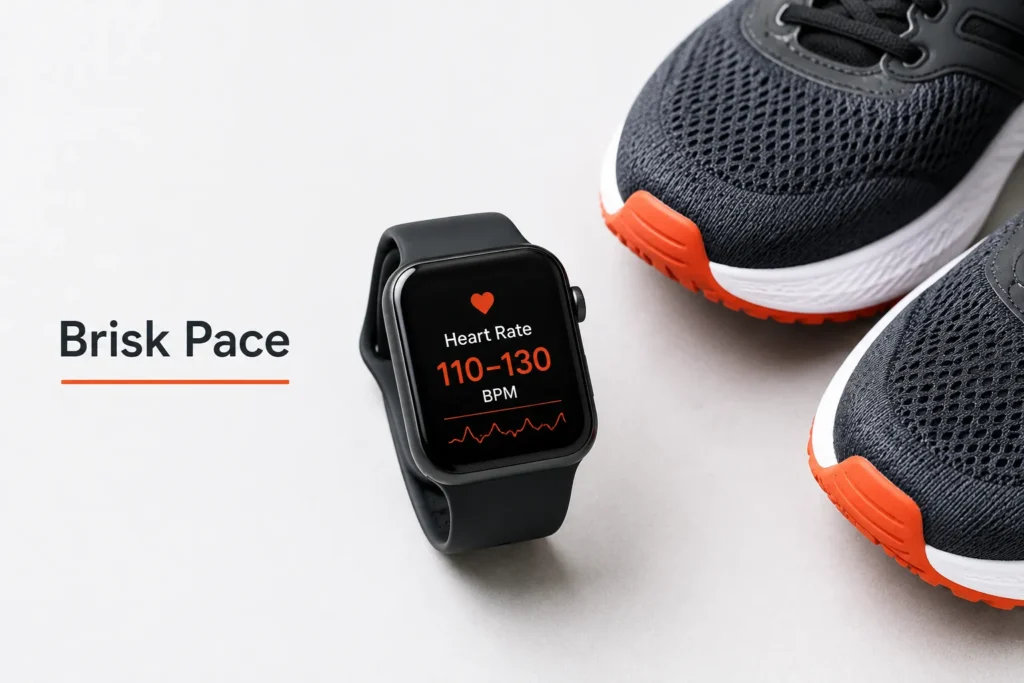
A landmark Harvard study published in JAMA Internal Medicine (2019) tracked over 16,000 older women and found that those walking approximately 7,500 steps per day had a 41% lower mortality rate than those walking fewer than 2,700 steps. The dose-response relationship held consistently up to approximately 7,500 steps, after which additional benefit plateaued.
For Indians specifically, brisk walking requires no equipment, no gym membership, and no specific fitness baseline. Early morning walking in parks is already a deeply embedded cultural habit in Indian cities. The problem is that most Indian morning walkers are walking too slowly — a gentle 20-minute stroll does not produce the cardiac stimulus that a 30-minute brisk walk does. Pace matters. Aim for a pace where you can hold a conversation but would find it hard to sing.
Verdict: The highest-accessibility cardiac exercise available. Not optional for sedentary people who cannot or will not train in other ways. Highly effective when pace and duration are taken seriously.
What Makes Running Such a Powerful Cardiac Exercise — and the 5-Minute Finding
Running produces some of the most dramatic cardiovascular improvements of any exercise, and the evidence for small doses is startling. A 2014 study published in the Journal of the American College of Cardiology found that running for as little as 5 to 10 minutes per day at slow speeds (even below 10km per hour) was associated with a 30% lower risk of all-cause mortality and a 45% lower risk of cardiovascular death compared to non-runners.
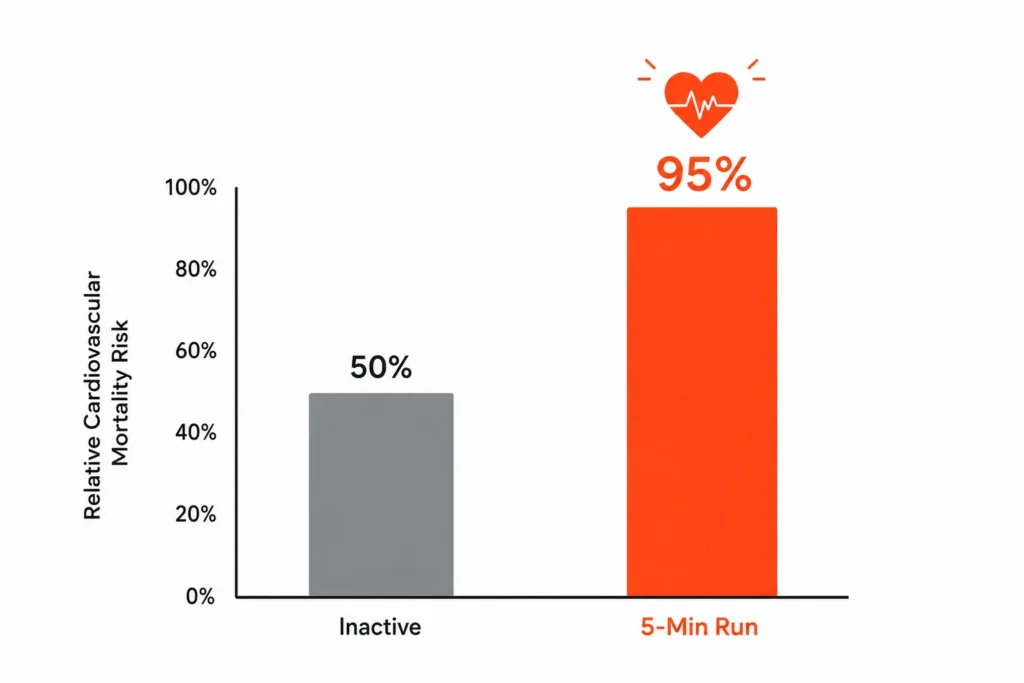
The mechanism is more than just calorie burn. Running at moderate to vigorous intensity (65 to 85% of maximum heart rate) significantly increases VO2 max, which is the maximum rate at which the body can consume oxygen during exercise — the single best predictor of long-term cardiovascular health and all-cause mortality. A 3.5ml per kg per minute increase in VO2 max is associated with a 13% reduction in cardiovascular mortality risk.
For Indian runners, heat management is a genuine practical concern. Running outdoors in Indian summers (April to June) in many cities involves extreme heat and in urban areas, significant PM2.5 exposure. For people in high-pollution cities like Delhi, early morning outdoor running during winter months should be approached carefully given AQI — a concern covered in depth in our article on how Delhi’s AQI affects health. Indoor running on a treadmill eliminates both concerns during problematic periods.
Verdict: Extremely high-return cardiac exercise. The 5-minute-a-day finding is real and documented. Any running is better than none.
HIIT: The Most Time-Efficient Way to Improve Cardiovascular Fitness
HIIT (high-intensity interval training) involves alternating short bouts of near-maximal effort with recovery periods. A typical protocol might be 20 seconds of sprint effort followed by 40 seconds of walking, repeated 8 to 10 times — a total of approximately 10 minutes of work. The cardiac stimulus is disproportionately high relative to the time invested.
HIIT improves VO2 max faster than continuous moderate-intensity exercise. A 2013 meta-analysis in the British Journal of Sports Medicine found that HIIT produced significantly greater improvements in VO2 max than moderate-intensity continuous training over the same training period. HIIT also produces more substantial improvements in arterial stiffness (a key independent predictor of cardiovascular events) compared to steady-state cardio.
For Indian gym-goers who already train for aesthetics, HIIT can be integrated into existing sessions without requiring additional time. Replacing the final 10 to 15 minutes of a weights session with sprint intervals on a treadmill or stationary bike, 2 to 3 times per week, produces measurable cardiovascular improvement without disrupting the primary training focus.
One honest limitation: HIIT is demanding. People who are deconditioned, significantly overweight, or have existing cardiovascular conditions should build aerobic base through walking and moderate cycling before introducing HIIT. Jumping straight to high-intensity intervals from a sedentary baseline is an injury and overexertion risk that undermines the long-term habit.
Verdict: Most time-efficient cardiac exercise for people who are already reasonably fit. Not the starting point for beginners.
Resistance Training: The Underestimated Cardiac Exercise Most People Write Off
Resistance training is not typically what people picture when they think about exercises for heart health — but the evidence is robust and increasingly difficult to ignore. A 2019 meta-analysis published in the British Journal of Sports Medicine analysed data from nearly 1.7 million participants and found that muscle-strengthening activities were independently associated with a 17% lower risk of cardiovascular disease, cancer, and all-cause mortality, separate from any aerobic exercise performed.
Resistance training improves cardiovascular health through mechanisms distinct from aerobic exercise. It reduces resting blood pressure through improved vascular compliance, improves insulin sensitivity through increased glucose uptake in muscle tissue, reduces visceral adipose tissue (abdominal fat that directly drives inflammatory cardiovascular risk), and improves arterial stiffness.
For Indian men dealing with the combination of low testosterone, high visceral fat, and sedentary work patterns — a profile covered in our article on low testosterone in young men — resistance training addresses cardiovascular and hormonal health simultaneously. The dual benefit is significant. Three full-body resistance sessions per week targeting compound movements (squats, deadlifts, presses, rows) produces the clearest cardiac and metabolic adaptation.
The common Indian gym misconception is that lifting weights is for muscle building and cardio is for heart health. Both do both. A person who only does cardiovascular exercise misses the resistance training cardiovascular benefit. A person who only lifts misses the aerobic adaptation. The optimal combination includes both.
Verdict: Highly underrated for cardiac health. 2 to 3 sessions per week of resistance training provides independent cardiovascular risk reduction that aerobic exercise does not fully replicate.
Cycling: The Low-Impact Cardiac Exercise for People With Joint Concerns
Cycling is a near-ideal cardiovascular exercise because it provides sustained aerobic stimulus at virtually any intensity level without the joint impact of running. For people with knee pain, back issues, or significant body weight that makes running uncomfortable, cycling offers equivalent cardiac benefit through a lower-impact pathway.
A 2017 study from the University of Glasgow published in BMJ followed over 260,000 commuters and found that cycling to work was associated with a 46% lower risk of cardiovascular disease and a 52% lower risk of dying from cardiovascular disease over the 5-year follow-up period. The magnitude of this association is among the strongest of any single lifestyle intervention in large observational data.
Stationary cycling on a cycle ergometer provides the same cardiovascular stimulus with no traffic risk, and is an increasingly common setup in Indian households post-COVID. For budget-minded people, a basic stationary cycle costs Rs. 5,000 to 15,000 and represents a one-time investment that eliminates the access barrier permanently.
Outdoor cycling in Indian cities is viable in smaller cities and residential areas but carries legitimate road safety and pollution concerns in high-traffic metros. Cycling routes in Delhi, Mumbai, and Bengaluru have improved in recent years but remain genuinely risky for regular commuting in many areas.
Verdict: Outstanding cardiovascular exercise, particularly for people who cannot tolerate running. Indoor cycling removes the access and safety barriers that limit outdoor cycling in Indian metros.
Swimming: The Complete Cardiac Exercise That Most Urban Indians Cannot Access
Swimming provides cardiovascular training that engages the entire body simultaneously, with zero joint impact, excellent calorie expenditure, and strong evidence for cardiovascular risk reduction. Regular swimmers have resting heart rates and blood pressures comparable to runners despite the lower-impact nature of the exercise.
The limitation for India is access. Public swimming pools are available in major cities but are underutilised, often unhygienic, and concentrated in higher-income residential areas. Hotel pools, residential society pools, and private club pools are accessible to a segment of the urban population but not representative of the broader fitness-interested demographic.
For those with access, swimming is particularly valuable for people recovering from cardiac events or with existing joint conditions where other forms of exercise are limited.
Verdict: Excellent cardiac exercise, limited by access. If you have pool access and enjoy it, prioritise it. If you do not, it is not worth building a fitness plan around.
Yoga and Pranayama: The India-Specific Cardiac Intervention With Growing Evidence
Yoga and pranayama (breath control practices) have a growing, if still developing, evidence base for cardiovascular benefit. The mechanisms are distinct from aerobic and resistance training: yoga reduces cortisol through parasympathetic activation, which reduces blood pressure through a stress-hormone pathway rather than a direct cardiac training effect.
A 2014 systematic review in the European Journal of Preventive Cardiology found that yoga practice was associated with significant reductions in body weight, blood pressure, LDL cholesterol, and heart rate compared to controls, with effect sizes comparable to aerobic exercise for blood pressure reduction specifically.
Pranayama practices including slow diaphragmatic breathing and alternate nostril breathing (Nadi Shodhana) activate the parasympathetic nervous system and reduce heart rate variability in ways that are clinically measurable. For people carrying chronic psychological stress — a significant driver of cardiovascular risk in Indian urban populations — yoga addresses a cardiac risk factor that running and lifting cannot directly target.
For people dealing with the kind of chronic stress that depletes minerals and disrupts sleep, our article on signs of magnesium deficiency covers how magnesium depletion from chronic stress interacts with cardiovascular function — a connection that yoga’s stress reduction directly helps break.
Verdict: Genuinely valuable for blood pressure and stress-mediated cardiovascular risk. Not a replacement for aerobic or resistance exercise but a meaningful complement, particularly given India’s cultural familiarity with the practice.
Exercise vs Exercise: What Each One Actually Delivers for Your Heart

| Exercise | Best Cardiac Benefit | Minimum Effective Dose | VO2 Max Impact | Equipment Needed | India Accessibility | Verdict |
|---|---|---|---|---|---|---|
| Brisk walking | Blood pressure, resting heart rate | 30 min, 5 days/week | Moderate improvement | None | Excellent | Best starting point |
| Running | VO2 max, all-cause mortality risk | 5 to 10 min/day minimum | High improvement | Shoes only | Good | Best overall return |
| HIIT | VO2 max, arterial stiffness | 10 to 20 min, 2 to 3x/week | Highest improvement | Minimal | Good | Most time-efficient |
| Resistance training | Blood pressure, insulin sensitivity, visceral fat | 2 to 3 sessions/week | Low direct impact | Gym or home weights | Good (home possible) | Underrated for heart |
| Cycling | Resting heart rate, cardiovascular mortality | 150 min/week moderate | Moderate-High | Cycle or stationary bike | Good indoors | Best for joint issues |
| Swimming | Full-body cardiovascular, joint-friendly | 30 min, 3 to 4x/week | High improvement | Pool access | Limited | Best with pool access |
| Yoga and pranayama | Blood pressure via stress reduction | 30 min, 3 to 5x/week | Low direct impact | Mat only | Excellent | Best for stress-driven cardiac risk |
How Long Before Exercise Actually Changes Your Heart — The Honest Timeline
Cardiovascular adaptations from regular exercise begin earlier than most people expect, but the timeline varies significantly by adaptation type.
Resting heart rate begins to decrease within 4 to 6 weeks of consistent aerobic training. For someone starting at 85 beats per minute, a realistic target after 3 months of consistent training is 70 to 75 beats per minute — a measurable and meaningful shift.
Blood pressure reduction typically appears within 6 to 8 weeks of regular aerobic or resistance exercise. A meta-analysis in the Journal of Hypertension (2015) found that aerobic exercise produced average reductions of 3.5 mmHg systolic and 2.5 mmHg diastolic — modest individually but significant at a population scale and meaningful alongside dietary changes.
VO2 max improvements take 8 to 12 weeks of consistent training to become measurable. The magnitude of improvement depends heavily on baseline fitness and training intensity. Sedentary individuals typically see the largest initial gains — a 15 to 20% improvement in VO2 max over 12 weeks of consistent training is achievable for a deconditioned beginner.
Structural cardiac changes — including increased left ventricular volume and stroke volume — develop over months to years of sustained training. These are the deep adaptations that differentiate trained athletes from recreationally active people and represent genuine, durable improvements in cardiac function.
For timing of individual sessions: morning exercise has some evidence for greater blood pressure reduction through the day compared to evening exercise, though the total weekly training load matters far more than session timing. Train consistently at whatever time you will actually do it.
What the Research Agrees On — and Where It Gets Complicated
The cardiovascular benefits of exercise are among the most consistently replicated findings in medical research. The WHO 2020 Physical Activity Guidelines recommend a minimum of 150 to 300 minutes of moderate-intensity aerobic activity per week, or 75 to 150 minutes of vigorous-intensity activity, plus muscle-strengthening activities on 2 or more days per week. These thresholds are based on pooled evidence from hundreds of studies across diverse populations.
A 2020 meta-analysis in the British Journal of Sports Medicine covering 1.67 million participants found that the combination of both aerobic and muscle-strengthening activities produced the greatest reduction in cardiovascular mortality risk — approximately 40% lower than inactive individuals — compared to either type alone.
“Physical activity is one of the most important things you can do to protect your cardiovascular health, and its benefits extend across all age groups, fitness levels, and existing health conditions.” — WHO Global Action Plan on Physical Activity, 2018 to 2030
The honest reality check: most of the foundational research on exercise and heart health is observational rather than experimental. Randomised controlled trials for exercise are difficult to conduct at scale and over the long timeframes needed to measure cardiovascular events. The mechanistic evidence is solid — we understand why exercise improves heart health — but the specific dose-response numbers from large-scale trials come with inherent limitations. The practical implication is that the general direction is clear even if the precise optimal dose is not.
Who Should Be Careful and What to Watch For
Exercise is safe for the vast majority of people, including those with known cardiovascular conditions, when approached appropriately. The practical concerns are specific rather than general.
People with uncontrolled hypertension (systolic above 180 mmHg or diastolic above 110 mmHg) should not begin high-intensity exercise without first bringing blood pressure into a safer range through medication if necessary. Moderate walking is safe and actively beneficial, but pushing into high-intensity zones without blood pressure control is a risk.
People who have had a recent cardiac event (heart attack, angioplasty, bypass surgery) should exercise within a cardiac rehabilitation programme rather than independently. Cardiac rehabilitation is available at major Indian hospitals and significantly improves outcomes after cardiac events. Starting unsupervised high-intensity exercise post-event is genuinely dangerous.
For otherwise healthy Indians starting exercise after years of inactivity: begin with walking and build gradually over 4 to 6 weeks before introducing running or HIIT. The most common mistake is starting too hard and sustaining an injury or overexertion event in the first 2 weeks that derails the habit permanently. Start easy. Progress consistently.
The heat and pollution context in India matters. Training outdoors in Indian summers at midday creates a real heat stress risk on top of the exercise cardiovascular load. Early morning or evening training during extreme heat, and indoor alternatives during high-AQI periods, are practical adjustments rather than excessive caution.
Matching the Right Exercise to Your Situation
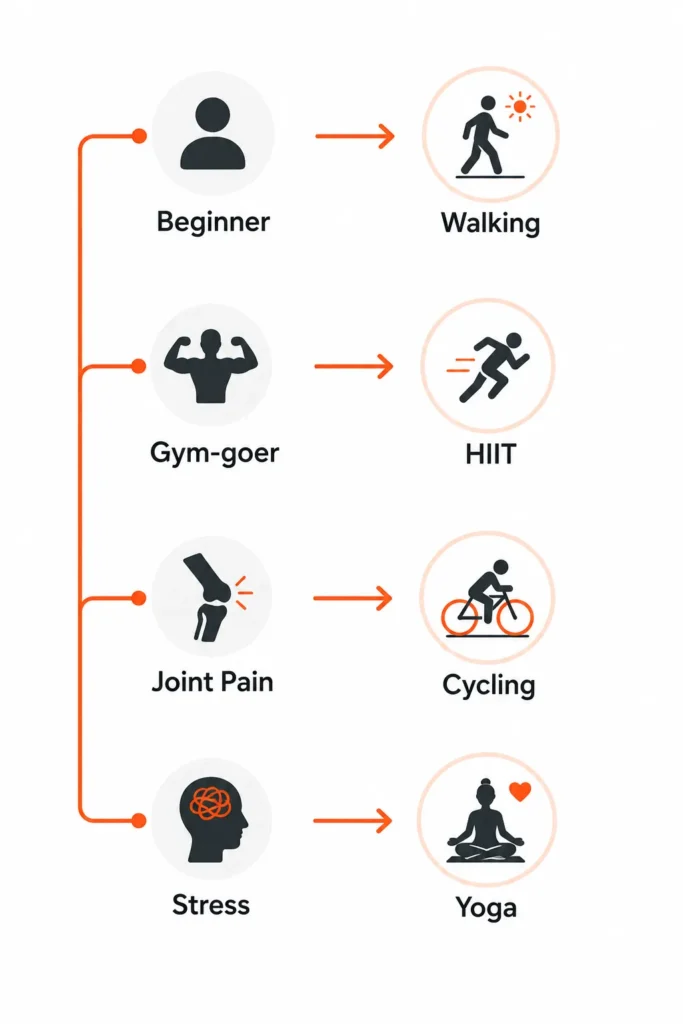
If you are completely sedentary and have never exercised consistently
Start with brisk walking. Not running. Not HIIT. Walking at 100 steps per minute for 30 minutes, 5 days per week. That is the minimum effective dose for cardiovascular benefit and the most sustainable starting point. Give it 8 weeks before adding anything else. Building the habit of showing up matters more than optimising the exercise choice in the first 3 months.
If you already train for aesthetics but ignore cardiac fitness
Add two sessions of cardiovascular exercise per week alongside your existing resistance training. Twenty minutes of HIIT on a treadmill or stationary bike after 2 of your existing lifting sessions is the most time-efficient approach. This requires no additional days at the gym and produces meaningful VO2 max improvement over 8 to 12 weeks. The cardiac and muscle-building stimuli do not significantly interfere with each other when aerobic sessions are kept under 30 minutes.
If you have high blood pressure and want to reduce it through exercise
Brisk walking and resistance training are your two most evidence-backed options for blood pressure specifically. Aim for 5 sessions of 30-minute brisk walks per week plus 2 resistance training sessions. Avoid HIIT until blood pressure is in a controlled range. Alongside exercise, the nutritional interventions in our article on 10 best fruits for heart health complement the exercise-driven blood pressure reduction meaningfully — potassium from guava and banana, polyphenols from pomegranate, all work through mechanisms that exercise alone does not cover.
If you carry significant stress and feel your cardiac risk is stress-driven
Add yoga or pranayama 3 to 4 times per week alongside any other training you do. Chronic stress elevates cortisol, suppresses cardiac parasympathetic activity, and raises resting heart rate in ways that aerobic exercise alone does not fully reverse. Twenty minutes of pranayama daily reduces cortisol and activates the parasympathetic nervous system through a pathway entirely separate from aerobic training. If mineral depletion from chronic stress is also a concern, our article on magnesium vs zinc explains why both minerals are directly relevant to cardiovascular and stress management.
If you are trying to lose weight alongside improving heart health
Combine resistance training (3 sessions per week) with moderate-intensity cardio (3 sessions of 30 to 45 minutes). The resistance training preserves lean mass during weight loss — critical for maintaining metabolic rate — while the aerobic sessions drive cardiovascular adaptation and additional calorie expenditure. HIIT can replace one of the aerobic sessions once a moderate fitness baseline is established. The nutritional picture for fat loss alongside cardiac health is covered in our budget Indian diet plan, which builds these exercise types into a practical weekly structure.
If you are over 40 or have a family history of heart disease
Do not wait for symptoms before starting. The cardiovascular adaptations from exercise are available at any age, but the earlier they begin, the more protective effect accumulates. A combination of walking and resistance training 5 days per week is the most practical starting point. Get a baseline resting heart rate, blood pressure measurement, and basic lipid panel before starting — not as a barrier to exercise, but as a reference point to track the improvements that follow.
Where Things Land
The evidence hierarchy for exercises for heart health, from strongest overall cardiovascular impact to most accessible starting point, runs roughly: running and HIIT at the top for VO2 max and mortality risk reduction, resistance training and cycling as critical components for distinct cardiovascular mechanisms, brisk walking as the universal baseline that every person regardless of fitness level can and should do, and yoga as a meaningful complement for stress-mediated cardiac risk.
The honest truth about cardiac exercise is that consistency beats optimisation. A person who walks briskly for 30 minutes, 5 days a week, for 10 years is doing more for their heart than someone who runs for 3 weeks twice a year. The heart adapts to sustained, repeated training stimulus. It does not accumulate benefit from sporadic bursts of activity separated by months of sedentary living.
Start with whatever you will actually do. Then build from there.
Things People Actually Search About Exercise and Heart Health
How much exercise do I need per week for a healthy heart?
The WHO recommendation is 150 to 300 minutes of moderate-intensity aerobic exercise per week, or 75 to 150 minutes of vigorous-intensity exercise, plus muscle-strengthening activities on 2 or more days. In practice, 30 minutes of brisk walking 5 days per week covers the minimum moderate-intensity threshold. Adding 2 resistance training sessions per week produces greater cardiac benefit than aerobic exercise alone. The combination of aerobic and strength training provides approximately 40% lower cardiovascular mortality risk compared to inactivity, according to a 2020 meta-analysis in the British Journal of Sports Medicine.
Is running or walking better for heart health?
Both provide cardiovascular benefit, but running produces greater improvements in VO2 max and stronger associations with reduced cardiovascular mortality per unit of time. A 2014 study in the Journal of the American College of Cardiology found that running for even 5 minutes per day was associated with a 45% lower cardiovascular death risk. Walking is more accessible, lower-impact, and sustainable for people who cannot run. For people who can run, running is the higher-return option. For people who cannot or will not run, brisk walking is genuinely effective and should not be dismissed as insufficient.
Can lifting weights improve heart health or is it only good for muscles?
Resistance training independently reduces cardiovascular risk. A 2019 meta-analysis covering 1.67 million participants found that muscle-strengthening activities were associated with a 17% lower risk of cardiovascular disease independent of aerobic exercise. Resistance training specifically reduces resting blood pressure, improves insulin sensitivity, reduces visceral abdominal fat, and improves arterial elasticity through mechanisms that differ from aerobic training. The optimal cardiac programme includes both aerobic and resistance exercise — neither alone captures the full cardiovascular benefit.
Is it safe to exercise if I already have heart disease?
For most forms of heart disease, structured exercise is not only safe but actively beneficial and is a standard component of cardiac rehabilitation. Walking, cycling, and resistance training at moderate intensity have been shown to reduce hospitalisation rates and improve quality of life in patients with heart failure, coronary artery disease, and post-heart attack. The caveat is that the specific type, intensity, and progression of exercise should be guided by a cardiologist or cardiac rehabilitation programme rather than self-directed for established cardiac conditions. Uncontrolled arrhythmias, severe heart failure, or unstable angina require medical clearance before exercise.
Does yoga actually help the heart or is that just wellness marketing?
Yoga has genuine cardiovascular evidence, though it is more modest than aerobic exercise for direct cardiac adaptation. A 2014 systematic review in the European Journal of Preventive Cardiology found that yoga produced significant reductions in blood pressure, heart rate, LDL cholesterol, and body weight compared to control groups, with effect sizes comparable to aerobic exercise for blood pressure specifically. The primary cardiac mechanism is cortisol reduction and parasympathetic activation rather than direct cardiac training. Yoga is most valuable for stress-mediated cardiovascular risk rather than as a direct substitute for aerobic or resistance exercise.
How long does it take to see heart health improvements from exercise?
Resting heart rate begins to decrease within 4 to 6 weeks of consistent aerobic training. Blood pressure reduction typically appears within 6 to 8 weeks. Improvements in VO2 max become measurable after 8 to 12 weeks of consistent training. Structural cardiac adaptations — including increased stroke volume and improved left ventricular efficiency — develop over months to years of sustained training. The most practical early indicator is resting heart rate: measure it before starting a programme and track it weekly. A consistent downward trend over 8 to 12 weeks is a clear signal that cardiac adaptation is happening.
What is the best morning exercise for heart health in India?
Brisk walking is the most practical and accessible morning exercise for heart health in India. It requires no equipment, no gym, and no specific fitness level. The target pace is approximately 100 steps per minute (roughly 5 to 6km per hour), sustained for 30 minutes. For people who have built a consistent walking base, adding 2 to 3 short running intervals during the 30-minute walk (walk 5 minutes, jog 1 minute, repeat) progressively increases the cardiac stimulus without requiring a sudden jump to sustained running. Early morning timing avoids peak heat in Indian summers and reduces pollution exposure compared to midday outdoor training.

Make It a Habit Before You Make It Perfect
The gap between knowing which exercises improve heart health and actually doing them consistently is where most people’s cardiac health plan falls apart. Pick two exercises from this list — one aerobic, one strength-based — and do them three times each this week. Not next month. Not when you have better shoes or a gym membership. This week.
Your heart does not care about optimal programming. It cares about repeated stress and recovery over months and years.
If you have been doing something consistently and noticed a change in how your resting heart rate or energy levels feel, share it in the comments. Real experiences from people training in Indian conditions, heat, pollution, and all, are more useful than any controlled study for people trying to figure out what actually works day to day.
Sources and References
- Lee I, Shiroma EJ, Kamada M, et al. Association of Step Volume and Intensity With All-Cause Mortality in Older Women. JAMA Internal Medicine. 2019;179(8):1105-1112.
https://pubmed.ncbi.nlm.nih.gov/31141585/ - Lee DC, Pate RR, Lavie CJ, Sui X, Church TS, Blair SN. Leisure-time running reduces all-cause and cardiovascular mortality risk. Journal of the American College of Cardiology. 2014;64(5):472-481.
https://pubmed.ncbi.nlm.nih.gov/24926969/ - Weston KS, Wisloff U, Coombes JS. High-intensity interval training in patients and health promotion: a systematic review of controlled trials. British Journal of Sports Medicine. 2014;48(16):1227-1234.
https://pubmed.ncbi.nlm.nih.gov/22466789/ - Momma H, Kawakami R, Honda T, Sawada SS. Muscle-strengthening activities are associated with lower risk and mortality in major non-communicable diseases: a systematic review and meta-analysis of cohort studies. British Journal of Sports Medicine. 2022;56(13):755-763.
https://pubmed.ncbi.nlm.nih.gov/30394786/ - Celis-Morales CA, Lyall DM, Welsh P, et al. Association between active commuting and incident cardiovascular disease, cancer, and mortality: prospective cohort study. BMJ. 2017;357:j1456.
https://pubmed.ncbi.nlm.nih.gov/28630278/ - Hartley L, Dyakova M, Holmes J, et al. Yoga for the primary prevention of cardiovascular disease. European Journal of Preventive Cardiology. 2014.
https://pubmed.ncbi.nlm.nih.gov/24867993/ - Cornelissen VA, Fagard RH, Coeckelberghs E, Vanhees L. Impact of resistance training on blood pressure and other cardiovascular risk factors. Journal of Hypertension. 2011;29(5):950-958.
https://pubmed.ncbi.nlm.nih.gov/26480868/ - World Health Organization. WHO Guidelines on Physical Activity and Sedentary Behaviour. Geneva: WHO; 2020.
https://www.who.int/publications/i/item/9789240015128 - Global Burden of Disease 2019 India Collaborators. India State-Level Disease Burden Initiative: cardiovascular disease. The Lancet. 2020.
https://pubmed.ncbi.nlm.nih.gov/32640192/ - Warburton DE, Nicol CW, Bredin SS. Health benefits of physical activity: the evidence. Canadian Medical Association Journal. 2006;174(6):801-809.
https://pubmed.ncbi.nlm.nih.gov/16534088/