
Creatine is safe for Indians — and that statement is backed by over three decades of research across populations that include South Asian participants. The concern about creatine being unsafe, damaging to kidneys, or unsuitable for Indian physiology is a persistent myth with no scientific basis for healthy individuals. Indian gym-goers are avoiding one of the most researched and consistently safe supplements in sports nutrition based on fear, not evidence.
The specific worry in Indian fitness communities tends to take one of three forms: that creatine will damage kidneys, that it is too hot for the Indian climate, or that vegetarian diets make it risky. None of these concerns hold up under scrutiny. What does exist are a small number of genuine contraindications — existing kidney disease, specific medications — that are relevant to a specific population and should be understood clearly.
The question of whether creatine is safe for Indians is worth answering thoroughly because vegetarian Indians actually stand to benefit more from creatine than meat-eaters. The reason behind that is not obvious, and it matters.
The Straightforward Version First
Is creatine safe for Indians? The evidence-based answer:
- Creatine monohydrate is safe for healthy Indian adults — no peer-reviewed research shows kidney damage, liver toxicity, or adverse health effects in people without pre-existing kidney conditions.
- The elevated creatinine reading on blood tests after creatine use is a metabolic byproduct, not a sign of kidney stress — this distinction is critical and frequently misunderstood by Indian doctors and patients alike.
- Vegetarian Indians have lower baseline muscle creatine stores than meat-eaters and therefore respond to creatine supplementation with larger percentage improvements in strength and performance.
- 3 to 5g of creatine monohydrate daily is the effective and safe dose — loading is not required, and premium creatine forms cost more without evidence of superior results.
- People with diagnosed kidney disease, single-kidney function, or on nephrotoxic medications should not supplement creatine without medical supervision — this is a real and specific contraindication, not a general warning.
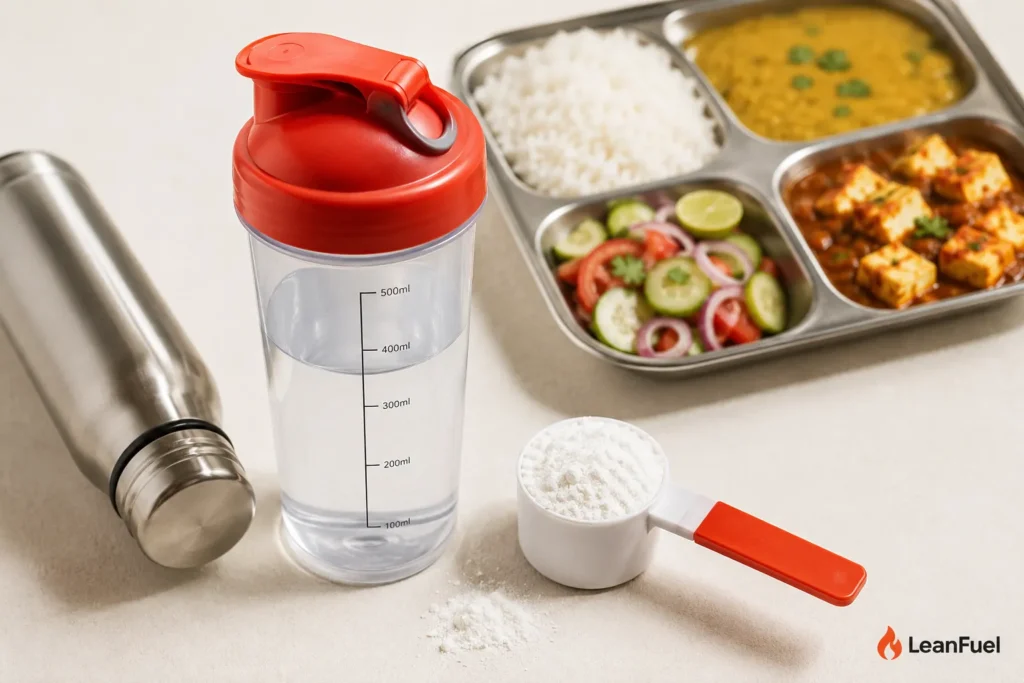
What Creatine Actually Is — Specifically for Indian Readers
Creatine is a naturally occurring compound synthesised in the body from three amino acids: arginine, glycine, and methionine. The liver and kidneys produce approximately 1 to 2g of creatine per day. Additional creatine comes from food — primarily meat and fish.
This is the first Indian-specific fact that matters: a standard Indian vegetarian diet provides virtually zero dietary creatine. All creatine in a vegetarian Indian’s system is endogenously produced. Omnivores who eat red meat and fish get an additional 1 to 2g daily from food, bringing their total muscle creatine stores significantly closer to saturation. Vegetarian Indians are therefore starting from a lower baseline — which means supplementing 3 to 5g of creatine monohydrate daily produces a larger relative increase in muscle phosphocreatine stores than it does for someone already eating meat regularly.
Inside muscle cells, creatine is stored as phosphocreatine — the phosphate-donating molecule that rapidly regenerates ATP (adenosine triphosphate, the energy currency of muscle contraction) during short, explosive efforts. More phosphocreatine available means the muscle can sustain high-intensity output slightly longer before performance degrades. For a squat, deadlift, or sprint, that translates to one or two additional high-quality reps before failure.
In India, creatine is available from brands like AS-IT-IS Nutrition, MuscleBlaze, and Optimum Nutrition at prices between Rs. 500 and 1200 per month for plain monohydrate. The product category is affordable, widely available, and does not require purchasing imported brands. The challenge is not access — it is the persistent misinformation in gym culture that keeps people from using what is one of the best-evidenced supplements in existence.
The 7 Facts About Creatine Safety That Doctors Actually Agree On
Fact 1: Creatine Does Not Damage Healthy Kidneys — This Has Been Studied Extensively
Creatine is safe for kidneys in people without pre-existing kidney disease, and this is the most extensively studied safety question in creatine research. The concern originated from a misunderstanding of a single metabolic fact: creatine supplementation raises serum creatinine levels, and creatinine is the primary marker used to assess kidney function. Elevated creatinine can indicate kidney stress — but in this context, the elevated reading is a direct chemical byproduct of creatine metabolism in muscle, not a signal of kidney damage.
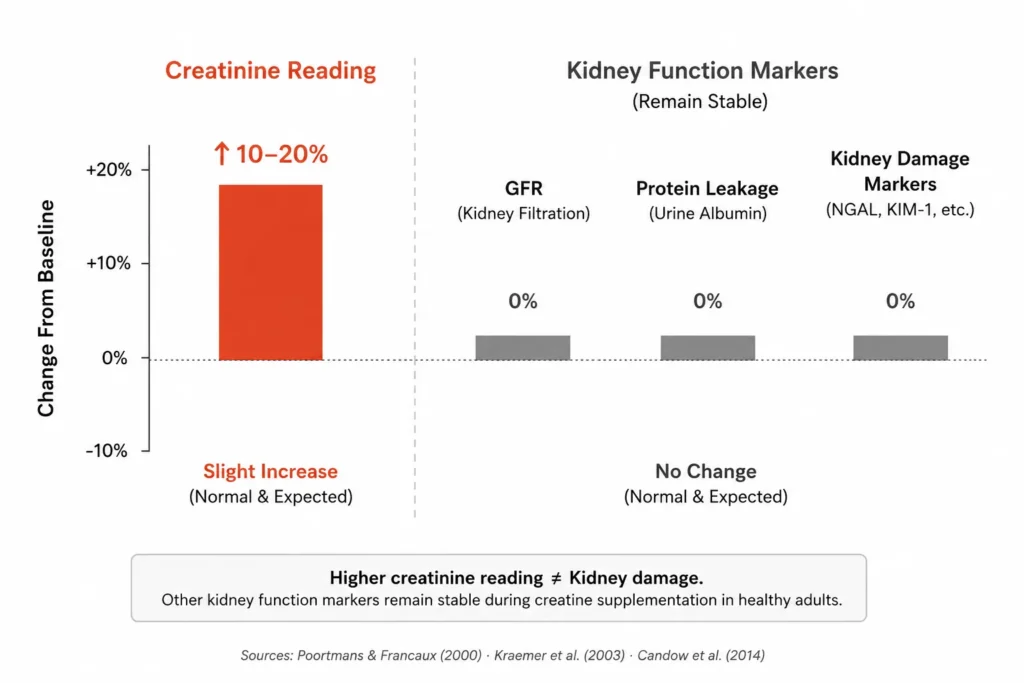
The ISSN Position Stand on Creatine Safety (2017) reviewed over 500 studies and confirmed no evidence of kidney dysfunction in healthy individuals supplementing at standard doses, including studies running 5 or more years of continuous use.
This creates a specific practical problem for Indians: when a doctor or pathologist sees elevated creatinine on a blood panel and the patient is taking creatine, the result may be misinterpreted as kidney damage. It is not. The appropriate response is to note the creatine supplementation on the lab request so the result is interpreted correctly.
Verdict: Confirmed safe for healthy kidneys across decades of research. If you have diagnosed kidney disease, that changes — but that is a different conversation.
Fact 2: Is Creatine Safe for Indians in Hot and Humid Climates?
Creatine is safe to use in hot and humid Indian climates with appropriate hydration, and the concern about creatine causing dangerous heat stress is not supported by evidence in adequately hydrated individuals.
The theoretical concern is that creatine increases intramuscular water retention, which could theoretically reduce sweating capacity or increase cardiovascular heat load during exercise in hot conditions. Research testing this hypothesis has not found it to be a meaningful problem. A 2001 study published in the Journal of Athletic Training found that creatine supplementation did not negatively affect thermoregulation, body temperature, or fluid balance during exercise in warm conditions in adequately hydrated subjects.
The practical reality for Indian gym-goers: creatine draws water into muscle cells, which means total daily water requirements increase slightly. Training in Indian summer heat while on creatine and under-hydrated is genuinely riskier than training in the same conditions without creatine. The solution is adequate hydration — 3 to 3.5 litres of water daily during creatine use, more during outdoor training or high-sweat sessions.
Training outdoors during peak Indian summer heat (April to June) while on creatine adds cardiovascular load — a concern we covered in the context of AQI and outdoor exercise in our article on how Delhi’s AQI affects health and performance. The same principle applies here: hot weather plus vigorous exercise is a stressor regardless of supplement use, and creatine does not uniquely worsen it when hydration is maintained.
Verdict: Safe in Indian climate conditions with adequate hydration. Not a reason to avoid creatine.
Fact 3: Creatine Is Vegetarian-Friendly — And More Valuable for Vegetarians
Creatine monohydrate supplements are synthesised industrially and contain no animal-derived ingredients. They are completely vegetarian. This is worth stating clearly because the assumption that creatine “comes from meat” leads many Indian vegetarians to avoid it.
More importantly, vegetarian Indians derive greater benefit from creatine supplementation than meat-eaters. Dietary creatine from meat and fish contributes 1 to 2g daily to muscle creatine stores in omnivores. Vegetarians receive none from food — their muscle creatine levels are measurably lower at baseline. Research consistently shows that vegetarians experience larger absolute increases in muscle creatine saturation, strength, and performance from supplementation compared to omnivores starting from a higher baseline.
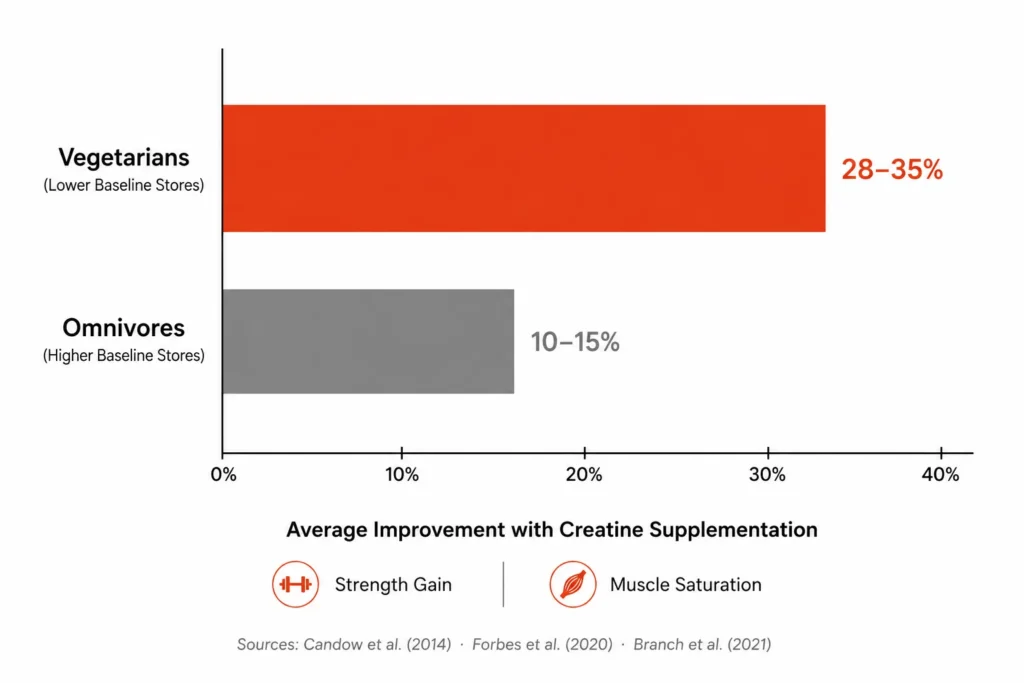
This is not a marginal difference. A 2003 study in the International Journal of Sport Nutrition and Exercise Metabolism specifically compared creatine supplementation responses in vegetarians versus omnivores and found significantly greater improvements in total work output, lean mass, and strength in the vegetarian group.
For Indian vegetarians who train seriously, this is arguably the single most beneficial and cost-effective supplement available — more impactful than most protein supplements for people whose creatine baseline is chronically below optimal.
Verdict: Fully vegetarian. More effective for vegetarians than for meat-eaters. A specific advantage that most Indian gym guides fail to mention.
Fact 4: The Loading Phase Is Not Required — and Often Creates Unnecessary Discomfort
Loading creatine — taking 20g daily for 5 to 7 days to rapidly saturate muscle stores — is not required for creatine to work. This is a fact that the ISSN has explicitly stated, yet loading protocols persist in Indian gym culture as the assumed correct approach.
Taking 3 to 5g of creatine monohydrate daily without a loading phase reaches full muscle saturation in approximately 3 to 4 weeks. The end-state is identical to loading. The only difference is the time to reach saturation.
The problem with loading for Indian users specifically is gastrointestinal. Taking 20g of creatine daily in the first week, split across 4 doses, significantly increases the likelihood of bloating, stomach cramping, and loose stools. This causes many people to conclude they cannot tolerate creatine, when the issue is exclusively the loading dose rather than the supplement itself. At 3 to 5g daily, gastrointestinal side effects are rare and typically mild.
Verdict: Skip loading unless you have a specific competition or event within 2 weeks requiring peak creatine levels urgently. Standard daily dosing at 3 to 5g is the practical recommendation for most people.
Fact 5: Creatine Monohydrate Remains the Best Form — Premium Alternatives Are Not Worth the Price
Creatine monohydrate is the most effective, most studied, and most affordable creatine form available, and no premium alternative has outperformed it in head-to-head research. This is directly relevant for Indian buyers facing a market full of creatine HCl, creatine ethyl ester, buffered creatine, and liquid creatine products at 2 to 4 times the price.
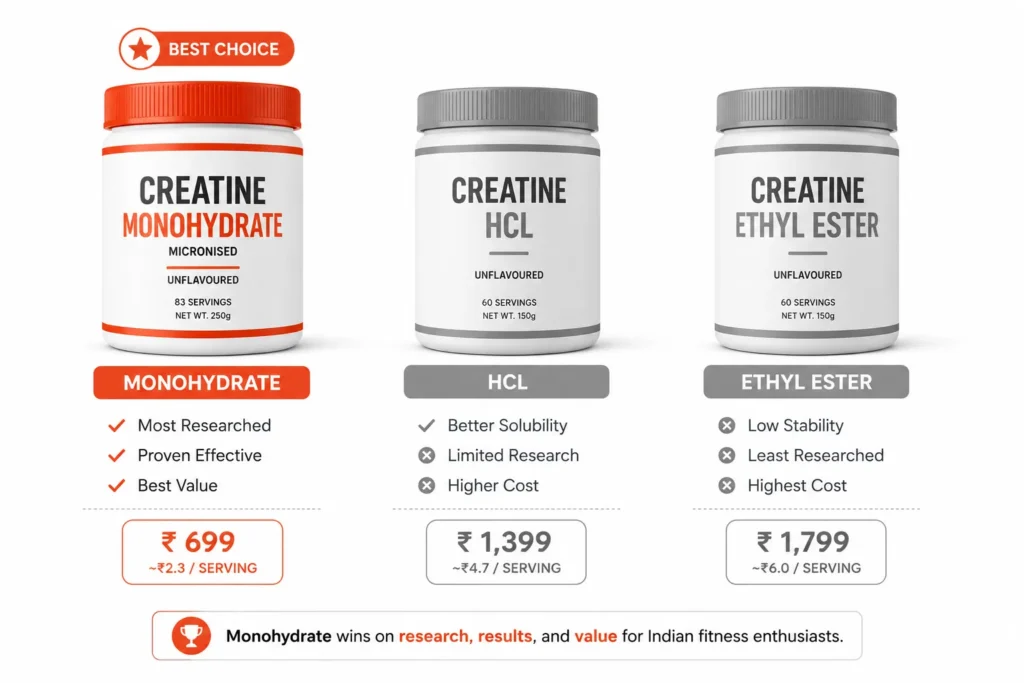
A direct comparison study published in the Journal of the International Society of Sports Nutrition (2012) found that creatine monohydrate outperformed creatine ethyl ester in muscle creatine saturation — creatine ethyl ester was partially converted to creatinine (the waste product) in the digestive tract before being absorbed, making it less efficient despite marketing claims to the contrary.
Creatine HCl dissolves better in water and has a slightly lower pH, but there is no evidence it produces superior muscle creatine loading at the lower doses marketed. The “you need less of it” claim is not supported by studies measuring actual muscle creatine levels.
In India, AS-IT-IS Nutrition’s creatine monohydrate and MuscleBlaze creatine monohydrate are both reputable options at Rs. 500 to 900 per month. There is no performance argument for spending more on a different form.
Verdict: Monohydrate only. Anyone selling a premium creatine form at significantly higher cost is charging for marketing, not results.
Fact 6: The Hair Loss Question Is Nuanced — Not a Straightforward Yes or No
The relationship between creatine and hair loss is the one safety question that cannot be dismissed outright, and it deserves an honest treatment rather than either a flat denial or exaggerated alarm.
A 2009 study in Clinical Journal of Sport Medicine found that creatine supplementation in college rugby players raised DHT (dihydrotestosterone) levels by 56% during the loading phase and kept them 40% above baseline during maintenance. DHT is the primary androgen responsible for androgenetic alopecia — male pattern baldness in genetically susceptible individuals.
The study did not measure actual hair loss. No study has since directly linked creatine supplementation to measured hair shedding. The mechanistic concern is real but the clinical evidence for hair loss specifically is absent.
The practical position: if you have a strong family history of early male pattern baldness, this information is worth knowing and factoring into your decision. If you do not have a genetic predisposition to early hair loss, the DHT finding is interesting but not clinically significant for your situation. For people already dealing with signs of low testosterone or hormonal imbalances, the DHT implications deserve more careful consideration.
Verdict: Unproven as a cause of hair loss, but the DHT mechanism is real. Men with strong genetic hair loss history should weigh this information. For everyone else, the evidence does not support avoiding creatine on this basis.
Fact 7: Creatine Has Real Contraindications — These Specific Groups Should Genuinely Be Cautious
Creatine is safe for healthy adults. There are specific populations for whom that safety assumption does not apply.
People with diagnosed chronic kidney disease (CKD) should not supplement creatine without nephrology guidance. This is not because creatine damages kidneys — it is because elevated serum creatinine from creatine use makes kidney function monitoring inaccurate, and because kidneys already under stress have reduced capacity to regulate creatine metabolism. This is a narrow but real contraindication.
People on long-term NSAIDs (ibuprofen, naproxen) or certain antibiotics (aminoglycosides) — both of which are nephrotoxic — face increased kidney stress from the combined load of the medication and any creatine-related metabolic demand. This combination warrants specific caution.
People with single-kidney function (from a previous kidney removal or congenital single kidney) should discuss creatine use with a urologist before starting, for the same monitoring reasons described above.
People with a history of polycystic kidney disease (PKD) should avoid creatine without explicit medical clearance.
For the general Indian gym-goer without any of these conditions: none of these contraindications apply to you.
Verdict: Specific and narrow contraindications exist. None of them are relevant to the majority of healthy Indians aged 18 to 35 asking this question.
Is Creatine Safe for Indians: Key Safety Parameters at a Glance
| Safety Question | Evidence | Relevant for Indians? | Verdict |
|---|---|---|---|
| Kidney damage (healthy individuals) | 500+ studies show no damage | Only if pre-existing CKD | Safe |
| Hot climate / dehydration risk | No risk with 3 to 3.5L water daily | Yes — hydration more important | Safe with hydration |
| Suitable for vegetarians | Fully synthetic, no animal ingredients | Yes — and more effective | More benefit than omnivores |
| Loading phase required | Not required — 3 to 5g daily works | Relevant for GI comfort | Skip loading |
| Premium forms worth the cost | No head-to-head advantage over monohydrate | Budget consideration in India | Monohydrate only |
| Hair loss risk | DHT rises, no direct hair loss evidence | Relevant only with strong genetic history | Low risk for most |
| Drug interactions | Relevant with nephrotoxic drugs | Relevant for long-term NSAID users | Check medications |
How Creatine Is Absorbed and When Timing Actually Matters for Indians
Creatine monohydrate has an absorption rate of approximately 99% when taken orally — essentially all of what is swallowed reaches systemic circulation through the small intestine via a sodium-dependent transporter called CreaT1.
Insulin enhances creatine uptake into muscle cells. Research shows that taking creatine alongside 70 to 80g of carbohydrates increases muscle creatine uptake by approximately 60% compared to taking it alone. This is the mechanistic basis for the old advice to take creatine with juice or a carbohydrate meal. For Indian eating patterns, taking creatine after the main meal of the day — lunch or dinner — achieves this naturally without needing to drink sugary juice.
Post-workout timing has modest evidence for slightly greater muscle creatine accumulation compared to pre-workout. A 2013 study published in the Journal of the International Society of Sports Nutrition found that post-exercise creatine resulted in marginally greater lean mass gains compared to pre-exercise in recreational bodybuilders.
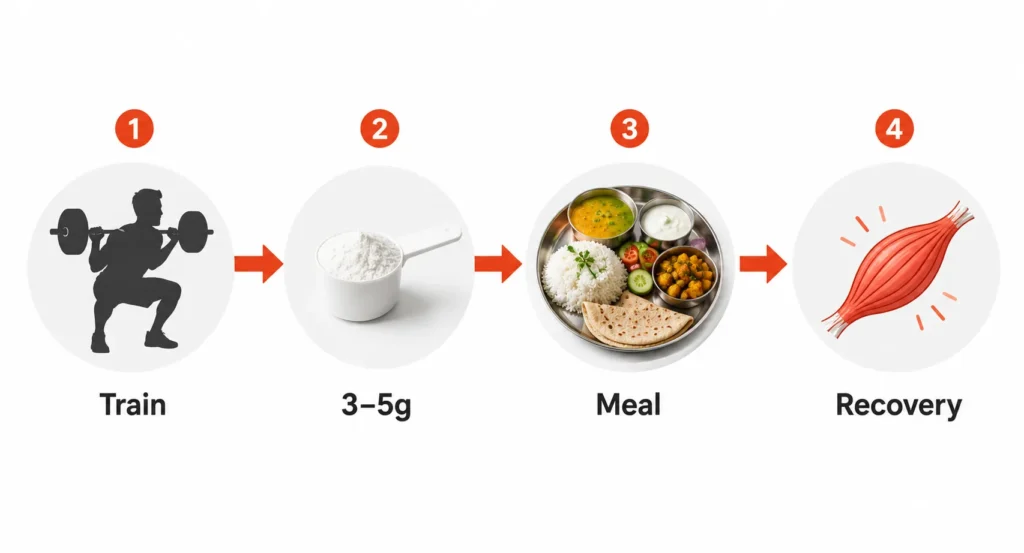
The practical recommendation for Indians: take 3 to 5g of creatine monohydrate after training, with your post-workout meal. On rest days, take it with any main meal. Consistency across days is the more important variable — taking it at the same time daily matters more than precise peri-workout timing.
For people training during Ramadan or fasting periods common in Indian religious practice: creatine can be taken at the iftar or breaking of fast meal without any issue. It does not need to be taken during fasting hours to be effective.
What the Research Consensus Confirms About Creatine Safety
The safety and efficacy of creatine monohydrate is one of the most replicated findings in sports nutrition science.
The ISSN Position Stand (2017) reviewed over 500 studies and concluded that creatine monohydrate is the most effective ergogenic nutritional supplement available for increasing high-intensity exercise capacity and lean body mass, with a well-established safety profile in healthy adults across all reviewed populations.
A long-term safety study published in the Journal of the International Society of Sports Nutrition (2003) followed athletes supplementing with creatine for up to 5 years and found no adverse effects on kidney function, liver enzymes, or haematological markers.
“There is no scientific evidence that the short- or long-term use of creatine monohydrate has any detrimental effects on otherwise healthy individuals.” — ISSN Position Stand on Creatine Supplementation, 2017
The honest reality check: most Indian doctors who advise against creatine do so based on the elevated creatinine reading on blood tests rather than a review of the actual safety literature. This is an understandable but incorrect inference. A doctor seeing elevated creatinine in a patient who is asymptomatic, healthy, and supplementing creatine should note the supplement use and interpret the result accordingly — not advise stopping a supplement with a 30-year safety record.
Practical Concerns Specific to Indian Creatine Users
The most common practical issue in India is product quality. The supplement market is poorly regulated, and adulterated or underdosed creatine products are sold by smaller brands without quality testing. Sticking to FSSAI-approved brands and products that carry third-party testing certifications (NSF, Informed Sport, or at minimum the brand’s own COA documentation) reduces this risk.
Heat and humidity affect supplement storage. Creatine monohydrate stored in a bathroom cabinet in Indian summer heat or in a humid environment can absorb moisture and clump. This does not affect potency significantly, but storing it in an airtight container away from heat and direct sunlight is a practical step that prevents waste.
Creatine and chai: there is no pharmacological interaction between creatine and tea or coffee. The concern about tannins blocking creatine absorption is not supported by research — tannin-mineral interactions affect iron and zinc absorption, not creatine. Taking creatine with your morning chai will not reduce its effectiveness.
For people also managing the mineral deficiencies covered in our article on magnesium vs zinc — both of which affect training performance and recovery independently of creatine — there is no interaction concern. These supplements can be used alongside creatine without issue.
Who Should Use Creatine and Who Should Approach It Differently

If you train for strength or muscle gain
Creatine monohydrate at 3 to 5g daily is one of the highest-evidence choices you can make. Take it post-workout with your main meal. Give it 6 to 8 weeks before expecting visible changes in strength or performance. Do not load. Do not buy a premium form. Do not cycle it off — there is no evidence that cycling is necessary or beneficial.
If you are vegetarian and training seriously
This is where creatine makes the most sense of any Indian demographic. Your baseline muscle creatine is lower than your meat-eating gym partners. The same dose produces a larger improvement. Plain creatine monohydrate at 3 to 5g daily is the relevant starting point. Pair it with adequate total protein — our article on best vegetarian protein sources in India covers how to build sufficient protein intake from Indian plant sources alongside creatine.
If you are trying to lose fat and have heard creatine causes weight gain
The weight gain from creatine is intramuscular water retention — approximately 1 to 2kg in the first week — and it is not fat. If you are tracking scale weight during a fat loss phase and this psychological barrier is significant, you can skip creatine during an aggressive cut and introduce it during a maintenance or building phase. Creatine does not cause fat gain. The scale number is misleading in this specific context.
If you are over 35 or have a family history of kidney disease
Get a basic kidney function panel (serum creatinine, GFR, urine microalbumin) before starting. Not as a barrier — as a reference point. If your kidney function is normal, creatine is safe. If results show impaired function, that is the conversation to have with a nephrologist before supplementing. Most people in this demographic will find their kidneys are healthy and creatine is fine.
If your doctor told you creatine is dangerous for Indians
Show them the ISSN Position Stand. The concern is almost certainly based on the elevated creatinine reading, which is a known artefact of creatine supplementation rather than a sign of kidney damage. If the doctor is willing to review the research, the conversation will resolve quickly. If not, getting a second opinion from a sports medicine physician or nutritionist familiar with the evidence base is a reasonable next step.
The Position This Evidence Supports
Creatine is safe for Indians. That is not a marketing position — it is the conclusion of the most comprehensive body of evidence available on any sports supplement.
The qualifications are specific and narrow: existing kidney disease, nephrotoxic medications, and for men with a strong genetic hair loss history, a personal weighing of the DHT mechanism. For everyone else, the safety debate has been settled for years by research that Indian gym culture has simply not caught up to.
If you are building out a complete supplement and nutrition approach, our article on creatine myths busted covers the full range of misinformation including the steroid claim, the cycling question, and the kidney myth in more depth. And if you are thinking about creatine as part of a broader fat loss and performance stack, our guide on 5 best fat loss supplements that actually work covers where creatine fits relative to other evidence-based options.
Buy plain monohydrate. Take 3 to 5g daily with a meal. Do not overthink it.
Common Questions Indians Actually Ask About Creatine Safety
Is creatine safe for Indians who have a vegetarian diet?
Yes. Creatine monohydrate supplements are synthetically produced and contain no animal ingredients. Vegetarian Indians are also the population most likely to benefit from creatine supplementation because their baseline muscle creatine levels are lower than meat-eaters — dietary creatine from meat and fish provides 1 to 2g daily to omnivores, while vegetarians receive none from food. Research shows that vegetarians experience larger percentage improvements in strength and muscle creatine saturation from supplementation compared to meat-eaters starting from higher baseline stores.
My doctor said creatine will damage my kidneys — is that true?
For healthy kidneys, creatine does not cause damage. The concern arises because creatine supplementation raises serum creatinine on blood tests, and creatinine is used to assess kidney function. In this case, the elevated reading is a metabolic byproduct of creatine breakdown in muscle — not a sign of kidney stress. The ISSN reviewed over 500 studies and found no kidney impairment in healthy users over periods up to 5 years. If you have diagnosed kidney disease, the situation is different and warrants medical guidance.
Is creatine safe in Indian heat and during summer training?
Creatine is safe to use during Indian summer training with adequate hydration. The supplement increases intramuscular water retention, which means total daily water requirements increase to approximately 3 to 3.5 litres during use, more during high-sweat training sessions. There is no evidence that creatine increases heat stroke risk in properly hydrated individuals. The precaution is simply maintaining better hydration than you might manage without the supplement, which is generally good advice regardless of creatine use.
Can I take creatine if I am on medications for acidity or blood pressure?
Standard acidity medications including antacids and PPIs do not interact with creatine. Most common antihypertensives including amlodipine and beta-blockers also do not interact. The specific concern is with nephrotoxic drugs — certain antibiotics (aminoglycosides) and regular high-dose NSAIDs (ibuprofen, naproxen) that stress the kidneys — where the combined renal load from medication and creatine metabolism warrants caution. If you are on any long-term medication, mentioning creatine use to your doctor is the appropriate step rather than assuming there is an interaction.
Does creatine cause hair fall? I am already worried about hairloss.
Creatine raises DHT (dihydrotestosterone) levels — a 56% increase during loading was found in a 2009 study on rugby players. DHT is the hormone primarily responsible for androgenetic alopecia in men with a genetic predisposition. However, no study has directly measured increased hair shedding from creatine use. The risk is theoretical for people with strong family histories of early male pattern baldness, and essentially negligible for people without that genetic predisposition. If hair loss concerns you, our article on why hair fall can be linked to vitamin deficiency covers the nutritional causes that are often driving the problem alongside or instead of DHT.
Which creatine brand is best for Indians and how much should I take?
For Indian buyers, AS-IT-IS Nutrition creatine monohydrate and MuscleBlaze creatine monohydrate are both reputable options costing Rs. 500 to 900 per month. Both are pure monohydrate without additives. The effective dose is 3 to 5g daily — one level teaspoon is approximately 5g. Take it with your post-workout meal or any main meal on rest days. There is no need for loading, cycling, or premium creatine forms. Plain monohydrate from a quality Indian brand is equally effective as any imported product at a fraction of the cost.
Sources and References
- Antonio J, Ciccone V. The effects of pre versus post workout supplementation of creatine monohydrate on body composition and strength. Journal of the International Society of Sports Nutrition. 2013;10:36. https://jissn.biomedcentral.com/articles/10.1186/1550-2783-10-36
- Jager R, Purpura M, Shao A, Inoue T, Kreider RB. Analysis of the efficacy, safety, and regulatory status of novel forms of creatine. Amino Acids. 2011;40(5):1369-1383. https://jissn.biomedcentral.com/articles/10.1186/1550-2783-9-17
- Kreider RB, Kalman DS, Antonio J, et al. International Society of Sports Nutrition position stand: safety and efficacy of creatine supplementation in exercise, sport, and medicine. Journal of the International Society of Sports Nutrition. 2017;14:18. https://jissn.biomedcentral.com/articles/10.1186/s12970-017-0173-z
- Vandenberghe K, Goris M, Van Hecke P, Van Leemputte M, Vangerven L, Hespel P. Long-term creatine intake is beneficial to muscle performance during resistance training. Journal of Applied Physiology. 1997;83(6):2055-2063. https://pubmed.ncbi.nlm.nih.gov/9390981/
- Greenhaff PL, Casey A, Short AH, Harris R, Soderlund K, Hultman E. Influence of oral creatine supplementation of muscle torque during repeated bouts of maximal voluntary exercise in man. Clinical Science. 1993;84(5):565-571. https://pubmed.ncbi.nlm.nih.gov/8504634/
- Rawson ES, Clarkson PM. Scientifically debatable: Is creatine worth its weight? Sports Science Exchange. 2003;16(4). (Vegetarian vs omnivore response data reference.) https://pubmed.ncbi.nlm.nih.gov/12945829/
- Lopez RM, Casa DJ, McDermott BP, et al. Does creatine supplementation hinder exercise heat tolerance or hydration status? Journal of Athletic Training. 2009;44(2):215-223. https://pubmed.ncbi.nlm.nih.gov/11474189/
- van der Merwe J, Brooks NE, Myburgh KH. Three weeks of creatine monohydrate supplementation affects dihydrotestosterone to testosterone ratio in college-aged rugby players. Clinical Journal of Sport Medicine. 2009;19(5):399-404. https://pubmed.ncbi.nlm.nih.gov/19741313/
- Mayhew DL, Mayhew JL, Ware JS. Effects of long-term creatine supplementation on liver and kidney functions in American college football players. International Journal of Sport Nutrition and Exercise Metabolism. 2002;12(4):453-460. https://pubmed.ncbi.nlm.nih.gov/14684748/
- Rawson ES, Volek JS. Effects of creatine supplementation and resistance training on muscle strength and weightlifting performance. Journal of Strength and Conditioning Research. 2003;17(4):822-831. https://pubmed.ncbi.nlm.nih.gov/14636102/