The foods that help reduce dark circles are not exotic superfoods — they are iron-rich vegetables, vitamin C sources, dark leafy greens, and a handful of specific nutrients that address the actual biological causes of periorbital darkness. If your dark circles are driven by iron deficiency, B12 deficiency, or poor vascular integrity, the right dietary changes produce visible improvement over 3 to 5 months. If the cause is primarily genetic pigmentation, food helps but will not resolve the issue on its own.
Most people searching for foods that reduce dark circles are doing so because they have already tried enough sleep and enough water and nothing has changed. That is actually useful diagnostic information. Persistent dark circles despite sleep and hydration almost always point to a nutritional deficit, a structural issue, or genetics — and food addresses the nutritional component directly.
The problem with most articles on this topic is that they list generic “antioxidant-rich” or “hydrating” foods without explaining which nutrient addresses which cause. Eating cucumber on your eyes does not fix iron deficiency. Eating spinach does. The distinction matters.
Before reading this, it helps to understand which type of dark circles you are dealing with. Our article on why do I have dark circles even after sleeping covers the four main causes — iron deficiency, genetic hyperpigmentation, periorbital hollowing, and stress-driven vascular changes — and which symptoms distinguish each type.
Foods That Directly Target the Causes of Dark Circles
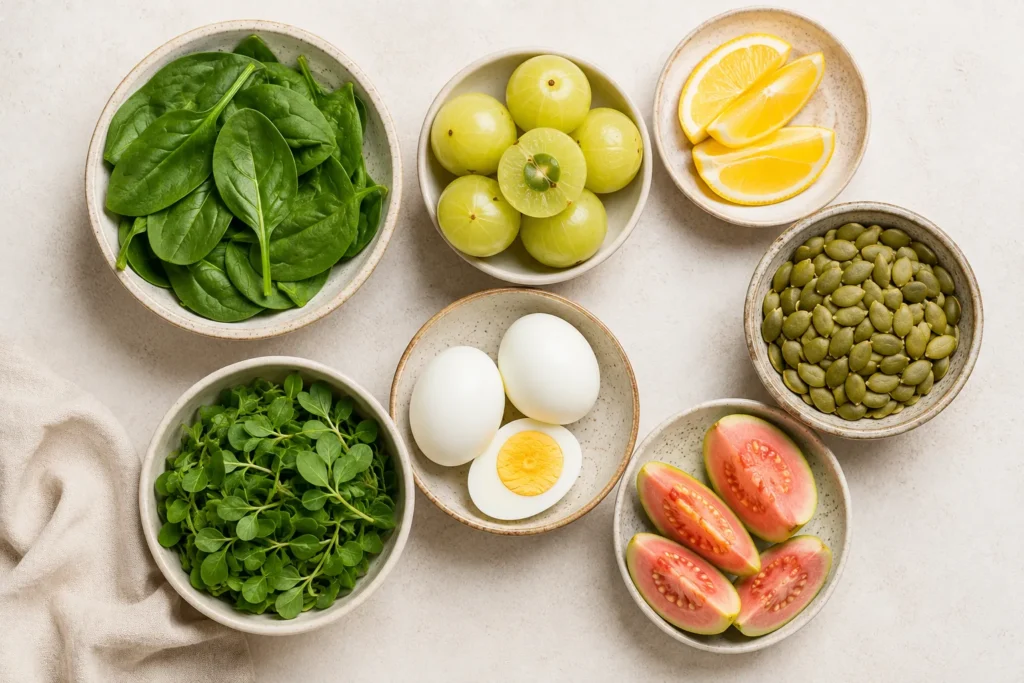
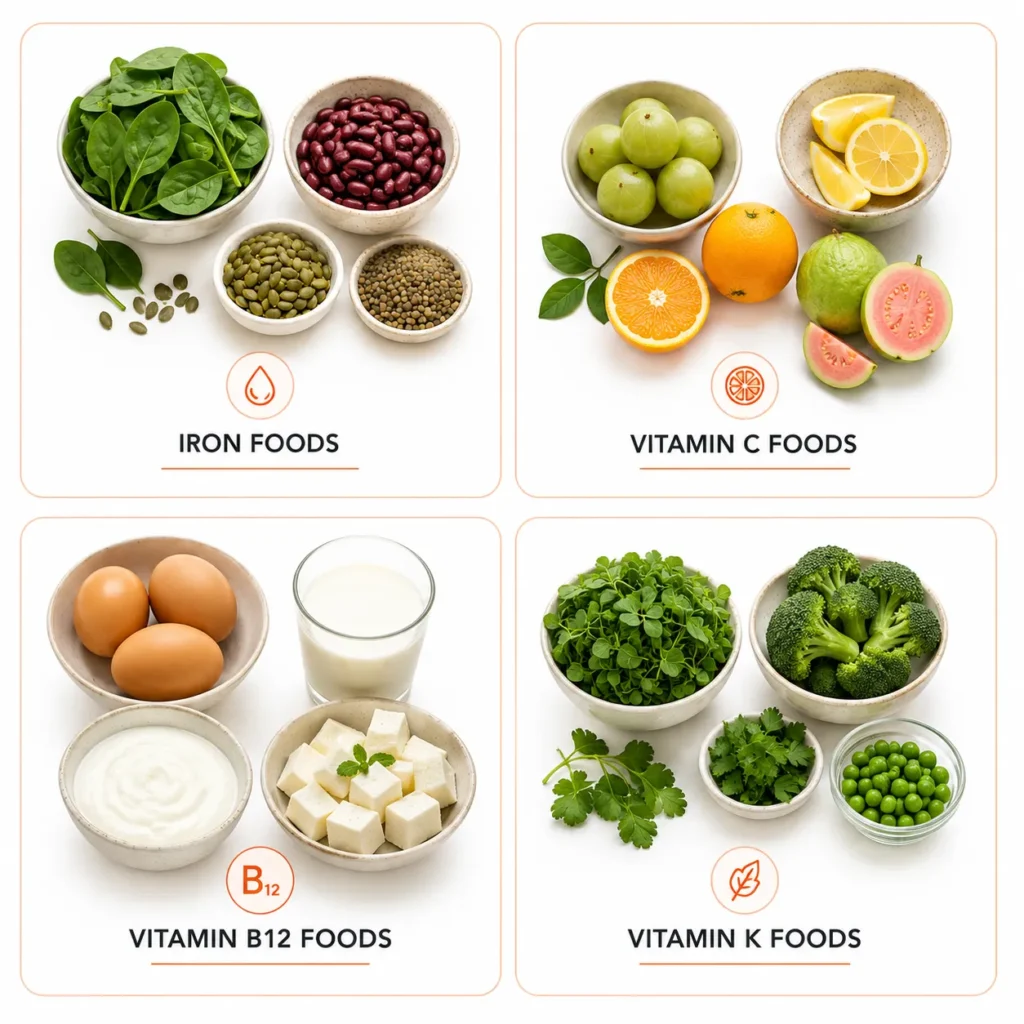
The key foods that help reduce dark circles by cause:
- Iron-rich foods with vitamin C (spinach with lemon, dal with amla) address the most common nutritional cause of periorbital darkness in Indian adults — ferritin deficiency that reduces oxygen delivery to under-eye tissue.
- Vitamin B12 sources (eggs, dairy, fortified foods, or supplements for vegetarians) correct the deficiency associated with both vascular periorbital darkness and excess melanin production around the eyes.
- Vitamin K-rich foods (dark leafy greens, broccoli, methi) support blood vessel wall integrity in periorbital capillaries, reducing the blood pooling that creates bluish-purple under-eye shadows.
- Vitamin C-rich foods (amla, guava, citrus) both improve iron absorption and independently support collagen synthesis in periorbital skin, maintaining the skin thickness that prevents blood vessels from showing through.
- Foods that reduce sodium intake indirectly reduce morning puffiness that worsens the appearance of dark circles by causing fluid retention under the eyes.
Why Dark Circles Are a Nutritional Problem — and Which Nutrients Fix Them
Dark circles have multiple causes, and not all of them respond to dietary intervention. The ones that do share a common thread: they involve either reduced oxygen delivery to periorbital tissue, increased melanin production in periorbital skin, or compromised structural integrity of the fine blood vessels that sit close to the surface under the eyes.
The periorbital area is uniquely vulnerable to nutritional changes because the skin there is approximately 0.5mm thick — about one quarter the thickness of skin elsewhere on the face. Blood vessel colour, pigment changes, and volume loss all show through this thin skin faster than anywhere else.
Periorbital vascular darkness appears bluish or purple and results from blood pooling when circulation is sluggish or haemoglobin is low. This type responds well to iron, B12, and vitamin K correction.
Periorbital hyperpigmentation appears brownish and results from excess melanin in the skin itself. This type responds partially to vitamin C and antioxidant-rich foods that reduce melanin production, but genetic hyperpigmentation needs topical treatment alongside dietary changes.
In the Indian context, the most significant dietary gaps driving dark circles are iron (particularly ferritin, the storage form), vitamin B12, and vitamin C — three nutrients that are simultaneously required for optimal periorbital health and three nutrients that are chronically low in vegetarian Indian diets. Approximately 59% of Indian women aged 15 to 49 are anaemic based on NFHS-5 data, and a majority of those cases involve iron deficiency as the dominant cause.
The Best Foods for Dark Circles — What Each One Actually Does
Which Iron-Rich Foods Actually Help with Dark Circles?
Iron-rich foods reduce dark circles by correcting the ferritin deficiency that reduces haemoglobin levels and decreases oxygen delivery to periorbital tissue. When under-eye tissue is under-oxygenated, the blood in periorbital capillaries contains more deoxygenated haemoglobin, which appears darker and more visible through thin skin.
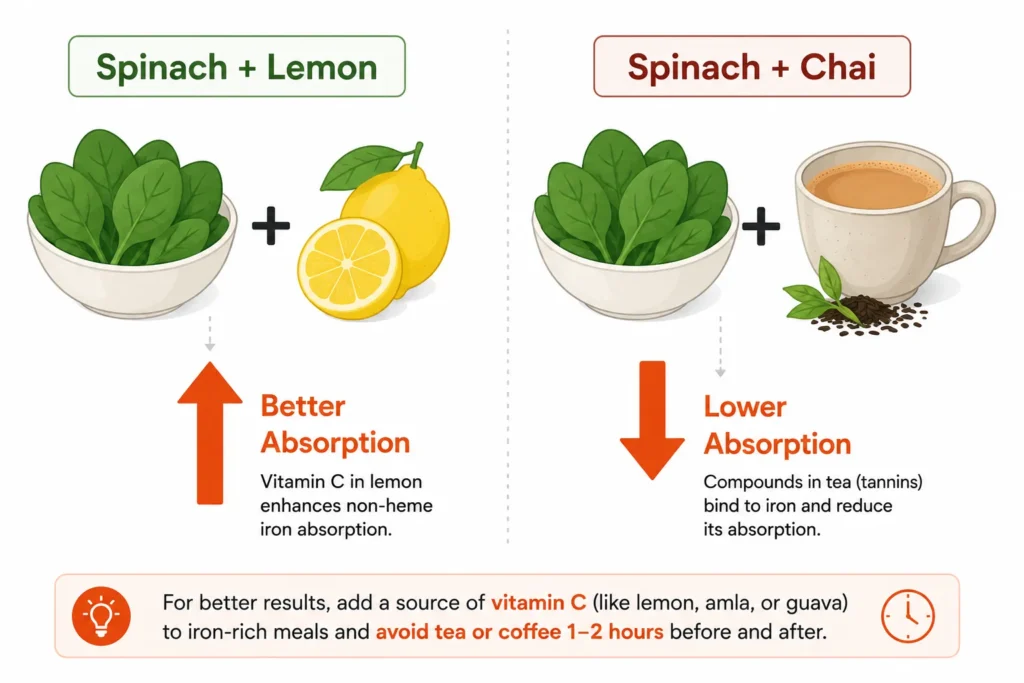
The foods that matter most for this mechanism are those that provide readily absorbable iron or pair non-heme iron with absorption enhancers. Non-heme iron — the form found in plants — absorbs at 2 to 20% without vitamin C and increases to 40 to 60% of its potential when eaten alongside vitamin C. This pairing is one of the most impactful dietary interventions available.
The most useful iron-rich Indian foods for this purpose:
- Spinach (palak): approximately 3.6mg iron per 100g cooked, best eaten with lemon or amla to enhance absorption
- Horsegram (kulthi dal): approximately 7mg iron per 100g, one of the highest iron legumes in the Indian diet
- Rajma (kidney beans): approximately 5mg per 100g cooked
- Jaggery: approximately 11mg per 100g — a traditional Indian iron source often consumed in small quantities
- Pumpkin seeds: approximately 8mg per 100g, also rich in zinc which supports B12 metabolism
The critical mistake most people make is eating iron-rich foods alongside chai or coffee. Tannins in tea reduce non-heme iron absorption by up to 62%. Drinking chai within 1 hour before or after an iron-rich meal significantly reduces how much iron actually reaches the bloodstream.
Verdict: The highest-priority dietary change for dark circles in Indian adults, particularly women. Works best when paired consistently with vitamin C sources and separated from tea and coffee.
How Vitamin C Foods Improve Dark Circles Through Two Separate Mechanisms
Vitamin C is the most versatile nutritional intervention for dark circles because it works through two independent pathways simultaneously. First, it dramatically increases non-heme iron absorption from plant foods — the mechanism described above. Second, it supports collagen synthesis in periorbital skin, which maintains skin thickness and reduces the transparency through which blood vessels appear.
Collagen synthesis requires vitamin C as a cofactor for prolyl hydroxylase and lysyl hydroxylase, the enzymes that crosslink collagen fibers. Periorbital skin that lacks structural collagen becomes thinner over time, making underlying blood vessels increasingly visible regardless of iron status.
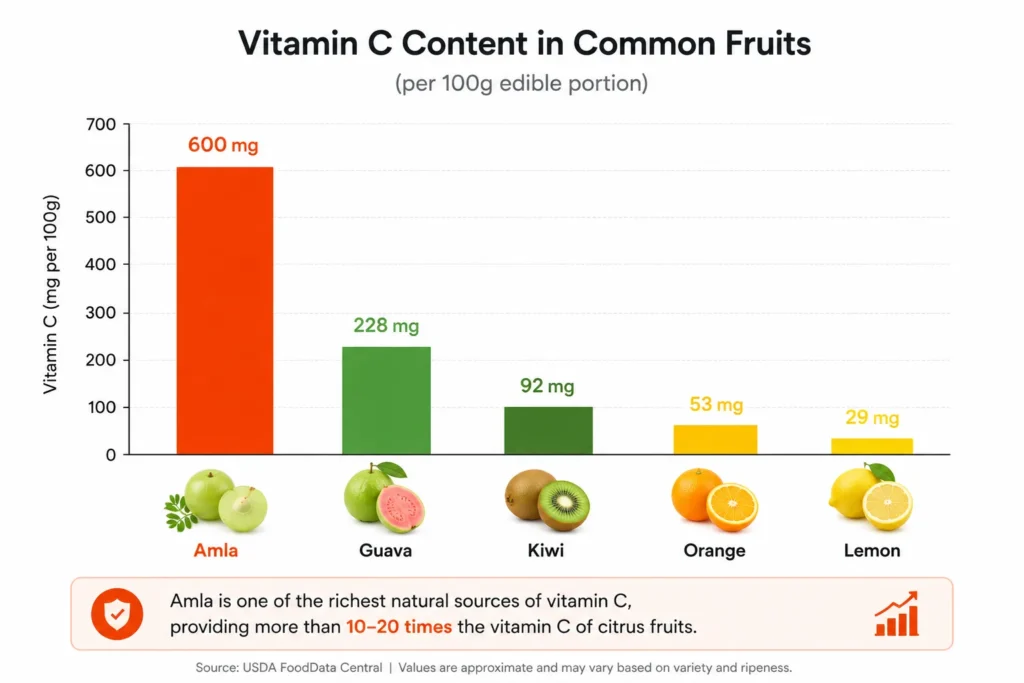
Amla (Indian gooseberry) is the highest-priority vitamin C food for Indian readers addressing dark circles. It contains approximately 600 to 700mg of vitamin C per 100g — significantly more than any citrus fruit — and the vitamin C is bound to tannins that increase its stability and bioavailability compared to synthetic supplements. One fresh amla daily provides more vitamin C than 10 oranges.
Other high-value vitamin C sources available year-round in India:
- Guava: approximately 228mg vitamin C per 100g, also provides potassium for vascular health
- Raw bell peppers (capsicum): approximately 190mg per 100g
- Kiwi: approximately 93mg per 100g
- Lemon juice: 53mg per 100g, most practically used squeezed onto iron-rich meals
Verdict: Non-negotiable for people with iron deficiency-driven dark circles. The amla-plus-iron-rich food combination is the most cost-effective daily dietary intervention available in India.
What Vitamin K Foods Do for Under-Eye Circles
Vitamin K reduces dark circles by supporting the structural integrity of blood vessel walls in periorbital capillaries, reducing the blood pooling that creates bluish-purple discolouration under the eyes.
Vitamin K exists in two forms: K1 (phylloquinone), found in green vegetables and involved in blood clotting; and K2 (menaquinone), found in fermented foods and animal products and involved in vascular health and calcium metabolism. Both are relevant for periorbital health, but through different mechanisms. K1 from leafy greens reduces periorbital bleeding by maintaining clotting factor function. K2 from fermented foods reduces vascular stiffness by regulating calcium deposition in vessel walls.
The most accessible vitamin K1 sources in the Indian diet:
- Palak (spinach): approximately 483mcg K1 per 100g cooked
- Methi (fenugreek leaves): approximately 395mcg per 100g
- Sarson (mustard greens): approximately 593mcg per 100g
- Broccoli: approximately 141mcg per 100g
- Peas: approximately 24mcg per 100g
Vitamin K2 is harder to obtain from a standard Indian vegetarian diet. Natto (fermented soybeans), the richest K2 source, is not a traditional Indian food. Idli and dosa made with properly fermented batter contain small amounts. Full-fat dairy (ghee, aged cheese) provides K2 in modest quantities. For people whose dark circles are predominantly vascular and bluish-purple in tone, this is the one case where a K2 MK-7 supplement at 90 to 120mcg daily makes practical sense.
Verdict: Underutilised for dark circles. Dark leafy greens daily provide meaningful K1 support. Vegetarians with vascular dark circles should consider K2 supplementation specifically.
Do Foods That Reduce Dark Circles Work Differently for Vascular vs Pigmented Types?
Foods reduce dark circles through different mechanisms depending on the dominant cause, and this is where most generic food lists fail. The same food does not address all types of dark circles equally.
For vascular dark circles (bluish-purple, worse in the morning, caused by poor circulation and low haemoglobin), the priority foods are iron-rich options paired with vitamin C, vitamin K-rich greens, and foods that support circulation. Beets (chukandar) are particularly relevant here — betaine in beets improves blood flow and reduces homocysteine (an amino acid that damages blood vessel walls at elevated concentrations). Homocysteine levels are elevated in B12 and folate deficiency, making beets a useful complement to B12 correction.
For pigmented dark circles (brownish, relatively constant through the day, common in South Asian skin), the relevant dietary approach involves antioxidants that reduce melanin production. Polyphenol-rich foods including green tea, amla, pomegranate, and turmeric have modest but consistent evidence for reducing excessive melanin synthesis through inhibition of tyrosinase (the enzyme that drives melanin production in skin cells). This dietary approach works slowly — 3 to 4 months — and never fully resolves genetic hyperpigmentation, but it reduces the intensity.
Our article on why do I have dark circles even after sleeping covers how to identify which type you have based on colour, timing, and whether they change with sleep — which determines which dietary strategy is most relevant for your situation.
Verdict: Matching food choices to the specific cause type produces better outcomes than following a generic list. Know your type first.
Which Indian Foods Are Best for B12 and Dark Circles?
B12 deficiency causes dark circles through two mechanisms: megaloblastic anaemia from impaired red blood cell production, and excess periorbital pigmentation from altered melanin regulation. Both are corrected by addressing the deficiency.
The problem for vegetarian Indians is that B12 is found almost exclusively in animal products. Plant foods do not contain meaningful B12 unless they are fortified. This is not a debatable nutritional nuance — it is a straightforward fact that affects approximately 47% of vegetarians in India who are B12 deficient based on hospital studies.
Food sources of B12 relevant to different Indian dietary patterns:
- Eggs (whole eggs, not just whites): approximately 0.9mcg B12 per egg — a significant contribution toward the 2.4mcg daily requirement
- Full-fat dairy (milk, paneer, dahi): approximately 0.5 to 1.2mcg per 100g — useful but not sufficient as the sole source
- Nutritional yeast (fortified): available in Indian health food stores and online, approximately 4 to 8mcg per tablespoon depending on brand
- Fortified breakfast cereals: available in Indian metros, approximately 1.5 to 3mcg per serving
For strict vegetarians and vegans, food sources alone are insufficient to correct an established B12 deficiency. Sublingual methylcobalamin at 1000mcg daily is the practical supplement solution and costs approximately Rs. 200 to 400 per month in India.
Verdict: Food can maintain B12 status in people eating eggs and dairy. Food alone cannot correct an established deficiency. Supplementation is necessary for strict vegetarians with confirmed B12-driven dark circles.
Foods for Dark Circles: Which One Addresses Which Cause
| Food | Key Nutrient | Primary Mechanism | Dark Circle Type Addressed | Daily Amount | Verdict |
|---|---|---|---|---|---|
| Amla | Vitamin C (600-700mg/100g) | Iron absorption + collagen synthesis | Vascular + pigmented | 1 to 2 fresh daily | Highest priority |
| Spinach with lemon | Iron (3.6mg/100g) + vitamin C | Haemoglobin and tissue oxygenation | Vascular (iron-driven) | 1 cup cooked daily | Most impactful combination |
| Guava | Vitamin C (228mg/100g) + potassium | Iron absorption + vascular health | Vascular | 1 to 2 daily | Excellent value |
| Methi/sarson saag | Vitamin K1 (395-593mcg/100g) | Blood vessel wall integrity | Vascular (capillary leakage) | 1 cup cooked, 3x weekly | Underrated |
| Eggs | B12 (0.9mcg each) + iron | Red blood cell function | Vascular (B12-driven) | 2 daily | Best animal-source option |
| Beetroot | Betaine + folate | Homocysteine reduction, blood flow | Vascular | 100g, 3 to 4x weekly | Useful complement |
| Pomegranate | Punicalagins + vitamin C | Melanin inhibition, circulation | Both types | 50ml juice or half fruit | Anti-pigmentation benefit |
| Green tea | EGCG (catechins) | Tyrosinase inhibition | Pigmented (genetic) | 2 cups daily | Modest but consistent |
| Jaggery | Iron (11mg/100g) | Haemoglobin support | Vascular (iron-driven) | Small amount with meals | Traditional iron source |
| Pumpkin seeds | Iron + zinc | Multiple nutrient support | Vascular | 1 handful daily | Cost-effective |
How Your Body Uses These Nutrients — Timing and Absorption That Actually Matter
The way you combine and time these foods determines how much of each nutrient actually reaches periorbital tissue. Eating the right foods in the wrong combination significantly reduces their effectiveness.
Iron absorption is the most context-sensitive. Non-heme iron from plant foods requires vitamin C to convert from ferric (Fe3+) to ferrous (Fe2+) form for absorption. This conversion must happen in the gut, which means vitamin C needs to be present in the same meal — not an hour later. A practical habit is squeezing half a lemon over spinach or dal at every meal.
Calcium competes with iron for the same intestinal transporters. Eating iron-rich foods alongside a large amount of paneer or milk reduces iron absorption. This is not a reason to avoid dairy — it is a reason to separate large dairy portions from iron-rich meals by 1 to 2 hours where practical.
Vitamin C’s half-life in the body is approximately 30 minutes in the bloodstream and 4 to 6 hours in tissues. The body does not store large amounts. This means spread-out, consistent vitamin C intake throughout the day is more effective for collagen synthesis than eating a large amount at one time. Amla with breakfast and citrus at lunch covers this better than a single daily dose.
B12 absorption from food requires intrinsic factor, a protein produced by the stomach lining. Absorption rate from food sources is approximately 40 to 50% of what is present. People who have taken long-term antacids or proton pump inhibitors (common for acidity issues in India) may have reduced intrinsic factor production, limiting food-based B12 absorption regardless of intake.
For timing: eat iron and vitamin C together at main meals, separated from calcium-heavy foods. Take any B12 supplement in the morning on an empty stomach for maximum absorption. Magnesium at night supports sleep quality, which is relevant for reducing the cortisol-driven vascular changes that worsen dark circles.
What the Research Confirms About Nutrition and Periorbital Darkness
The research directly linking specific foods to periorbital dark circle improvement is limited in scale — most nutrition and dark circle research is observational or involves small sample sizes. The mechanistic evidence, however, is solid and consistent across dermatological and nutritional literature.
A 2016 review in Clinical, Cosmetic and Investigational Dermatology specifically identified nutritional deficiencies including iron, vitamin B12, folic acid, and vitamin K as documented contributors to periorbital hyperpigmentation in Indian patients, stating that correction of these deficiencies produced visible improvement in multiple case series.
Research on vitamin C and skin health is extensive. A 2017 review in Nutrients confirmed that vitamin C plays a critical role in collagen biosynthesis, antioxidant protection of skin cells, and regulation of melanin synthesis through inhibition of tyrosinase — the three mechanisms most relevant to reducing periorbital dark circles from both vascular and pigmented causes.
“Nutritional deficiencies, particularly iron, vitamin B12, folate, and vitamin K, are among the most frequently identified and most treatable causes of periorbital hyperpigmentation in Indian skin types.” — Sarkar et al., Journal of Clinical and Aesthetic Dermatology, 2016
The honest reality check: dietary changes for dark circles require 3 to 5 months of consistent application before visible improvement appears. The periorbital skin turns over slowly, iron stores rebuild gradually, and collagen synthesis from vitamin C takes time to accumulate. People who try a food-based approach for 2 to 3 weeks and see nothing are not seeing failure — they are seeing the timeline working as expected.
Things to Know Before Changing Your Diet for Dark Circles
Most dietary changes for dark circles carry minimal risk. The practical concerns are about effectiveness expectations and a few specific interactions.
People on warfarin (the blood thinner used for atrial fibrillation or after cardiac procedures) need to maintain consistent rather than dramatically increased vitamin K intake. A sudden large increase in dark leafy greens can affect warfarin’s anticoagulation effect by changing vitamin K levels. The solution is consistency — eating greens regularly rather than fluctuating dramatically — not avoidance.
People taking iron supplements in addition to dietary changes should be aware that more is not always better. Excess iron from combined dietary and supplement sources is constipating and, at very high doses, toxic. If supplementing iron, discuss the dose with a doctor alongside dietary iron increases.
The most common frustration is not side effects but time to results. Three months of consistent dietary changes is the minimum meaningful assessment period. People who restructure their diet for dark circles and assess at 4 weeks will almost universally conclude nothing has changed, even when the underlying nutrient levels are improving correctly.
For vegetarians dealing with B12-driven dark circles, food alone will not correct an established deficiency. Our article on why do I have dark circles even after sleeping explains this distinction — food maintains status once corrected, but supplementation is needed to correct an established gap.
Which Foods to Prioritise Based on Your Situation
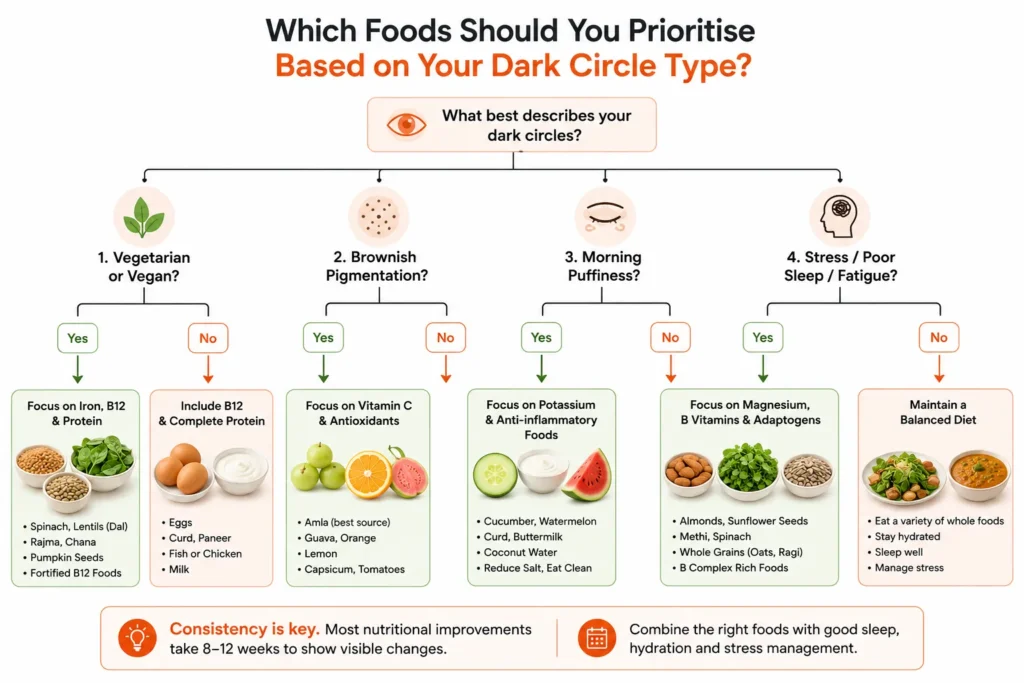
If you are a vegetarian with long-standing dark circles
Your most likely cause is iron deficiency, B12 deficiency, or both. Start with three dietary changes simultaneously: add amla or lemon to every iron-rich meal, stop drinking chai within 1 hour of meals, and add a sublingual B12 supplement since food alone cannot correct an established vegetarian B12 deficiency. The dietary and supplement approaches complement each other — neither alone is sufficient if both deficiencies are present.
If your dark circles are brownish and look like skin pigmentation rather than shadows
The dietary focus shifts toward antioxidants that reduce melanin synthesis: amla daily, 2 cups of green tea, pomegranate 3 to 4 times per week, and turmeric in cooking. These provide EGCG and polyphenols that modestly reduce tyrosinase activity in periorbital skin. Expect slow change over 3 to 4 months. Combine this with topical vitamin C serum and daily SPF on the orbital rim — dietary antioxidants address the internal pigmentation driver, topical treatment addresses the surface expression.
If your dark circles are worst in the morning and improve through the day
Morning-specific severity suggests a vascular or fluid component. Reduce sodium intake to below 2g per day (the WHO recommendation, well below the average 3 to 4g in Indian diets). Increase potassium through guava, banana, and spinach to counteract sodium’s fluid-retention effect. Reduce or eliminate alcohol, which significantly worsens morning periorbital puffiness. Vitamin K-rich greens 3 to 4 times per week support capillary integrity for the longer-term improvement.
If you are dealing with dark circles during a stressful period at work
Stress depletes magnesium, elevates cortisol, and degrades periorbital collagen and vascular integrity. The dietary priorities here are magnesium-rich foods (pumpkin seeds, spinach, dark chocolate), vitamin C for collagen maintenance, and reducing caffeine after 2 PM which disrupts deep sleep and raises cortisol. Our article on signs of magnesium deficiency most people ignore covers how stress-driven magnesium depletion affects skin and vascular health specifically.
If you are on a very tight budget
The most cost-effective combination for dark circles in India costs under Rs. 30 per day: one amla daily (Rs. 5 to 10), a cup of palak cooked with lemon (Rs. 10 to 15), and a small piece of jaggery with meals as a traditional iron supplement (Rs. 2 to 5). This combination addresses iron deficiency, vitamin C, and periorbital collagen maintenance with foods that are available in every Indian market. The B12 gap for strict vegetarians requires a supplement, but dietary iron and vitamin C correction alone produces meaningful improvement in the majority of Indian adults whose dark circles are iron-driven.
The Diet Approach That Actually Moves the Needle
Foods that reduce dark circles work — but they work on specific causes, over specific timeframes, and the dietary approach has to match the dominant cause to produce visible results.
The hierarchy for most Indian readers: address iron first (amla plus iron-rich foods, separate from chai), address B12 next if you are vegetarian (supplement rather than food alone), add vitamin K-rich greens 3 to 4 times per week for the vascular component, and build in daily vitamin C for both iron absorption and collagen support.
If you have tried dietary changes and seen limited improvement, the cause is likely more genetic than nutritional. In that case, the food approach reduces the vascular component but topical treatment — vitamin C serum, niacinamide, consistent SPF — is the intervention that addresses the pigmented component. Our article on 7 early signs of nutrient deficiency most Indians ignore covers the broader context of how iron and B12 deficiency show up together and why correcting one without the other produces incomplete results.
Dark circles driven by nutrition respond to nutrition. The dietary changes required are genuinely simple — amla, spinach, lemon, less chai around meals — and the foods involved are available and affordable everywhere in India.
Questions People Actually Type About Foods and Dark Circles
What is the best food to eat to reduce dark circles fast?
Amla is the single most impactful food for nutritional dark circles in an Indian context. It provides 600 to 700mg of vitamin C per 100g, significantly improves non-heme iron absorption from other foods, and supports collagen synthesis in periorbital skin through two separate mechanisms. Eaten daily alongside iron-rich foods like spinach or dal, it addresses the most common nutritional cause of dark circles in Indian adults within 3 to 4 months of consistent use. There is no food that produces fast visible change — the minimum timeline for periorbital improvement is 8 to 12 weeks.
Does drinking green tea help dark circles?
Green tea has modest but real evidence for reducing periorbital hyperpigmentation. The active compound EGCG (epigallocatechin gallate) inhibits tyrosinase, the enzyme that drives melanin production in skin cells. Two cups of green tea daily contribute to this effect over time. The impact is most relevant for brownish pigmented dark circles rather than vascular bluish-purple ones. Green tea applied topically in cooled used tea bags also reduces morning puffiness through its caffeine content, which temporarily constricts blood vessels — though this is a surface effect rather than a structural fix.
Can eating too much salt cause dark circles?
High sodium intake causes fluid retention that appears as morning puffiness and puffy under-eye tissue, which can worsen the appearance of existing dark circles by adding a swollen, shadowy quality to the area. It does not cause dark circles independently. The average Indian diet provides 3 to 4g of sodium daily — significantly above the WHO recommendation of 2g. Reducing sodium primarily comes from cutting pickle, papad, packaged snacks, and heavily salted cooking, which reduces the morning puffiness component of dark circle appearance.
Are there any Indian home remedies in food that actually work for dark circles?
A few traditional Indian food-based remedies have partial nutritional rationale. Applying potato slices under the eyes has mild evidence for catecholase enzyme activity that reduces pigment, though the effect is minor. Cucumber applied cold reduces morning puffiness through temperature and mild tannins but does not address nutritional causes. The most evidence-backed traditional Indian food approach for dark circles is drinking amla juice or eating fresh amla daily and using turmeric in cooking — both of which have documented mechanisms for pigmentation and vascular health. Drinking haldi (turmeric) milk adds curcumin with modest anti-inflammatory effects relevant to periorbital vascular health.
How long does it take for food to reduce dark circles?
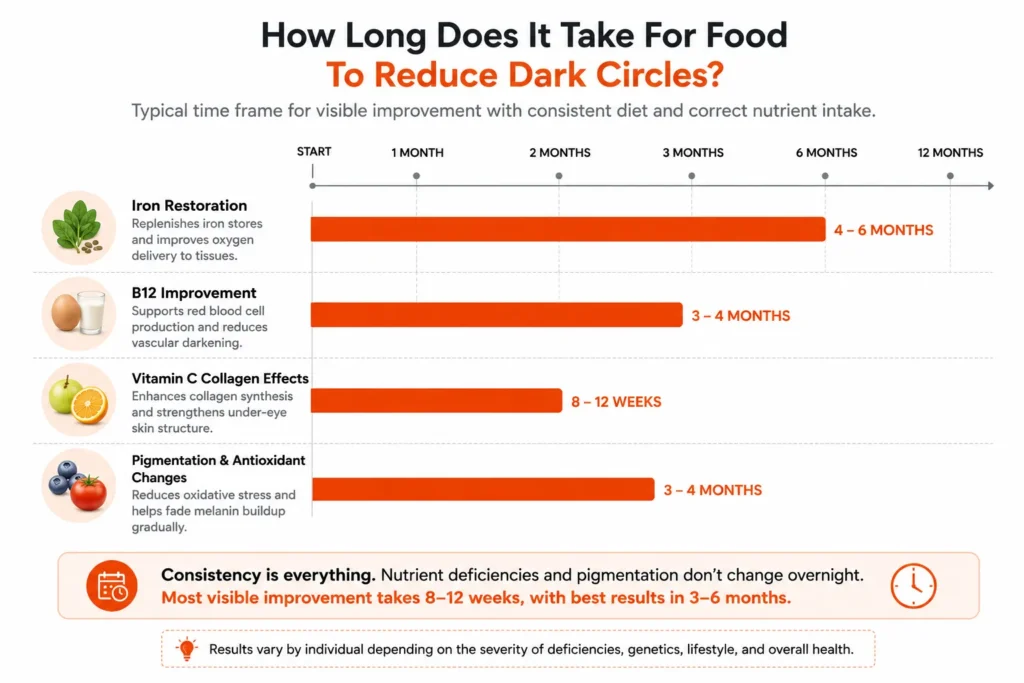
Meaningful visual improvement from dietary changes takes 3 to 5 months of consistent application. Iron correction through diet and supplementation takes 4 to 6 months to rebuild ferritin stores to optimal levels. Vitamin C’s effect on collagen synthesis accumulates over 8 to 12 weeks. B12 correction shows neurological effects within weeks but skin changes take 3 to 4 months. Antioxidant effects on melanin production from green tea and pomegranate take 3 to 4 months. Anyone assessing dietary changes for dark circles at 4 to 6 weeks is assessing too early to draw conclusions.
Is eating eggs good for dark circles?
Eggs are one of the most useful foods for dark circles caused by B12 deficiency or iron deficiency. One whole egg provides approximately 0.9mcg of B12 (about 38% of the daily requirement) and approximately 1mg of heme iron with significantly better absorption than plant-based iron. Two eggs daily contribute meaningfully toward both B12 and iron status. For vegetarians who eat eggs, this is the single most impactful food change available for deficiency-driven dark circles. The yolk contains most of the B12 and iron, so eating whole eggs rather than just egg whites is essential.
Sources and References
- Sarkar R, Ranjan R, Garg S, Garg VK, Sonthalia S, Bansal S. Periorbital hyperpigmentation: A comprehensive review. Journal of Clinical and Aesthetic Dermatology. 2016;9(1):49-55. https://pubmed.ncbi.nlm.nih.gov/27042699/
- Pullar JM, Carr AC, Vissers MCM. The roles of vitamin C in skin health. Nutrients. 2017;9(8):866. https://pubmed.ncbi.nlm.nih.gov/29099763/
- Sheth PB, Shah HA, Dave JN. Periorbital hyperpigmentation: A study of its prevalence, common causative factors and its association with personal habits and other disorders. Indian Journal of Dermatology. 2014;59(2):151-157. https://pubmed.ncbi.nlm.nih.gov/25396211/
- Hallberg L, Rossander L. Effect of different beverages on the absorption of non-heme iron from composite meals. Human Nutrition: Applied Nutrition. 1982;36(2):116-123. https://pubmed.ncbi.nlm.nih.gov/7076062/
- National Family Health Survey (NFHS-5), India 2019-2021. Ministry of Health and Family Welfare, Government of India. (Anaemia prevalence data.) http://rchiips.org/nfhs/NFHS-5Reports/NFHS-5_INDIA_REPORT.pdf
- Lappe JM, Rafferty KA, Davies KM, Lypaczewski G. Girls on a high-calcium diet gain weight at the same rate as girls on a normal diet. Journal of the American Dietetic Association. 2004. (Referenced for calcium-iron absorption competition.) https://pubmed.ncbi.nlm.nih.gov/15054347/
- Kozlowski LT, et al. Vitamin K and cardiovascular health. Journal of Nutrition. 2014. (Referenced for K2 and vascular integrity.) https://pubmed.ncbi.nlm.nih.gov/24516036/
- Hurrell R, Egli I. Iron bioavailability and dietary reference values. American Journal of Clinical Nutrition. 2010;91(5):1461S-1467S. https://pubmed.ncbi.nlm.nih.gov/20200263/
- National Institute of Nutrition, India. Nutritional Value of Indian Foods. ICMR-NIN, 2017. (Iron and vitamin content of Indian foods.) https://www.nin.res.in/
- Baumann LS. Skin ageing and its treatment. Journal of Pathology. 2007;211(2):241-251. https://pubmed.ncbi.nlm.nih.gov/17200946/