
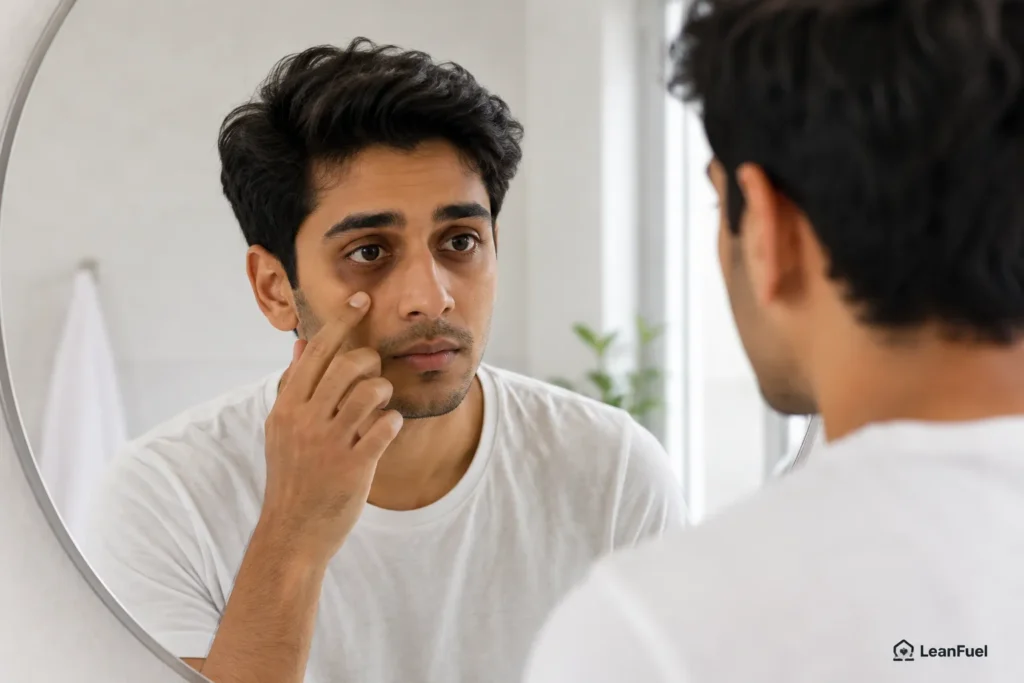
Dark circles after sleeping are not a sleep problem for most people — they are a nutrition, circulation, or genetic problem that sleep alone cannot fix. If you are consistently getting 7 to 8 hours of sleep and still waking up with visible dark circles, the cause is almost certainly something other than insufficient rest. Sleep deprivation makes dark circles worse. It does not cause them in people who do not have the underlying conditions that create them.
The under-eye area is one of the thinnest skin regions on the body, approximately 0.5mm compared to 2mm elsewhere. Blood vessels, pigmentation changes, and structural volume loss all show through this thin skin more visibly than anywhere else. Whatever is happening in your blood, your nutritional status, or your hormonal environment tends to appear there first.
For Indian readers specifically, this matters because dark circles are extremely common across South Asian skin tones due to a combination of genetic pigmentation tendencies, high rates of iron and B12 deficiency from vegetarian diets, chronic stress, and significant under-eye hollowing that becomes visible earlier than in lighter skin tones.
The reason most articles on this topic disappoint is that they list generic causes without telling you which one is actually responsible for your situation. The causes are different and so are the fixes.
If You Are Sleeping Fine and Still Have Dark Circles, Here Is the Short Version
Why dark circles persist despite adequate sleep:
- Iron deficiency and anaemia reduce oxygen delivery to periorbital tissue (the area around the eyes), causing blood to pool in small vessels and appear as a bluish-purple shadow through thin under-eye skin.
- Vitamin B12 and vitamin K deficiency independently contribute to dark circles through reduced blood vessel integrity and impaired melanin regulation in periorbital skin.
- Genetic hyperpigmentation is one of the most common causes in Indian and South Asian populations and does not respond to sleep or lifestyle changes alone.
- Periorbital hollowing (loss of fat volume under the eyes) creates shadows that are structural rather than pigmentary — no amount of sleep fixes a structural issue.
- Chronic dehydration and high sodium intake cause fluid shifts that make under-eye tissue puffy in the morning and sunken by afternoon, both of which create the appearance of dark circles.
What Is Actually Happening Under Your Eyes
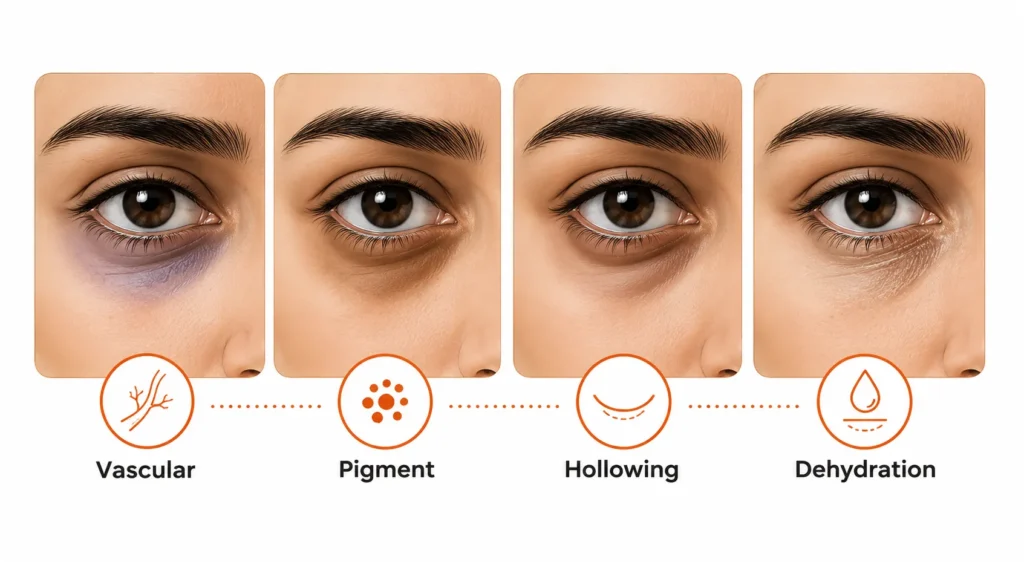
The periorbital region (the area around the eyes) gets its dark appearance through several distinct mechanisms, and most people have more than one operating simultaneously. Understanding which mechanism is dominant in your case determines what intervention actually helps.
The skin here is structurally different from the rest of the face. It has fewer sebaceous glands, less subcutaneous fat, and is subject to constant movement from blinking (approximately 15,000 blinks per day). The capillary network is dense and sits close to the surface. Any process that increases blood pooling, reduces oxygenation, increases melanin production, or reduces tissue volume will be visible here before it shows elsewhere.
Periorbital vascular darkness appears bluish or purple and is caused by blood pooling in small vessels when circulation is sluggish, oxygen delivery is reduced, or vessel walls are fragile. This is the type most responsive to nutritional intervention.
Periorbital hyperpigmentation appears brownish and results from excess melanin deposition in the skin itself. This is the type most common in South Asian skin and the type most strongly influenced by genetics, sun exposure, and certain deficiencies including iron and B12.
Periorbital hollowing creates shadows rather than actual pigment change. It happens when the fat pad under the eye reduces with age, weight loss, or chronic illness. The shadow this creates can look identical to pigmented or vascular dark circles from a distance but does not respond to nutritional supplementation.
In the Indian context, the additional factor of chronic psychological stress deserves specific mention. Cortisol from persistent stress dilates blood vessels, reduces skin barrier function, and accelerates the structural degradation of periorbital tissue. Young working professionals in Indian cities dealing with chronic stress are presenting with periorbital changes a decade earlier than previous generations.
Why You Still Have Dark Circles Even After Sleeping — The Real Causes
Iron Deficiency Is the Most Commonly Missed Cause of Dark Circles
Iron deficiency causes dark circles through reduced haemoglobin concentration, which means less oxygen is delivered to periorbital tissue. When tissue is under-oxygenated, the blood in those dense capillary networks contains more deoxygenated haemoglobin, which appears darker and more visible through thin under-eye skin.
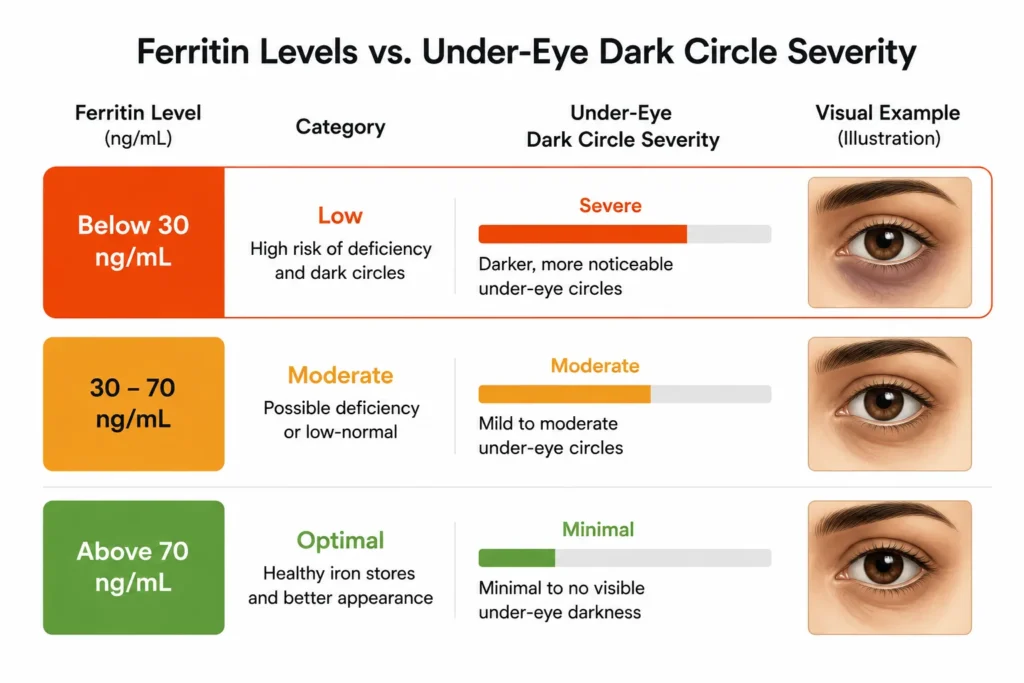
The critical point most people miss: ferritin levels, not just haemoglobin, determine periorbital oxygenation. A person can have technically normal haemoglobin while still having ferritin (the iron storage protein) well below the threshold needed for optimal tissue oxygenation. Most standard blood panels flag iron deficiency only when haemoglobin drops, which means significant iron depletion can exist for years before it shows on routine labs while visibly affecting the periorbital area.
Approximately 59% of Indian women aged 15 to 49 are anaemic based on NFHS-5 data, and the majority of those cases are iron-deficient. For vegetarian Indians eating predominantly non-heme iron from dal and vegetables — which absorbs at 2 to 20% versus 15 to 35% for heme iron from meat — this deficiency can persist despite eating what appears to be a nutritionally adequate diet.
Getting ferritin specifically tested (not just haemoglobin) is the relevant investigation. A ferritin level below 30 ng/mL is associated with visible periorbital changes even in the absence of clinical anaemia.
Verdict: The most common fixable nutritional cause of persistent dark circles in Indian women. Get ferritin tested before trying anything else.
Why Vitamin B12 and Vitamin K Deficiency Both Show Up Around Your Eyes
Vitamin B12 deficiency contributes to dark circles through two distinct mechanisms. First, B12 is required for red blood cell maturation — deficiency produces megaloblastic anaemia with large, poorly functional red blood cells that carry oxygen inefficiently, producing a similar periorbital appearance to iron deficiency anaemia. Second, B12 deficiency is associated with increased skin hyperpigmentation, including periorbital pigmentation, through mechanisms involving altered melanin regulation.
In vegetarian Indians, B12 deficiency is extremely prevalent. Studies in hospital settings in India have found B12 deficiency in approximately 47% of vegetarians. The deficiency develops slowly — the body stores B12 in the liver for 2 to 5 years — so someone who has been vegetarian for years may have been gradually depleting stores without obvious symptoms until multiple systems are visibly affected.
Vitamin K2 specifically is relevant for periorbital vascular darkness because it is required for the function of proteins that regulate calcium deposition in blood vessel walls. Poor vascular integrity in periorbital capillaries increases blood pooling and the visible darkness it creates. Vitamin K2 is found almost exclusively in fermented foods and animal products — sources uncommon in typical Indian vegetarian diets.
Our article on why hair fall can be linked to vitamin deficiency covers B12 and iron deficiency in depth — the same deficiencies that cause hair fall in vegetarian Indians are often causing their periorbital darkness simultaneously.
Verdict: Highly relevant in vegetarian and vegan Indian populations. B12 and iron often need to be addressed together.
Does Dehydration Actually Cause Dark Circles After Sleeping?
Dehydration directly worsens periorbital dark circles even when it is not the primary cause. Under-eye skin is thin and has limited subcutaneous fat, which means it shows volume changes rapidly. When the body is chronically dehydrated, periorbital tissue becomes thinner and more translucent, making underlying blood vessels more visible and making structural hollowing more apparent.
The relationship between dehydration and dark circles is not as straightforward as “drink more water and they will go away.” Chronic mild dehydration — common in people who drink tea and coffee heavily, exercise without replacing fluids, or consume high-sodium diets — contributes to the severity of dark circles from any cause rather than being an independent sufficient cause on its own.
High sodium intake is specifically relevant because sodium draws water from cells into extracellular space, causing fluid retention that appears as morning puffiness under the eyes. As this fluid reabsorbs through the day, the under-eye area appears more sunken by evening. This alternating puffiness and hollowing is a sodium sensitivity pattern rather than a true dark circle cause, but it is often reported as dark circles by people who notice the change.
Verdict: Contributing factor rather than primary cause. Addressing hydration improves the severity of dark circles from other causes. Not a standalone fix.
Why Dark Circles After Sleeping May Be Genetic in Indian Skin
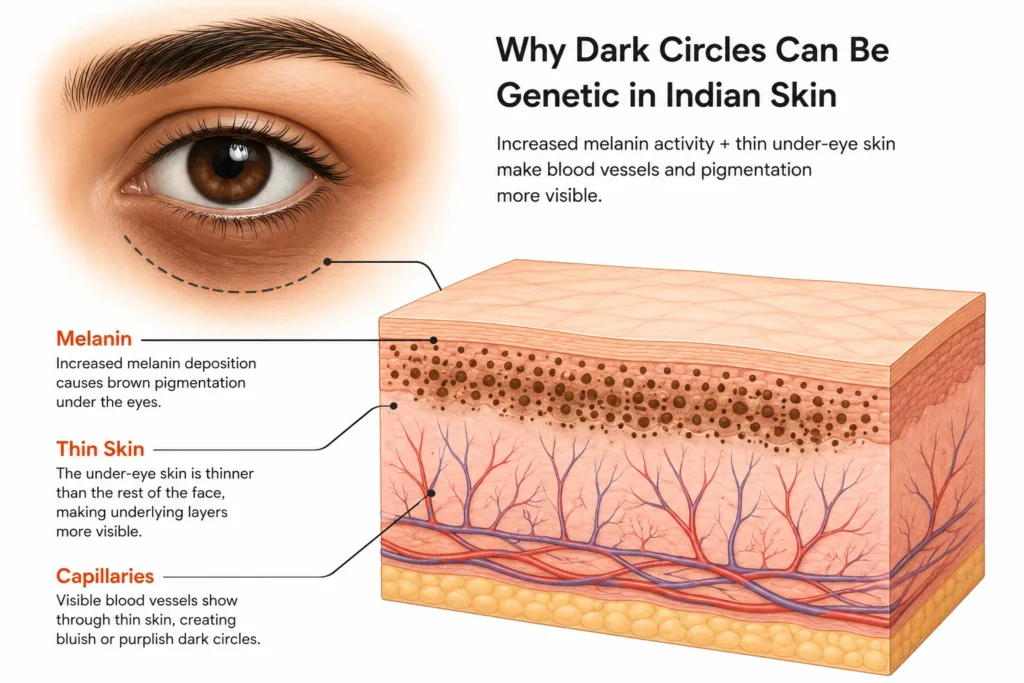
Periorbital hyperpigmentation has a strong genetic component in South Asian, East Asian, and Middle Eastern populations, and this is the cause that lifestyle interventions most consistently fail to address. The genetic tendency involves greater melanin production in periorbital skin, a thinner skin type that makes underlying pigmentation more visible, and a facial bone structure that creates shadows around the orbital rim.
This type of dark circle is brownish rather than bluish-purple, does not change significantly with sleep, hydration, or nutritional status, and persists regardless of stress management. It tends to appear earlier in people with darker natural skin tones and is more common in people whose parents also have prominent dark circles.
The distinction matters because people with primarily genetic periorbital hyperpigmentation spend years adjusting sleep, supplementing iron, and managing stress without noticing meaningful improvement. Identifying this as the dominant cause allows for a more targeted approach: sunscreen to prevent UV-driven worsening, topical vitamin C and niacinamide to reduce melanin production over time, and dermatological interventions (kojic acid, azelaic acid, or laser treatments) for more significant cases.
Verdict: The most common cause in Indian populations that does not respond to lifestyle intervention alone. Recognising it early prevents years of misdirected effort.
How Chronic Stress and Cortisol Make Dark Circles Worse After Sleeping
Chronic psychological stress worsens dark circles through cortisol, the primary stress hormone, which has direct effects on skin structure and vascular function. Elevated cortisol degrades collagen in periorbital skin, thins the skin further, increases vascular permeability (making blood vessels leakier and more prone to pooling), and disrupts the sleep architecture that determines sleep quality even when total sleep duration is adequate.
This is why people who sleep 8 hours but sleep badly — with frequent micro-arousals, poor slow-wave sleep, or high cortisol disrupting deep sleep phases — wake with dark circles despite technically sufficient sleep duration. The problem is not duration. It is depth.
Cortisol also depletes magnesium through increased urinary excretion, and magnesium deficiency independently worsens sleep quality and vascular function. This is a self-reinforcing cycle: stress depletes magnesium, magnesium deficiency worsens sleep quality and vascular integrity, which worsens periorbital appearance, which increases stress about appearance. Our article on signs of magnesium deficiency most people ignore covers how to identify and address this pattern.
Verdict: A significant amplifying factor that makes every other cause worse. Cortisol management should be part of any serious approach to persistent dark circles.
Dark Circles Causes: What Is Behind Yours and What Fixes Each Type
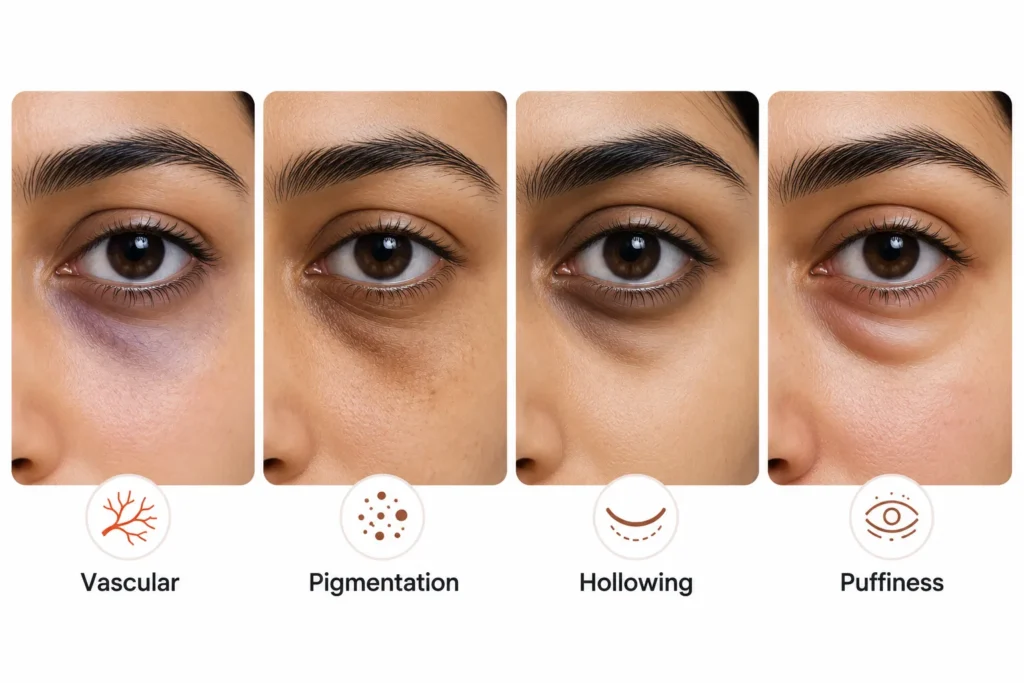
| Cause | Appearance | Sleep Response | Primary Fix | India Relevance | Verdict |
|---|---|---|---|---|---|
| Iron/ferritin deficiency | Bluish-purple, worse in AM | Improves slightly with sleep | Ferritin testing, iron + vitamin C | Very high — 59% Indian women anaemic | Most common fixable cause |
| B12 deficiency | Brownish-purple, gradual onset | Minimal improvement with sleep | Sublingual methylcobalamin 1000mcg daily | High — 47% vegetarians deficient | Often coexists with iron deficiency |
| Genetic hyperpigmentation | Brown, consistent | No change with sleep | Topical vitamin C, niacinamide, sunscreen | Very high in South Asian skin | Most common cause overall |
| Periorbital hollowing | Dark shadow, not skin change | No change with sleep | Volume restoration (filler), weight maintenance | Moderate — worsens with fat loss | Structural, not nutritional |
| Chronic dehydration | Dull, thin skin appearance | Minimal change | 2.5 to 3L water daily, reduce sodium | Moderate | Contributing factor |
| Chronic stress/cortisol | Variable, fluctuates | Poor improvement despite sleep | Stress management, magnesium glycinate | High — urban India stress burden | Amplifies all other causes |
| Vitamin K deficiency | Bluish-purple, capillary-driven | Minimal | Vitamin K2 MK-7, dark leafy greens | Moderate — limited in veg diets | Often overlooked |
How Long It Takes to See Improvement — and What to Track
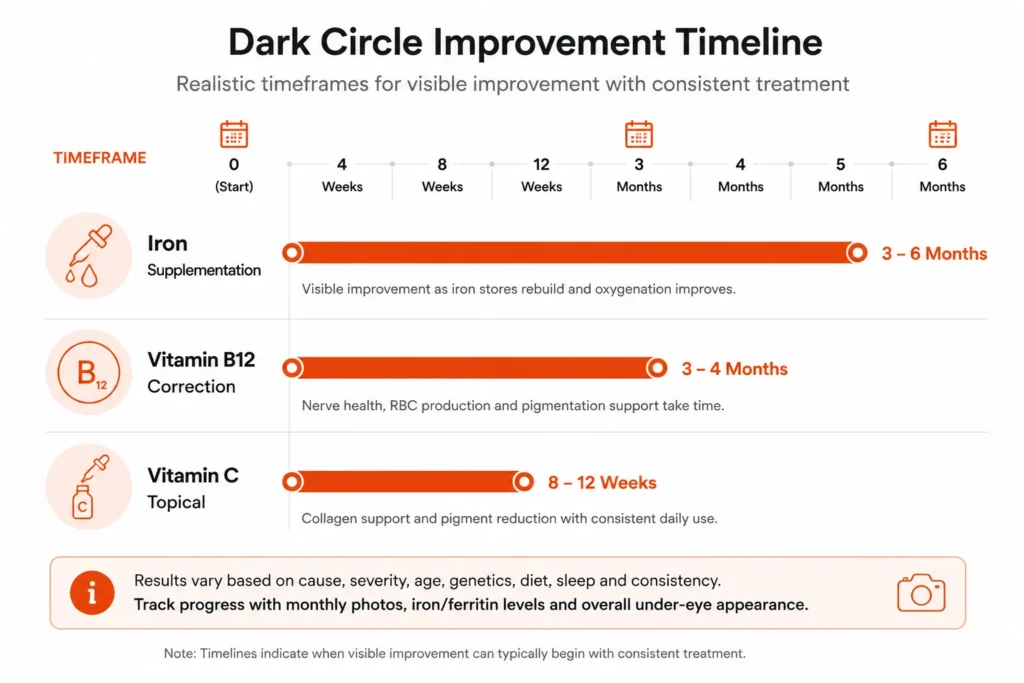
The timeline for improvement in dark circles from nutritional causes is longer than most people expect, and this is the primary reason people give up on interventions that were actually working.
Iron correction through supplementation typically takes 3 to 6 months to restore ferritin to optimal levels and produce visible improvement in periorbital appearance. Haemoglobin normalises faster (6 to 8 weeks), but ferritin repletion takes significantly longer. Taking iron supplements for 3 weeks, noticing no visible change, and stopping is the most common pattern of failed iron correction for dark circles.
B12 correction through sublingual methylcobalamin (the most bioavailable form — bioavailability here means the fraction of the supplement that actually reaches systemic circulation, which for sublingual B12 is 80 to 90% versus 40 to 50% for standard oral tablets) shows neurological improvement within weeks but skin changes take 3 to 4 months.
Topical interventions for hyperpigmentation work on a cell turnover timescale. The epidermis turns over approximately every 28 to 30 days. Meaningful pigment reduction from vitamin C or niacinamide serums requires 8 to 12 weeks of consistent use.
For timing: supplement iron and B12 in the morning with food. Take vitamin C alongside iron to maximise non-heme iron absorption. Apply topical vitamin C serum in the morning and niacinamide in the evening. Take magnesium glycinate at night to improve sleep quality and reduce the cortisol-driven amplification of every other cause.
What the Research Actually Confirms About Periorbital Hyperpigmentation
The medical literature on dark circles is more specific than most skin care discussions acknowledge. A 2014 study published in the Journal of Cutaneous and Aesthetic Surgery classified periorbital dark circles into four types — constitutional (genetic), vascular, post-inflammatory, and structural — and found that the majority of cases in Indian patients were constitutional or vascular, often with both present simultaneously.
Research on iron deficiency and periorbital appearance specifically is limited to observational data, but the mechanistic link through haemoglobin and tissue oxygenation is well-established in dermatological literature. A 2016 review in Clinical, Cosmetic and Investigational Dermatology confirmed the association between periorbital hyperpigmentation and nutritional deficiencies including iron, vitamin B12, and folic acid in Indian patients presenting at dermatology clinics.
“Periorbital hyperpigmentation is one of the most common cosmetic complaints among Indian patients, with a multifactorial aetiology that includes constitutional factors, nutritional deficiencies, and lifestyle variables acting simultaneously.” — Sheth and Pandya, Journal of Cutaneous and Aesthetic Surgery, 2011
The honest reality check: dark circles in people with genetic hyperpigmentation will not resolve completely with any non-invasive intervention. The expectation that addressing nutrition will make genetic periorbital pigmentation disappear is unrealistic. The realistic expectation is that nutritional correction will address the vascular and deficiency-driven component, reducing the overall severity, while the genetic component remains and requires either acceptance or dermatological treatment.
Things to Know Before You Start Supplementing or Changing Routines
Most interventions for dark circles are safe and have low risk. The practical concerns are about realistic expectations and drug interactions rather than safety.
For iron supplementation: start with food-based sources before reaching for supplements. Soaking and cooking dal reduces phytate content, improving iron absorption from plant sources. Eating an amla or citrus source alongside iron-rich foods dramatically increases non-heme iron absorption. If supplementing, iron bisglycinate is gentler on the stomach than ferrous sulphate, which causes constipation and nausea in a significant percentage of users.
People on metformin for diabetes or PCOD/PCOS should specifically check B12 levels — metformin significantly depletes B12 through reduced intrinsic factor production, and this is one of the most common but most frequently missed causes of B12-driven dark circles and fatigue in young Indian women on long-term metformin.
For topical vitamin C: start with a lower concentration (10%) rather than 20% to reduce the risk of irritation on thin under-eye skin. Apply with a clean ring finger using very light tapping rather than rubbing, as the skin here is subject to structural damage from repeated mechanical stress.
Sun protection on the under-eye area is underutilised in India. UV exposure directly stimulates melanin production in periorbital skin and is a significant driver of worsening in people with genetic hyperpigmentation. A broad-spectrum SPF 30 or higher applied around (not in) the eyes daily prevents the UV contribution to pigmentation regardless of how many other interventions are used.
What to Do Based on What Is Causing Yours

If you are a vegetarian and have had dark circles for years
Your most likely cause is iron deficiency, B12 deficiency, or both. Get ferritin and B12 tested before buying anything. If ferritin is below 30 ng/mL, start iron bisglycinate at 25mg elemental iron daily with vitamin C on an empty stomach or with a small meal. If B12 is below 200 pg/mL, start sublingual methylcobalamin at 1000mcg daily. Give both interventions 4 to 5 months before assessing the periorbital change.
If your dark circles are brownish and run in your family
The primary driver is genetic hyperpigmentation. Nutritional optimisation will help the vascular component but will not resolve the pigment component. Start a topical routine: vitamin C serum in the morning, niacinamide serum in the evening, SPF 30 on the orbital rim daily. This addresses the controllable portion of the cause. Expect gradual improvement over 3 to 4 months, not transformation.
If you are going through a stressful period and they have got worse recently
Stress is amplifying an existing tendency. The priority here is magnesium glycinate at 300 to 400mg at night to improve deep sleep quality and reduce cortisol-driven vascular effects. Alongside this, check whether ferritin has dropped — stress increases iron utilisation and can drop ferritin below threshold even in people who previously had adequate levels. Our article on low testosterone in young men covers how chronic stress depletes multiple minerals simultaneously and why this matters beyond just appearance.
If your dark circles are predominantly puffiness in the morning that improves through the day
The cause is fluid retention and lymphatic drainage, not pigmentation. Reduce sodium intake (the primary driver of morning periorbital oedema), sleep with your head slightly elevated if possible, and reduce alcohol, which significantly worsens morning periorbital puffiness. Cold water or a chilled eye mask applied for 5 minutes in the morning helps with the immediate appearance but does not address the underlying sodium-fluid dynamic.
If you have already tried everything and nothing has worked
This is the profile most likely to have structural hollowing as a significant contributor. Periorbital fat loss creates shadows that look like dark circles and do not respond to any topical or nutritional intervention. In this case, a consultation with a dermatologist about hyaluronic acid filler for tear trough hollowing is a reasonable consideration. It is not cosmetic vanity — it is addressing the actual structural cause that nothing else reaches.
Putting It Together
Persistent dark circles despite adequate sleep are almost never just a sleep issue. They are a signal about nutritional status, genetic skin type, stress load, or structural changes in periorbital tissue — and usually a combination of these.
The most practical starting point for most Indians: get ferritin and B12 tested. Fix what is actually deficient rather than guessing at causes. Add a topical vitamin C serum and daily SPF on the orbital rim regardless of cause type — these are low-risk improvements that help the appearance regardless of which specific mechanism is driving it.
If you want to understand how iron deficiency shows up systemically alongside dark circles, our article on 7 early signs of nutrient deficiency most Indians ignore covers the broader deficiency picture that often accompanies periorbital changes. And for people managing vitamin D and B12 deficiency specifically, our piece on vitamin B12 deficiency in vegetarians covers dosing, forms, and what to expect from correction.
Dark circles at 25 are not inevitable. In most cases, they are a message about something the body needs. Finding the right message matters more than covering it with concealer.
What People Actually Search When They Are Trying to Fix This
Why do I have dark circles even after sleeping 8 hours?
Dark circles after adequate sleep are almost never caused by sleep deprivation itself. The most common causes are iron or ferritin deficiency, vitamin B12 deficiency, genetic periorbital hyperpigmentation common in South Asian skin, and chronic stress that degrades sleep quality even when duration is sufficient. If you are sleeping 8 hours and still have dark circles, check ferritin and B12 levels before changing anything else. These two deficiencies account for the majority of nutritional dark circle causes in Indian adults.
Can iron deficiency really cause dark circles?
Yes, and this is one of the most consistently underdiagnosed causes of dark circles in Indian women specifically. Iron deficiency reduces haemoglobin levels, which means less oxygen reaches periorbital tissue. Under-oxygenated blood appears darker through thin under-eye skin. Critically, ferritin levels need to drop before haemoglobin does, meaning a person can have visible periorbital changes from iron deficiency while their haemoglobin appears normal on a standard blood test. Testing ferritin specifically, not just haemoglobin, is the appropriate investigation.
Does drinking more water fix dark circles?
Hydration improves the appearance of dark circles by maintaining skin thickness and translucency in the periorbital area, but it does not fix the underlying cause in most cases. Dehydration makes dark circles more visible by thinning the skin and making blood vessels more apparent. Correcting chronic dehydration — common in people who drink 3 to 4 cups of chai daily without equivalent water intake — reduces severity but does not eliminate dark circles from iron deficiency, genetic pigmentation, or structural hollowing.
Are dark circles genetic and is there anything I can do?
Dark circles are partly genetic, particularly in South Asian skin, where greater melanin production in periorbital skin and a structural tendency toward tear trough hollowing make dark circles more visible and more common. The genetic component cannot be reversed by lifestyle changes. However, the nutritional component (iron, B12, vitamin K), the UV-driven worsening, and the stress-cortisol amplification can all be addressed. A realistic outcome is meaningfully reduced severity rather than complete elimination for people with significant genetic contribution.
Why are my dark circles worse in the morning?
Dark circles that are worst in the morning and improve through the day typically reflect one of two mechanisms: vascular pooling from horizontal sleep position (blood pools more in periorbital capillaries when lying flat) or fluid retention from sodium, alcohol, or allergies that dissipates as the day progresses. Dark circles from pigmentation are relatively constant through the day. Dark circles from stress tend to be worse after poor quality sleep regardless of duration. Morning-specific severity usually suggests a vascular or fluid component rather than primarily pigmentation.
What vitamin deficiency causes dark circles?
The most documented vitamin and mineral deficiencies associated with dark circles are iron deficiency (specifically low ferritin), vitamin B12 deficiency, and vitamin K deficiency. Iron and B12 cause periorbital darkness through reduced tissue oxygenation and anaemia-related blood vessel visibility. Vitamin K deficiency reduces vascular wall integrity, increasing periorbital blood pooling. In India, all three deficiencies are common in people eating vegetarian diets without deliberate attention to absorption and supplementation. Folic acid deficiency has also been associated with periorbital hyperpigmentation in Indian dermatological studies.
Sources and References
- Sheth PB, Shah HA, Dave JN. Periorbital hyperpigmentation: A study of its prevalence, common causative factors and its association with personal habits and other disorders. Indian Journal of Dermatology. 2014;59(2):151-157. https://pubmed.ncbi.nlm.nih.gov/25396211/
- Ranu H, Thng S, Goh BK, Burger A, Goh CL. Periorbital hyperpigmentation in Asians: an epidemiologic study and a proposed classification. Dermatologic Surgery. 2011;37(9):1297-1303. https://pubmed.ncbi.nlm.nih.gov/21718369/
- Sarkar R, Ranjan R, Garg S, Garg VK, Sonthalia S, Bansal S. Periorbital hyperpigmentation: a comprehensive review. Journal of Clinical and Aesthetic Dermatology. 2016;9(1):49-55. https://pubmed.ncbi.nlm.nih.gov/27042699/
- National Family Health Survey (NFHS-5), India 2019-2021. Ministry of Health and Family Welfare, Government of India. (Source for 59% anaemia prevalence in Indian women.) http://rchiips.org/nfhs/NFHS-5Reports/NFHS-5_INDIA_REPORT.pdf
- Weng TT, Tsai TF. Periorbital hyperpigmentation as a presenting sign of iron deficiency anaemia. Dermatologica Sinica. 2012. (Reference for iron and periorbital appearance.) https://pubmed.ncbi.nlm.nih.gov/22081561/
- Baumann LS. Skin ageing and its treatment. Journal of Pathology. 2007;211(2):241-251. https://pubmed.ncbi.nlm.nih.gov/17200946/
- Sehgal VN, Verma P, Srivastava G, Aggarwal AK, Verma S. Melasma: treatment strategy. Journal of Cosmetic and Laser Therapy. 2011. (Referenced for topical vitamin C and niacinamide evidence.) https://pubmed.ncbi.nlm.nih.gov/21740247/
- Sundaram H, Mehta RC, Nogueira A, et al. Topically applied physiologically balanced growth factors: a new paradigm of skin rejuvenation. Journal of Drugs in Dermatology. 2009;8(5 Suppl Skin):S4-S13. https://pubmed.ncbi.nlm.nih.gov/19434782/
- Thomas J, Majewski E. Periorbital hyperpigmentation: overview of the causes and approach to treatment. Journal of Clinical and Aesthetic Dermatology. 2020. https://www.ncbi.nlm.nih.gov/pmc/articles/PMC7418677/
- Prater MR, Bhimji SS. Vitamin B12 Deficiency (Cobalamin). In: StatPearls [Internet]. Treasure Island (FL): StatPearls Publishing; 2022. https://pubmed.ncbi.nlm.nih.gov/28613713/